
Why Chain-Agnostic Workflows Matter for Stablecoins
How chain-agnostic workflows centralize approvals, run pre-sign risk checks, and create audit-ready treasury records for stablecoins.

Managing stablecoins across multiple blockchains is messy, risky, and inefficient without the right tools. Manual processes, fragmented wallets, and chain-specific workflows create chaos, increase errors, and make compliance harder - especially as regulations tighten with laws like the GENIUS Act (effective December 2026).
Chain-agnostic workflows solve this by centralizing governance, enforcing consistent rules, and improving visibility across all blockchains. Tools like Stablerail automate approvals, risk checks, and audit trails, ensuring safer, faster, and more organized treasury operations. For businesses handling $1M–$50M annually in stablecoins, this approach replaces outdated methods with a single system that simplifies multi-chain management and reduces risks.
Key Takeaways:
Problem: Multi-chain stablecoin operations are prone to errors, delays, and compliance issues.
Solution: Chain-agnostic workflows centralize approvals, policy enforcement, and risk checks across all blockchains.
Benefits: Unified visibility, automated risk screening, and audit-ready records.
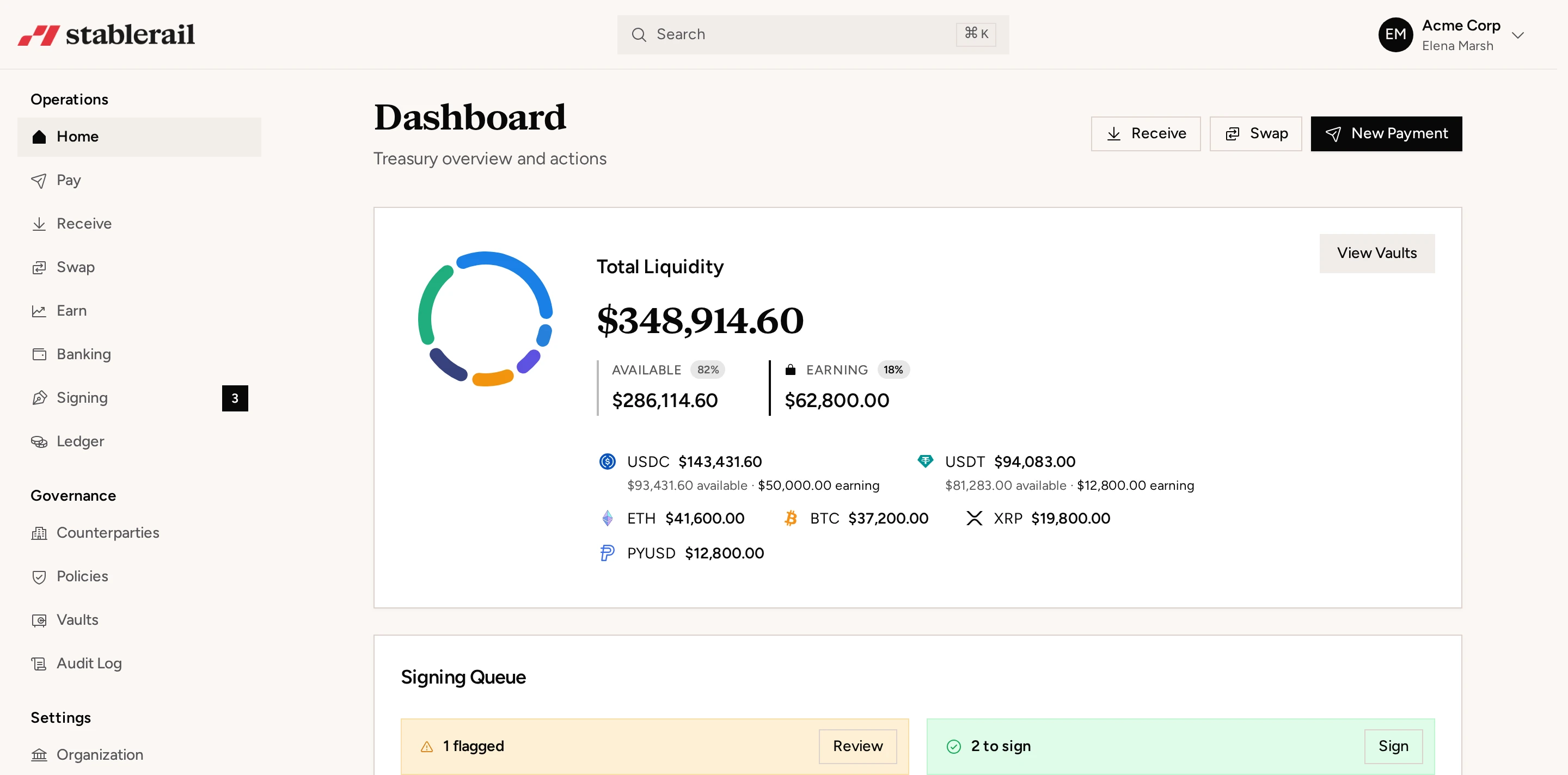
Example: Stablerail provides a Treasury Hub with features like MPC-secured vaults and pre-signature risk checks.
This shift is critical for organizations aiming to manage stablecoins efficiently and securely in a multi-chain world.
1. Chain-Specific Workflows
Chain-specific workflows rely on separate tools, wallets, and processes for each blockchain. This fragmented approach creates major hurdles for finance teams trying to manage stablecoin treasuries at scale.
Policy Enforcement
Organizations using these workflows often depend on informal approval methods. Approvals typically happen through channels like Slack or email, which lack a proper audit trail. This informal setup introduces single points of failure - where one individual with a hardware wallet and a spreadsheet essentially controls the entire treasury. If their device is compromised or they make an error, the consequences can be severe. These approval gaps also create vulnerabilities in transaction validation, which increases risks, as detailed in the next section.
Risk Screening
The lack of formal controls significantly increases risks during transaction validation. Chain-specific workflows often involve blind signing, where hardware wallets display unreadable hexadecimal characters instead of clear transaction details. This forces users to approve transactions without fully understanding them, making mistakes more likely. On top of that, liquidity fragmentation adds to the complexity: for instance, holding USDC on Ethereum but needing to pay a vendor who only accepts USDT on Arbitrum requires using bridges. These bridges are often slow and carry additional risks, leading to delays and potential vulnerabilities.
Audit Trails
Fragmented on-chain activity complicates compliance efforts. Without proper systems, teams must manually cross-reference on-chain transactions with off-chain records, which is both time-consuming and prone to errors. For example, signatures alone don’t reveal who authorized a transaction. Compliance teams are left piecing together information from spreadsheets, chat logs, and blockchain explorers, making it difficult to defend their processes during regulatory reviews. Despite the stablecoin market reaching around $300 billion by 2025, many organizations still rely on outdated, fragmented tools. This results in inconsistent risk assessments (which can be quantified using a stablecoin risk calculator) and siloed data, preventing a clear overview of treasury operations.
Multi-Chain Support
The challenges don’t stop with approvals and transaction validation. Operating across multiple blockchains further complicates visibility and reconciliation. Without unified tools, finance teams struggle to track their total exposure or answer basic questions like, "How much USDC do we have across all chains?" High-security signing processes can delay routine payments by days, making reconciliation even slower. These inefficiencies highlight the need for workflows that enforce consistent policies and provide a unified view across all blockchains.
2. Chain-Agnostic Workflows (e.g., Stablerail)
Chain-agnostic workflows address the issue of fragmentation by acting as a smart intermediary between finance teams and blockchains. Instead of juggling separate tools for each blockchain network, these systems enforce consistent governance rules across all chains through a single control platform. This approach transforms stablecoin treasury management from scattered wallets into a cohesive operating system.
This streamlined method replaces the inefficiency of chain-specific solutions, simplifying everything from approvals to execution.
Policy Enforcement
Chain-agnostic platforms leverage policy-as-code to translate governance rules into automated, enforceable logic that operates before any transaction is signed. For example, Stablerail can turn a rule like “Payments over $5,000 to new addresses require CFO approval and verification” into an automated process. This system includes t-of-n separation of duties, ensuring multiple individuals are involved in requesting, approving, and signing transactions. By doing so, it eliminates single points of failure that are common in chain-specific workflows.
Risk Screening
Before transactions are executed, the platform conducts pre-sign verification using specialized agents. Stablerail automates processes like sanctions screening, taint analysis, behavioral anomaly detection, and counterparty risk scoring. It then generates a Risk Dossier with a clear verdict - PASS, FLAG, or BLOCK - accompanied by plain-English explanations tied to specific policy rules and timestamps. This ensures approvers aren’t blindly signing incomprehensible hexadecimal data on hardware wallets. Instead, they receive detailed transaction information with context about potential risks. The system acts as a copilot, flagging problems while leaving final signing authority to humans.
Audit Trails
Every step in the transaction process is meticulously recorded. From the creation of a transaction request to its execution, Stablerail logs who initiated the request, the checks performed, any flags raised, who approved or overrode decisions (and why), and the exact time of the signature. This creates auditor-ready evidence that can be presented to auditors, boards, or regulators. As Stablecoin Insider puts it:
"A stablecoin treasury cannot be 'a wallet that holds funds.' It must be an operating system with documented rules, enforceable permissions, and an auditable reconciliation process".
By requiring a business reference - like an Invoice ID or Payroll Batch ID - for every transaction, these systems ensure a clear connection between on-chain activity and off-chain records.
Multi-Chain Support
The Treasury Hub provides one centralized interface for tracking balances, exposures, and approvals across all chains. Finance teams can answer questions like “How much USDC do we have across all chains?” without manually checking multiple block explorers. Stablerail uses MPC-secured vaults that support multiple blockchains with a single signature type, eliminating the need for custom smart contracts on each chain. Funds are stored in self-custodial vaults controlled by the organization, ensuring they remain bankruptcy-immune - protected from the financial health of the service provider. This setup is ideal for companies managing $1 million to $50 million in stablecoin volume annually, with an annual subscription fee that scales based on the number of entities, users, and on-chain activity.
These features elevate treasury governance, making stablecoin transactions as secure and seamless as traditional bank wires.
Pros and Cons
Chain-Specific vs Chain-Agnostic Stablecoin Workflows Comparison
Let’s take a closer look at the benefits and challenges of chain-specific versus chain-agnostic workflows, building on the earlier comparison.
Chain-specific workflows are straightforward but struggle in multi-chain environments. They often require fragmented wallets, manual reconciliation, and informal approvals, which can quickly become cumbersome as operations scale. On the other hand, chain-agnostic systems emphasize scalability by centralizing governance and improving visibility. Platforms like Stablerail, for instance, provide a unified Treasury Hub where balances across multiple chains can be monitored in real time. These systems also enable consistent policy enforcement through code and generate auditor-ready evidence for every transaction. However, they come with added complexity, requiring thorough audits and team training. Industry experts warn that without proper redundancy, orchestration layers in these systems could become single points of failure or bottlenecks in critical workflows.
To better understand the trade-offs, here’s a side-by-side breakdown:
Feature
Chain-Specific (Manual/Legacy)
Chain-Agnostic (Agentic/Policy-Enforced)
Visibility
Fragmented across wallets/chains
Unified Treasury Hub; real-time dashboard
Signing Process
Blind signing of technical data
Human-readable Risk Dossiers with verdicts
Security
Single-key or multisig
MPC-secured vaults (distributed shards)
Efficiency
Manual reconciliation; one-by-one transfers
Batch processing (up to 500 transfers/signature)
Risk Checks
Manual or post-transaction
Real-time, AI-driven pre-signature checks
Audit Trail
Slack/Email logs
Automated Proof-of-Control receipts
For businesses managing $1M–$50M annually, chain-agnostic systems can significantly reduce operational overhead while improving compliance. However, it’s critical to choose a platform that ensures bankruptcy immunity, meaning funds remain in self-custodial vaults under your control rather than being tied to wallets managed by the software provider.
Real-world examples highlight the practicality of these systems. In November 2025, Kinexys (JPMorgan’s blockchain unit) and Ondo Finance used the Chainlink Runtime Environment to settle a cross-chain exchange of OUSG fund tokens for tokenized cash. This involved a public blockchain and a private bank network. Similarly, in early 2026, UBS and DigiFT implemented a chain-agnostic workflow for managing subscriptions and redemptions of a tokenized money market fund. Their system synchronized records with legacy custody systems while maintaining full on-chain transparency.
These examples underscore the potential of chain-agnostic workflows to transform treasury operations. Next, we’ll dive into how organizations can effectively implement these systems to address governance challenges.
Conclusion
Chain-agnostic workflows are reshaping how stablecoin treasuries are managed. As Stablecoin Insider aptly put it:
"A stablecoin treasury cannot be 'a wallet that holds funds.' It must be an operating system with documented rules, enforceable permissions, and an auditable reconciliation process".
This approach brings several key benefits: unified visibility across chains, consistent enforcement of policies through code, and proactive risk management that helps prevent potential issues before they arise. Stablerail exemplifies this shift by addressing risks like asset freezes linked to tainted parties. For mid-sized stablecoin treasuries, the reduced operational complexity and the added security of a bankruptcy-immune design - keeping funds in self-custody without relying on unilateral signing authority - make this transition highly appealing.
Chain-agnostic workflows tackle long-standing challenges like fragmented visibility and manual risk assessments, offering a smarter, more cohesive solution. These workflows aren’t just theoretical improvements - they translate into practical advancements in design and execution.
A tiered wallet structure is often the starting point for implementing these workflows. Using a "Cold/Warm/Hot" method, treasuries can secure large balances in highly protected environments while reserving hot wallets for smaller, automated transactions. When paired with policy-as-code and comprehensive audit trails, this system turns treasury management into a strategic asset.
As multi-chain operations become increasingly standard, organizations that adopt chain-agnostic workflows will stand out. Those clinging to outdated methods like spreadsheets and manual approvals risk falling behind. To maintain efficiency and security, adopting these systems isn’t just a recommendation - it’s essential.
FAQs
What does “chain-agnostic” mean for stablecoin treasury workflows?
In stablecoin treasury workflows, being “chain-agnostic” means having the flexibility to operate seamlessly across multiple blockchains, rather than being restricted to just one. This approach allows for unified governance, consistent policy enforcement, and thorough risk assessments for stablecoins like USDC or USDT - whether they’re on Ethereum, Solana, or other networks. The benefits? Enhanced liquidity, reduced reliance on a single blockchain, and greater resilience. This setup empowers finance teams to manage stablecoins securely and efficiently in a multi-chain environment.
How can policy-as-code prevent bad stablecoin payments before anyone signs?
Policy-as-code helps block problematic stablecoin payments by automating compliance checks, enforcing governance rules, and evaluating risks instantly before transactions are approved. Organizations can define policies - such as transaction caps, mandatory approvals, or a list of authorized addresses - that apply automatically to every payment request. Additionally, pre-signature checks scan for sanctions, unusual activity, and potential exposure, reducing the chances of mistakes or fraud. This approach ensures compliance while keeping a clear and transparent audit trail.
What should I look for to ensure a chain-agnostic treasury setup is audit-ready and bankruptcy-immune?
To build a treasury that's both audit-ready and resistant to bankruptcy risks, prioritize a self-custodial setup. This approach should include strong pre-sign checks, such as sanctions screening, policy enforcement, and thorough risk assessments. Opt for bankruptcy-immune vaults to ensure no single party can access funds unilaterally. Incorporate threshold cryptography to remove single points of failure and bolster security.
Additionally, set up automated approval policies for transactions that are high-value or out of the ordinary. This not only streamlines the process but also ensures every decision is properly logged, promoting transparency and meeting regulatory requirements.
Related Blog Posts
Former CEO of Simple, a self-custodial wallet with $2B+ in transaction volume across 75+ countries.
More about the Stablerail team- Stablecoin treasury managementApprovals, limits, yield and reporting on one balance.
- Stablecoin payoutsBatch contractor and vendor payments with screening.
- USDT vs USDCWhich stablecoin your company should settle in.
- Stablecoin finance glossaryMPC, off-ramp, travel rule and the rest, in plain English.
- Product updatesEverything we ship, month by month.