
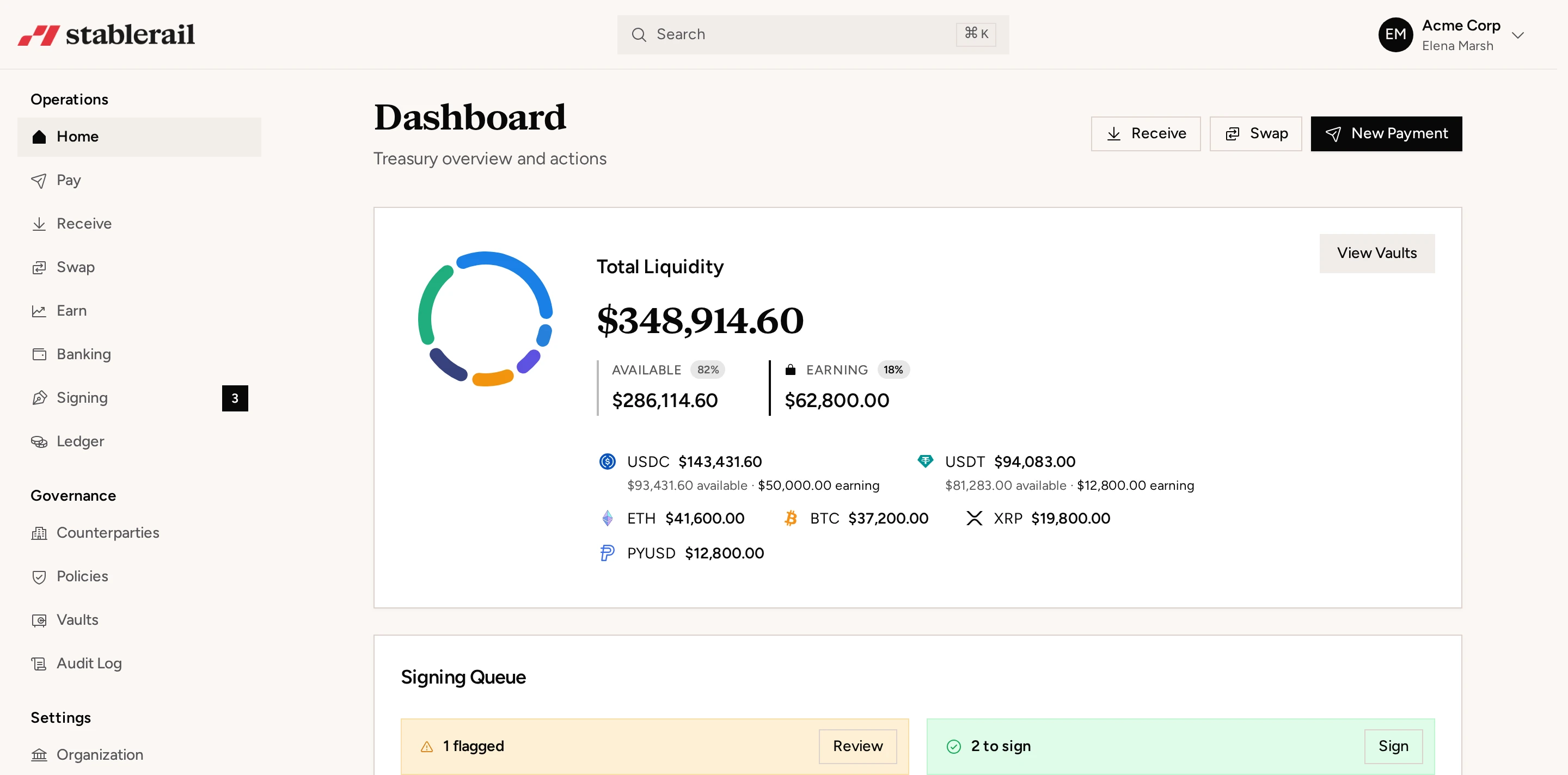
How Pre-Transaction Screening Protects Treasury Systems
Real-time pre-transaction screening stops fraud, enforces policy, and ensures AML/sanctions compliance for treasury and stablecoin payments.

Pre-transaction screening is a process that stops risky financial transactions before they occur. It checks transactions against global watchlists, sanctions, and other risk indicators in real time. This proactive approach helps treasury teams avoid issues like fraud, money laundering, and sanctions violations.
Key benefits include:
Fraud Prevention: Detects unusual patterns or unauthorized changes before funds are moved.
Sanctions Compliance: Blocks transactions involving restricted entities or flagged addresses.
Policy Enforcement: Automates rules like requiring approvals for large or new payments.
Audit-Ready Documentation: Keeps detailed logs of decisions for transparency.
For stablecoin payments (e.g., USDC, USDT), this process ensures compliance while maintaining blockchain efficiency. Tools like Stablerail integrate these checks seamlessly, offering automated risk assessments while keeping human oversight intact.
How Real Time Monitoring Rules Protect Against Fraud, Sanctions, and AML Risks
Risks Mitigated by Pre-Transaction Screening
Pre-transaction screening serves as a critical safeguard, protecting treasury operations from financial, reputational, and legal risks. By evaluating transactions before they’re executed, finance teams can intercept potentially harmful transactions - risks that manual reviews or post-transaction monitoring might overlook.
Sanctions and Taint Screening
Sanctions and taint screening identifies and blocks transactions involving prohibited entities, sanctioned individuals, politically exposed persons (PEPs), or funds tied to illegal activities. This process helps treasury operations comply with regulations like the FATF Recommendations, the USA PATRIOT Act, and EU AML Directives, shielding them from violations that could lead to severe penalties.
The screening process works by cross-referencing counterparties against global watchlists in real time. Payments flagged during this process are stopped before they can be executed. For instance, a case from the Monetary Authority of Singapore highlighted how the absence of early screening can significantly increase exposure to money laundering and terrorism financing risks.
In stablecoin treasury systems, pre-transaction checks are especially important for identifying "tainted" addresses. These checks prevent interactions with high-risk counterparties that could lead to wallet freezes. For example, stablecoin issuers like Circle or Tether may freeze a wallet if it’s linked to flagged activity, ensuring the treasury’s operations remain uninterrupted.
Apart from sanctions compliance, this screening also plays a key role in detecting and curbing fraudulent activity.
Fraud Detection and Policy Enforcement
Pre-transaction screening helps prevent fraud by automating the detection of anomalies, such as unusual transfer patterns, odd transaction times, or unexpected payment amounts. It also enforces stablecoin treasury management best practices directly within the payment process.
For example, machine-enforced rules like “payments over $5,000 to new addresses require CFO approval” or “weekend transfers exceeding $10,000 need additional verification” create automated checkpoints. This approach reduces reliance on manual wire approvals, which are susceptible to human error or unauthorized changes. Treasury management systems have used this automation to successfully prevent fraud by catching unauthorized wire changes and ensuring approvals are in place.
Automation also allows finance teams to process large transaction volumes without compromising security. By eliminating fraudulent transfers before they occur, organizations save time and fees while maintaining operational integrity and compliance.
AML and Compliance Requirements
In addition to fraud prevention, pre-transaction screening supports anti-money laundering (AML) compliance. By screening transactions against watchlists, sanctions lists, and risk indicators before approval, treasury systems meet AML standards and demonstrate proactive controls to regulators, auditors, and clients.
Regulatory frameworks like the Bank Secrecy Act and FATF Recommendations emphasize the importance of real-time, risk-based checks as a cornerstone of AML programs. Pre-transaction screening enables treasury systems to meet these expectations, helping organizations avoid fines, build trust, and protect their reputation.
For stablecoin transactions, this compliance is particularly critical. Blockchain’s decentralized nature introduces risks like unverified counterparties and pseudonymous addresses - challenges not typically encountered in traditional banking. Pre-transaction screening addresses these concerns, ensuring stablecoin payments adhere to the same governance standards as bank wires, all while maintaining the speed and efficiency of blockchain-based settlements.
How Pre-Transaction Screening Works in Treasury Systems
How Pre-Transaction Screening Works: Real-Time Checks to Transaction Approval
Pre-transaction screening uses automated checks and enforceable rules to evaluate payments before they reach the signing stage. This adds a layer of protection that goes beyond what traditional custody tools can offer. By combining real-time monitoring, secured self-custodial processes, and rule-based governance, this screening system strengthens treasury operations. Let’s break down how these components work together.
Real-Time Monitoring and Rule-Based Checks
Treasury systems conduct instant scans of transactions, comparing them against sanctions lists, politically exposed persons (PEPs), and other watchlists. They also analyze transaction details for anomalies in amounts, timing, or patterns. When risks are detected, the system assigns a status - PASS, FLAG, or BLOCK - and provides clear explanations tied to policy clauses and timestamps.
This automation removes the delays caused by manual reviews, which are common in traditional wire approvals. Treasury Management Systems (TMS) encode controls for high-risk activities, enabling bulk processing while flagging issues like credit limit breaches or unusual counterparty behavior. The result? Faster compliance, lower labor costs, and the ability to block suspicious transactions before they’re executed.
Integration with Self-Custodial Systems
Pre-transaction checks are performed before signing but after custody, ensuring that users maintain control of their keys while incorporating essential business context.
A great example is Stablerail, which acts as a control layer between the creation of payment intents and the execution of transactions. When a finance team initiates a payment - whether from an invoice, payout file, or API - dedicated agents perform pre-sign checks for sanctions, taint exposure, policy compliance, and behavioral anomalies. The system generates a Risk Dossier but doesn’t have signing authority. Humans retain control, signing transactions via MPC wallets for treasury operations, ensuring funds remain under the organization’s control throughout the process.
Policy-as-Code for Governance
Policy-as-code transforms human-readable rules into automated governance. For example, a rule like "Payments over $5,000 to new addresses require CFO approval" is converted into an automated checkpoint. These checkpoints block non-compliant transactions and log every action in a detailed audit trail.
This approach scales governance without adding manual workload. Policies can limit stablecoin usage (e.g., "Only allow USDC on Base/Ethereum"), set counterparty risk thresholds, or enforce waiting periods for large transfers. Any policy violation results in the automatic blocking of the transaction. The system keeps a full audit trail, covering everything from intent creation to checks, flags, approvals, and overrides. This provides clear, actionable evidence for audits, boards, and regulatory reviews.
Research Findings on Risk Reduction Benefits
Studies on pre-transaction screening highlight how it enhances treasury operations by cutting down on errors, preventing fraud, and improving transparency. Automating treasury controls not only minimizes mistakes but also reinforces financial security. These advantages are evident in both traditional banking systems and newer stablecoin payment methods, where automation replaces error-prone manual tasks.
Fewer Manual Errors and Enhanced Transparency
Manual processes, like using spreadsheets, chat-based approvals on platforms such as Slack or Telegram, or disconnected wallet interfaces, are often riddled with risks like typos, duplicate payments, and delays. Automated pre-transaction screening eliminates these inefficiencies, giving finance teams real-time insights into their treasury operations.
A centralized dashboard - commonly called a Treasury Hub - provides instant access to balances, exposures, and pending approvals across multiple chains and wallets. This consolidation of data from various banks and ERPs eliminates manual tracking silos and reduces delays in reconciling payments. Beyond just error reduction, these systems also improve fraud prevention, making treasury management both precise and secure.
Strengthened Fraud Prevention
Research shows that pre-transaction screening is effective at stopping fraud before funds leave the organization. For instance, some systems introduce automatic cool-off periods, such as a required 4-hour delay for high-value transfers or payments to new beneficiaries. Simulated transactions are also used to flag suspicious activity, like first-time payment destinations or sudden changes in recipient addresses. These safeguards operate seamlessly, preventing fraud without slowing down legitimate transactions. Such strategies are now standard features in many screening tools.
Real-World Applications of Screening Tools
In traditional finance, managed screening solutions check transactions against sanctions lists and watchlists before processing, automatically blocking any non-compliant payments. Similarly, in stablecoin treasury systems, screening happens before funds are signed and moved on-chain, ensuring compliance and security.
Organizations managing between $1 million and $50 million annually in stablecoin transactions often see the greatest return on investment from automated controls, as the transaction volume justifies the need for strong risk management measures.
Pre-Transaction Screening in Stablecoin Treasury Systems
In stablecoin treasury systems, pre-transaction screening is not just a precaution - it's a necessity. Since stablecoin payments are irreversible once signed, every transaction must adhere to strict governance rules. This ensures that all checks are thoroughly completed before any funds are moved, reducing risk and reinforcing accountability.
Stablerail's Agentic Pre-Sign Checks
Stablerail serves as a control layer that operates above custody and before the signing process. When a payment intent is created - whether through an invoice, CSV, or API - automated agents immediately generate a Risk Dossier before the transfer occurs.
These agents perform a range of checks simultaneously, including:
Sanctions screening against global watchlists.
Taint and exposure analysis to detect connections to illicit addresses.
Behavioral anomaly detection to flag unusual patterns.
Counterparty risk scoring based on the historical activity of wallet addresses.
The result is a detailed risk dossier that explains any flagged issues, complete with evidence, policy references, and timestamps. For instance, if a payment to a new vendor surpasses $5,000, the system might flag it for additional approval, ensuring compliance with the organization's governance policies.
Human-In-The-Loop Approvals and Audit Trails
While automated agents handle risk checks, humans retain ultimate signing authority, ensuring a balance of efficiency and oversight.
Stablerail enforces tiered approval workflows based on the risk level and transaction specifics:
Tier
Category
Criteria
Required Approvals
Tier 1
Auto-Release
Routine payroll, verified vendors
Programmatic checks only
Tier 2
Single Approval
Transactions above auto-release limits, new vendors
One finance/treasury officer
Tier 3
Dual Approval
>$100,000; high-risk scenarios
Two senior signers (e.g., CFO)
Every step, from intent creation to final signing, is logged in a tamper-evident audit trail. Each transaction generates a proof-of-control receipt outlining what was paid, why it was approved, who authorized it, and the associated risk assessment. This level of documentation provides CFO-grade transparency for all treasury decisions.
Additional safeguards include smart cool-off periods, such as a 4-hour delay for high-value transfers or payments to new beneficiaries. If a vendor's address changes unexpectedly, the system automatically locks the payment, triggering mandatory escalation.
Manual vs. Automated Screening Outcomes
The contrast between manual processes and Stablerail's automated system highlights the efficiency and security improvements gained through automation:
Feature
Manual Wallet/Spreadsheet Process
Stablerail Policy-Enforced Process
Custody
Spread across ledgers, centralized exchanges, and multisigs
Centralized in MPC-secured vaults
Approvals
Informal, often via messaging apps
Structured, multi-step policy engine
Audit Trail
Scattered in chat logs or manual records
Automated, tamper-evident logs
Signing
"Blind signing" of technical data
Contextual signing with human-readable details
For companies managing $1 million to $50 million annually in stablecoins, automated pre-transaction screening offers clear advantages. At this scale, the volume of transactions makes manual methods prone to errors, while the financial stakes demand a more reliable, systematic approach. Stablerail's subscription pricing adapts to the number of entities, users, and on-chain activity, making it a scalable solution for growing treasury operations.
Conclusion
Pre-transaction screening acts as a safeguard, immediately halting high-risk transactions to prevent sanctions violations, fraud, and compliance issues before any funds are moved. This forward-thinking approach minimizes legal risks, protects an institution's reputation, and eliminates the costly mistakes often associated with manual processes.
For stablecoin transactions, which are irreversible by nature, this kind of protection is non-negotiable. Automated screening combines the speed of blockchain transactions with strong governance, ensuring operational efficiency without compromising security.
Platforms like Stablerail are leading the way in treasury governance by offering tools such as pre-sign Risk Dossiers, policy-as-code enforcement, and tamper-evident audit logs. These features provide CFO-level documentation for every decision, making it possible for companies managing $1 million to $50 million annually in stablecoins to scale their governance as their operations grow.
This evolution from manual oversight to automated pre-sign checks isn’t just a technological upgrade - it’s a game-changer for treasury teams. By embedding compliance directly into the transaction process, these systems shift the focus from reactive monitoring to proactive risk management. The "copilot, not autopilot" model - where AI verifies context while humans retain decision-making authority - offers a balanced approach that’s set to become the norm as stablecoin use expands.
FAQs
What’s the difference between pre-transaction screening and post-transaction monitoring?
Pre-transaction screening takes place before a transaction is finalized. It uses automated tools like sanctions checks, policy enforcement, and anomaly detection to catch errors, fraud, or violations upfront. This step ensures that only transactions meeting compliance standards move forward.
Post-transaction monitoring, on the other hand, happens after the transaction is executed. It involves real-time tracking to spot any suspicious activity or compliance issues that might have slipped through earlier checks.
Together, these processes form a solid system for both proactive prevention and continuous risk management.
How does pre-transaction screening work for stablecoin wallet addresses?
Pre-transaction screening for stablecoin wallet addresses involves automated checks designed to minimize risks before a transaction is signed. This process includes several critical steps:
Sanctions list screening: Ensuring wallet addresses are not linked to sanctioned entities.
Evasion tactic monitoring: Detecting the use of tools like mixers that obscure transaction origins.
Policy compliance verification: Confirming that transactions align with established rules and guidelines.
Specialized agents play a crucial role by assessing risks, identifying unusual activity, and assigning scores to counterparties. Based on this analysis, they issue a verdict - PASS, FLAG, or BLOCK - accompanied by detailed explanations. Transactions are only allowed to proceed if they pass these checks. In some cases, additional human review may be required to finalize the decision.
What happens when a transaction is flagged or blocked?
When a transaction gets flagged or blocked, pre-sign checks come into play. These checks include sanctions screening, policy enforcement, anomaly detection, and counterparty risk scoring. Their job? Spot potential issues before the transaction is executed.
Flagged transactions don't just sit idle - they go through a review process. During this stage, authorized personnel can either override the block or confirm it. Every action taken, along with the reasoning behind it, is logged in a full audit trail. This ensures transparency, helps meet compliance requirements, and keeps operational risks in check - all while preserving the quick pace of on-chain settlements.
Related Blog Posts
Former CEO of Simple, a self-custodial wallet with $2B+ in transaction volume across 75+ countries.
More about the Stablerail team- Stablecoin treasury managementApprovals, limits, yield and reporting on one balance.
- Stablecoin payoutsBatch contractor and vendor payments with screening.
- USDT vs USDCWhich stablecoin your company should settle in.
- Stablecoin finance glossaryMPC, off-ramp, travel rule and the rest, in plain English.
- Product updatesEverything we ship, month by month.