
Cross-Chain Intents vs. Traditional Payment Approvals
Compare intent-based cross-chain payments with manual approval workflows—trade-offs in speed, automation, and compliance.

Cross-chain intents and manual payment approvals serve different needs in finance. Here's the key takeaway: Cross-chain intents prioritize speed and automation, while manual approvals focus on control and accountability.
Cross-Chain Intents: You set a goal (e.g., "Send $10,000 USDC to Vendor ABC"), and the system handles the process. This method is fast, automated, and ideal for frequent or low-value transactions, like micropayments or DeFi activities. Risks are absorbed by solvers, and execution is near-instant.
Manual Approvals: Every step is reviewed by humans. This approach is slower but ensures strict oversight, compliance, and detailed audit trails. It's best for high-value payments, stablecoin treasury management operations, and regulated industries.
Quick Comparison
Feature
Cross-Chain Intents
Manual Payment Approvals
Speed
Under 60 seconds
10 minutes to 7 days
User Input
Goal-based
Step-by-step
Risk Handling
Solvers absorb risks
Organization manages risks
Best Use Case
Micropayments, DeFi
High-value treasury ops
Governance
Automated constraints
Human oversight
Audit Trails
Limited
Detailed
For fast, automated payments like machine-to-machine transactions or DeFi, cross-chain intents shine. For high-stakes, compliance-heavy scenarios, manual approvals are the better choice. Many companies now use both, combining speed with governance.
Cross-Chain Intents vs Traditional Payment Approvals Comparison
Hart Lambur I Cross Chain Intents with ERC-7683 I Across I Pragma Singapore 2024
How Each System Works
The key difference between these systems lies in how they manage execution and allocate risk. Cross-chain intents rely on a declarative model - you specify the desired outcome, and third parties compete to achieve it. On the other hand, traditional payment approvals use an imperative model, where your team defines each step, oversees the process, and assumes the operational risks.
Cross-Chain Intents Workflow
In a cross-chain intent system, you sign a message that outlines your goal, such as: "Swap 2 ETH on Base for USDC on Optimism." You don’t define the technical steps - just the desired result.
Specialized solvers then compete in Dutch auctions to fulfill your intent. The winning solver uses their own liquidity to front the assets on the destination chain. If the execution fails, the solver absorbs the gas fees, ensuring your balance remains untouched - essentially a "no win, no fee" model.
Settlement is handled through an escrow contract, like ERC-7683. This contract ensures your source funds are only released to the solver after cryptographic proof confirms that the intent was successfully fulfilled on the destination chain. For example, CoW Swap, a platform using this model, has saved users over $441 million by reducing slippage and MEV (Maximum Extractable Value), with disputes occurring in less than 0.01% of cases.
Traditional Payment Approvals Workflow
In traditional systems, the workflow begins with a payment initiator creating a transfer request. Before any funds are moved, the system performs pre-sign verification, which includes tasks like sanctions screening, spending limit checks, behavioral anomaly detection, and counterparty risk scoring.
Transactions are processed based on threshold policies. For example:
Routine payments like payroll may be auto-approved after programmatic checks.
Mid-level payments to vendors might require approval from a finance officer.
High-value transfers (e.g., over $100,000) often demand dual approval from senior executives, such as the CFO.
This separation of duties ensures no single individual has unchecked authority.
Execution typically involves multi-signature setups or Multi-Party Computation (MPC). Your team is responsible for managing gas fees, defining the execution path, and coordinating approvals, often through tools like Slack or email. While this approach provides full control, it also places the risk of fraud or errors squarely on the organization. Compared to the automated nature of cross-chain intents, this method is far more manual and structured.
Workflow Comparison Table
The differences between these workflows significantly impact transaction speed, risk management, and compliance. Here’s a side-by-side comparison:
Feature
Cross-Chain Intents
Traditional Payment Approvals
User Input
Goal-based (Intent)
Path-based (Manual Request)
Execution Role
Solvers/Fillers (Competitive)
Internal Signers (Quorum-based)
Gas Management
Gas abstraction; solvers pay
Organization pays for each step
Risk Handling
Solver bears execution risk
Organization manages fraud/error risk
Validation
Programmatic Settlement/Escrow
Manual Pre-sign Checks & Policy Engine
Settlement Speed
Under 60 seconds
10–30 minutes to 7 days
Complexity
Abstracted (One-click)
Structured (Multi-step Governance)
Speed and Efficiency
Execution Speed
Cross-chain intents bring automation to payment execution and settlement, delivering near-instant results. For example, the Tempo blockchain, built specifically for machine payments, achieves deterministic finality in about 0.5 seconds. This allows treasury teams to handle tasks like cross-border vendor payments or multi-chain rebalancing in real time, bypassing the delays caused by manual verification processes. In high-frequency cases - like streaming micropayments or pay-per-request API monetization - the x402 protocol has processed over 140 million transactions and managed more than $600 million in payment volume. These figures show how intent-based systems handle transaction volumes that would be overwhelming for traditional manual workflows.
This speed doesn't just save time - it also reduces the operational workload, leading us to the next advantage: simplifying complex multi-chain processes.
Complexity Reduction
Cross-chain intents simplify multi-chain operations by turning technical challenges into a single, user-friendly action. Users only need to specify their desired outcome, while the system handles everything else - bridge selection, gas fees, and routing optimization. Compare this to traditional systems, where treasury teams must manually manage gas fees, reconcile isolated transactions, and coordinate fragmented approvals.
Protocols like the Machine Payments Protocol (MPP) take this a step further by introducing a session layer. Here, agents pre-authorize spending limits, enabling continuous micropayment streams that are later batch-settled in one on-chain transaction. With a rail-agnostic design, these systems support multiple payment methods - stablecoins, fiat cards, and Bitcoin Lightning - on the same endpoints. This eliminates the need for separate processes to manage different payment rails. By reducing the need for human intervention in technical details, these systems also improve risk management, setting them apart from traditional methods.
In short, cross-chain intents combine high speed with simplified processes, effectively tackling the challenges of multi-chain operations.
Security and Risk Management
Risk Mitigation in Cross-Chain Intents
Cross-chain intents rely on solver competition and automated verification to secure transactions. Protocols like ERC-7683 and Across utilize this approach, where solvers compete to fulfill user requests, taking on the execution risk. Settlement systems then verify that these transactions align with the user's signed constraints. This competitive validation process has proven effective, with a dispute rate of less than 0.01% - a testament to its reliability and security benefits.
The CoW Protocol further reduces risks through batch auctions, which help minimize MEV (Maximal Extractable Value) and slippage. This method has delivered over $441 million in surplus value to users, showcasing the effectiveness of solver-driven execution. According to the CoW DAO:
"Intents-based aggregators represent a maturation of DeFi infrastructure... execution complexity should be handled by professional software agents, not by end-users".
This approach shifts fraud detection and security responsibilities to the protocol layer. Cryptographic mandates and automated settlement verification ensure secure transactions, contrasting with the extensive pre-signature checks used in traditional payment systems.
Risk Mitigation in Traditional Payment Approvals
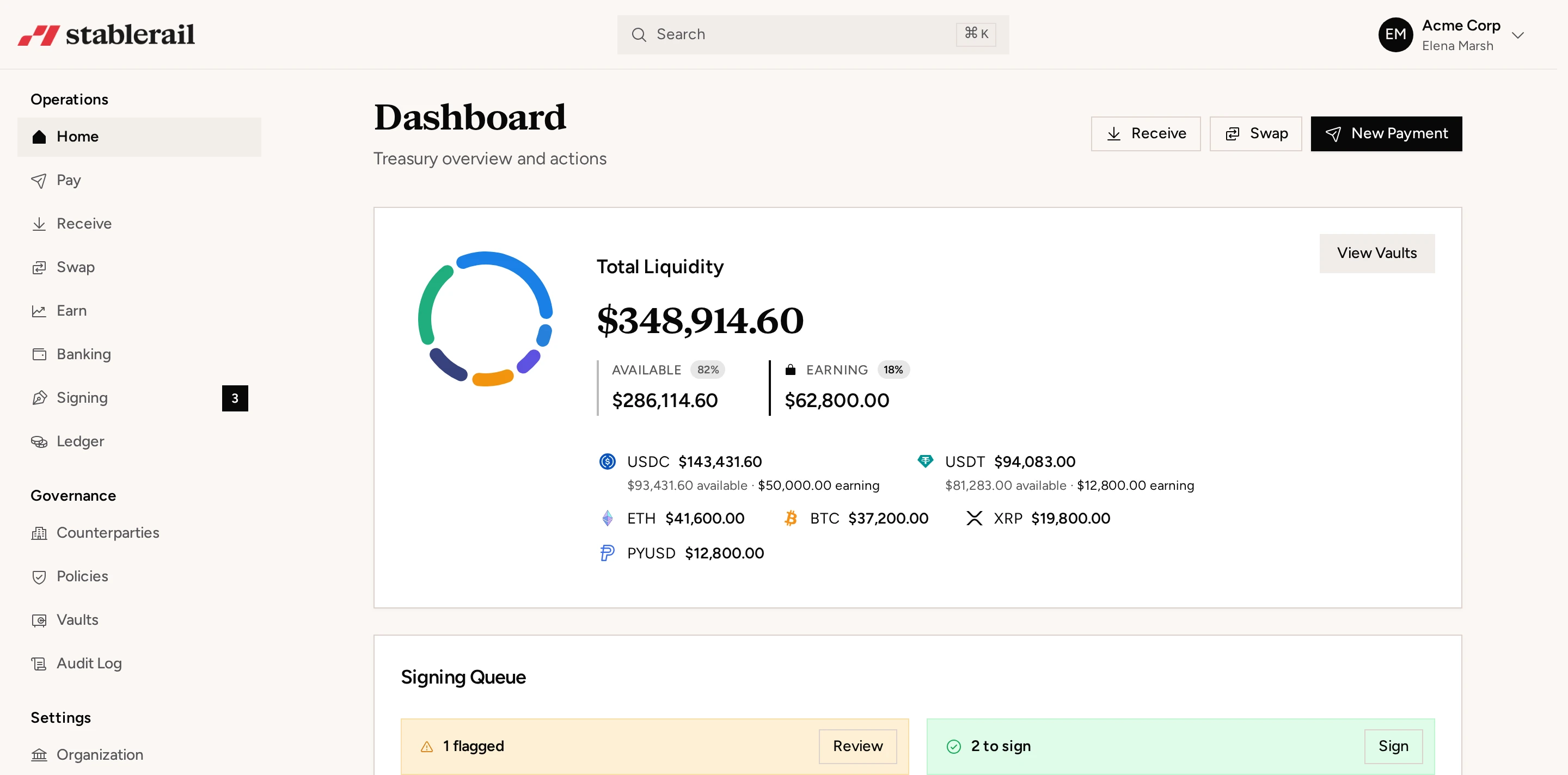
Traditional payment systems approach risk differently, emphasizing pre-execution human verification. These systems rely heavily on pre-signature checks before authorizing any transaction. For instance, platforms like Stablerail mandate various verifications, such as sanctions screening, exposure analysis, counterparty risk scoring, and behavioral anomaly detection. They flag unusual activities - like transfers over $10,000 on weekends or payments to new addresses - and compile a detailed Risk Dossier. This dossier includes verdicts (PASS, FLAG, BLOCK) and plain-English explanations tied to specific policy clauses.
Human oversight plays a key role in this model. While policy-as-code rules automatically enforce conditions (e.g., "Payments over $5,000 to new addresses require CFO approval and verification"), final transaction approval often requires a human decision. Every action is meticulously documented in an audit trail, providing evidence that meets the scrutiny of auditors, boards, and regulators. This process strengthens governance and ensures regulatory compliance while maintaining secure payment operations.
Security Features Comparison Table
Here’s a side-by-side look at how traditional approvals and cross-chain intents differ in their security measures:
Security Feature
Traditional Approvals
Cross-Chain Intents
Compliance Timing
Pre-signature (before the key is used)
Pre-execution/Settlement (during solver selection)
Taint Screening
Real-time pre-sign analysis of counterparty wallets
Facilitator-level verification during settlement
Anomaly Detection
Flags weekend transfers, new addresses, and velocity spikes
Session-based spending limits and pre-authorization
Governance Enforcement
Policy-as-code (machine-enforceable rules)
Signed declarative outcomes and oracle disputes
Audit Trail
Audit-grade control receipts
Automated settlement proofs and event logs
Best Use Case
High-value corporate treasury ($1M–$50M annually)
High-frequency micropayments and machine-to-machine APIs
Governance and Compliance
Beyond just speed and managing risks, how a system enforces internal controls plays a key role in maintaining audit-ready stablecoin operations.
Policy Enforcement in Cross-Chain Intents
Cross-chain intents rely on solver-driven execution and automated settlement to enable fast, streamlined transactions. For example, protocols like Coinbase's x402 - responsible for processing over 140 million transactions and handling more than $600 million in volume - are designed to operate without requiring stateful configurations like account setups or API keys. This makes them ideal for high-frequency, low-value transactions where speed matters more than complex approval workflows.
While these systems allow for basic constraints (like limiting price or asset type), they don’t support detailed internal policies such as Separation of Duties or mandatory cool-off periods. The AP2 protocol addresses part of this gap by using Verifiable Digital Credentials (VDCs) to cryptographically prove spending permissions, capturing "Intent Mandates" for automated purchases. However, these solutions focus on protocol-level authorization rather than the nuanced corporate rules often needed for treasury operations.
In contrast, traditional payment systems embed policy enforcement directly into the transaction process, offering a more tailored approach to internal controls.
Policy-as-Code in Traditional Payment Approvals
Traditional payment systems take corporate rules and turn them into automated, machine-enforceable policies before transactions are signed. Platforms like Stablerail act as a control layer, enabling finance teams to define rules such as:
"Payments to new addresses over $5,000 require CFO approval."
"Weekend transfers exceeding $10,000 need additional sign-offs."
These guardrails are applied automatically to every transaction, ensuring corporate policies are consistently followed. Unlike cross-chain intents, this policy-as-code approach offers greater flexibility. Finance teams can set temporal restrictions (e.g., blocking transactions during specific hours), maintain approved vendor lists, and establish multi-level approval processes - mirroring the structure of traditional banking workflows - all while retaining the efficiency of on-chain settlement.
Audit Trails and Transparency
One major difference between these systems lies in how they handle auditability. Cross-chain intents rely on on-chain transaction histories and protocol-specific receipts, which capture settlement proofs and event logs. However, they lack the ability to attribute transactions to specific individuals or business actions. While on-chain records confirm that a transaction occurred, external logs are needed to link it to employee actions, invoices, or other business contexts.
Traditional payment systems, on the other hand, generate detailed "Proof-of-Control" receipts that tie on-chain transactions directly to their business context. For instance, Stablerail creates a complete audit trail for every step - intent creation, risk checks, flags, overrides, approvals, and signing. This provides an immutable record linking the transaction hash to the requester’s identity, supporting documents, the triggering policy clause, and timestamps for each decision. For companies managing $1 million to $50 million annually in stablecoins, this level of documentation is critical for satisfying auditors, boards, and regulators. Open settlement protocols simply aren't built to provide this depth of transparency.
These differences in auditability further shape the decision between using cross-chain intents or traditional payment systems.
When to Use Each System
Choosing between cross-chain intents and traditional payment approvals depends on the specific context and the level of control required. This section highlights when to prioritize fast, automated transactions versus when structured, compliance-focused processes are more appropriate.
Use Cases for Cross-Chain Intents
Cross-chain intents shine in scenarios where speed and automation take precedence. They are built for high-frequency, low-value transactions that demand minimal friction and permissionless execution. These systems are perfect for situations where rapid, autonomous payments are essential.
One standout example is machine-to-machine payments. AI-driven transactions are forecasted to reach $136 billion in consumer-to-business volume by 2025, with projections hitting $1.7 trillion by 2030. A notable milestone occurred in February 2026 when OpenAI introduced "Instant Checkout" in ChatGPT. Using the Agentic Commerce Protocol (ACP), this system partnered with Etsy sellers to allow AI agents to complete purchases on users' behalf. SharedPaymentTokens (SPTs), which are scoped by amount and time, ensured secure transactions and prevented unauthorized charges.
Beyond AI commerce, cross-chain intents are a natural fit for DeFi operations like cross-chain arbitrage, yield farming, and decentralized lending. These transactions benefit from near-instant execution, averaging under 60 seconds, and are safeguarded from MEV attacks through private order flows. As one developer from Nethermind put it:
"I went from dreading cross-chain transfers to forgetting they were even cross-chain."
Other suitable applications include pay-per-request API monetization, streaming micropayments, and cases where buyers and sellers lack a prior relationship. These use cases highlight the scalability and efficiency of cross-chain intents.
Use Cases for Traditional Payment Approvals
Traditional payment systems are designed for scenarios that demand rigorous oversight and accountability. They are ideal for managing corporate treasury operations, such as B2B vendor payments, payroll, or treasury rebalancing, particularly when handling annual amounts between $1 million and $50 million.
These systems enforce multi-layered governance and provide detailed audit trails to comply with strict regulatory standards. For example, companies bound by SOX regulations or preparing for the GENIUS Act must ensure every transaction is tied to a specific requester, invoice, policy clause, and timestamp. Tools like Stablerail's "Proof-of-Control" receipts offer the documentation needed to defend financial decisions to auditors, boards, and regulators.
Traditional systems are also preferable when intentional friction is necessary. Not every transaction should be instantaneous. In high-risk corporate environments, a deliberate pace and stringent controls are critical. For instance, "smart delays" allow finance teams to review counterparty risks, verify vendor legitimacy, or detect unusual behaviors before releasing funds. These systems prioritize safety and accountability over speed, making them essential for high-stakes scenarios.
Conclusion
Cross-chain intents and traditional payment approvals operate on fundamentally different principles, each tailored to meet specific operational needs. The main distinction lies in how they balance speed and control. Cross-chain intents are built for rapid settlement and high-frequency transactions, making them ideal for use cases like machine-to-machine commerce, DeFi activities, and micropayments. These systems thrive in environments where minimizing friction is a top priority, offering permissionless execution and near-instant results.
On the other hand, traditional payment approvals focus on accountability and risk management, often at the expense of speed. These systems are indispensable in scenarios where traceability and compliance are non-negotiable. With multi-layered governance, human oversight, and detailed audit trails, they excel in corporate treasury operations, payroll, and large-scale B2B transactions. For industries under strict regulatory frameworks like SOX compliance, the slower, deliberate pace of traditional systems is often seen as an advantage.
Each approach serves its purpose, and a hybrid model is gaining traction. Businesses are increasingly combining these systems - leveraging intent-based rails for low-value, high-frequency payments while using approval workflows for high-value, high-stakes disbursements. This convergence reflects the evolving needs of industries, where both speed and governance are essential.
The decision ultimately comes down to priorities. If you need strict auditability for stablecoin payments between $1 million and $50 million annually, traditional systems with robust governance are the way to go. For autonomous agents or streaming micropayments, cross-chain intents are better suited. By understanding the trade-offs in speed, security, and compliance, businesses can avoid mismatches - like using a high-speed protocol for transactions requiring intensive oversight.
Stablerail's platform embodies this convergence, offering a solution that blends near-instant execution with CFO-grade governance. This empowers finance teams to achieve both operational efficiency and regulatory compliance in managing corporate stablecoin payments.
FAQs
Who are “solvers,” and what happens if a cross-chain intent fails?
In cross-chain intents, solvers play a crucial role. They are responsible for executing the approved intent, ensuring that transactions are successfully carried out across different blockchain networks. However, if something goes wrong - whether it's a network error, insufficient funds, or a security concern - the process stops immediately. This triggers fallback measures like manual intervention or re-verification steps.
These safeguards are essential to avoid unintended asset losses or compliance problems. Additionally, the system maintains transparency by providing a clear audit trail that documents both the failure and the steps taken to resolve it.
How do escrow standards like ERC-7683 prove the intent was fulfilled before funds are released?
ERC-7683 introduces a way to ensure intent fulfillment by integrating programmable conditions directly into escrow contracts. These conditions - like compliance checks or necessary approvals - must be satisfied before any funds are released. This approach mirrors pre-signature governance, where policies and verifications are enforced before a transaction is completed. The result? An auditable trail that confirms all requirements were met, helping to minimize risks such as fraud or mistakes.
What’s the simplest way to combine fast intents with CFO-grade approvals for large stablecoin payments?
The easiest method is to implement a policy-as-code governance system. This system automates pre-transaction checks and enforces approval limits before any signing occurs. It allows for quick creation of payment intents while ensuring that high-value or high-risk transactions go through mandatory checks, anomaly detection, and policy enforcement. For these transactions, human approvers step in to review and document decisions, striking a balance between the fast pace of on-chain processes and the strict compliance and controls expected by CFOs.
Related Blog Posts
Former CEO of Simple, a self-custodial wallet with $2B+ in transaction volume across 75+ countries.
More about the Stablerail team- Stablecoin treasury managementApprovals, limits, yield and reporting on one balance.
- Stablecoin payoutsBatch contractor and vendor payments with screening.
- USDT vs USDCWhich stablecoin your company should settle in.
- Stablecoin finance glossaryMPC, off-ramp, travel rule and the rest, in plain English.
- Product updatesEverything we ship, month by month.