
How Pre-Transaction Controls Prevent Sanctions Violations
Automated pre-sign checks screen stablecoin payments for sanctions, taint, and policy violations to prevent costly regulatory breaches.

Pre-transaction controls are automated compliance checks that screen payments before they’re signed and executed. These controls are vital for stablecoin transactions, which settle instantly and bypass traditional banking safeguards. Without them, companies risk violating sanctions, as seen in ShapeShift’s $12.57 million settlement with OFAC in 2025 for transactions linked to sanctioned countries.
Here’s why pre-transaction controls matter:
Sanctions Screening: Identifies wallets linked to restricted entities (e.g., on OFAC’s SDN List).
Policy Enforcement: Blocks payments that violate internal rules, like exceeding approval thresholds.
Risk Analysis: Detects suspicious patterns, such as ties to mixers or high-risk jurisdictions.
Platforms like Stablerail integrate these controls seamlessly, using policy-as-code rules, automated risk assessments, and audit trails to ensure compliance without sacrificing transaction speed. This approach helps businesses avoid penalties, maintain transparency, and streamline treasury operations while managing stablecoin payments securely.
Sanctions Risks in Stablecoin Payments
Common Sanctions Threats in Digital Payments
Stablecoin transactions come with their fair share of sanctions-related risks. One of the most pressing concerns is the potential for direct transactions with sanctioned entities - such as wallets or individuals listed on databases like OFAC's Specially Designated Nationals (SDN) List. Under U.S. primary sanctions, even a single transaction involving an SDN-listed address can result in strict liability. This means companies are held accountable, even if the violation was unintentional.
Another challenge arises from compromised funds. Stablecoins like USDC or USDT have transparent transaction histories, making them easy to trace. If funds in a wallet are linked to sanctioned individuals, mixers like Tornado Cash (sanctioned in August 2022), or other illicit activities, regulators can follow the blockchain trail. Transfers involving such tainted funds - whether they passed through sanctioned mixers or addresses tied to SDN entities - can lead to penalties.
High-risk jurisdictions further complicate matters. Sanctioned actors frequently use regions such as Russia, Iran, North Korea, Cuba, Sudan, and Syria to obscure the flow of funds. From late 2023 to 2025, enforcement of cryptocurrency-related sanctions reached unprecedented levels. Warning signs include transactions originating from IP addresses in sanctioned countries, connections to known mixers, or unusual patterns involving new wallet addresses. These risks make it clear that robust compliance measures are not optional - they’re essential.
Why Stablecoins Need Extra Compliance Measures
The risks tied to stablecoin payments highlight the need for enhanced compliance protocols. Unlike traditional wire transfers, which are subject to intermediary compliance checks at banks, stablecoin transactions settle instantly and bypass these safeguards. Once a payment is executed on-chain, it’s irreversible, yet regulators still hold companies accountable for any violations. Without pre-transaction screening, businesses are left exposed to significant regulatory risks.
Adding to the complexity, the pseudonymous nature of blockchain technology conceals the identities behind wallet addresses. Cross-chain bridges further exacerbate the problem by enabling funds to move across multiple networks, making enforcement even tougher. To mitigate these challenges, companies must take proactive steps. This includes independently screening wallet histories for any signs of compromised funds before completing a transaction, rather than relying on intermediaries to handle compliance.
The $80M Canaccord Fine Is Just the Start. Sanctions Crypto Exploded | TPT Weekly
How Pre-Transaction Controls Prevent Sanctions Violations
How Pre-Transaction Controls Screen Stablecoin Payments Before Execution
Pre-transaction controls step in to screen payments before they’re finalized, ensuring compliance with sanctions regulations. Unlike traditional banking systems - where compliance checks happen during intermediary processing - stablecoin transactions settle instantly and irreversibly on-chain. This means companies must proactively verify, at the intent stage, that funds won’t end up with sanctioned entities.
Here’s how it works: automated checks are inserted between the decision to pay and the signing phase. Once the finance team creates a payment intent, specialized agents screen recipient wallets against the OFAC SDN List, review transaction histories for potential exposure, and enforce predefined policies. If a red flag pops up - like a wallet associated with sanctioned regions such as Iran or Russia, or funds linked to Tornado Cash - the system blocks the transaction before it’s signed.
This preventive approach played a crucial role during enforcement surges from late 2023 to 2025, when sanctions violations in cryptocurrency transactions reached new heights. By catching and halting prohibited payments early, these controls help companies steer clear of violations altogether. This setup lays the groundwork for the more detailed, agent-driven checks described next.
Agent-Driven Checks Before Signing
Automated agents conduct real-time checks before any transaction gets the green light. These agents compare recipient wallet addresses against SDN and PEP watchlists while tracing wallet histories for links to sanctioned entities or mixers. Advanced anomaly detection also flags unusual activity - like payments at odd hours, amounts that deviate significantly from normal patterns, or transfers to newly created addresses.
For example, Stablerail’s agents handle these checks on MPC wallets for corporate treasury for stablecoins like USDC and USDT on EVM chains, including Ethereum and Base. The system generates a Risk Dossier with a verdict: PASS, FLAG, or BLOCK. This dossier includes clear evidence, such as timestamps, policy references, or blockchain data. For instance, a $7,500 payment to a new vendor might trigger a FLAG because it exceeds the $5,000 limit requiring CFO approval.
Importantly, these agents don’t operate in isolation. Stablerail doesn’t have unilateral signing authority and can’t move funds independently. This “copilot, not autopilot” approach ensures automated screening works alongside human oversight, catching risks that manual reviews might overlook. These checks directly support the policy-as-code system that governs each transaction.
Enforcing Financial Policies Through Code
Policy-as-code takes manual financial rules and turns them into automated controls that apply to every payment intent. Companies can set specific rules, like “payments over $5,000 to new addresses require CFO approval” or “weekend transfers exceeding $10,000 need additional verification.” These rules are then enforced automatically before any transaction is signed, reducing human error and ensuring compliance.
The process integrates smoothly with existing workflows. Finance teams can upload an invoice, a payout CSV, or use an API to create a payment intent. From there, agents apply the pre-defined rules, generating a Risk Dossier for review. If a flag arises, approvers can override it, but they must provide documented reasons. The system keeps a complete audit trail - from intent creation to checks, overrides, and approvals - offering CFO-grade evidence for auditors and regulators. This setup mirrors the governance standards of traditional bank wires while maintaining the speed and efficiency of on-chain transactions.
Setting Up Pre-Transaction Controls with Stablerail
Creating pre-transaction controls involves a careful balance of security, compliance, and operational efficiency. Stablerail makes this process more manageable by acting as a governance layer that screens every payment intent before funds move on-chain. Sitting above custody and before signing, Stablerail ensures that every transaction is vetted. Here’s how to set up and manage these controls effectively.
Configuring Self-Custodial MPC Wallets
Stablerail uses MPC-based wallets on EVM chains like Ethereum and Base, giving you full control over your private keys without unilateral signing authority. This self-custodial model addresses a critical gap in traditional key management platforms, which often lack insight into the business context of transactions. For example, they may not account for whether a payment is intended for a verified vendor, a new counterparty, or an entity on a sanctions list.
By integrating with Stablerail, you add a governance layer that ensures every business decision is vetted before funds leave your wallet. This complements the policy-as-code system, ensuring key management aligns with broader compliance and operational goals.
Running Pre-Sign Checks with Specialized Agents
Stablerail’s specialized agents automate risk assessments by analyzing recipient addresses, transaction histories, and geolocations before signing any transaction. These agents perform several checks, including:
Sanctions Screening: Verifying wallet addresses against the OFAC SDN List and PEP watchlists.
Behavioral Analysis: Detecting anomalies like payments at unusual hours, unexpected amounts, or transfers to newly created addresses.
Geolocation Verification: Blocking payments to jurisdictions under sanctions.
Transaction History Review: Identifying prior interactions with counterparties on the blockchain.
Each transaction generates a Risk Dossier with a verdict: PASS, FLAG, or BLOCK. This dossier provides clear, evidence-based explanations, referencing timestamps, policy clauses, blockchain data, or counterparty risk scores.
This robust screening process helps organizations comply with regulatory mandates. For instance, Permitted Payment Stablecoin Issuers (PPSIs) are required to block, freeze, or reject transactions that violate Federal or State laws. Stablerail’s pre-transaction agents ensure these checks happen at the decision-making stage, before any transaction is signed.
Adding Human Approval Steps to the Workflow
While automated checks are powerful, human oversight is essential for handling nuanced or complex decisions. Stablerail follows a "copilot, not autopilot" approach, where flagged transactions are escalated for human review. Approvers examine the Risk Dossier, provide justifications for overrides, and document their decisions, creating a complete audit trail.
This audit trail tracks every step of the transaction - from intent creation to agent checks, human approvals, and final signing. This level of documentation is invaluable for audits or regulatory inquiries, ensuring transparency and accountability.
"Agents verify the intent. Humans sign the transaction. Treasury controls, compliance, and risk intelligence for companies moving stablecoins at scale." – Stablerail
For every completed payment, Stablerail generates a Proof-of-Control receipt. This document details what was paid, why it was approved, who signed off, and the associated risk verdict, providing a ready reference for auditors, boards, and regulators.
Benefits of Pre-Transaction Controls for Companies
Avoiding Compliance Penalties and Violations
Pre-transaction controls help companies sidestep costly regulatory penalties by addressing compliance issues before funds are moved. Instead of detecting violations after the fact, these controls act as a safeguard against sanctions breaches, which is critical given the increasing enforcement actions in this area.
Under U.S. primary sanctions, companies face strict liability, meaning even unintentional violations can result in multimillion-dollar fines, mandatory compliance program updates, and significant reputational harm that can disrupt operations. A prime example is the case of Tornado Cash, which was sanctioned by OFAC in August 2022 for failing to implement effective anti-laundering measures.
By using pre-transaction screening, companies can identify high-risk transactions - such as those involving sanctioned jurisdictions like Iran or North Korea - before agreements are finalized. Tools like Stablerail enhance this process by providing an audit trail and detailed risk reports, offering CFOs the documentation needed to justify decisions during regulatory reviews. This transforms compliance from a liability into an asset.
Improving Treasury Operations
Beyond managing risk, pre-transaction controls significantly enhance treasury operations by automating routine compliance processes. For example, Stablerail’s agent-driven screening takes just seconds during the "intent to sign" phase, enabling payments to settle at blockchain speed while maintaining the governance standards expected from traditional banking systems.
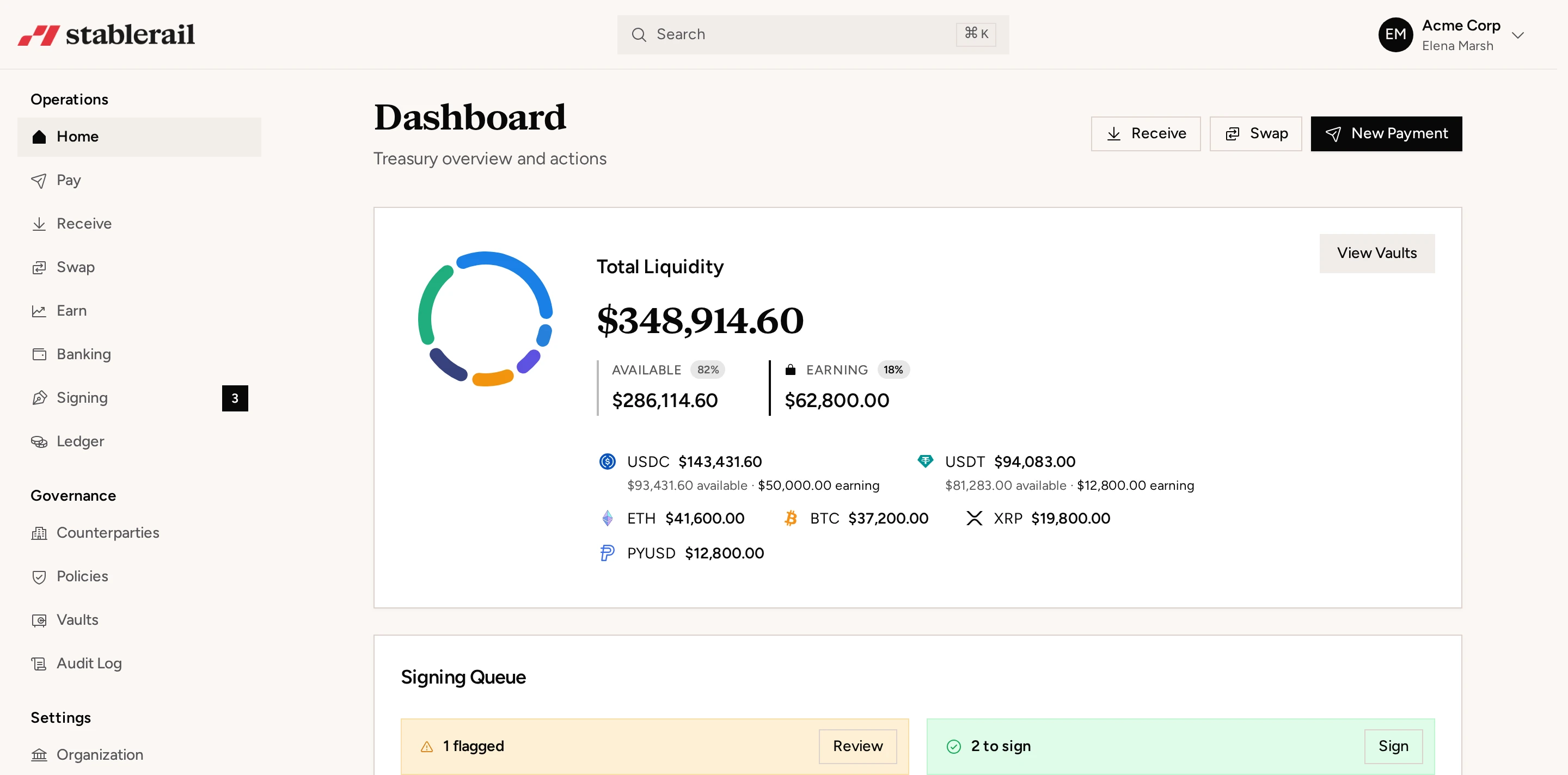
These controls also simplify operations in tangible ways. They consolidate balances across multiple blockchains (like Ethereum, Base, and Polygon) and stablecoins (USDC and USDT) into a single dashboard, eliminating fragmented workflows. Batch processing capabilities allow up to 500 transfers to be validated with a single cryptographic signature. Automated reconciliation links on-chain transaction IDs with invoices and approval logs, removing the need for manual oversight. Additionally, policy-as-code features can automatically release routine payments - such as payroll or recurring SaaS fees - so finance teams can dedicate their attention to handling high-risk exceptions.
Conclusion
By 2026, pre-transaction controls have become a must-have for stablecoin users. The move from reactive detection to proactive prevention reflects a harsh reality: under U.S. primary sanctions, even unintentional violations carry strict liability. A stark example of this came with the September 2025 ShapeShift settlement, where over 17,000 transactions - totaling approximately $12.57 million - flowed to sanctioned jurisdictions like Cuba, Iran, Sudan, and Syria. The lack of a compliance program in this case not only led to financial penalties but also inflicted serious reputational damage. This highlights why robust controls - and platforms like Stablerail - are critical.
Stablerail bridges the gap between the governance standards of traditional banking and the speed of on-chain settlement. Unlike custody tools that overlook broader business needs, Stablerail screens every payment intent before it’s signed. Its self-custodial MPC architecture ensures companies maintain full control of their keys, while automated agents handle sanctions screening, taint detection, and policy enforcement seamlessly. These measures do more than address today’s risks - they position companies to tackle future regulatory shifts with confidence.
For businesses managing large stablecoin volumes, these controls turn compliance into a strategic asset. With machine-enforceable rules - such as requiring CFO approval for payments over $5,000 to new addresses - companies can eliminate inefficient workflows that rely on spreadsheets, Slack messages, and manual approvals. Additionally, complete audit trails provide the transparency regulators and auditors demand.
As cryptocurrency sanctions enforcement hit record levels in 2025 and OFAC scrutiny continues to grow, pre-transaction controls are no longer optional. Stablerail’s Treasury Hub and Policy Console modules offer a scalable solution designed to adapt as your operations expand. Whether it’s vendor payments today or payroll and SOX compliance in the future, these tools lay a solid foundation for growth.
The pressing question is: how quickly can your company implement these controls to avoid costly sanctions violations?
FAQs
What counts as “tainted” stablecoin funds?
“Tainted” stablecoin funds refer to assets associated with activities such as mixers, cross-chain swaps, or wallets flagged on sanctions lists. These funds carry compliance risks and demand careful screening to minimize the risk of sanctions violations.
How do pre-transaction controls avoid false positives?
Pre-transaction controls help cut down on false positives by applying multiple layers of verification. These include sanctions screening, behavioral anomaly detection, and policy enforcement. Each layer checks for things like counterparty risk, unusual transaction patterns, and compliance with regulations, offering clear, easy-to-understand explanations backed by solid evidence.
To ensure accuracy, these systems combine machine-enforceable policies with human-in-the-loop approvals. This approach balances automation with human oversight, making sure only legitimate transactions go through while keeping errors and compliance issues in check.
What proof should we keep for audits and OFAC inquiries?
Maintaining thorough audit trails is crucial for tracking every step of a transaction. This includes documenting intent creation, the checks performed, any flags or overrides, approvals, and the signing process. To ensure transparency and accountability, it's important to include supporting evidence like proof-of-control receipts. These records help substantiate compliance and provide a clear view of the decision-making process.
Related Blog Posts
Former CEO of Simple, a self-custodial wallet with $2B+ in transaction volume across 75+ countries.
More about the Stablerail team- Stablecoin treasury managementApprovals, limits, yield and reporting on one balance.
- Stablecoin payoutsBatch contractor and vendor payments with screening.
- USDT vs USDCWhich stablecoin your company should settle in.
- Stablecoin finance glossaryMPC, off-ramp, travel rule and the rest, in plain English.
- Product updatesEverything we ship, month by month.