
What Is an Onchain Audit Trail, and What Can It Prove?
Learn how transaction hashes, timestamps, wallet addresses and asset movements create an onchain audit trail—and what additional evidence finance teams need.
%22%20x1%3D%220%22%20y1%3D%220%22%20x2%3D%221%22%20y2%3D%221%22%3E%0A%20%20%20%20%20%20%20%20%3Cstop%20offset%3D%220%25%22%20stop-color%3D%22%232E0709%22%20%2F%3E%0A%20%20%20%20%20%20%20%20%3Cstop%20offset%3D%2250%25%22%20stop-color%3D%22%234A0F14%22%20%2F%3E%0A%20%20%20%20%20%20%20%20%3Cstop%20offset%3D%22100%25%22%20stop-color%3D%22%236B181C%22%20%2F%3E%0A%20%20%20%20%20%20%3C%2FlinearGradient%3E%0A%20%20%20%20%20%20%3CradialGradient%20id%3D%22glow%22%20cx%3D%221306%22%20cy%3D%22-231%22%20r%3D%22520%22%20gradientUnits%3D%22userSpaceOnUse%22%3E%0A%20%20%20%20%20%20%20%20%3Cstop%20offset%3D%220%25%22%20stop-color%3D%22%23FFB199%22%20stop-opacity%3D%220.45%22%20%2F%3E%0A%20%20%20%20%20%20%20%20%3Cstop%20offset%3D%2255%25%22%20stop-color%3D%22%23FFB199%22%20stop-opacity%3D%220.08%22%20%2F%3E%0A%20%20%20%20%20%20%20%20%3Cstop%20offset%3D%22100%25%22%20stop-color%3D%22%23FFB199%22%20stop-opacity%3D%220%22%20%2F%3E%0A%20%20%20%20%20%20%3C%2FradialGradient%3E%0A%20%20%20%20%20%20%3ClinearGradient%20id%3D%22glass%22%20x1%3D%220%22%20y1%3D%220%22%20x2%3D%221%22%20y2%3D%221%22%3E%0A%20%20%20%20%20%20%20%20%3Cstop%20offset%3D%220%25%22%20stop-color%3D%22%23F8D6D2%22%20stop-opacity%3D%220.26%22%20%2F%3E%0A%20%20%20%20%20%20%20%20%3Cstop%20offset%3D%22100%25%22%20stop-color%3D%22%23FFFFFF%22%20stop-opacity%3D%220.08%22%20%2F%3E%0A%20%20%20%20%20%20%3C%2FlinearGradient%3E%0A%20%20%20%20%20%20%3ClinearGradient%20id%3D%22accent%22%20x1%3D%220%22%20y1%3D%220%22%20x2%3D%221%22%20y2%3D%221%22%3E%0A%20%20%20%20%20%20%20%20%3Cstop%20offset%3D%220%25%22%20stop-color%3D%22%23FFB199%22%20%2F%3E%0A%20%20%20%20%20%20%20%20%3Cstop%20offset%3D%22100%25%22%20stop-color%3D%22%23E85D3A%22%20%2F%3E%0A%20%20%20%20%20%20%3C%2FlinearGradient%3E%0A%20%20%20%20%20%20%3Cfilter%20id%3D%22soft%22%3E%3CfeGaussianBlur%20stdDeviation%3D%2210%22%20%2F%3E%3C%2Ffilter%3E%0A%20%20%20%20%3C%2Fdefs%3E%0A%20%20%20%20%3Crect%20width%3D%221600%22%20height%3D%22900%22%20fill%3D%22url(%23bg)%22%20%2F%3E%0A%20%20%20%20%3Crect%20width%3D%221600%22%20height%3D%22900%22%20fill%3D%22url(%23glow)%22%20%2F%3E%0A%20%20%20%20%0A%20%20%3Crect%20x%3D%22500%22%20y%3D%22160%22%20width%3D%22600%22%20height%3D%22620%22%20rx%3D%2214%22%20fill%3D%22url(%23glass)%22%20stroke%3D%22%23F4CDC5%22%20stroke-opacity%3D%220.65%22%2F%3E%0A%20%20%3Crect%20x%3D%22540%22%20y%3D%22220%22%20width%3D%22210%22%20height%3D%2214%22%20rx%3D%223%22%20fill%3D%22%23F4CDC5%22%20opacity%3D%220.45%22%2F%3E%3Crect%20x%3D%22540%22%20y%3D%22280%22%20width%3D%22255%22%20height%3D%2214%22%20rx%3D%223%22%20fill%3D%22%23F4CDC5%22%20opacity%3D%220.45%22%2F%3E%3Crect%20x%3D%22540%22%20y%3D%22340%22%20width%3D%22277%22%20height%3D%2214%22%20rx%3D%223%22%20fill%3D%22%23F4CDC5%22%20opacity%3D%220.45%22%2F%3E%3Crect%20x%3D%22540%22%20y%3D%22400%22%20width%3D%22178%22%20height%3D%2214%22%20rx%3D%223%22%20fill%3D%22%23F4CDC5%22%20opacity%3D%220.45%22%2F%3E%3Crect%20x%3D%22540%22%20y%3D%22460%22%20width%3D%22129%22%20height%3D%2214%22%20rx%3D%223%22%20fill%3D%22%23F4CDC5%22%20opacity%3D%220.45%22%2F%3E%3Crect%20x%3D%22540%22%20y%3D%22520%22%20width%3D%22104%22%20height%3D%2214%22%20rx%3D%223%22%20fill%3D%22%23F4CDC5%22%20opacity%3D%220.45%22%2F%3E%0A%20%20%3Crect%20x%3D%22540%22%20y%3D%22640%22%20width%3D%22300%22%20height%3D%22100%22%20rx%3D%228%22%20fill%3D%22url(%23accent)%22%20opacity%3D%220.85%22%2F%3E%0A%20%20%3Cpath%20d%3D%22M560%20700%20C%20600%20660%2C%20640%20720%2C%20700%20680%20S%20800%20690%2C%20820%20670%22%20fill%3D%22none%22%20stroke%3D%22%23FFF1ED%22%20stroke-width%3D%225%22%20stroke-linecap%3D%22round%22%2F%3E%0A%0A%20%20%20%20%3Crect%20x%3D%2226%22%20y%3D%2226%22%20width%3D%221548%22%20height%3D%22848%22%20rx%3D%2218%22%20fill%3D%22none%22%20stroke%3D%22%23F2D0C8%22%20stroke-opacity%3D%220.12%22%2F%3E%0A%20%20%3C%2Fsvg%3E)
An onchain audit trail is the sequence of transactions recorded on a blockchain. For a stablecoin payment, it can show that a particular address transferred a stated amount of USDC or USDT to another address, when the network processed it and whether the transaction succeeded.
This makes blockchain records useful transaction evidence. But they are only one part of a corporate audit file. A blockchain usually does not identify the legal entities controlling the wallets, show who approved a payment, explain its business purpose or determine how it should be treated in the accounts.
What an onchain record contains
Each blockchain transaction has a unique identifier. On Ethereum and other Ethereum-compatible networks such as Base, Arbitrum, Polygon, BNB Chain and Optimism, this is normally called a transaction hash. On Solana, the equivalent identifier is commonly called a transaction signature.
Entering that identifier into a compatible block explorer returns the public transaction record. For a typical stablecoin transfer, finance teams can review:
- Transaction identifier: A unique reference used to locate and independently verify the transaction.
- Network: The blockchain on which the transfer occurred. The same-looking address or token symbol may exist on multiple networks, so this field matters.
- Status: Whether the transaction succeeded, failed or remains pending.
- Block and timestamp: The block containing the transaction and the approximate time recorded by the network.
- Sending and receiving addresses: The public wallet addresses involved in the movement.
- Asset and amount: The token contract, token quantity and direction of movement.
- Network fee: The native blockchain asset paid to process the transaction, such as ETH on Ethereum or SOL on Solana.
The token contract is especially important. A ticker such as “USDC” is not sufficient proof that an asset is genuine because unrelated tokens can use the same symbol. Verification should include the network and the issuer’s official token contract address.
What blockchain records can prove
| Question | What the onchain record supports | Important qualification |
|---|---|---|
| Did a transfer occur? | A confirmed record can show that the network processed a transfer between specified addresses. | Check transaction status and the number of confirmations or the network’s finality state. |
| What asset moved? | The token contract and event data identify the onchain asset. | Confirm the contract against an authoritative issuer source. |
| How much moved? | Token transfer data records the quantity sent. | Accounting value in fiat requires a separate exchange-rate source and valuation policy. |
| When did it move? | The block timestamp provides a network-recorded time. | It is not necessarily the invoice settlement time, bank value date or legal time of receipt. |
| Which addresses participated? | The record shows the sending and receiving public addresses. | An address does not by itself reveal the legal owner or wallet operator. |
| Was the record later edited? | Confirmed blockchain history is designed to be tamper-evident and independently reproducible. | Very recent transactions may be reorganized on some networks before sufficient finality. |
For example, if a supplier disputes receipt of 25,000 USDC on Base, the transaction hash can help establish that 25,000 units of the specified token moved to the stated address and that the network marked the transfer successful. It does not, on its own, establish that the address belonged to the supplier or that payment satisfied the correct invoice.
What an onchain audit trail cannot prove
Identity and wallet attribution
Public addresses are generally pseudonymous. Wallet attribution means linking an address to a person, company, exchange or service. That link normally requires evidence outside the blockchain, such as a signed supplier instruction, account statement, exchange record, contractual notice or verified address submission.
Blockchain analytics providers may label addresses based on observed activity and external research. These labels can support an investigation or screening process, but they should not automatically be treated as conclusive proof of legal ownership.
Internal authorization
A valid blockchain signature proves that the required cryptographic key or signing policy authorized the transaction at the wallet level. It does not necessarily prove that the payment followed the company’s delegation of authority.
Evidence of corporate authorization may include an approval log, payment request, quorum-signing record, user identity, approval limit and timestamp. In a self-custodial MPC vault, multiple parties can be required to approve a transaction without assembling one private key in a single place. The blockchain will show the resulting transaction, while the treasury platform’s audit log shows the internal approval path.
Business purpose
The transfer data does not explain whether a payment was for payroll, an invoice, a loan, a refund or an intercompany settlement. Even when a transaction includes a memo or reference, that text may be incomplete and is not a substitute for source documents.
Keep the invoice, contract, payroll file, purchase approval or payment request linked to the transaction hash. Batch payouts also need a mapping between each beneficiary, business document and onchain transfer. See the operational flow for stablecoin payouts.
Accounting treatment
A blockchain does not decide whether stablecoins should be classified as cash, a financial asset, an intangible asset or another category under the company’s applicable accounting framework. It also does not calculate the reporting-currency value, gains or losses, network fees, impairment or disclosures.
Finance teams need a documented accounting policy, a consistent exchange-rate source and reconciliation between the wallet ledger, general ledger and supporting documents.
How to build a complete transaction evidence pack
A useful evidence pack combines onchain data with company records. For each material transfer, retain:
- The transaction hash or signature and the relevant blockchain network.
- Sending and receiving addresses, token contract, amount, fee and final status.
- A timestamp and the date used for accounting recognition.
- Evidence linking each address to the intended counterparty.
- The invoice, contract, payroll instruction or other source document.
- The payment request and internal approval history.
- Sanctions and wallet-screening results captured at the time of review.
- The fiat exchange rate, valuation source and accounting entry.
- Any exception notes, refunds or replacement transactions.
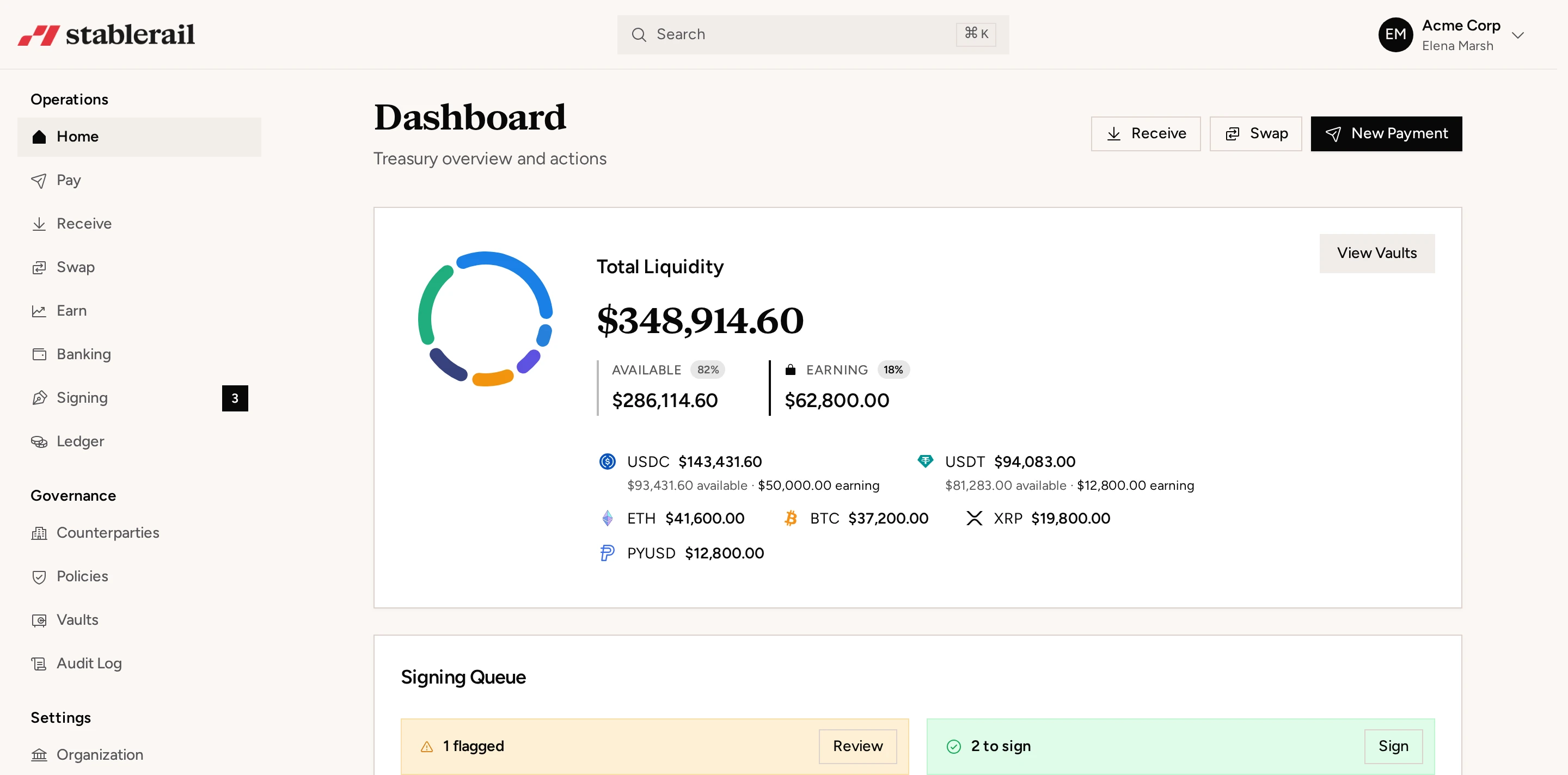
Stablerail combines stablecoin movements across supported networks with approval limits, allowlists, quorum signing, wallet screening and audit logs. Evidence packs can bring those operational records together with transaction details, while the underlying blockchain entry remains independently checkable.
A practical verification workflow
Finance teams can use the following process when reviewing a stablecoin payment:
- 1. Confirm the network. Ethereum, Tron and Solana are separate systems; a transaction identifier must be checked on the correct chain.
- 2. Verify the identifier. Copy the transaction hash directly from the treasury system rather than relying on a screenshot.
- 3. Check status and finality. Confirm that the transaction succeeded and has reached the organization’s required confirmation threshold.
- 4. Validate the token. Match the token contract to the issuer’s published contract for that network.
- 5. Compare addresses and amount. Reconcile them against the approved payment instruction and independently verified beneficiary details.
- 6. Link offchain evidence. Attach authorization, counterparty, purpose, screening and accounting records.
- 7. Record exceptions. Document failed transactions, duplicate attempts, refunds and payments sent on the wrong network.
An onchain audit trail is therefore strong evidence of what the blockchain processed. It becomes useful corporate audit evidence only when finance teams connect it to verified identities, approvals, commercial documents and accounting records.
Finance writers covering stablecoin treasury, payments, compliance, and risk controls.
More about the Stablerail team- Stablecoin treasury managementApprovals, limits, yield and reporting on one balance.
- Stablecoin payoutsBatch contractor and vendor payments with screening.
- USDT vs USDCWhich stablecoin your company should settle in.
- Stablecoin finance glossaryMPC, off-ramp, travel rule and the rest, in plain English.
- Product updatesEverything we ship, month by month.