
Virtual vs physical corporate cards: when to use each
Virtual cards suit subscriptions, cloud services and online ads; physical cards suit travel and point-of-sale spend. Learn how to combine both with practical limits, ownership and controls.
Use virtual corporate cards for recurring online spend, including SaaS, cloud infrastructure, advertising and vendor subscriptions. Use physical corporate cards when employees must pay in person, particularly for hotels, transport, meals and supplies. Most companies need both: virtual cards provide vendor separation and faster credential replacement, while physical cards provide broader card-present acceptance. Apply ownership, limits and merchant controls to either format.
%22%20x1%3D%220%22%20y1%3D%220%22%20x2%3D%221%22%20y2%3D%221%22%3E%0A%20%20%20%20%20%20%20%20%3Cstop%20offset%3D%220%25%22%20stop-color%3D%22%232A0608%22%20%2F%3E%0A%20%20%20%20%20%20%20%20%3Cstop%20offset%3D%2250%25%22%20stop-color%3D%22%23420D12%22%20%2F%3E%0A%20%20%20%20%20%20%20%20%3Cstop%20offset%3D%22100%25%22%20stop-color%3D%22%23621619%22%20%2F%3E%0A%20%20%20%20%20%20%3C%2FlinearGradient%3E%0A%20%20%20%20%20%20%3CradialGradient%20id%3D%22glow%22%20cx%3D%22539%22%20cy%3D%22502%22%20r%3D%22520%22%20gradientUnits%3D%22userSpaceOnUse%22%3E%0A%20%20%20%20%20%20%20%20%3Cstop%20offset%3D%220%25%22%20stop-color%3D%22%23FF9577%22%20stop-opacity%3D%220.45%22%20%2F%3E%0A%20%20%20%20%20%20%20%20%3Cstop%20offset%3D%2255%25%22%20stop-color%3D%22%23FF9577%22%20stop-opacity%3D%220.08%22%20%2F%3E%0A%20%20%20%20%20%20%20%20%3Cstop%20offset%3D%22100%25%22%20stop-color%3D%22%23FF9577%22%20stop-opacity%3D%220%22%20%2F%3E%0A%20%20%20%20%20%20%3C%2FradialGradient%3E%0A%20%20%20%20%20%20%3ClinearGradient%20id%3D%22glass%22%20x1%3D%220%22%20y1%3D%220%22%20x2%3D%221%22%20y2%3D%221%22%3E%0A%20%20%20%20%20%20%20%20%3Cstop%20offset%3D%220%25%22%20stop-color%3D%22%23F8D6D2%22%20stop-opacity%3D%220.26%22%20%2F%3E%0A%20%20%20%20%20%20%20%20%3Cstop%20offset%3D%22100%25%22%20stop-color%3D%22%23FFFFFF%22%20stop-opacity%3D%220.08%22%20%2F%3E%0A%20%20%20%20%20%20%3C%2FlinearGradient%3E%0A%20%20%20%20%20%20%3ClinearGradient%20id%3D%22accent%22%20x1%3D%220%22%20y1%3D%220%22%20x2%3D%221%22%20y2%3D%221%22%3E%0A%20%20%20%20%20%20%20%20%3Cstop%20offset%3D%220%25%22%20stop-color%3D%22%23FF9577%22%20%2F%3E%0A%20%20%20%20%20%20%20%20%3Cstop%20offset%3D%22100%25%22%20stop-color%3D%22%23D03B2D%22%20%2F%3E%0A%20%20%20%20%20%20%3C%2FlinearGradient%3E%0A%20%20%20%20%20%20%3Cfilter%20id%3D%22soft%22%3E%3CfeGaussianBlur%20stdDeviation%3D%2210%22%20%2F%3E%3C%2Ffilter%3E%0A%20%20%20%20%3C%2Fdefs%3E%0A%20%20%20%20%3Crect%20width%3D%221600%22%20height%3D%22900%22%20fill%3D%22url(%23bg)%22%20%2F%3E%0A%20%20%20%20%3Crect%20width%3D%221600%22%20height%3D%22900%22%20fill%3D%22url(%23glow)%22%20%2F%3E%0A%20%20%20%20%3Cline%20x1%3D%22200%22%20y1%3D%22250%22%20x2%3D%221400%22%20y2%3D%22250%22%20stroke%3D%22%23F4CDC5%22%20stroke-opacity%3D%220.12%22%2F%3E%3Cline%20x1%3D%22200%22%20y1%3D%22340%22%20x2%3D%221400%22%20y2%3D%22340%22%20stroke%3D%22%23F4CDC5%22%20stroke-opacity%3D%220.12%22%2F%3E%3Cline%20x1%3D%22200%22%20y1%3D%22430%22%20x2%3D%221400%22%20y2%3D%22430%22%20stroke%3D%22%23F4CDC5%22%20stroke-opacity%3D%220.12%22%2F%3E%3Cline%20x1%3D%22200%22%20y1%3D%22520%22%20x2%3D%221400%22%20y2%3D%22520%22%20stroke%3D%22%23F4CDC5%22%20stroke-opacity%3D%220.12%22%2F%3E%3Cline%20x1%3D%22200%22%20y1%3D%22610%22%20x2%3D%221400%22%20y2%3D%22610%22%20stroke%3D%22%23F4CDC5%22%20stroke-opacity%3D%220.12%22%2F%3E%3Cpolyline%20points%3D%22200%2C261%20350%2C296%20500%2C370%20650%2C379%20800%2C485%20950%2C289%201100%2C439%201250%2C423%201400%2C386%22%20fill%3D%22none%22%20stroke%3D%22url(%23accent)%22%20stroke-width%3D%2210%22%20stroke-linejoin%3D%22round%22%20stroke-linecap%3D%22round%22%2F%3E%3Ccircle%20cx%3D%22200%22%20cy%3D%22261%22%20r%3D%229%22%20fill%3D%22%23F8D6D2%22%2F%3E%3Ccircle%20cx%3D%22350%22%20cy%3D%22296%22%20r%3D%229%22%20fill%3D%22%23F8D6D2%22%2F%3E%3Ccircle%20cx%3D%22500%22%20cy%3D%22370%22%20r%3D%229%22%20fill%3D%22%23F8D6D2%22%2F%3E%3Ccircle%20cx%3D%22650%22%20cy%3D%22379%22%20r%3D%229%22%20fill%3D%22%23F8D6D2%22%2F%3E%3Ccircle%20cx%3D%22800%22%20cy%3D%22485%22%20r%3D%229%22%20fill%3D%22%23F8D6D2%22%2F%3E%3Ccircle%20cx%3D%22950%22%20cy%3D%22289%22%20r%3D%229%22%20fill%3D%22%23F8D6D2%22%2F%3E%3Ccircle%20cx%3D%221100%22%20cy%3D%22439%22%20r%3D%229%22%20fill%3D%22%23F8D6D2%22%2F%3E%3Ccircle%20cx%3D%221250%22%20cy%3D%22423%22%20r%3D%229%22%20fill%3D%22%23F8D6D2%22%2F%3E%3Ccircle%20cx%3D%221400%22%20cy%3D%22386%22%20r%3D%229%22%20fill%3D%22%23F8D6D2%22%2F%3E%0A%20%20%20%20%3Crect%20x%3D%2226%22%20y%3D%2226%22%20width%3D%221548%22%20height%3D%22848%22%20rx%3D%2218%22%20fill%3D%22none%22%20stroke%3D%22%23F2D0C8%22%20stroke-opacity%3D%220.12%22%2F%3E%0A%20%20%3C%2Fsvg%3E)
Use virtual corporate cards by default for recurring online vendors, subscriptions, cloud services and advertising. Issue physical cards to named employees who travel or make point-of-sale purchases. Neither format is universally better: virtual cards improve vendor separation and credential management, while physical cards provide more reliable card-present acceptance. A well-run corporate card programme normally combines both.
Virtual and physical corporate cards compared
Both formats can operate on the same card network and may offer similar spending controls. The important difference is how the credentials are delivered and where the card can reliably be used.
| Decision factor | Virtual corporate card | Physical corporate card |
|---|---|---|
| Best use | SaaS, cloud infrastructure, online advertising, digital services and vendor subscriptions | Travel, hotels, restaurants, fuel, office supplies and other in-person expenses |
| Availability | Usually generated digitally after the account and cardholder or user are approved | Must be produced, delivered and activated before use |
| Vendor separation | Easy to dedicate one card to a vendor, entity, project or budget | Usually better assigned to an individual employee than a single vendor |
| Card-present acceptance | May work through a supported mobile wallet, but not at every merchant or terminal | Suitable for chip, contactless and other supported card-present transactions |
| Replacement | Credentials can generally be cancelled and reissued digitally | A replacement card normally has to be shipped, although wallet access may be available sooner |
| Travel | Useful for advance bookings and online purchases | More practical for check-in, deposits, transport, meals and incidental expenses |
| Fraud containment | A vendor-specific card can isolate exposure to one merchant or budget | A lost or compromised card can affect every permitted merchant until it is frozen |
| Primary owner | A vendor, subscription, team, project or named user | A named employee with a documented business purpose |
A physical card number can also be entered online, and some virtual cards can be added to mobile wallets. Those capabilities do not make the formats interchangeable. Finance teams should base the decision on real-world acceptance, ownership and the consequences of replacing the credentials.
Use virtual cards for recurring online spend
A virtual card consists of digitally delivered card credentials, typically a card number, expiry date and security code. Its main operational advantage is separation: finance can assign distinct credentials to individual vendors or budgets rather than placing many recurring charges on one shared card.
Give important vendors their own cards
Vendor-specific cards make reconciliation and incident response simpler. If a software provider submits an unexpected charge, finance can freeze that card without interrupting cloud hosting, advertising or other subscriptions. If the credentials are exposed, only one vendor billing profile should need to be updated.
Useful virtual-card assignments include:
- One card for each material SaaS, cloud or data provider.
- Separate cards for each advertising platform, legal entity or budget owner.
- A project card for a client engagement or fixed-term initiative.
- A temporary card for a trial, event or approved contractor expense.
- A dedicated card for a new or infrequently used online vendor.
Virtual cards do not cancel the underlying vendor contract. Closing a card may stop future authorizations, but finance must still terminate the service under the contract and confirm that no invoices remain outstanding. Card programmes may also support network services that update stored credentials, so teams should verify what happens after replacement rather than assuming every recurring payment will automatically fail.
Set limits around the billing mechanism
A predictable monthly subscription can have a monthly card limit based on the contracted charge plus reasonable headroom. Usage-based services need more room because the invoice can change with consumption. Taxes, foreign-exchange movement, billing adjustments and temporary authorization attempts can also affect the amount submitted.
Limits that are too loose weaken the value of vendor separation; limits that are too tight create failed renewals and service disruption. The budget owner should receive alerts or review usage before a critical service approaches its ceiling. Avoid single-use credentials for recurring subscriptions unless the card programme explicitly supports the required billing pattern.
Use physical cards for travel and point-of-sale purchases
A physical corporate card is the practical choice whenever an employee may need to insert, tap or present a card. Common examples include hotels, car rentals, restaurants, taxis, fuel, conferences and emergency business purchases.
A mobile wallet can extend the usefulness of a virtual card, but wallet support depends on the issuer, device, geography and merchant terminal. Some merchants do not accept mobile wallets, while hotels or rental companies may ask for a card at check-in or collection. A virtual-only setup can therefore leave an employee without a workable payment method.
Allow headroom for hotels and rental vehicles
Travel merchants commonly request a preauthorization for the expected bill, incidentals or a deposit. The authorization reduces available spending capacity even though it is not yet a settled charge. The merchant can later complete, adjust or release it, and release timing may depend on the merchant, acquirer, network and card issuer.
Do not set a travel card limit equal to the quoted room or rental price. Capacity may be needed for the booking, deposit, incidental hold, taxes, tips and legitimate trip expenses. Finance should document how employees request a temporary increase and who can approve it outside normal working hours.
Issue cards to named employees
Shared physical cards obscure who possessed the card, who made a purchase and who owes a receipt. Issue cards to named employees wherever possible, then remove or freeze access promptly when the person changes role, leaves the company or no longer travels.
Physical cards should not become general-purpose purchasing tools merely because they are convenient. Match each employee’s limit and permitted use to their responsibilities, and require a business purpose and receipt for each expense.
Apply controls to both formats
Card format is not a substitute for policy. Depending on the programme, virtual and physical cards may both support transaction limits, periodic limits, merchant category controls and restrictions on transaction types. Finance should confirm which controls are actually available before designing its policy.
Merchant category code controls can block categories such as cash withdrawals or entertainment, but they are not exact vendor controls. The merchant’s payment provider assigns its category, and the classification may differ from what finance expects. Test business-critical merchants before applying a narrow allowlist.
At minimum, define:
- Ownership: name the employee, vendor, project or budget responsible for the card.
- Purpose: document the permitted merchants and expense types.
- Limits: set transaction and periodic ceilings with justified headroom.
- Evidence: require receipts, invoices and a business purpose on a defined schedule.
- Exceptions: specify who can approve limit changes or blocked transactions.
- Closure: freeze and cancel cards when employment, contracts or projects end.
How issuing and stablecoin funding fit together
Card issuing covers the creation of cards under a company programme, assignment to cardholders or business purposes, and application of available controls. Before issuance, a provider normally completes business verification and confirms eligible jurisdictions, industries and cardholders.
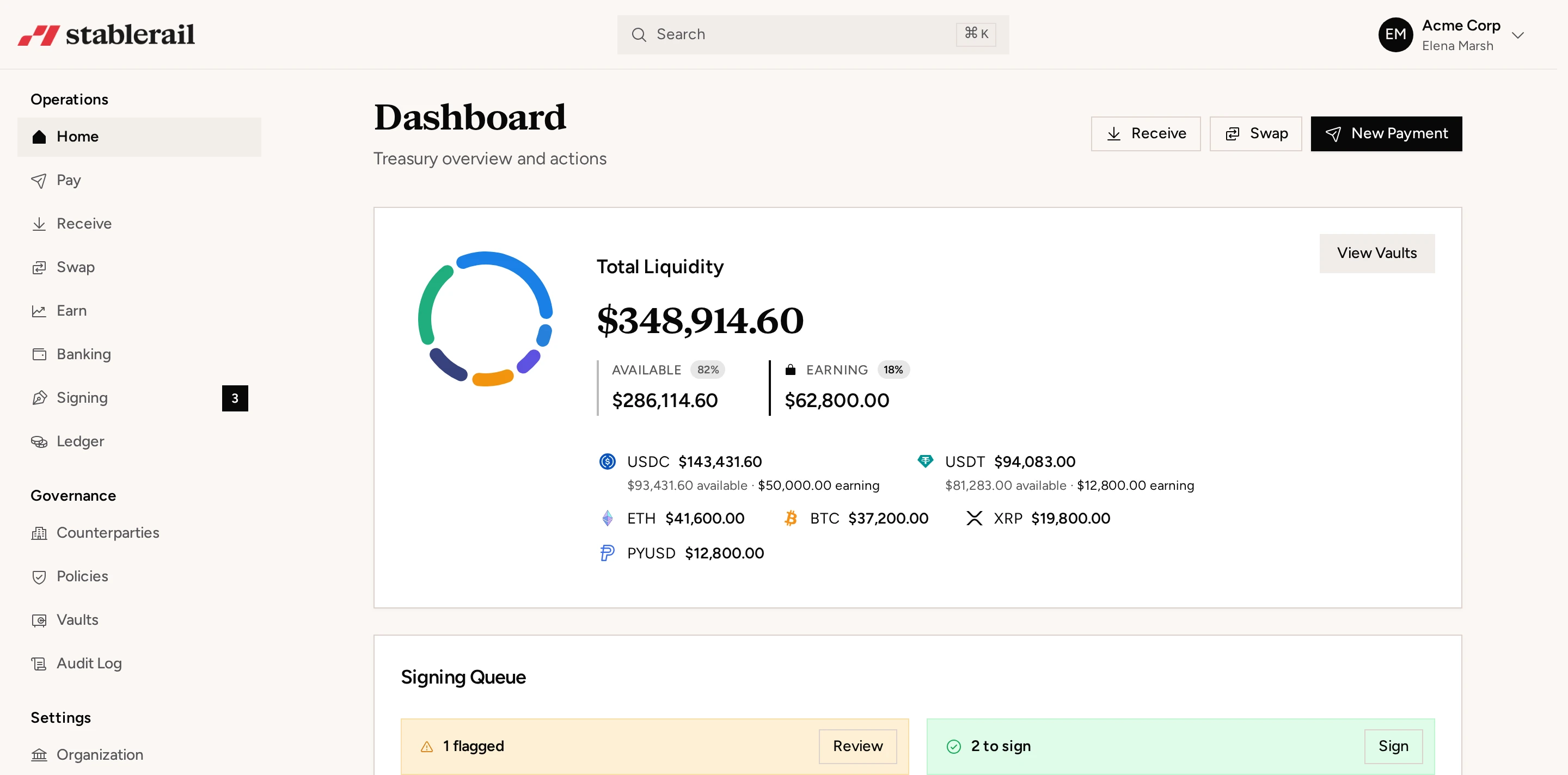
For companies managing USDC or USDT, Stablerail brings corporate cards into the same business account used for stablecoin treasury, approvals and signing quorum, global payouts and fiat off-ramp. Finance teams can retain exportable audit evidence while managing card activity alongside broader treasury operations.
Before spending from a stablecoin-funded balance, confirm the card’s settlement currency, the conversion route into fiat, applicable fees and how refunds are credited. Also verify card-format availability, mobile-wallet support, delivery countries, limits and permitted merchant categories. These details can vary by jurisdiction and card programme.
A practical routing policy
A simple policy should tell employees and budget owners which card format to request:
- Recurring online vendor: use a vendor-specific virtual card.
- Advertising: use separate virtual cards by platform, entity or accountable budget owner.
- Usage-based cloud service: use a virtual card with monitored headroom.
- Employee travel: issue a named physical card; use a virtual card for advance bookings where appropriate.
- Occasional in-person purchase: use a controlled physical card assigned to the responsible employee.
- Short-term project: create a dedicated virtual card and close it after final charges and refunds settle.
Review the card register regularly. Remove cards linked to departed employees, closed projects and former vendors. Compare recurring charges with contracts and approved budgets, investigate repeated authorization failures before raising limits, and track missing receipts or unexplained merchant descriptors.
Most finance teams should use both
Virtual cards are the stronger default for online and recurring spend because they separate vendors and make credential replacement less disruptive. Physical cards remain necessary for reliable travel and face-to-face purchasing. Using both formats avoids concentrating subscriptions on shared plastic while ensuring employees can pay when a physical card is required.
The most effective setup is purpose-based: one owner, one documented use and an appropriate limit for every card. That structure improves reconciliation and limits the operational impact when credentials are compromised, a card is lost or a vendor relationship ends.
Frequently asked questions
Are virtual corporate cards safer than physical cards?
Virtual cards can reduce the impact of compromised credentials when each card is restricted to one vendor or budget. Physical cards are not inherently unsafe, but loss or theft may expose a wider range of permitted spending until the card is frozen. Controls, ownership and monitoring matter as much as format.
Can employees use a virtual corporate card for travel?
Virtual cards can work for advance bookings and may support mobile-wallet payments. However, hotels, rental companies and some terminals may require a physical card, so regular travellers should usually have a named physical card with enough capacity for deposits and authorization holds.
Should every SaaS vendor have a separate virtual card?
Separate cards are most valuable for material, recurring or higher-risk vendors because they simplify reconciliation and credential replacement. Finance teams may group immaterial purchases where card volume would become unmanageable, provided ownership and limits remain clear.
How much headroom should a corporate travel card have?
The limit should cover the expected bill plus deposits, incidental holds, taxes and legitimate trip expenses. There is no universal percentage because authorization practices vary by merchant, location and trip type; finance should use booking details and provide a controlled process for temporary increases.
Can corporate cards be funded from USDC or USDT?
Some business account and card programmes let companies use treasury balances connected to USDC or USDT for card spending. Finance should confirm the fiat conversion route, settlement currency, fees, refund treatment and jurisdictional availability before relying on the setup.
Finance writers covering stablecoin treasury, payments, compliance, and risk controls.
More about the Stablerail team- Stablecoin treasury managementApprovals, limits, yield and reporting on one balance.
- Stablecoin payoutsBatch contractor and vendor payments with screening.
- USDT vs USDCWhich stablecoin your company should settle in.
- Stablecoin finance glossaryMPC, off-ramp, travel rule and the rest, in plain English.
- Product updatesEverything we ship, month by month.