
How to Manage Business Expenses with Stablecoins and Corporate Cards
A practical guide to funding corporate cards from stablecoin balances, setting spend controls, collecting receipts, handling reimbursements and completing month-end reconciliation.
%22%20x1%3D%220%22%20y1%3D%220%22%20x2%3D%221%22%20y2%3D%221%22%3E%0A%20%20%20%20%20%20%20%20%3Cstop%20offset%3D%220%25%22%20stop-color%3D%22%232E0709%22%20%2F%3E%0A%20%20%20%20%20%20%20%20%3Cstop%20offset%3D%2250%25%22%20stop-color%3D%22%234A0F14%22%20%2F%3E%0A%20%20%20%20%20%20%20%20%3Cstop%20offset%3D%22100%25%22%20stop-color%3D%22%236B181C%22%20%2F%3E%0A%20%20%20%20%20%20%3C%2FlinearGradient%3E%0A%20%20%20%20%20%20%3CradialGradient%20id%3D%22glow%22%20cx%3D%22816%22%20cy%3D%22244%22%20r%3D%22520%22%20gradientUnits%3D%22userSpaceOnUse%22%3E%0A%20%20%20%20%20%20%20%20%3Cstop%20offset%3D%220%25%22%20stop-color%3D%22%23FFB199%22%20stop-opacity%3D%220.45%22%20%2F%3E%0A%20%20%20%20%20%20%20%20%3Cstop%20offset%3D%2255%25%22%20stop-color%3D%22%23FFB199%22%20stop-opacity%3D%220.08%22%20%2F%3E%0A%20%20%20%20%20%20%20%20%3Cstop%20offset%3D%22100%25%22%20stop-color%3D%22%23FFB199%22%20stop-opacity%3D%220%22%20%2F%3E%0A%20%20%20%20%20%20%3C%2FradialGradient%3E%0A%20%20%20%20%20%20%3ClinearGradient%20id%3D%22glass%22%20x1%3D%220%22%20y1%3D%220%22%20x2%3D%221%22%20y2%3D%221%22%3E%0A%20%20%20%20%20%20%20%20%3Cstop%20offset%3D%220%25%22%20stop-color%3D%22%23F8D6D2%22%20stop-opacity%3D%220.26%22%20%2F%3E%0A%20%20%20%20%20%20%20%20%3Cstop%20offset%3D%22100%25%22%20stop-color%3D%22%23FFFFFF%22%20stop-opacity%3D%220.08%22%20%2F%3E%0A%20%20%20%20%20%20%3C%2FlinearGradient%3E%0A%20%20%20%20%20%20%3ClinearGradient%20id%3D%22accent%22%20x1%3D%220%22%20y1%3D%220%22%20x2%3D%221%22%20y2%3D%221%22%3E%0A%20%20%20%20%20%20%20%20%3Cstop%20offset%3D%220%25%22%20stop-color%3D%22%23FFB199%22%20%2F%3E%0A%20%20%20%20%20%20%20%20%3Cstop%20offset%3D%22100%25%22%20stop-color%3D%22%23E85D3A%22%20%2F%3E%0A%20%20%20%20%20%20%3C%2FlinearGradient%3E%0A%20%20%20%20%20%20%3Cfilter%20id%3D%22soft%22%3E%3CfeGaussianBlur%20stdDeviation%3D%2210%22%20%2F%3E%3C%2Ffilter%3E%0A%20%20%20%20%3C%2Fdefs%3E%0A%20%20%20%20%3Crect%20width%3D%221600%22%20height%3D%22900%22%20fill%3D%22url(%23bg)%22%20%2F%3E%0A%20%20%20%20%3Crect%20width%3D%221600%22%20height%3D%22900%22%20fill%3D%22url(%23glow)%22%20%2F%3E%0A%20%20%20%20%3Cpath%20d%3D%22M%20800%20210%20A%20240%20240%200%200%201%201040%20450%20L%20930%20450%20A%20130%20130%200%200%200%20800%20320%20Z%22%20fill%3D%22url(%23accent)%22%20stroke%3D%22%23F4CDC5%22%20stroke-opacity%3D%220.4%22%2F%3E%3Cpath%20d%3D%22M%201040%20450%20A%20240%20240%200%200%201%20642.8334238531315%20631.379897845022%20L%20714.868104587113%20548.2474446660535%20A%20130%20130%200%200%200%20930%20450%20Z%22%20fill%3D%22url(%23glass)%22%20stroke%3D%22%23F4CDC5%22%20stroke-opacity%3D%220.4%22%2F%3E%3Cpath%20d%3D%22M%20642.8334238531315%20631.379897845022%20A%20240%20240%200%200%201%20565.4847521669217%20398.9843305072857%20L%20672.9709074237493%20422.3665123581131%20A%20130%20130%200%200%200%20714.868104587113%20548.2474446660535%20Z%22%20fill%3D%22url(%23glass)%22%20stroke%3D%22%23F4CDC5%22%20stroke-opacity%3D%220.4%22%2F%3E%3Cpath%20d%3D%22M%20565.4847521669217%20398.9843305072857%20A%20240%20240%200%200%201%20800%20210%20L%20800%20320%20A%20130%20130%200%200%200%20672.9709074237493%20422.3665123581131%20Z%22%20fill%3D%22url(%23glass)%22%20stroke%3D%22%23F4CDC5%22%20stroke-opacity%3D%220.4%22%2F%3E%0A%20%20%20%20%3Crect%20x%3D%2226%22%20y%3D%2226%22%20width%3D%221548%22%20height%3D%22848%22%20rx%3D%2218%22%20fill%3D%22none%22%20stroke%3D%22%23F2D0C8%22%20stroke-opacity%3D%220.12%22%2F%3E%0A%20%20%3C%2Fsvg%3E)
Stablecoin expense management lets a company use USDC or USDT treasury balances for day-to-day business spending without asking employees to pay personally or sending a blockchain transaction for every purchase. Corporate cards provide the familiar payment layer, while the finance team retains control over funding, limits, merchant categories and reconciliation.
A workable setup needs more than issuing cards. Finance must decide how stablecoins are converted for card settlement, which expenses are allowed, who approves exceptions, how receipts are collected and how card activity reaches the accounting ledger.
How stablecoin-funded corporate cards work
The operating model has three main components: a corporate treasury balance, a card programme and an expense-management process. A company holds USDC, USDT or fiat in its treasury, allocates funds to the card programme and issues virtual or physical cards to employees or departments.
Card purchases are generally authorised and settled in fiat through the card network. If the source balance is held in stablecoins, a conversion into the card's settlement currency is required. The precise point of conversion, exchange rate, spread and fee depends on the provider and transaction setup. Finance teams should review the displayed pricing and settlement terms before relying on cards for high-volume spending.
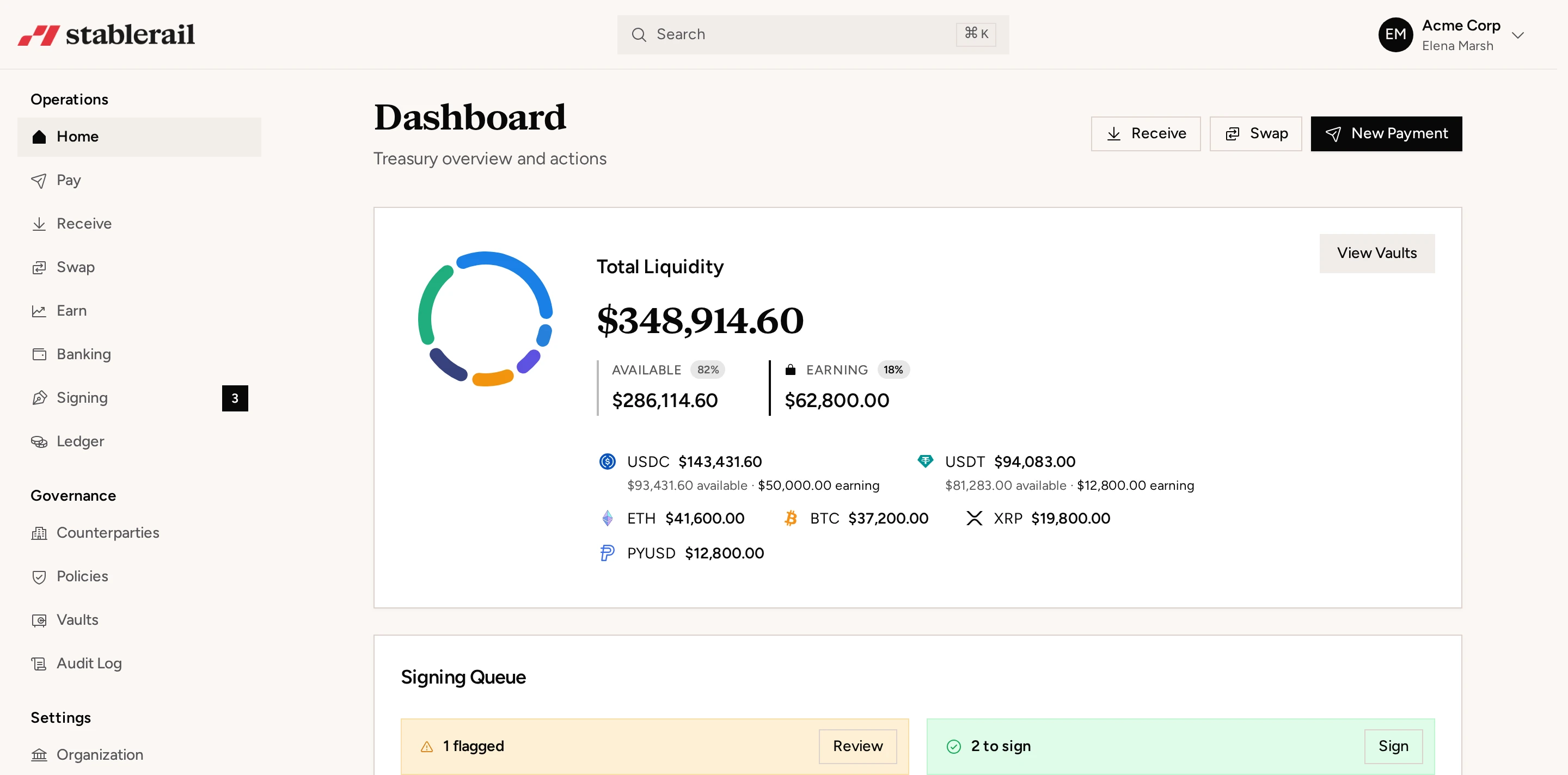
With Stablerail, companies can manage corporate cards funded from their treasury balance and apply card limits and merchant category code controls. Virtual cards are useful for software subscriptions and online purchases; physical cards suit travel and in-person spending. See the corporate cards overview for the available operating model.
Choose the right payment method
Not every expense belongs on a card. Use the payment method that gives the business the right balance of acceptance, cost and documentation.
| Expense | Preferred method | Reason |
|---|---|---|
| Software subscriptions | Dedicated virtual card | Easy to cap, replace and assign to one vendor |
| Employee travel | Physical or virtual corporate card | Broad acceptance and reduced personal outlay |
| One-off online purchase | Single-purpose virtual card | Limits exposure and simplifies attribution |
| Large supplier invoice | Bank transfer or stablecoin payout | Often better suited to high-value, documented payments |
| Contractor payment | Batch fiat or stablecoin payout | Supports structured payment files and remittance records |
| Small out-of-pocket expense | Reimbursement | Useful when the corporate card is not accepted |
For vendor or contractor payments that do not belong on cards, a stablecoin payout workflow can separate invoice payments from employee expenses.
Build a card funding process
Avoid treating the entire treasury balance as available card spend. Create a defined operating allocation based on expected expenses, upcoming travel and subscription renewals.
1. Select the funding asset and currency
Decide whether card obligations will be funded from USDC, USDT or an existing fiat balance. Match the card currency to the majority of expected spending where possible. A EUR card used mainly for EUR expenses, for example, can reduce unnecessary currency conversions.
2. Set a funding buffer
Estimate weekly or monthly card demand and add a documented buffer for timing differences, tips, deposits and delayed presentment. Card transactions can move through several stages: authorisation, clearing and final settlement. The final amount may differ from the initial authorisation.
3. Replenish under approval
Use a repeatable process for moving funds into the card programme. Define the amount an operator can allocate, when a second approver is required and who can return unused funds to the main treasury. Stablerail's self-custodial MPC vaults and quorum signing can be used to separate transaction preparation from approval for treasury movements.
Configure practical spend controls
Spend controls should reflect the employee's role rather than applying one company-wide limit. Overly broad limits create exposure, while very low limits generate manual exceptions.
- Per-transaction limits: cap the value of any single purchase.
- Daily or monthly limits: control cumulative employee expenses.
- Merchant category controls: permit or block categories such as travel, advertising, cash-like transactions or entertainment.
- Card status controls: freeze cards when employees leave, cards are lost or projects end.
- Purpose-specific cards: issue separate virtual cards for cloud hosting, advertising or each major subscription.
- Time-based policies: close temporary cards after a trip, event or procurement window.
Document how limit increases are requested and approved. Emergency increases should have an expiry date so that temporary access does not become permanent.
Manage approvals, receipts and reimbursements
Card approval should happen at the appropriate point. Routine spending within policy may be pre-approved through the employee's assigned limit. Higher-value purchases, unusual merchant categories or exceptions can require approval before the card is used.
Require employees to submit a receipt, business purpose and accounting category shortly after purchase. For travel and hospitality, the record may also need attendee names, destination or project details. Finance should distinguish between a receipt, which shows what was purchased, and a card statement, which only proves that a transaction occurred.
Reimbursements still need a defined workflow for merchants that do not accept the card. Employees should submit proof of payment, the original receipt, currency and business purpose. Finance can then approve the claim and pay it through payroll, a bank rail or another supported payout method. Avoid recording a reimbursement as a new operating expense if the underlying expense has already been booked.
Account for conversion and card transaction states
A purchase may involve the merchant currency, card billing currency, treasury asset and accounting currency. Preserve each value rather than recording only the final stablecoin deduction.
| Data field | Why finance needs it |
|---|---|
| Authorised amount | Shows the initial hold against available card capacity |
| Settled amount | Represents the final expense payable through the card programme |
| Merchant and merchant category | Supports policy review and ledger coding |
| Transaction and billing currencies | Explains foreign-exchange differences |
| Stablecoin or fiat funding amount | Links the card expense to the treasury movement |
| Fees and conversion rate | Separates operating expense from payment or FX cost |
| Receipt and approver | Provides evidence for review and audit |
Refunds may arrive days after the original purchase and can use a different exchange rate if currencies are converted again. Record the refund against the original expense where possible, while booking any residual conversion difference separately.
Complete month-end reconciliation
Month-end reconciliation should connect card transactions, treasury funding and the general ledger. A practical close process is:
- Export all authorised, settled, reversed and refunded transactions for the period.
- Match settled transactions to receipts and employee submissions.
- Investigate missing receipts, duplicate charges and out-of-policy purchases.
- Map expenses to ledger accounts, departments, projects and tax codes.
- Reconcile card funding movements to stablecoin wallet or fiat account records.
- Separate conversion fees, card fees and foreign-exchange differences from the underlying expense.
- Record unsettled authorisations appropriately rather than treating every pending hold as a final expense.
- Confirm that terminated employees and expired projects no longer have active cards.
The audit trail should show who issued the card, changed its limit, approved an exception and reviewed the expense. Keep card records alongside wallet transaction references, conversion records and accounting exports so reviewers can follow the movement from treasury funding to final ledger entry.
A simple operating policy
A concise policy can cover permitted expenses, prohibited merchant categories, receipt deadlines, approval thresholds, reimbursement rules and consequences for repeated exceptions. Review limits periodically using actual spend rather than leaving the original settings in place indefinitely.
The goal is not to put every payment on a card. It is to use corporate cards where card acceptance and employee convenience matter, while retaining stablecoin payouts and bank transfers for invoices, payroll and larger vendor obligations. That separation makes employee expenses easier to control and month-end reconciliation easier to complete.
Finance writers covering stablecoin treasury, payments, compliance, and risk controls.
More about the Stablerail team- Stablecoin treasury managementApprovals, limits, yield and reporting on one balance.
- Stablecoin payoutsBatch contractor and vendor payments with screening.
- USDT vs USDCWhich stablecoin your company should settle in.
- Stablecoin finance glossaryMPC, off-ramp, travel rule and the rest, in plain English.
- Product updatesEverything we ship, month by month.