
How Stablecoin Orchestration Platforms Simplify Treasury Operations
Stablecoin orchestration gives treasury teams one workflow for fiat funding, USDC and USDT conversion, approvals, global payouts and audit evidence.
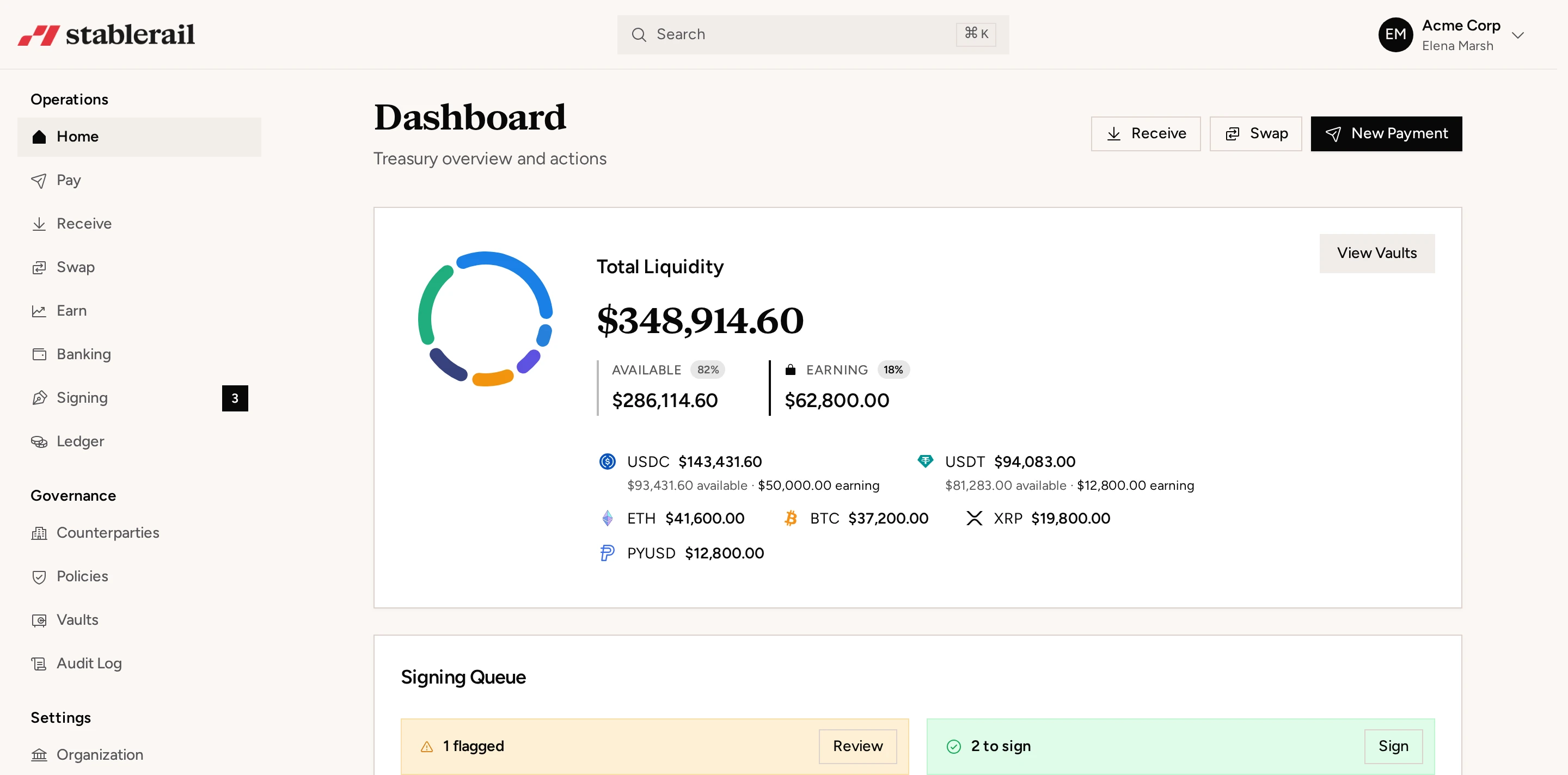
A stablecoin orchestration platform simplifies treasury by coordinating fiat accounts, USDC or USDT balances, conversion, liquidity, approvals and payouts in one operating workflow. Instead of managing each bank, blockchain and provider separately, finance teams can control transactions consistently, monitor settlement and export evidence for reconciliation. The platform does not replace underlying rails; it makes them easier to operate together.
%22%20x1%3D%220%22%20y1%3D%220%22%20x2%3D%221%22%20y2%3D%221%22%3E%0A%20%20%20%20%20%20%20%20%3Cstop%20offset%3D%220%25%22%20stop-color%3D%22%232E0709%22%20%2F%3E%0A%20%20%20%20%20%20%20%20%3Cstop%20offset%3D%2250%25%22%20stop-color%3D%22%234A0F14%22%20%2F%3E%0A%20%20%20%20%20%20%20%20%3Cstop%20offset%3D%22100%25%22%20stop-color%3D%22%236B181C%22%20%2F%3E%0A%20%20%20%20%20%20%3C%2FlinearGradient%3E%0A%20%20%20%20%20%20%3CradialGradient%20id%3D%22glow%22%20cx%3D%22911%22%20cy%3D%22475%22%20r%3D%22520%22%20gradientUnits%3D%22userSpaceOnUse%22%3E%0A%20%20%20%20%20%20%20%20%3Cstop%20offset%3D%220%25%22%20stop-color%3D%22%23FFB199%22%20stop-opacity%3D%220.45%22%20%2F%3E%0A%20%20%20%20%20%20%20%20%3Cstop%20offset%3D%2255%25%22%20stop-color%3D%22%23FFB199%22%20stop-opacity%3D%220.08%22%20%2F%3E%0A%20%20%20%20%20%20%20%20%3Cstop%20offset%3D%22100%25%22%20stop-color%3D%22%23FFB199%22%20stop-opacity%3D%220%22%20%2F%3E%0A%20%20%20%20%20%20%3C%2FradialGradient%3E%0A%20%20%20%20%20%20%3ClinearGradient%20id%3D%22glass%22%20x1%3D%220%22%20y1%3D%220%22%20x2%3D%221%22%20y2%3D%221%22%3E%0A%20%20%20%20%20%20%20%20%3Cstop%20offset%3D%220%25%22%20stop-color%3D%22%23F8D6D2%22%20stop-opacity%3D%220.26%22%20%2F%3E%0A%20%20%20%20%20%20%20%20%3Cstop%20offset%3D%22100%25%22%20stop-color%3D%22%23FFFFFF%22%20stop-opacity%3D%220.08%22%20%2F%3E%0A%20%20%20%20%20%20%3C%2FlinearGradient%3E%0A%20%20%20%20%20%20%3ClinearGradient%20id%3D%22accent%22%20x1%3D%220%22%20y1%3D%220%22%20x2%3D%221%22%20y2%3D%221%22%3E%0A%20%20%20%20%20%20%20%20%3Cstop%20offset%3D%220%25%22%20stop-color%3D%22%23FFB199%22%20%2F%3E%0A%20%20%20%20%20%20%20%20%3Cstop%20offset%3D%22100%25%22%20stop-color%3D%22%23E85D3A%22%20%2F%3E%0A%20%20%20%20%20%20%3C%2FlinearGradient%3E%0A%20%20%20%20%20%20%3Cfilter%20id%3D%22soft%22%3E%3CfeGaussianBlur%20stdDeviation%3D%2210%22%20%2F%3E%3C%2Ffilter%3E%0A%20%20%20%20%3C%2Fdefs%3E%0A%20%20%20%20%3Crect%20width%3D%221600%22%20height%3D%22900%22%20fill%3D%22url(%23bg)%22%20%2F%3E%0A%20%20%20%20%3Crect%20width%3D%221600%22%20height%3D%22900%22%20fill%3D%22url(%23glow)%22%20%2F%3E%0A%20%20%20%20%3Crect%20x%3D%22280%22%20y%3D%22200%22%20width%3D%22831%22%20height%3D%2244%22%20rx%3D%226%22%20fill%3D%22url(%23glass)%22%20stroke%3D%22%23F4CDC5%22%20stroke-opacity%3D%220.35%22%2F%3E%0A%20%20%20%20%20%20%3Ccircle%20cx%3D%22250%22%20cy%3D%22222%22%20r%3D%2210%22%20fill%3D%22url(%23accent)%22%20opacity%3D%221%22%2F%3E%3Crect%20x%3D%22280%22%20y%3D%22270%22%20width%3D%22765%22%20height%3D%2244%22%20rx%3D%226%22%20fill%3D%22url(%23glass)%22%20stroke%3D%22%23F4CDC5%22%20stroke-opacity%3D%220.35%22%2F%3E%0A%20%20%20%20%20%20%3Ccircle%20cx%3D%22250%22%20cy%3D%22292%22%20r%3D%2210%22%20fill%3D%22url(%23accent)%22%20opacity%3D%221%22%2F%3E%3Crect%20x%3D%22280%22%20y%3D%22340%22%20width%3D%22882%22%20height%3D%2244%22%20rx%3D%226%22%20fill%3D%22url(%23glass)%22%20stroke%3D%22%23F4CDC5%22%20stroke-opacity%3D%220.35%22%2F%3E%0A%20%20%20%20%20%20%3Ccircle%20cx%3D%22250%22%20cy%3D%22362%22%20r%3D%2210%22%20fill%3D%22%23F8D6D2%22%20opacity%3D%220.4%22%2F%3E%3Crect%20x%3D%22280%22%20y%3D%22410%22%20width%3D%22791%22%20height%3D%2244%22%20rx%3D%226%22%20fill%3D%22url(%23glass)%22%20stroke%3D%22%23F4CDC5%22%20stroke-opacity%3D%220.35%22%2F%3E%0A%20%20%20%20%20%20%3Ccircle%20cx%3D%22250%22%20cy%3D%22432%22%20r%3D%2210%22%20fill%3D%22url(%23accent)%22%20opacity%3D%221%22%2F%3E%3Crect%20x%3D%22280%22%20y%3D%22480%22%20width%3D%22895%22%20height%3D%2244%22%20rx%3D%226%22%20fill%3D%22url(%23glass)%22%20stroke%3D%22%23F4CDC5%22%20stroke-opacity%3D%220.35%22%2F%3E%0A%20%20%20%20%20%20%3Ccircle%20cx%3D%22250%22%20cy%3D%22502%22%20r%3D%2210%22%20fill%3D%22url(%23accent)%22%20opacity%3D%221%22%2F%3E%3Crect%20x%3D%22280%22%20y%3D%22550%22%20width%3D%22947%22%20height%3D%2244%22%20rx%3D%226%22%20fill%3D%22url(%23glass)%22%20stroke%3D%22%23F4CDC5%22%20stroke-opacity%3D%220.35%22%2F%3E%0A%20%20%20%20%20%20%3Ccircle%20cx%3D%22250%22%20cy%3D%22572%22%20r%3D%2210%22%20fill%3D%22url(%23accent)%22%20opacity%3D%221%22%2F%3E%3Crect%20x%3D%22280%22%20y%3D%22620%22%20width%3D%22973%22%20height%3D%2244%22%20rx%3D%226%22%20fill%3D%22url(%23glass)%22%20stroke%3D%22%23F4CDC5%22%20stroke-opacity%3D%220.35%22%2F%3E%0A%20%20%20%20%20%20%3Ccircle%20cx%3D%22250%22%20cy%3D%22642%22%20r%3D%2210%22%20fill%3D%22url(%23accent)%22%20opacity%3D%221%22%2F%3E%3Crect%20x%3D%22280%22%20y%3D%22690%22%20width%3D%22986%22%20height%3D%2244%22%20rx%3D%226%22%20fill%3D%22url(%23glass)%22%20stroke%3D%22%23F4CDC5%22%20stroke-opacity%3D%220.35%22%2F%3E%0A%20%20%20%20%20%20%3Ccircle%20cx%3D%22250%22%20cy%3D%22712%22%20r%3D%2210%22%20fill%3D%22%23F8D6D2%22%20opacity%3D%220.4%22%2F%3E%3Crect%20x%3D%22200%22%20y%3D%22170%22%20width%3D%221200%22%20height%3D%22600%22%20rx%3D%2220%22%20fill%3D%22none%22%20stroke%3D%22%23F4CDC5%22%20stroke-opacity%3D%220.3%22%2F%3E%0A%20%20%20%20%3Crect%20x%3D%2226%22%20y%3D%2226%22%20width%3D%221548%22%20height%3D%22848%22%20rx%3D%2218%22%20fill%3D%22none%22%20stroke%3D%22%23F2D0C8%22%20stroke-opacity%3D%220.12%22%2F%3E%0A%20%20%3C%2Fsvg%3E)
A stablecoin orchestration platform gives treasury teams one operating layer for funding, conversion, approvals, liquidity positioning, payouts and reconciliation. Banks, blockchains and liquidity providers still execute the underlying movements, but finance no longer has to coordinate every step through separate portals and spreadsheets. The result is fewer handoffs, clearer transaction status and a more consistent control record across fiat, USDC and USDT.
What stablecoin orchestration actually covers
Holding stablecoins is only one part of treasury operations. A business receiving EUR, paying vendors in USD and settling contractors in USDC must coordinate currencies, bank rails, blockchain networks, exchange rates, wallet addresses and accounting records.
Orchestration connects those components without pretending they are interchangeable. A bank transfer depends on banking hours, scheme rules and beneficiary-bank processing. A stablecoin transfer depends on the selected asset, blockchain, address and network conditions. The platform should present both through a consistent workflow while preserving the details finance needs to assess each route.
| Operating layer | What treasury needs to manage | Evidence to retain |
|---|---|---|
| Accounts and balances | Fiat, USDC and USDT balances by entity, currency and network | Statements, balance exports and ownership records |
| Conversion | Source currency, destination asset, quote, fees and expiry | Accepted quote, exchange rate and fee breakdown |
| Liquidity | Available size for the required currency, asset, network and time | Funding movement and conversion records |
| Payments | Beneficiary details, payment rail, wallet network and reference | Bank reference or blockchain transaction hash |
| Controls | Creator, approvers, signing threshold and screening result | Approval history, screening record and final status |
Stablerail provides one business account for stablecoin treasury, including USDC and USDT, with global payouts and a fiat off-ramp. The relevant question for a finance team is not simply whether a platform can move funds, but whether it can make the full lifecycle controlled and reconcilable.
A typical end-to-end treasury workflow
1. Receive or fund the account
Funding may begin with a domestic or international bank transfer, or with USDC or USDT received on a supported blockchain. Before sharing instructions, confirm the receiving legal entity, beneficiary name, currency, rail and reference requirements. For stablecoins, confirm both the token and network; the same wallet format does not guarantee that a recipient supports the intended asset or chain.
Incoming funds should be identifiable without relying on an email from the sender. Unique references, dedicated account details or structured remittance data can reduce manual matching. For stablecoin receipts, record the originating address, destination address, network and transaction hash.
2. Convert and position liquidity
Once funds arrive, treasury decides where liquidity is required. A company might receive EUR, convert it into USDC and pay recipients on a network they already support. Alternatively, it might receive stablecoins and off-ramp part of the balance to fiat for payroll, tax or suppliers.
Review the entire route before accepting a conversion: source amount, destination amount, exchange rate, spread, explicit platform fee, blockchain fee, bank charges, quote expiry and expected settlement path. The lowest advertised fee may not produce the highest net amount if another route has a wider foreign-exchange spread or intermediary deductions.
Liquidity should also be considered by corridor rather than as one platform-wide number. Capacity for USDC to USD does not establish capacity for EUR to USDT, or for moving a specific token on a particular network. Large or time-sensitive transactions may require pre-funding or advance coordination.
3. Approve and execute
Payment controls should reflect authority rather than wallet access. One employee should not be able to create, approve and sign a material transfer merely because that person can access the treasury interface. Approval rules and signing quorum can separate preparation from release and require additional authorization for larger transactions.
Screening should occur before funds are sent, not only after execution. Stablerail supports approvals and signing quorum, sanctions and address screening before send, and exportable audit evidence. Finance teams should still define who investigates a screening alert, who may clear it and what documentation is required.
Execution time depends on the selected rail. The estimates below are operating guides rather than guarantees; cut-off times, holidays, compliance reviews, receiving institutions and blockchain conditions can all affect delivery.
| Rail | Typical operating pattern | Important dependency |
|---|---|---|
| SEPA Instant | Near-real-time and available continuously where both institutions participate | Participation, transaction eligibility and bank controls |
| SEPA Credit Transfer | Generally processed on business days | Cut-off time and receiving-bank processing |
| ACH | Same-day or multi-business-day processing, depending on service and submission time | Processing window, returns and bank review |
| Fedwire | Generally same-business-day settlement when submitted before cut-off | Operating hours and complete beneficiary details |
| SWIFT | Often takes multiple business days | Correspondent banks, deductions and compliance checks |
| Faster Payments | Usually near-real-time for eligible UK payments | Participant availability and fraud controls |
| CHAPS | Same-business-day processing before the applicable cut-off | Bank submission window |
| BACS | Multi-day processing on a scheduled cycle | File deadlines and business days |
| Stablecoin transfer | Blockchain settlement can occur continuously | Network congestion, finality, recipient support and compliance review |
Blockchain confirmation is not always the same as beneficiary credit. An exchange or payment provider may wait for additional confirmations or conduct its own review before making funds available. Treasury reporting should therefore distinguish transaction broadcast, on-chain confirmation and recipient completion.
4. Pay beneficiaries and reconcile
A stablecoin payout instruction needs the legal beneficiary, token, amount, network and validated destination address. A fiat payout usually requires the beneficiary name, account or IBAN, routing information, currency, payment reference and sometimes the beneficiary’s address or payment purpose.
Address validation should include more than checking whether a string has the correct format. Confirm the recipient controls the address, supports the chosen network and expects the specified token. For a new or high-value destination, an independently verified test transfer can reduce—but cannot eliminate—the risk of an irreversible error.
After execution, the treasury ledger should receive the original instruction, approval history, fees, rate, timestamps, bank reference or transaction hash, and final status. Returned fiat payments and failed payouts need their own entries rather than being overwritten as if the original instruction never occurred.
Integrations that reduce operational work
The value of orchestration depends on whether it fits the finance stack. APIs can support balances, quotes, beneficiaries, conversions and payouts, while CSV workflows may be sufficient for lower-volume teams. Status notifications or webhooks should distinguish pending, completed, rejected, returned and failed transactions.
Before integration, test how the platform handles duplicate requests, quote expiry and delayed status updates. API users should use a unique instruction identifier so a retry does not accidentally create a second payment. Accounting fields such as legal entity, invoice number, cost centre and payment purpose should remain attached from initiation through export.
How to compare orchestration platforms
| Area | Questions to ask | Warning sign |
|---|---|---|
| Coverage | Which currencies, stablecoins, networks, entities and jurisdictions are supported? | Coverage is described globally without an entity or corridor list |
| Pricing | Can treasury see the rate, spread and expected fees before approval? | Only a headline transaction fee is disclosed |
| Liquidity | Can the required amount be quoted for the exact corridor and network? | Capacity is discussed without route-specific detail |
| Controls | Can duties be separated across creation, approval and signing? | One credential can release every transaction |
| Settlement | How are pending, rejected, returned and delayed transfers reported? | A submitted payment is treated as completed |
| Reconciliation | Are references, fees, hashes, approvals and status changes exportable? | Evidence must be assembled from several interfaces |
| Failure handling | Who investigates bank returns, screening alerts and wrong-network incidents? | Only successful payment flows are documented |
A practical pilot checklist
- Confirm eligibility: complete KYB planning for the company, owners, directors, jurisdictions, industry and expected activity.
- Map representative routes: include a fiat receipt, a conversion, a stablecoin payout and a fiat off-ramp.
- Test controls: use separate creators and approvers, then verify the evidence records each action.
- Trigger exceptions: test an expired quote, rejected beneficiary, screening alert and returned payment where the environment permits.
- Measure total cost: compare the amount sent with the amount received, including spreads, network costs and bank deductions.
- Reconcile the pilot: confirm accounting can match every instruction without relying on screenshots or private messages.
The practical outcome
Stablecoin orchestration simplifies treasury by replacing disconnected operational steps with a coordinated workflow. It should make balances visible, route funds across fiat and stablecoin rails, apply approval controls, report settlement accurately and preserve evidence for accounting and audit.
The strongest platform is not necessarily the one with the longest network list or lowest headline fee. It is the one that supports the company’s actual corridors, exposes total transaction economics, provides usable liquidity, handles exceptions clearly and integrates with the controls and records finance already maintains.
Frequently asked questions
What is a stablecoin orchestration platform?
A stablecoin orchestration platform coordinates fiat accounts, stablecoin balances, conversion, liquidity, approvals and payouts through one workflow. It connects underlying banks, blockchains and service providers while giving finance teams consolidated transaction status and evidence.
How does stablecoin orchestration help treasury teams?
It reduces the number of portals, spreadsheets and manual handoffs required to move USDC, USDT and fiat. Treasury can apply consistent approvals, monitor settlement and export records for accounting and audit.
What should a CFO look for in a stablecoin orchestration platform?
Evaluate corridor and jurisdiction coverage, total conversion cost, route-specific liquidity, approval controls, screening, failure handling and reconciliation exports. Run representative transactions rather than judging the platform from a single test payment.
How should stablecoin payouts be reconciled?
Retain the payment instruction, beneficiary, token, network, amount, fees, approvals, timestamps and blockchain transaction hash. The ledger should distinguish submission, on-chain confirmation and recipient completion instead of treating them as one event.
Are stablecoin transfers faster than bank transfers?
Stablecoin networks can operate continuously and may confirm transfers quickly, but blockchain confirmation does not guarantee immediate recipient credit. Compliance reviews, network congestion and a recipient platform’s confirmation requirements can still delay availability.
What are the main risks of stablecoin treasury orchestration?
Key risks include wrong-network transfers, incorrect addresses, weak approval separation, hidden conversion costs, insufficient corridor liquidity and incomplete reconciliation. A platform can coordinate controls, but treasury still needs documented authority, verification and exception procedures.
Finance writers covering stablecoin treasury, payments, compliance, and risk controls.
More about the Stablerail team- Stablecoin treasury managementApprovals, limits, yield and reporting on one balance.
- Stablecoin payoutsBatch contractor and vendor payments with screening.
- USDT vs USDCWhich stablecoin your company should settle in.
- Stablecoin finance glossaryMPC, off-ramp, travel rule and the rest, in plain English.
- Product updatesEverything we ship, month by month.