
How to Make Stablecoin Vendor Payments With the Right Controls
A practical finance workflow for making USDC and USDT vendor payments, from wallet verification and screening through approval, settlement and reconciliation.
To make stablecoin vendor payments safely, verify the invoice and vendor, record the token, network and wallet as separate instructions, screen the recipient and address, and require approval before signing. After sending USDC or USDT, retain the transaction hash, approval history, screening result, fees and exchange-rate evidence. Reconcile those records to the payable, and use a fiat off-ramp when a vendor cannot accept stablecoins.
%22%20x1%3D%220%22%20y1%3D%220%22%20x2%3D%221%22%20y2%3D%221%22%3E%0A%20%20%20%20%20%20%20%20%3Cstop%20offset%3D%220%25%22%20stop-color%3D%22%232E0709%22%20%2F%3E%0A%20%20%20%20%20%20%20%20%3Cstop%20offset%3D%2250%25%22%20stop-color%3D%22%234A0F14%22%20%2F%3E%0A%20%20%20%20%20%20%20%20%3Cstop%20offset%3D%22100%25%22%20stop-color%3D%22%236B181C%22%20%2F%3E%0A%20%20%20%20%20%20%3C%2FlinearGradient%3E%0A%20%20%20%20%20%20%3CradialGradient%20id%3D%22glow%22%20cx%3D%221161%22%20cy%3D%22366%22%20r%3D%22520%22%20gradientUnits%3D%22userSpaceOnUse%22%3E%0A%20%20%20%20%20%20%20%20%3Cstop%20offset%3D%220%25%22%20stop-color%3D%22%23FFB199%22%20stop-opacity%3D%220.45%22%20%2F%3E%0A%20%20%20%20%20%20%20%20%3Cstop%20offset%3D%2255%25%22%20stop-color%3D%22%23FFB199%22%20stop-opacity%3D%220.08%22%20%2F%3E%0A%20%20%20%20%20%20%20%20%3Cstop%20offset%3D%22100%25%22%20stop-color%3D%22%23FFB199%22%20stop-opacity%3D%220%22%20%2F%3E%0A%20%20%20%20%20%20%3C%2FradialGradient%3E%0A%20%20%20%20%20%20%3ClinearGradient%20id%3D%22glass%22%20x1%3D%220%22%20y1%3D%220%22%20x2%3D%221%22%20y2%3D%221%22%3E%0A%20%20%20%20%20%20%20%20%3Cstop%20offset%3D%220%25%22%20stop-color%3D%22%23F8D6D2%22%20stop-opacity%3D%220.26%22%20%2F%3E%0A%20%20%20%20%20%20%20%20%3Cstop%20offset%3D%22100%25%22%20stop-color%3D%22%23FFFFFF%22%20stop-opacity%3D%220.08%22%20%2F%3E%0A%20%20%20%20%20%20%3C%2FlinearGradient%3E%0A%20%20%20%20%20%20%3ClinearGradient%20id%3D%22accent%22%20x1%3D%220%22%20y1%3D%220%22%20x2%3D%221%22%20y2%3D%221%22%3E%0A%20%20%20%20%20%20%20%20%3Cstop%20offset%3D%220%25%22%20stop-color%3D%22%23FFB199%22%20%2F%3E%0A%20%20%20%20%20%20%20%20%3Cstop%20offset%3D%22100%25%22%20stop-color%3D%22%23E85D3A%22%20%2F%3E%0A%20%20%20%20%20%20%3C%2FlinearGradient%3E%0A%20%20%20%20%20%20%3Cfilter%20id%3D%22soft%22%3E%3CfeGaussianBlur%20stdDeviation%3D%2210%22%20%2F%3E%3C%2Ffilter%3E%0A%20%20%20%20%3C%2Fdefs%3E%0A%20%20%20%20%3Crect%20width%3D%221600%22%20height%3D%22900%22%20fill%3D%22url(%23bg)%22%20%2F%3E%0A%20%20%20%20%3Crect%20width%3D%221600%22%20height%3D%22900%22%20fill%3D%22url(%23glow)%22%20%2F%3E%0A%20%20%20%20%3Crect%20x%3D%22340%22%20y%3D%22220%22%20width%3D%22118%22%20height%3D%22108%22%20rx%3D%2210%22%20fill%3D%22url(%23accent)%22%20fill-opacity%3D%220.9%22%20stroke%3D%22%23F4CDC5%22%20stroke-opacity%3D%220.4%22%2F%3E%3Crect%20x%3D%22480%22%20y%3D%22220%22%20width%3D%22118%22%20height%3D%22108%22%20rx%3D%2210%22%20fill%3D%22url(%23glass)%22%20fill-opacity%3D%221%22%20stroke%3D%22%23F4CDC5%22%20stroke-opacity%3D%220.4%22%2F%3E%3Crect%20x%3D%22620%22%20y%3D%22220%22%20width%3D%22118%22%20height%3D%22108%22%20rx%3D%2210%22%20fill%3D%22url(%23accent)%22%20fill-opacity%3D%220.9%22%20stroke%3D%22%23F4CDC5%22%20stroke-opacity%3D%220.4%22%2F%3E%3Crect%20x%3D%22760%22%20y%3D%22220%22%20width%3D%22118%22%20height%3D%22108%22%20rx%3D%2210%22%20fill%3D%22url(%23glass)%22%20fill-opacity%3D%221%22%20stroke%3D%22%23F4CDC5%22%20stroke-opacity%3D%220.4%22%2F%3E%3Crect%20x%3D%22900%22%20y%3D%22220%22%20width%3D%22118%22%20height%3D%22108%22%20rx%3D%2210%22%20fill%3D%22url(%23glass)%22%20fill-opacity%3D%221%22%20stroke%3D%22%23F4CDC5%22%20stroke-opacity%3D%220.4%22%2F%3E%3Crect%20x%3D%221040%22%20y%3D%22220%22%20width%3D%22118%22%20height%3D%22108%22%20rx%3D%2210%22%20fill%3D%22url(%23accent)%22%20fill-opacity%3D%220.9%22%20stroke%3D%22%23F4CDC5%22%20stroke-opacity%3D%220.4%22%2F%3E%3Crect%20x%3D%221180%22%20y%3D%22220%22%20width%3D%22118%22%20height%3D%22108%22%20rx%3D%2210%22%20fill%3D%22url(%23glass)%22%20fill-opacity%3D%221%22%20stroke%3D%22%23F4CDC5%22%20stroke-opacity%3D%220.4%22%2F%3E%3Crect%20x%3D%22340%22%20y%3D%22350%22%20width%3D%22118%22%20height%3D%22108%22%20rx%3D%2210%22%20fill%3D%22url(%23accent)%22%20fill-opacity%3D%220.9%22%20stroke%3D%22%23F4CDC5%22%20stroke-opacity%3D%220.4%22%2F%3E%3Crect%20x%3D%22480%22%20y%3D%22350%22%20width%3D%22118%22%20height%3D%22108%22%20rx%3D%2210%22%20fill%3D%22url(%23accent)%22%20fill-opacity%3D%220.9%22%20stroke%3D%22%23F4CDC5%22%20stroke-opacity%3D%220.4%22%2F%3E%3Crect%20x%3D%22620%22%20y%3D%22350%22%20width%3D%22118%22%20height%3D%22108%22%20rx%3D%2210%22%20fill%3D%22url(%23glass)%22%20fill-opacity%3D%221%22%20stroke%3D%22%23F4CDC5%22%20stroke-opacity%3D%220.4%22%2F%3E%3Crect%20x%3D%22760%22%20y%3D%22350%22%20width%3D%22118%22%20height%3D%22108%22%20rx%3D%2210%22%20fill%3D%22url(%23accent)%22%20fill-opacity%3D%220.9%22%20stroke%3D%22%23F4CDC5%22%20stroke-opacity%3D%220.4%22%2F%3E%3Crect%20x%3D%22900%22%20y%3D%22350%22%20width%3D%22118%22%20height%3D%22108%22%20rx%3D%2210%22%20fill%3D%22url(%23glass)%22%20fill-opacity%3D%221%22%20stroke%3D%22%23F4CDC5%22%20stroke-opacity%3D%220.4%22%2F%3E%3Crect%20x%3D%221040%22%20y%3D%22350%22%20width%3D%22118%22%20height%3D%22108%22%20rx%3D%2210%22%20fill%3D%22url(%23accent)%22%20fill-opacity%3D%220.9%22%20stroke%3D%22%23F4CDC5%22%20stroke-opacity%3D%220.4%22%2F%3E%3Crect%20x%3D%221180%22%20y%3D%22350%22%20width%3D%22118%22%20height%3D%22108%22%20rx%3D%2210%22%20fill%3D%22url(%23accent)%22%20fill-opacity%3D%220.9%22%20stroke%3D%22%23F4CDC5%22%20stroke-opacity%3D%220.4%22%2F%3E%3Crect%20x%3D%22340%22%20y%3D%22480%22%20width%3D%22118%22%20height%3D%22108%22%20rx%3D%2210%22%20fill%3D%22url(%23glass)%22%20fill-opacity%3D%221%22%20stroke%3D%22%23F4CDC5%22%20stroke-opacity%3D%220.4%22%2F%3E%3Crect%20x%3D%22480%22%20y%3D%22480%22%20width%3D%22118%22%20height%3D%22108%22%20rx%3D%2210%22%20fill%3D%22url(%23accent)%22%20fill-opacity%3D%220.9%22%20stroke%3D%22%23F4CDC5%22%20stroke-opacity%3D%220.4%22%2F%3E%3Crect%20x%3D%22620%22%20y%3D%22480%22%20width%3D%22118%22%20height%3D%22108%22%20rx%3D%2210%22%20fill%3D%22url(%23accent)%22%20fill-opacity%3D%220.9%22%20stroke%3D%22%23F4CDC5%22%20stroke-opacity%3D%220.4%22%2F%3E%3Crect%20x%3D%22760%22%20y%3D%22480%22%20width%3D%22118%22%20height%3D%22108%22%20rx%3D%2210%22%20fill%3D%22url(%23glass)%22%20fill-opacity%3D%221%22%20stroke%3D%22%23F4CDC5%22%20stroke-opacity%3D%220.4%22%2F%3E%3Crect%20x%3D%22900%22%20y%3D%22480%22%20width%3D%22118%22%20height%3D%22108%22%20rx%3D%2210%22%20fill%3D%22url(%23glass)%22%20fill-opacity%3D%221%22%20stroke%3D%22%23F4CDC5%22%20stroke-opacity%3D%220.4%22%2F%3E%3Crect%20x%3D%221040%22%20y%3D%22480%22%20width%3D%22118%22%20height%3D%22108%22%20rx%3D%2210%22%20fill%3D%22url(%23accent)%22%20fill-opacity%3D%220.9%22%20stroke%3D%22%23F4CDC5%22%20stroke-opacity%3D%220.4%22%2F%3E%3Crect%20x%3D%221180%22%20y%3D%22480%22%20width%3D%22118%22%20height%3D%22108%22%20rx%3D%2210%22%20fill%3D%22url(%23accent)%22%20fill-opacity%3D%220.9%22%20stroke%3D%22%23F4CDC5%22%20stroke-opacity%3D%220.4%22%2F%3E%3Crect%20x%3D%22340%22%20y%3D%22610%22%20width%3D%22118%22%20height%3D%22108%22%20rx%3D%2210%22%20fill%3D%22url(%23accent)%22%20fill-opacity%3D%220.9%22%20stroke%3D%22%23F4CDC5%22%20stroke-opacity%3D%220.4%22%2F%3E%3Crect%20x%3D%22480%22%20y%3D%22610%22%20width%3D%22118%22%20height%3D%22108%22%20rx%3D%2210%22%20fill%3D%22url(%23glass)%22%20fill-opacity%3D%221%22%20stroke%3D%22%23F4CDC5%22%20stroke-opacity%3D%220.4%22%2F%3E%3Crect%20x%3D%22620%22%20y%3D%22610%22%20width%3D%22118%22%20height%3D%22108%22%20rx%3D%2210%22%20fill%3D%22url(%23accent)%22%20fill-opacity%3D%220.9%22%20stroke%3D%22%23F4CDC5%22%20stroke-opacity%3D%220.4%22%2F%3E%3Crect%20x%3D%22760%22%20y%3D%22610%22%20width%3D%22118%22%20height%3D%22108%22%20rx%3D%2210%22%20fill%3D%22url(%23glass)%22%20fill-opacity%3D%221%22%20stroke%3D%22%23F4CDC5%22%20stroke-opacity%3D%220.4%22%2F%3E%3Crect%20x%3D%22900%22%20y%3D%22610%22%20width%3D%22118%22%20height%3D%22108%22%20rx%3D%2210%22%20fill%3D%22url(%23glass)%22%20fill-opacity%3D%221%22%20stroke%3D%22%23F4CDC5%22%20stroke-opacity%3D%220.4%22%2F%3E%3Crect%20x%3D%221040%22%20y%3D%22610%22%20width%3D%22118%22%20height%3D%22108%22%20rx%3D%2210%22%20fill%3D%22url(%23glass)%22%20fill-opacity%3D%221%22%20stroke%3D%22%23F4CDC5%22%20stroke-opacity%3D%220.4%22%2F%3E%3Crect%20x%3D%221180%22%20y%3D%22610%22%20width%3D%22118%22%20height%3D%22108%22%20rx%3D%2210%22%20fill%3D%22url(%23accent)%22%20fill-opacity%3D%220.9%22%20stroke%3D%22%23F4CDC5%22%20stroke-opacity%3D%220.4%22%2F%3E%0A%20%20%20%20%3Crect%20x%3D%2226%22%20y%3D%2226%22%20width%3D%221548%22%20height%3D%22848%22%20rx%3D%2218%22%20fill%3D%22none%22%20stroke%3D%22%23F2D0C8%22%20stroke-opacity%3D%220.12%22%2F%3E%0A%20%20%3C%2Fsvg%3E)
To make stablecoin vendor payments safely, verify the invoice and vendor, record the token, network and wallet as separate instructions, screen the recipient and address, and require approval before signing. After sending USDC or USDT, retain the transaction hash, approval history, screening result, fees and exchange-rate evidence. Reconcile those records to the payable, and use a fiat off-ramp when a vendor cannot accept stablecoins.
Define the payment requirements first
Begin with the commercial obligation, not the wallet. Confirm the invoice currency, amount, due date, approved contract or purchase order, and whether the supplier must receive an exact amount. Then establish whether settlement will be made directly in USDC or USDT or converted into fiat before reaching the vendor.
For an on-chain payment, treat the token, blockchain network and destination address as three separate payment instructions. A vendor that accepts USDC through one network should not be assumed to support USDC through another. Even where address formats look compatible, an exchange or custodian may not credit deposits made through an unsupported network.
| Payment detail | Finance must confirm | Control objective |
|---|---|---|
| Invoice | Legal entity, invoice number, currency, amount and due date | Prevent payment of an invalid, duplicate or unapproved payable |
| Settlement asset | USDC, USDT or fiat | Ensure the vendor can receive and recognize the payment |
| Network | The exact blockchain supported by the receiving wallet or account | Avoid sending through an unsupported deposit route |
| Destination | Complete wallet address and any required memo or destination tag | Reduce fraud, replacement and transcription risk |
| Fees | Who bears network, conversion and payout charges | Make the beneficiary amount match the commercial agreement |
| Timing | Due date, expected processing time and required confirmations | Avoid late settlement or premature release of goods |
Verify the vendor and its payment instructions
Vendor onboarding should establish both who is being paid and who is authorized to provide payment instructions. Retain the legal entity name, registered address, tax information required by company policy, invoice contact, underlying contract or purchase order, and the identity of the person who supplied the wallet details.
For each destination, record the complete address, token, network, date received and source of the instructions. Also ask whether the destination is self-hosted or issued by an exchange or custodian. Hosted accounts may require a memo, destination tag or account-specific deposit route in addition to the wallet address.
Wallet details should be copied electronically rather than retyped. New or changed instructions should be confirmed through a second channel already associated with the vendor. For example, verify an emailed wallet change through a known phone number or procurement portal, not through contact details contained only in the change request.
A small test payment can confirm that the destination is technically capable of receiving the selected asset and network. It does not prove who controls the wallet, whether the request is genuine or whether the address is acceptable under the company’s compliance process. A test transfer therefore supplements verification and screening; it does not replace them.
Screen close to the time of payment
Apply the company’s sanctions and counterparty procedures to the vendor, and screen the destination address under the standards relevant to the company and transaction. Address screening can identify direct or indirect exposure in blockchain transaction history, but it does not by itself establish the legal identity of the wallet owner.
Retain the screening result, timestamp, provider or method used, and the disposition of any alert. An unresolved match should stop the payment and be escalated according to the company’s compliance process. Screening at onboarding is useful, but screening again shortly before release is stronger because sanctions lists and an address’s transaction history can change.
Separate preparation, approval and signing
Stablecoin transfers are generally irreversible after confirmation, so preventive controls matter more than recovery procedures. At minimum, the person preparing a payment should not be its sole approver. Higher-value or unusual payments can require additional approval based on the company’s authority matrix.
An allowlist adds another control by restricting payouts to destinations that have completed the company’s review. Adding or changing an allowlisted wallet should itself require independent approval. Otherwise, an operator who can both replace a destination and release a payment can bypass the intended protection.
Finance teams should distinguish workflow approval from cryptographic signing. An application may show that a controller approved an invoice, while the wallet separately requires a signing quorum before broadcasting the transaction. Those layers should be designed to work together, with clear records showing who prepared, approved and signed each transfer.
Before release, approvers should be able to see the vendor, invoice reference, token, network, full or meaningfully distinguishable wallet address, amount, fees and expected beneficiary receipt. Batch payments require line-level visibility rather than approval of only the aggregate total.
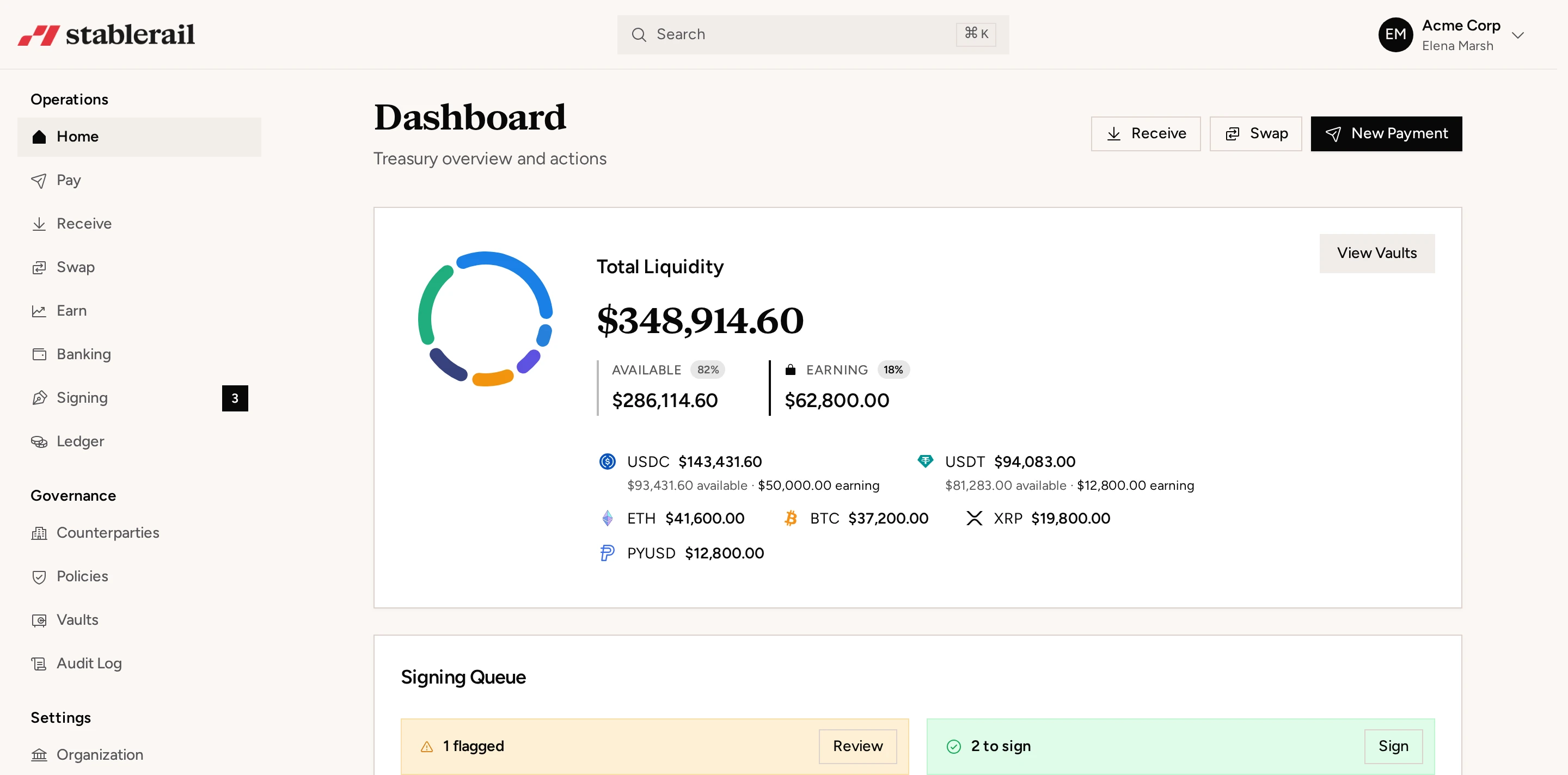
Stablerail provides one business account for USDC and USDT treasury, with approvals and signing quorum, sanctions and address screening before send, global payouts and fiat off-ramp routes, and exportable audit evidence. Those controls still need to be configured around the company’s own approval matrix, vendor policy and accounting procedures.
Release the payment and preserve evidence
Immediately before submission, check the final asset, network, destination and amount against the approved instruction. Confirm that the paying wallet has enough of the settlement token and the network’s required fee asset. Avoid maintaining unnecessary operating balances in a payout wallet solely for convenience.
After broadcast, retain the transaction hash and confirmation status. The transaction hash is the blockchain reference, but it is not a complete accounting record. The payment file should connect it to the approved business purpose.
- Vendor legal name and internal vendor ID
- Invoice number, currency, amount and due date
- Settlement token, network and destination wallet
- Screening result and any alert disposition
- Preparation, approval and signing history
- Transaction hash, submission time and confirmation status
- Network, conversion and payout fees
- Exchange-rate source and timestamp when required
Send the vendor a remittance notice containing the invoice reference, asset, network, amount and transaction hash. A block explorer link alone may show that value moved, but it may not give the vendor enough information to apply the receipt to the correct invoice.
Reconcile the payable to the blockchain transaction
Reconciliation should connect three records: the approved payable, the treasury or wallet transaction, and the confirmed blockchain transfer. Match by transaction hash, destination and invoice reference rather than amount alone. Two invoices can have the same value, while fees or exchange-rate movements can cause the settled amount to differ from the original fiat payable.
If the invoice is denominated in fiat, apply the exchange-rate source and recognition time required by the company’s accounting policy. Preserve that rate and timestamp with the payment evidence. Network fees, conversion charges and payout fees may need to be recorded separately from the underlying vendor expense.
Define exception handling before the first payment. Common cases include an underpayment caused by fees, a duplicate transfer, an unsupported network, a fiat payout returned by a bank, or a difference between the stablecoin amount sent and the fiat invoice value. Because an on-chain payment normally cannot be recalled, recovery from an incorrect recipient generally depends on the recipient’s cooperation.
Use fiat payout routes when the vendor cannot accept stablecoins
A company can fund a payment from USDC or USDT without requiring the vendor to receive stablecoins. Where an appropriate route is available, the balance can be converted and delivered through domestic or international bank rails. Finance should compare the quoted conversion rate, fees, expected arrival time and amount the beneficiary is expected to receive before approval.
| Vendor requirement | Possible payout route | Required instruction | Timing consideration |
|---|---|---|---|
| EUR bank payment | SEPA or SEPA Instant | Beneficiary name and IBAN | Route eligibility, bank processing and compliance review |
| USD domestic payment | ACH or Fedwire | Account and routing details | Cut-off times and receiving-bank processing |
| GBP domestic payment | Faster Payments, CHAPS or BACS | Account number and sort code | Rail availability and bank processing schedule |
| Cross-border bank payment | SWIFT | Beneficiary and bank details, including SWIFT/BIC | Intermediary banks, cut-offs and compliance checks |
The selected rail should reflect the vendor’s location, currency, urgency and exact-receipt requirement. Weekends, holidays, bank cut-off times, intermediary deductions and additional reviews can affect delivery even when stablecoin conversion has already occurred.
Stablecoin vendor payment checklist
- Match the invoice to the contract, purchase order and approved vendor.
- Confirm the settlement asset, network, address and fee treatment.
- Verify new or changed instructions through an independent channel.
- Screen the vendor and destination close to release.
- Approve allowlist changes separately from the payment.
- Apply approval thresholds and the required signing quorum.
- Review the beneficiary amount, fees and expected timing.
- Save the transaction hash, approvals, screening and rate evidence.
- Send remittance details and reconcile the payable.
The objective is not merely to move stablecoins quickly. It is to create a repeatable accounts-payable process with the same discipline expected of bank payments, adapted for network selection, wallet risk and irreversible settlement.
Frequently asked questions
What controls are needed for stablecoin vendor payments?
Use segregation of duties, approval thresholds, independently approved wallet allowlists, duplicate checks and signing quorum where applicable. Screen the vendor and destination before sending, then retain the approval, screening and blockchain evidence with the payable.
How do you verify a vendor’s USDC or USDT wallet?
Collect the wallet address, stablecoin and network from an authorized vendor contact, then confirm new or changed instructions through a separate, previously established channel. A test transfer can confirm technical compatibility, but it does not verify the recipient’s identity or replace sanctions and address screening.
What information is needed to reconcile a stablecoin payment?
Match the invoice to the destination wallet, stablecoin amount, network and transaction hash. Retain approval and screening records, confirmation status, fees, and the exchange-rate source and timestamp used under the company’s accounting policy.
Can a vendor be paid in fiat from a USDC or USDT balance?
Yes, where a suitable off-ramp and banking route are available, stablecoins can be converted and delivered to the vendor through domestic or international fiat rails. Review the conversion rate, fees, expected arrival time and beneficiary amount before approving the payment.
Should a company make a test transfer to a new vendor wallet?
A small test transfer can help verify that the wallet or hosted account supports the selected token and network. It cannot prove who controls the destination or whether the payment request is legitimate, so independent verification and screening are still required.
Finance writers covering stablecoin treasury, payments, compliance, and risk controls.
More about the Stablerail team- Stablecoin treasury managementApprovals, limits, yield and reporting on one balance.
- Stablecoin payoutsBatch contractor and vendor payments with screening.
- USDT vs USDCWhich stablecoin your company should settle in.
- Stablecoin finance glossaryMPC, off-ramp, travel rule and the rest, in plain English.
- Product updatesEverything we ship, month by month.