
How Stablecoin Spend Management Works for Business Teams
Stablecoin spend management lets business teams fund corporate cards from USDC or USDT while retaining limits, approvals, receipt collection and auditable reconciliation.
Stablecoin spend management lets a business use its USDC or USDT treasury for corporate card purchases while finance controls who can spend, how much and where. Employees pay through familiar card networks, merchants generally receive fiat, and the company records the stablecoin conversion, settled card charge, receipt, approval and accounting entry. The result is a controlled bridge between onchain treasury funds and everyday operating expenses.
%22%20x1%3D%220%22%20y1%3D%220%22%20x2%3D%221%22%20y2%3D%221%22%3E%0A%20%20%20%20%20%20%20%20%3Cstop%20offset%3D%220%25%22%20stop-color%3D%22%232A0608%22%20%2F%3E%0A%20%20%20%20%20%20%20%20%3Cstop%20offset%3D%2250%25%22%20stop-color%3D%22%23420D12%22%20%2F%3E%0A%20%20%20%20%20%20%20%20%3Cstop%20offset%3D%22100%25%22%20stop-color%3D%22%23621619%22%20%2F%3E%0A%20%20%20%20%20%20%3C%2FlinearGradient%3E%0A%20%20%20%20%20%20%3CradialGradient%20id%3D%22glow%22%20cx%3D%221094%22%20cy%3D%22212%22%20r%3D%22520%22%20gradientUnits%3D%22userSpaceOnUse%22%3E%0A%20%20%20%20%20%20%20%20%3Cstop%20offset%3D%220%25%22%20stop-color%3D%22%23FF9577%22%20stop-opacity%3D%220.45%22%20%2F%3E%0A%20%20%20%20%20%20%20%20%3Cstop%20offset%3D%2255%25%22%20stop-color%3D%22%23FF9577%22%20stop-opacity%3D%220.08%22%20%2F%3E%0A%20%20%20%20%20%20%20%20%3Cstop%20offset%3D%22100%25%22%20stop-color%3D%22%23FF9577%22%20stop-opacity%3D%220%22%20%2F%3E%0A%20%20%20%20%20%20%3C%2FradialGradient%3E%0A%20%20%20%20%20%20%3ClinearGradient%20id%3D%22glass%22%20x1%3D%220%22%20y1%3D%220%22%20x2%3D%221%22%20y2%3D%221%22%3E%0A%20%20%20%20%20%20%20%20%3Cstop%20offset%3D%220%25%22%20stop-color%3D%22%23F8D6D2%22%20stop-opacity%3D%220.26%22%20%2F%3E%0A%20%20%20%20%20%20%20%20%3Cstop%20offset%3D%22100%25%22%20stop-color%3D%22%23FFFFFF%22%20stop-opacity%3D%220.08%22%20%2F%3E%0A%20%20%20%20%20%20%3C%2FlinearGradient%3E%0A%20%20%20%20%20%20%3ClinearGradient%20id%3D%22accent%22%20x1%3D%220%22%20y1%3D%220%22%20x2%3D%221%22%20y2%3D%221%22%3E%0A%20%20%20%20%20%20%20%20%3Cstop%20offset%3D%220%25%22%20stop-color%3D%22%23FF9577%22%20%2F%3E%0A%20%20%20%20%20%20%20%20%3Cstop%20offset%3D%22100%25%22%20stop-color%3D%22%23D03B2D%22%20%2F%3E%0A%20%20%20%20%20%20%3C%2FlinearGradient%3E%0A%20%20%20%20%20%20%3Cfilter%20id%3D%22soft%22%3E%3CfeGaussianBlur%20stdDeviation%3D%2210%22%20%2F%3E%3C%2Ffilter%3E%0A%20%20%20%20%3C%2Fdefs%3E%0A%20%20%20%20%3Crect%20width%3D%221600%22%20height%3D%22900%22%20fill%3D%22url(%23bg)%22%20%2F%3E%0A%20%20%20%20%3Crect%20width%3D%221600%22%20height%3D%22900%22%20fill%3D%22url(%23glow)%22%20%2F%3E%0A%20%20%20%20%0A%20%20%3Crect%20x%3D%22200%22%20y%3D%22380%22%20width%3D%221200%22%20height%3D%22140%22%20rx%3D%2220%22%20fill%3D%22url(%23glass)%22%20stroke%3D%22%23F4CDC5%22%20stroke-opacity%3D%220.5%22%2F%3E%0A%20%20%3Ccircle%20cx%3D%22320%22%20cy%3D%22450%22%20r%3D%2244%22%20fill%3D%22url(%23accent)%22%20stroke%3D%22%23F4CDC5%22%20stroke-opacity%3D%220.6%22%2F%3E%0A%20%20%20%20%20%20%3Cpath%20d%3D%22M302%20450%20L%20316%20466%20L%20342%20434%22%20fill%3D%22none%22%20stroke%3D%22%23FFF1ED%22%20stroke-width%3D%226%22%20stroke-linecap%3D%22round%22%2F%3E%3Ccircle%20cx%3D%22640%22%20cy%3D%22450%22%20r%3D%2244%22%20fill%3D%22url(%23accent)%22%20stroke%3D%22%23F4CDC5%22%20stroke-opacity%3D%220.6%22%2F%3E%0A%20%20%20%20%20%20%3Cpath%20d%3D%22M622%20450%20L%20636%20466%20L%20662%20434%22%20fill%3D%22none%22%20stroke%3D%22%23FFF1ED%22%20stroke-width%3D%226%22%20stroke-linecap%3D%22round%22%2F%3E%3Ccircle%20cx%3D%22960%22%20cy%3D%22450%22%20r%3D%2244%22%20fill%3D%22url(%23accent)%22%20stroke%3D%22%23F4CDC5%22%20stroke-opacity%3D%220.6%22%2F%3E%0A%20%20%20%20%20%20%3Cpath%20d%3D%22M942%20450%20L%20956%20466%20L%20982%20434%22%20fill%3D%22none%22%20stroke%3D%22%23FFF1ED%22%20stroke-width%3D%226%22%20stroke-linecap%3D%22round%22%2F%3E%3Ccircle%20cx%3D%221280%22%20cy%3D%22450%22%20r%3D%2244%22%20fill%3D%22url(%23glass)%22%20stroke%3D%22%23F4CDC5%22%20stroke-opacity%3D%220.6%22%2F%3E%0A%20%20%20%20%20%20%0A%20%20%3Cpath%20d%3D%22M380%20450%20H%20560%22%20stroke%3D%22%23FFD2C8%22%20stroke-width%3D%225%22%20stroke-dasharray%3D%226%2010%22%2F%3E%3Cpath%20d%3D%22M700%20450%20H%20880%22%20stroke%3D%22%23FFD2C8%22%20stroke-width%3D%225%22%20stroke-dasharray%3D%226%2010%22%2F%3E%3Cpath%20d%3D%22M1020%20450%20H%201200%22%20stroke%3D%22%23FFD2C8%22%20stroke-width%3D%225%22%20stroke-dasharray%3D%226%2010%22%2F%3E%0A%0A%20%20%20%20%3Crect%20x%3D%2226%22%20y%3D%2226%22%20width%3D%221548%22%20height%3D%22848%22%20rx%3D%2218%22%20fill%3D%22none%22%20stroke%3D%22%23F2D0C8%22%20stroke-opacity%3D%220.12%22%2F%3E%0A%20%20%3C%2Fsvg%3E)
Stablecoin spend management connects a company’s USDC or USDT treasury to everyday business expenses. Finance can issue corporate cards, assign limits and collect receipts without requiring employees to spend personally or converting funds manually before every purchase. The card remains a conventional payment instrument: the merchant is generally paid through the card network in fiat, while the provider handles funding and conversion according to the program’s terms.
The objective is not simply to make stablecoins spendable. A workable system must connect treasury authorization, card controls, expense evidence and accounting records so finance can explain every movement from the original stablecoin balance to the final ledger entry.
How stablecoin-funded corporate cards work
The company first completes business onboarding, including know-your-business checks and reviews of its jurisdiction, ownership, industry and intended activity. Card availability can depend on the company’s location, the cardholder’s location and the provider’s program rules.
Once approved, the company deposits or holds a supported stablecoin and makes value available to the card program. The exact funding model varies. Some programs convert stablecoins when finance funds a fiat card balance. Others perform conversion closer to authorization, clearing or settlement. This distinction affects available balances, foreign-exchange exposure, transaction records and reconciliation.
- Fund: Finance deposits USDC or USDT and allocates value to a card balance, employee allowance or department budget.
- Authorize: When a cardholder pays, the issuer checks the available balance and applicable controls, such as transaction limits or merchant category restrictions.
- Convert: Stablecoin value is converted into the required settlement currency at the stage defined by the card program.
- Clear and settle: The merchant submits the final transaction through the card network. The settled amount may differ from the authorization.
- Document: The cardholder supplies the receipt, business purpose and any required project or cost-center information.
- Reconcile: Finance matches the card transaction to the conversion record, supporting evidence, approval and accounting entry.
A stablecoin-funded card is therefore different from an onchain merchant payment. The employee presents card credentials, not a wallet transaction, and the merchant does not need to accept USDC or USDT.
Choose a card structure that matches the expense
Issuing one shared card for every purchase makes ownership and reconciliation harder. Separate cards create clearer boundaries around employees, vendors and budgets. They also limit disruption if credentials are compromised or a card must be replaced.
| Card structure | Best use | Useful controls | Finance consideration |
|---|---|---|---|
| Named employee card | Travel and routine employee expenses | Per-transaction and monthly limits, geographic or merchant category restrictions | Assign a card owner and suspend access promptly when roles change |
| Single-vendor virtual card | Software, cloud services or advertising platforms | Vendor restriction, fixed limit and expiry date where supported | Map the card to a recurring vendor and general-ledger category |
| Department card | Marketing, operations or engineering budgets | Team budget, category restrictions and designated approval owner | Document who may use it and who is responsible for receipts |
| Temporary virtual card | Events, contractors or one-time purchases | Short validity period and limited available balance | Set an end date and close the card after the purpose is complete |
Virtual cards are generally well suited to online purchases and recurring vendors. Physical cards are more practical for travel, office purchases and other in-person expenses. Finance should confirm whether controls apply at the individual card, cardholder, department or overall program level.
Set limits and merchant controls deliberately
Card limits should reflect the expected use rather than an employee’s seniority alone. A frequent traveler may need a larger monthly allowance but still require a sensible per-transaction cap. A card dedicated to one subscription may need only enough capacity for the expected invoice and an approved variation.
- Per-transaction limits block purchases above a defined amount.
- Daily or monthly limits constrain aggregate spending over time.
- Merchant category code controls permit or block categories such as airlines, hotels, advertising, entertainment or cash withdrawals.
- Channel controls may distinguish online, in-person, contactless and cash-withdrawal activity.
- Card status controls allow finance to freeze or terminate a card when its purpose ends.
Merchant category codes are useful but imperfect. The merchant’s payment provider assigns the code, and a marketplace or diversified vendor may be classified more broadly than finance expects. Category restrictions should therefore be combined with value limits, card ownership and receipt review rather than treated as a precise purchasing policy.
Controls also need a decline process. Employees should know whom to contact when a legitimate purchase is blocked, while finance should verify the purpose before temporarily changing a limit or category setting. Permanent limit increases should follow the same approval policy as the underlying budget.
Separate spending approval from card authorization
Card authorization answers whether a transaction can proceed under the configured controls. Internal approval answers whether the company agreed to incur the expense. Passing a card control does not prove that a manager approved the purchase.
Routine software can be covered by an approved department budget and a vendor-specific card. Exceptional or higher-value purchases may require manager or finance approval before a card is issued or its limit is increased. Sensitive treasury actions, including moving funds into an operational spending balance, can require multiple approvers or a signing quorum so one person cannot act alone.
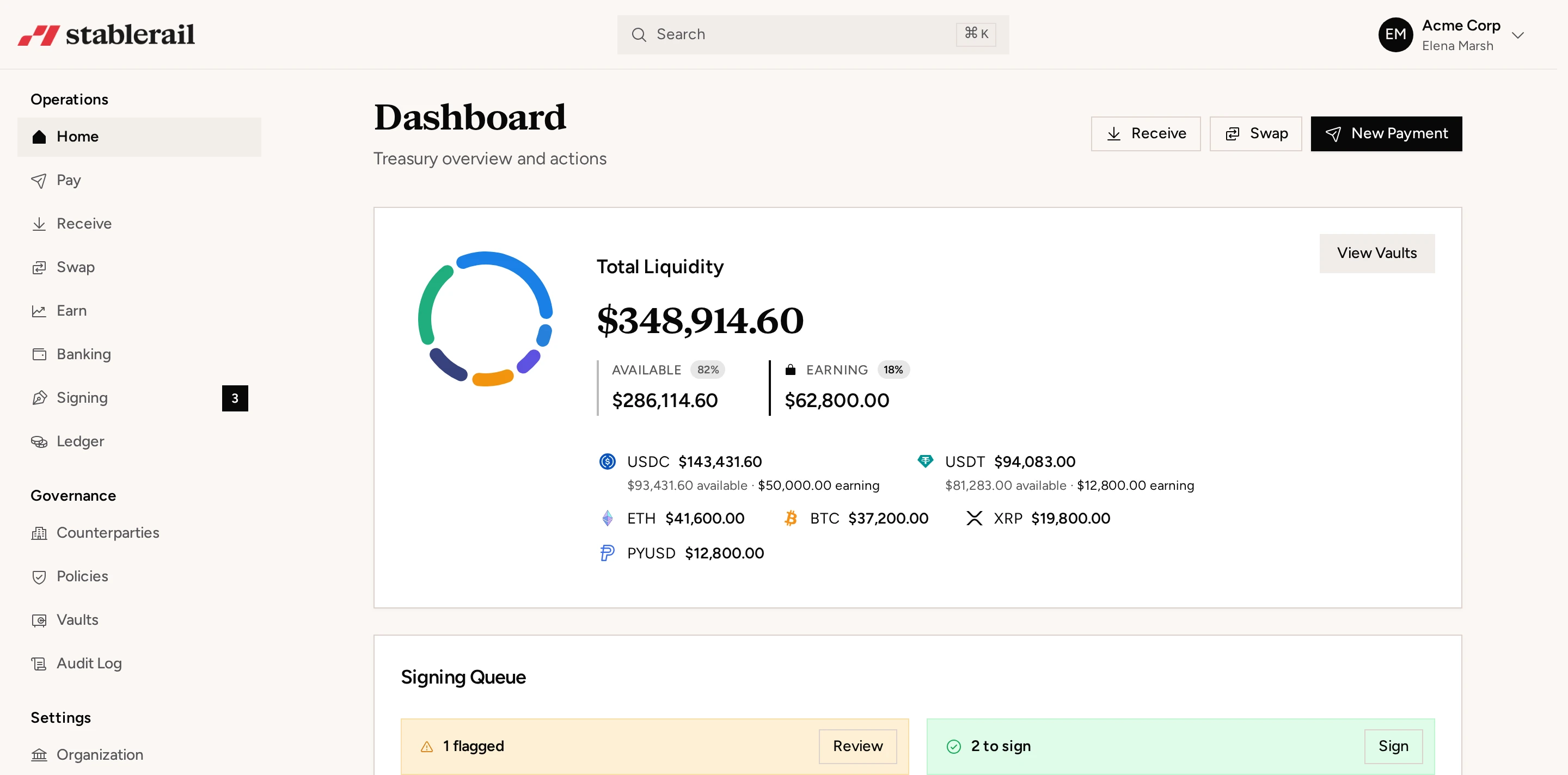
Finance should document who can issue cards, change limits, fund the program and approve exceptions. Stablerail brings USDC and USDT treasury, corporate cards, approvals and signing quorum into one business account, alongside pre-send sanctions and address screening, global payouts, fiat off-ramp and exportable audit evidence.
Capture evidence at the time of purchase
A card statement proves that a payment occurred, but it rarely proves the full business purpose or correct accounting treatment. Each expense record should connect the merchant and settled amount to the person responsible, supporting document and ledger classification.
- The receipt or supplier invoice
- The employee or card owner
- The business purpose
- The department, project or cost center
- The expense category or general-ledger code
- The required approval or approved budget
- Any tax information finance needs to retain
Employees should submit evidence while the purchase is recent. For recurring expenses, a dedicated virtual card can make the vendor and expected category predictable, but finance should still review changes in amount and retain the relevant invoice. A recurring assignment is an aid to categorization, not a substitute for evidence.
Reconcile the settled amount, not just the authorization
Card authorizations are temporary estimates. Hotels, car rental companies and fuel merchants may place holds, restaurants may add tips, and a merchant may complete a transaction for a different amount. Pending authorizations can also expire or be reversed. The final accounting record should normally use the settled transaction.
For every settled purchase, finance should be able to connect four records:
- Card record: Merchant, timestamp, cardholder, authorization amount, settlement amount and transaction status.
- Funding or conversion record: Stablecoin amount debited, fiat value, conversion timing, applicable rate and disclosed fee.
- Expense evidence: Receipt or invoice, business purpose, cost center and approval.
- Accounting entry: Expense account, tax treatment and any conversion or foreign-exchange difference required under the company’s accounting policy.
The accounting treatment of stablecoins and any gain or loss on disposal depends on the company’s jurisdiction, reporting framework and policies. Finance should preserve the stablecoin quantity, timestamps, conversion value and related fees rather than recording only the card’s fiat amount. Those details allow internal accountants and external advisers to determine the appropriate treatment.
Refunds should be linked to the original expense without deleting it. A refund can arrive in a later period, and its fiat or stablecoin value may not exactly match the original record because of conversion timing, network foreign exchange or a partial merchant refund. Reversals, duplicate charges, declines and charge disputes should also remain visible as separate events.
At month-end, reconcile the card subledger and any prefunded card balance to the relevant treasury and accounting balances. Investigate unmatched settlements, stale pending transactions, missing receipts, unexplained balance movements and cards assigned to former employees. Exportable transaction and approval evidence can reduce the manual work required for close and audit support.
Questions to resolve before rollout
Finance should understand the complete flow of funds before issuing cards. Provider documentation and commercial terms should clearly explain when conversion occurs, which currencies and jurisdictions are supported, how fees are disclosed, and how refunds and disputes are handled.
- Confirm company and cardholder eligibility.
- Identify the USDC or USDT balance that will support spending.
- Confirm conversion timing, settlement currencies and foreign-exchange treatment.
- Define card types, owners, limits and merchant restrictions.
- Document issuance, funding, exception and offboarding approvals.
- Set receipt deadlines and accounting fields before cards are distributed.
- Test an ordinary purchase, a foreign-currency purchase, a decline and a refund.
- Run a sample month-end reconciliation and verify that evidence is exportable.
Stablecoin spend management works best as one controlled operating process rather than a card product added in isolation. Employees receive a familiar way to pay, while finance retains authority over treasury funding, spending access, documentation and reconciliation.
Frequently asked questions
Can a business pay card expenses directly from USDC or USDT?
A supported card program can use a company’s USDC or USDT balance as the source of value for card spending. Depending on the program, conversion may occur when the card balance is funded or closer to authorization or settlement, while the merchant generally receives fiat through the card network.
Do merchants need to accept stablecoins for a stablecoin-funded card to work?
No. The employee uses a conventional corporate card, and the merchant accepts payment through its normal card-processing setup. The stablecoin conversion and card settlement occur behind the scenes according to the provider’s funding model.
How should finance reconcile stablecoin-funded card transactions?
Match the final settled card charge to the stablecoin conversion or funding record, receipt, approval and ledger entry. Preserve the stablecoin amount, fiat value, conversion timing, rate and fees, because the accounting or tax treatment may require more detail than the card statement provides.
When are stablecoins converted for corporate card spending?
Conversion timing depends on the card program. Some providers convert stablecoins when funds are allocated to a fiat card balance, while others convert nearer to authorization or settlement; finance should confirm the exact mechanism before rollout.
What controls should a stablecoin corporate card program have?
Useful controls include per-transaction and periodic limits, merchant category restrictions, card freezing, clear ownership and documented approval thresholds. Finance should also separate card authorization from purchase approval and require multiple approvers for sensitive treasury funding actions.
How are refunds handled on stablecoin-funded cards?
Refunds usually return through the card network and may arrive after the original accounting period. Finance should link the refund to the original purchase while preserving both records, because timing, partial refunds or conversion differences can cause the returned value to differ from the initial expense.
Finance writers covering stablecoin treasury, payments, compliance, and risk controls.
More about the Stablerail team- Stablecoin treasury managementApprovals, limits, yield and reporting on one balance.
- Stablecoin payoutsBatch contractor and vendor payments with screening.
- USDT vs USDCWhich stablecoin your company should settle in.
- Stablecoin finance glossaryMPC, off-ramp, travel rule and the rest, in plain English.
- Product updatesEverything we ship, month by month.