
Best Crypto Sanctions Screening Platforms: What Compliance Teams Should Compare
A practical framework for comparing crypto sanctions screening providers across list coverage, blockchains, exposure models, APIs, alert tuning, investigations, evidence retention and false positives.

Crypto sanctions screening platforms help companies decide whether to accept, hold or send digital assets involving a particular wallet. The strongest option is not necessarily the provider with the largest database or longest list of supported networks. It is the one that gives your compliance team reliable coverage, explainable alerts and evidence that fits your transaction workflow.
For companies moving USDC or USDT, screening should cover both the wallet and the transaction. A wallet may not appear directly on a sanctions list but could have received funds from, or sent funds to, a sanctioned address. Providers use blockchain analytics to identify these relationships, but their conclusions can differ significantly.
This guide provides a neutral framework for comparing platforms through documentation reviews, demonstrations and controlled testing.
Start with sanctions-list coverage
Ask each provider which lists it monitors, how quickly changes are incorporated and whether it distinguishes between a listed entity and a blockchain address attributed to that entity.
OFAC coverage is essential but not sufficient. Depending on where your company operates, relevant sources may include:
- US Treasury Office of Foreign Assets Control, or OFAC, sanctions programs and digital currency addresses.
- United Nations Security Council sanctions.
- European Union consolidated financial sanctions.
- UK Office of Financial Sanctions Implementation sanctions.
- Country-specific lists applicable to your entities, banking partners or customers.
A platform should preserve the source list, matching record and screening time. It should also show whether an alert came from an exact address match, an attributed entity or indirect transaction exposure.
Confirm the update process rather than accepting “real-time list coverage” at face value. Ask whether updates are automated, what happens when a source list changes, and whether existing customers and wallets are rescreened.
Compare actual blockchain and asset support
A provider may advertise support for hundreds of assets while offering detailed attribution on fewer underlying networks. Review coverage at the chain level and against your real treasury routes.
| Coverage question | Why it matters |
|---|---|
| Are Ethereum, Base, Arbitrum, Polygon, Tron, BNB Chain, Optimism and Solana supported? | USDC and USDT activity is spread across multiple networks with different address and transaction models. |
| Are tokens identified by contract address? | Names and symbols can be copied. Contract-level identification helps distinguish genuine stablecoins from lookalike tokens. |
| Are bridges and cross-chain transfers traced? | Risk may move between networks rather than staying on the chain where you receive funds. |
| How quickly are new assets and contracts indexed? | Delayed indexing can create blind spots for recently launched routes. |
Coverage should be tested with the exact networks used for payouts, customer receipts and treasury rebalancing. Broad support has limited value if the provider cannot trace your highest-volume stablecoin corridor.
Understand the exposure methodology
Wallet screening results depend on how a provider calculates exposure. Require a written explanation of the model and enough transaction detail for an analyst to reproduce the conclusion.
Direct and indirect exposure
Direct exposure usually means that the screened wallet transacted with a flagged address. Indirect exposure means that one or more intermediary wallets sit between them. Risk normally becomes less conclusive with each additional “hop,” so teams should be able to set different rules by distance.
Value attribution
Some models treat any contact with risky funds as contaminating the entire downstream balance. Others assign risk proportionally based on the amount and transaction path. These approaches can produce materially different alerts.
Ask providers to explain:
- How many transaction hops they trace.
- Whether exposure is measured as a value, percentage or both.
- How they handle high-volume exchanges, bridges, mixers and smart contracts.
- Whether incoming and outgoing exposure are treated differently.
- How attribution confidence is scored and displayed.
- Whether historical labels are preserved when attribution changes.
A single risk score is not enough. Analysts need the underlying category, transaction path, amount, date, source and confidence level.
Test real-time APIs in the payment workflow
For operational use, crypto sanctions screening must happen before a transfer is released, not hours later in a periodic review. Evaluate both wallet screening and transaction monitoring APIs.
Request documentation for:
- Wallet and transaction screening endpoints.
- Supported request volumes and rate limits.
- Typical and contractually stated API response times, including p95 and p99 latency.
- Webhook delivery for new alerts or changed wallet risk.
- Batch screening for customer or vendor address books.
- Idempotency, which prevents a retried request from creating duplicate actions.
- API availability commitments and failure handling.
Decide what your payment system should do when the screening service is unavailable. Depending on the risk and payment type, the safer operational response may be to queue the transfer for review rather than approve it automatically.
Assess alert tuning and false positives
False positives consume analyst time and can delay legitimate payroll, supplier payments or treasury transfers. However, reducing alert volume by weakening rules can create genuine exposure. The objective is useful prioritisation, not simply fewer alerts.
Look for configurable thresholds by risk type, exposure percentage, value, number of hops, network and payment direction. Rules may also need to differ between a new external beneficiary and a known corporate-owned wallet.
During a pilot, measure:
- The percentage of screened wallets that generate alerts.
- The percentage of alerts closed without escalation.
- Median time required to investigate an alert.
- How often analysts can understand and reproduce the result.
- Whether repeated activity creates duplicate alerts.
- How many alerts change after provider attribution updates.
Use a controlled sample containing routine wallets, previously investigated cases and known high-risk examples. Do not upload sensitive production data until data handling, permissions and retention terms have been reviewed.
Review case management and evidence retention
A screening result is only one part of an investigation. Compliance teams also need to record who reviewed the alert, what evidence was considered and why the transaction was approved, rejected or escalated.
Compare whether the platform provides:
- Case assignment, status, notes and escalation workflows.
- Links between related wallets, transactions and counterparties.
- Role-based access and separation between analysts and approvers.
- Exports containing timestamps, list versions, transaction paths and decisions.
- An audit log showing changes to rules and cases.
- Configurable retention and deletion periods.
Evidence should remain understandable even if the provider later changes a label or scoring model. Ask whether a case export captures the result as it appeared at the time of the decision, rather than only showing the latest classification.
Use a weighted procurement scorecard
A practical comparison should reflect your actual risk and payment profile. One possible starting point is 25% for sanctions and attribution coverage, 20% for blockchain support, 20% for methodology and explainability, 15% for API performance, 10% for alert tuning, and 10% for case management and evidence. Adjust these weights to match your jurisdictions and transaction flows.
Commercial terms also need scrutiny. Compare pricing by API call, monitored wallet, transaction, user or investigation seat. Check minimum commitments, overage charges, historical tracing fees, implementation support and data export rights at contract termination.
Fit screening into treasury operations
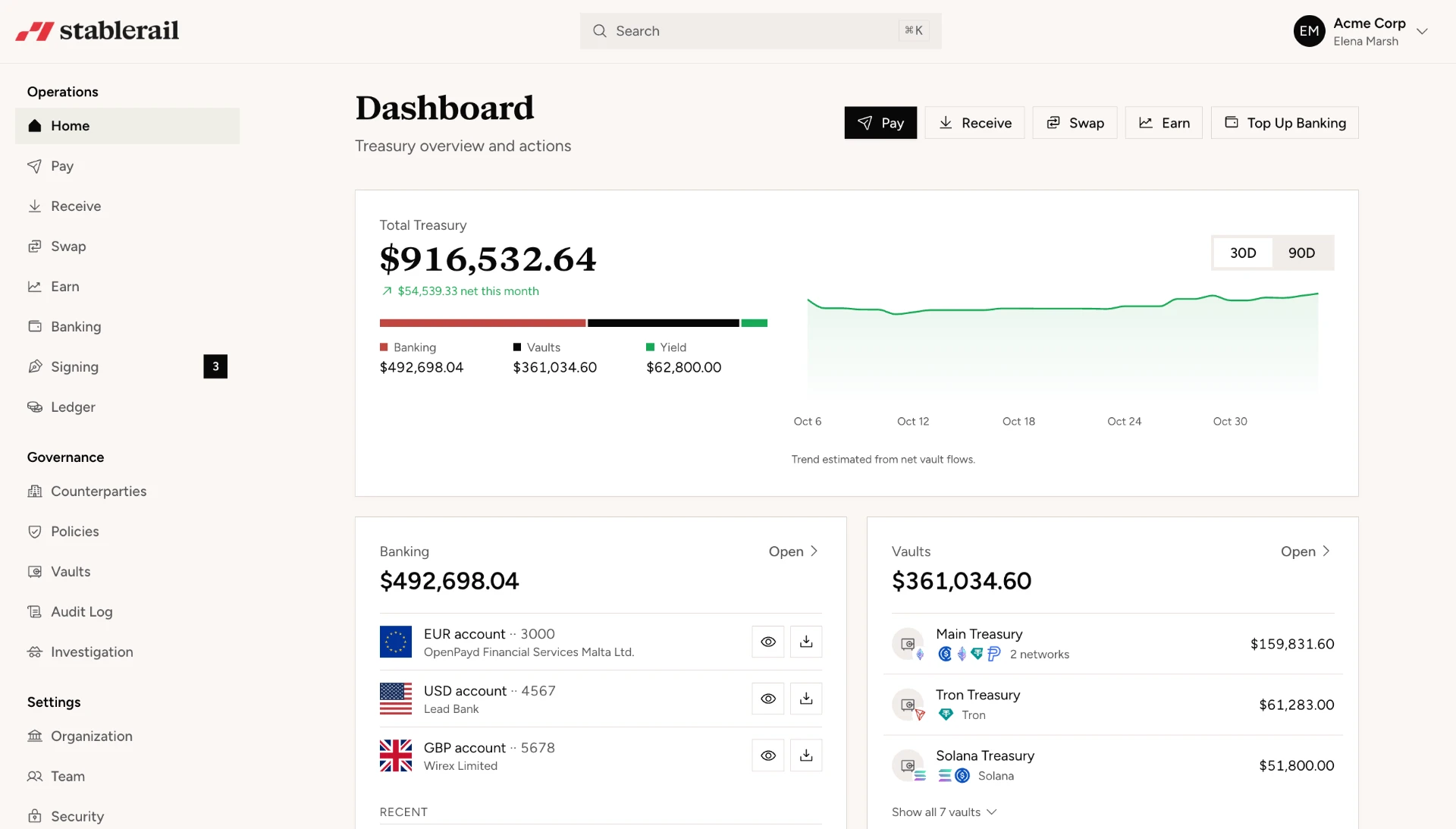
The selected provider should support controls at the point where funds enter or leave the treasury. Stablerail incorporates sanctions and wallet screening alongside allowlists, approval limits, quorum signing and audit evidence for corporate stablecoin operations. Teams can use the wallet checker when reviewing an address and apply screening within stablecoin payout workflows.
When evaluating an integrated platform, ask which data provider or methodology underpins each result, when screening occurs, what can block a transfer and what evidence is retained. Integration should not make the underlying decision opaque.
There is no universally best blockchain analytics platform. The right choice is the provider that covers your lists and networks, explains its exposure calculations, performs reliably in real time and gives investigators defensible evidence without generating unmanageable false positives.
Finance writers covering stablecoin treasury, payments, compliance, and risk controls.
More about the Stablerail team- Stablecoin treasury managementApprovals, limits, yield and reporting on one balance.
- Stablecoin payoutsBatch contractor and vendor payments with screening.
- USDT vs USDCWhich stablecoin your company should settle in.
- Stablecoin finance glossaryMPC, off-ramp, travel rule and the rest, in plain English.
- Product updatesEverything we ship, month by month.