
Manage company balances, payments, cards and approvals in one workspace.
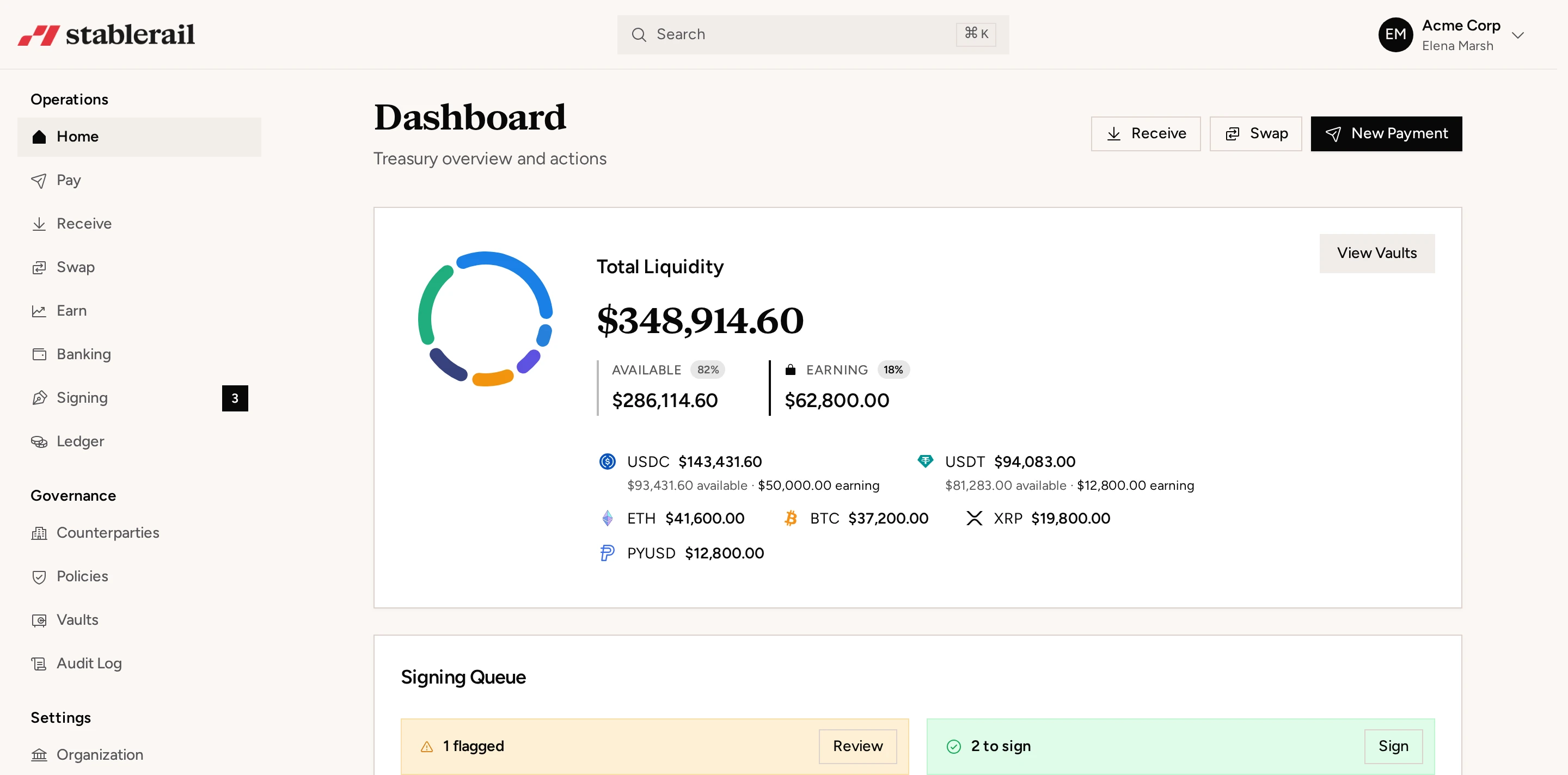
Get paid in stablecoins without a reconciliation problem
Accepting USDC is easy. Knowing which of last week's eleven incoming transfers paid invoice 1042 is the part that costs finance teams their Friday.
How it works
- Issue a hosted payment link with amount, accepted assets and networks stated up front.
- Each invoice gets its own destination, so payments match themselves.
- Inbound screening runs on the paying counterparty before funds are treated as good.
- Settlement lands in the same treasury balance you pay vendors and cards from.
- Off-ramp to fiat through regulated partners when you need local currency.
Why not a shared wallet address
A single company address turns every receipt into a manual matching exercise and makes screening retrospective. Per-invoice destinations give you clean attribution, a real ageing report and evidence per payment — the same standard applied to outbound payouts.
Frequently asked questions
How does a customer pay?
You send a payment link showing the amount, accepted assets and networks. The customer pays from their own wallet or exchange, and the payment is matched to the invoice automatically.
How do you avoid mismatched payments?
Each invoice carries its own destination and expected asset and network, so an incoming payment reconciles itself rather than landing in a shared address for someone to identify later.
Can we cash out to a bank account?
Yes. Received balances can be off-ramped to fiat through regulated partners after KYB, subject to corridor availability.
Which assets can we accept?
USDC, USDT, EURC, DAI and PYUSD across Ethereum, Arbitrum, Base, Polygon, BNB Chain, Optimism, Solana and Tron.
Is incoming money screened?
Yes. Inbound counterparties and addresses are screened, and the result is stored with the payment as evidence.
Keep reading
One account for stablecoin treasury, cards and payouts.
Receive, approve, screen, pay, card-spend and off-ramp — with audit evidence on every transaction.