
Stablecoin to fiat off-ramp: converting USDC and USDT to bank money
A practical guide to converting corporate USDC or USDT into USD, EUR or GBP, covering corridors, quotes, bank settlement, approvals, reconciliation and audit evidence.
A stablecoin-to-fiat off-ramp converts company-held USDC or USDT into bank money such as USD, EUR or GBP. Finance teams must verify the token and network, select an eligible currency corridor, review the all-in proceeds, approve the transaction, and reconcile two settlement events: the blockchain transfer and the bank payment. Timing and cost depend on liquidity, banking rails, cut-offs, compliance checks and intermediary fees.
%22%20x1%3D%220%22%20y1%3D%220%22%20x2%3D%221%22%20y2%3D%221%22%3E%0A%20%20%20%20%20%20%20%20%3Cstop%20offset%3D%220%25%22%20stop-color%3D%22%233E090D%22%20%2F%3E%0A%20%20%20%20%20%20%20%20%3Cstop%20offset%3D%2250%25%22%20stop-color%3D%22%235C1218%22%20%2F%3E%0A%20%20%20%20%20%20%20%20%3Cstop%20offset%3D%22100%25%22%20stop-color%3D%22%237B1F22%22%20%2F%3E%0A%20%20%20%20%20%20%3C%2FlinearGradient%3E%0A%20%20%20%20%20%20%3CradialGradient%20id%3D%22glow%22%20cx%3D%221065%22%20cy%3D%22435%22%20r%3D%22520%22%20gradientUnits%3D%22userSpaceOnUse%22%3E%0A%20%20%20%20%20%20%20%20%3Cstop%20offset%3D%220%25%22%20stop-color%3D%22%23FF8E72%22%20stop-opacity%3D%220.45%22%20%2F%3E%0A%20%20%20%20%20%20%20%20%3Cstop%20offset%3D%2255%25%22%20stop-color%3D%22%23FF8E72%22%20stop-opacity%3D%220.08%22%20%2F%3E%0A%20%20%20%20%20%20%20%20%3Cstop%20offset%3D%22100%25%22%20stop-color%3D%22%23FF8E72%22%20stop-opacity%3D%220%22%20%2F%3E%0A%20%20%20%20%20%20%3C%2FradialGradient%3E%0A%20%20%20%20%20%20%3ClinearGradient%20id%3D%22glass%22%20x1%3D%220%22%20y1%3D%220%22%20x2%3D%221%22%20y2%3D%221%22%3E%0A%20%20%20%20%20%20%20%20%3Cstop%20offset%3D%220%25%22%20stop-color%3D%22%23F8D6D2%22%20stop-opacity%3D%220.26%22%20%2F%3E%0A%20%20%20%20%20%20%20%20%3Cstop%20offset%3D%22100%25%22%20stop-color%3D%22%23FFFFFF%22%20stop-opacity%3D%220.08%22%20%2F%3E%0A%20%20%20%20%20%20%3C%2FlinearGradient%3E%0A%20%20%20%20%20%20%3ClinearGradient%20id%3D%22accent%22%20x1%3D%220%22%20y1%3D%220%22%20x2%3D%221%22%20y2%3D%221%22%3E%0A%20%20%20%20%20%20%20%20%3Cstop%20offset%3D%220%25%22%20stop-color%3D%22%23FF8E72%22%20%2F%3E%0A%20%20%20%20%20%20%20%20%3Cstop%20offset%3D%22100%25%22%20stop-color%3D%22%23D94030%22%20%2F%3E%0A%20%20%20%20%20%20%3C%2FlinearGradient%3E%0A%20%20%20%20%20%20%3Cfilter%20id%3D%22soft%22%3E%3CfeGaussianBlur%20stdDeviation%3D%2210%22%20%2F%3E%3C%2Ffilter%3E%0A%20%20%20%20%3C%2Fdefs%3E%0A%20%20%20%20%3Crect%20width%3D%221600%22%20height%3D%22900%22%20fill%3D%22url(%23bg)%22%20%2F%3E%0A%20%20%20%20%3Crect%20width%3D%221600%22%20height%3D%22900%22%20fill%3D%22url(%23glow)%22%20%2F%3E%0A%20%20%20%20%3Crect%20x%3D%22280%22%20y%3D%22200%22%20width%3D%22985%22%20height%3D%2244%22%20rx%3D%226%22%20fill%3D%22url(%23glass)%22%20stroke%3D%22%23F4CDC5%22%20stroke-opacity%3D%220.35%22%2F%3E%0A%20%20%20%20%20%20%3Ccircle%20cx%3D%22250%22%20cy%3D%22222%22%20r%3D%2210%22%20fill%3D%22url(%23accent)%22%20opacity%3D%221%22%2F%3E%3Crect%20x%3D%22280%22%20y%3D%22270%22%20width%3D%22842%22%20height%3D%2244%22%20rx%3D%226%22%20fill%3D%22url(%23glass)%22%20stroke%3D%22%23F4CDC5%22%20stroke-opacity%3D%220.35%22%2F%3E%0A%20%20%20%20%20%20%3Ccircle%20cx%3D%22250%22%20cy%3D%22292%22%20r%3D%2210%22%20fill%3D%22%23F8D6D2%22%20opacity%3D%220.4%22%2F%3E%3Crect%20x%3D%22280%22%20y%3D%22340%22%20width%3D%22921%22%20height%3D%2244%22%20rx%3D%226%22%20fill%3D%22url(%23glass)%22%20stroke%3D%22%23F4CDC5%22%20stroke-opacity%3D%220.35%22%2F%3E%0A%20%20%20%20%20%20%3Ccircle%20cx%3D%22250%22%20cy%3D%22362%22%20r%3D%2210%22%20fill%3D%22url(%23accent)%22%20opacity%3D%221%22%2F%3E%3Crect%20x%3D%22280%22%20y%3D%22410%22%20width%3D%22810%22%20height%3D%2244%22%20rx%3D%226%22%20fill%3D%22url(%23glass)%22%20stroke%3D%22%23F4CDC5%22%20stroke-opacity%3D%220.35%22%2F%3E%0A%20%20%20%20%20%20%3Ccircle%20cx%3D%22250%22%20cy%3D%22432%22%20r%3D%2210%22%20fill%3D%22%23F8D6D2%22%20opacity%3D%220.4%22%2F%3E%3Crect%20x%3D%22280%22%20y%3D%22480%22%20width%3D%22755%22%20height%3D%2244%22%20rx%3D%226%22%20fill%3D%22url(%23glass)%22%20stroke%3D%22%23F4CDC5%22%20stroke-opacity%3D%220.35%22%2F%3E%0A%20%20%20%20%20%20%3Ccircle%20cx%3D%22250%22%20cy%3D%22502%22%20r%3D%2210%22%20fill%3D%22url(%23accent)%22%20opacity%3D%221%22%2F%3E%3Crect%20x%3D%22280%22%20y%3D%22550%22%20width%3D%22727%22%20height%3D%2244%22%20rx%3D%226%22%20fill%3D%22url(%23glass)%22%20stroke%3D%22%23F4CDC5%22%20stroke-opacity%3D%220.35%22%2F%3E%0A%20%20%20%20%20%20%3Ccircle%20cx%3D%22250%22%20cy%3D%22572%22%20r%3D%2210%22%20fill%3D%22url(%23accent)%22%20opacity%3D%221%22%2F%3E%3Crect%20x%3D%22280%22%20y%3D%22620%22%20width%3D%22713%22%20height%3D%2244%22%20rx%3D%226%22%20fill%3D%22url(%23glass)%22%20stroke%3D%22%23F4CDC5%22%20stroke-opacity%3D%220.35%22%2F%3E%0A%20%20%20%20%20%20%3Ccircle%20cx%3D%22250%22%20cy%3D%22642%22%20r%3D%2210%22%20fill%3D%22url(%23accent)%22%20opacity%3D%221%22%2F%3E%3Crect%20x%3D%22280%22%20y%3D%22690%22%20width%3D%22706%22%20height%3D%2244%22%20rx%3D%226%22%20fill%3D%22url(%23glass)%22%20stroke%3D%22%23F4CDC5%22%20stroke-opacity%3D%220.35%22%2F%3E%0A%20%20%20%20%20%20%3Ccircle%20cx%3D%22250%22%20cy%3D%22712%22%20r%3D%2210%22%20fill%3D%22%23F8D6D2%22%20opacity%3D%220.4%22%2F%3E%3Crect%20x%3D%22200%22%20y%3D%22170%22%20width%3D%221200%22%20height%3D%22600%22%20rx%3D%2220%22%20fill%3D%22none%22%20stroke%3D%22%23F4CDC5%22%20stroke-opacity%3D%220.3%22%2F%3E%0A%20%20%20%20%3Crect%20x%3D%2226%22%20y%3D%2226%22%20width%3D%221548%22%20height%3D%22848%22%20rx%3D%2218%22%20fill%3D%22none%22%20stroke%3D%22%23F2D0C8%22%20stroke-opacity%3D%220.12%22%2F%3E%0A%20%20%3C%2Fsvg%3E)
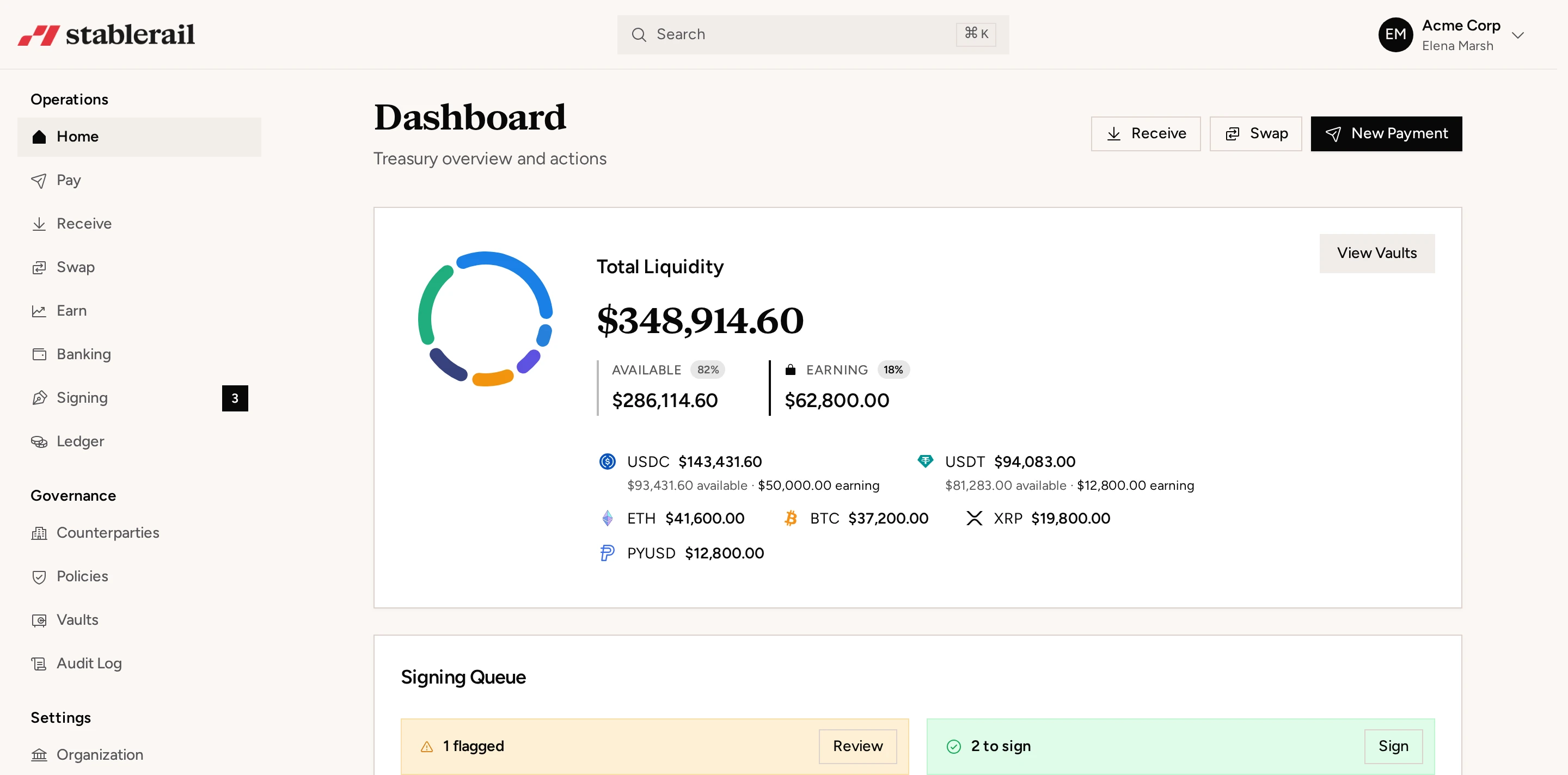
A stablecoin off-ramp is not simply a token sale. It is a controlled treasury process that moves value from a company wallet, through a conversion provider, and into a fiat balance or verified corporate bank account. Stablerail brings fiat conversion, approvals, signing quorum, sanctions and address screening, global payouts, and exportable audit evidence into a corporate stablecoin treasury workflow.
How a stablecoin-to-fiat off-ramp works
A business off-ramp normally has two linked but separate settlement legs. First, the company sends USDC or USDT on a specified blockchain. Second, the provider converts the stablecoin and credits or sends fiat through a banking rail. A confirmed blockchain transaction does not prove that the bank payment has settled.
- Select the source asset and network. Specify USDC or USDT and the blockchain on which it is held. The network must match the deposit instructions exactly.
- Select the fiat corridor. Choose the destination currency, such as USD, EUR or GBP, and confirm that the route is available for the company’s jurisdiction and account.
- Review the quote. Check the stablecoin amount, exchange rate, spread, separately stated fees, expected fiat proceeds and quote expiry.
- Approve and sign. Apply the company’s authorization process before releasing funds. Material transfers should not depend on one employee or signing credential.
- Complete both settlement legs. Monitor the blockchain transaction and the separate credit to the fiat balance or bank account.
- Reconcile and retain evidence. Match the quote, transaction hash, conversion record, bank reference, fees and final bank receipt.
| Stage | Finance team should verify | Evidence to retain |
|---|---|---|
| Order setup | Legal entity, asset, network, currency, destination and limits | Conversion instruction and account details |
| Quote | Rate, spread, fees, net proceeds and expiry | Timestamped quote or trade confirmation |
| Approval | Authorized initiator, approvers and signing quorum | Approval and signer history |
| Blockchain settlement | Token contract, address, amount and confirmation status | Transaction hash and screening result |
| Fiat settlement | Currency, rail, beneficiary, value date and amount received | Payment reference and bank statement |
Complete KYB before relying on a corridor
Businesses generally complete know-your-business checks before fiat conversion is enabled. The review establishes the legal entity, ownership, authorized representatives, operating activity, expected transaction profile and source of funds.
Common requests include a registry extract or certificate of incorporation, registered and operating addresses, tax information, directors, authorized signers, ultimate beneficial owners and ownership percentages. A provider may also request expected volumes, the purpose of the stablecoin activity, information about funding wallets, and proof that the destination bank account belongs to the company.
KYB approval does not make every asset, network, currency or payment rail available. Eligibility can vary by jurisdiction, industry, transaction profile and banking partner. Confirm the actual corridor before scheduling payroll, supplier payments, debt service or another time-sensitive obligation.
Verify the asset, token contract and network
“USDT” or “USDC” alone is not a complete transfer instruction. The same ticker may exist on multiple blockchains, and each network has different addresses, confirmation rules and transaction fees. USDT on Tron, for example, is operationally distinct from USDT on Ethereum.
Finance teams should obtain fresh deposit instructions for the selected conversion rather than reuse an address from a previous transaction. Confirm the exact token contract using an authoritative source, particularly where a network contains look-alike or bridged assets. A provider may support native USDC on a network without supporting another token that uses a similar name.
| Instruction | What to confirm | Risk if incorrect |
|---|---|---|
| Stablecoin | USDC or USDT and the exact token contract | Unsupported or counterfeit asset sent |
| Blockchain | Ethereum, Solana, Tron or another expressly supported network | Funds delayed or potentially unrecoverable |
| Deposit address | Address issued for the selected asset and network | Transfer credited incorrectly or not credited |
| Destination | Fiat balance or verified company bank account | Payment rejection or compliance review |
| Limits | Per-transaction and account-level minimums or maximums | Order rejection or manual processing |
Because blockchain transfers are generally irreversible, use address screening, sanctions screening and an independent destination check before signing. For a new network, deposit address or bank beneficiary, send a small test amount when the provider’s minimums and operating process permit it.
Compare the all-in fiat proceeds
The displayed exchange rate is only one component of cost. The most useful comparison is the net amount expected in the destination account for a fixed quantity of stablecoin.
- Conversion spread: the difference between a market reference and the executable rate offered.
- Conversion fee: a separately disclosed charge for the trade or redemption.
- Blockchain fee: the network cost of transferring the stablecoin.
- Bank-rail fee: a charge associated with wire, instant or other payment methods.
- Intermediary deduction: a possible correspondent-bank charge, particularly on some cross-border payments.
- Foreign-exchange cost: the cost of moving between the stablecoin’s reference currency and another fiat currency.
Record the reference rate only as context; the executable quote and net proceeds control the treasury decision. For a large conversion, a modest spread difference may outweigh a fixed bank fee. Also check whether fees are deducted from the stablecoin amount, invoiced separately or subtracted from the fiat proceeds, because each method affects reconciliation.
USDC to USD versus USDT to EUR
USDC to USD
USDC to USD is a same-reference-currency corridor because USDC is designed to track the US dollar. That does not guarantee a one-for-one receipt in the company’s bank account. Conversion charges, blockchain fees, liquidity conditions and bank fees may reduce the amount delivered.
USDT to EUR
USDT to EUR includes a foreign-exchange component because USDT references the US dollar while the company receives euros. The effective result reflects both stablecoin liquidity and the USD-to-EUR exchange rate. Compare the final EUR proceeds and quote expiry rather than evaluating only the USDT sale price.
| Decision point | USDC to USD | USDT to EUR |
|---|---|---|
| Currency exposure during conversion | Primarily stablecoin-to-USD execution | Stablecoin execution plus USD-to-EUR foreign exchange |
| Best comparison metric | Net USD credited | Net EUR credited |
| Likely bank routes | Domestic USD rail or cross-border wire | SEPA, eligible instant payment or cross-border wire |
| Reconciliation focus | Fees and any difference from the expected dollar value | Conversion rate, FX effect, fees and EUR receipt |
Allow for blockchain and bank settlement timing
Settlement time depends on blockchain confirmation, compliance review, liquidity, bank cut-offs, weekends, holidays and the receiving bank. Instant blockchain confirmation does not make the bank leg instant. An order approved after a banking cut-off may complete on-chain but wait for the next banking day.
| Bank rail | Common use | Operational expectation |
|---|---|---|
| ACH | Domestic USD | Same-day service may be available; otherwise settlement can take additional business days |
| Fedwire | Domestic USD, often higher-value | Generally same-business-day when released before applicable cut-offs |
| SEPA | EUR transfers | Often reaches the beneficiary by the next business day |
| SEPA Instant | Eligible EUR transfers | Usually processed within seconds when both institutions and the payment qualify |
| Faster Payments | Domestic GBP | Often near real time, subject to checks and participant limits |
| CHAPS | Higher-value domestic GBP | Generally same-business-day before cut-off |
| BACS | Domestic GBP batch payments | Typically follows a three-working-day processing cycle |
| SWIFT | Cross-border payments | Timing varies with correspondent banks, currencies and compliance reviews |
These are operating expectations, not guaranteed delivery times. For urgent funding, confirm the quote expiry, provider processing window, payment-rail cut-off, local holidays and beneficiary-bank requirements before approving the transfer.
Reconcile the conversion as two settlement events
Use a clearing or conversion account in the ledger to connect the wallet outflow with the fiat receipt. Record the stablecoin disposal when control transfers under the company’s accounting policy, then clear the amount when fiat arrives. Book conversion fees, network fees, bank deductions and foreign-exchange differences separately where material.
Do not force the transaction hash and bank credit into one record if they occurred on different dates. Preserving both timestamps makes it easier to explain in-transit balances at period end. Accounting classification and valuation depend on the company’s reporting framework and policies, so the controller should confirm the treatment with the company’s accounting advisers.
Build an audit-ready evidence pack
For every off-ramp, retain the approved quote, source and destination amounts, rate, fees, quote expiry, wallet addresses, token contract, blockchain network, transaction hash and confirmation timestamps. Add the beneficiary details, bank payment reference, value date, statement entry, business purpose and identities of the employees who initiated and approved the transfer.
Screening results should be preserved with the transaction rather than left in a separate operational tool. Stablerail can export audit evidence alongside approval history, fiat conversion and corporate treasury activity, helping finance teams connect blockchain records with the resulting bank movement.
Pre-conversion checklist
- Confirm KYB approval and corridor eligibility for the legal entity.
- Verify the stablecoin, token contract, blockchain and deposit address.
- Confirm that the destination bank account is owned by the company.
- Compare net fiat proceeds, including spread and every known fee.
- Check quote expiry, bank cut-off, holidays and beneficiary limits.
- Apply the required approvals and signing quorum.
- Screen the destination address before sending.
- Monitor the blockchain and bank legs separately.
- Reconcile differences and export the complete evidence pack.
The safest operating rule is to test any new asset, network, deposit address or bank destination with a small amount before depending on it for a material or time-sensitive conversion.
Frequently asked questions
How do I convert company-held USDC to money in a bank account?
Use a business off-ramp that supports the company’s legal entity, USDC network, destination currency and bank account. Review and approve the quote, transfer USDC to the specified address, then reconcile the blockchain transaction with the separate fiat credit.
How long does a USDC or USDT off-ramp take?
The total time includes both blockchain confirmation and bank settlement. The bank leg may be near real time on an eligible instant rail, same-day before a cut-off, or longer when correspondent banks, compliance reviews, weekends or holidays are involved.
What fees apply when converting USDT or USDC to fiat?
Costs may include the conversion spread, a stated conversion fee, blockchain network fees, bank-rail charges and intermediary-bank deductions. If the destination currency differs from the stablecoin’s reference currency, foreign-exchange cost also affects the net proceeds.
Can a company off-ramp USDT directly to EUR?
Yes, where an eligible USDT-to-EUR corridor is available for the company, network and jurisdiction. Because USDT references the US dollar, finance teams should evaluate the final EUR proceeds, including the USD-to-EUR exchange rate and all fees.
What records should a company keep for a stablecoin off-ramp?
Keep the approved quote, approval history, token and network details, wallet addresses, transaction hash, screening result, fees, bank payment reference and statement entry. The records should clearly connect the wallet outflow, conversion and fiat receipt to the underlying business purpose.
Finance writers covering stablecoin treasury, payments, compliance, and risk controls.
More about the Stablerail team- Stablecoin treasury managementApprovals, limits, yield and reporting on one balance.
- Stablecoin payoutsBatch contractor and vendor payments with screening.
- USDT vs USDCWhich stablecoin your company should settle in.
- Stablecoin finance glossaryMPC, off-ramp, travel rule and the rest, in plain English.
- Product updatesEverything we ship, month by month.