
Stablecoin Risk Monitoring Platforms: Audit Logs, RBAC, and Evidence Capture
A practical guide to evaluating stablecoin risk monitoring platforms for USDC and USDT, including chain coverage, RBAC, case workflows, audit logs, evidence exports, and proof-of-concept tests.
A stablecoin risk monitoring platform should screen wallets before funds move, monitor transactions, route alerts for investigation, restrict user actions through role-based access, and preserve a point-in-time record of every decision. For USDC and USDT operations, evaluate coverage chain by chain—not just by token—and verify audit-log retention, case exports, APIs, sanctions screening, administrative controls, and the connection between risk findings and payment approval.
%22%20x1%3D%220%22%20y1%3D%220%22%20x2%3D%221%22%20y2%3D%221%22%3E%0A%20%20%20%20%20%20%20%20%3Cstop%20offset%3D%220%25%22%20stop-color%3D%22%232A0608%22%20%2F%3E%0A%20%20%20%20%20%20%20%20%3Cstop%20offset%3D%2250%25%22%20stop-color%3D%22%23420D12%22%20%2F%3E%0A%20%20%20%20%20%20%20%20%3Cstop%20offset%3D%22100%25%22%20stop-color%3D%22%23621619%22%20%2F%3E%0A%20%20%20%20%20%20%3C%2FlinearGradient%3E%0A%20%20%20%20%20%20%3CradialGradient%20id%3D%22glow%22%20cx%3D%22969%22%20cy%3D%22129%22%20r%3D%22520%22%20gradientUnits%3D%22userSpaceOnUse%22%3E%0A%20%20%20%20%20%20%20%20%3Cstop%20offset%3D%220%25%22%20stop-color%3D%22%23FF9577%22%20stop-opacity%3D%220.45%22%20%2F%3E%0A%20%20%20%20%20%20%20%20%3Cstop%20offset%3D%2255%25%22%20stop-color%3D%22%23FF9577%22%20stop-opacity%3D%220.08%22%20%2F%3E%0A%20%20%20%20%20%20%20%20%3Cstop%20offset%3D%22100%25%22%20stop-color%3D%22%23FF9577%22%20stop-opacity%3D%220%22%20%2F%3E%0A%20%20%20%20%20%20%3C%2FradialGradient%3E%0A%20%20%20%20%20%20%3ClinearGradient%20id%3D%22glass%22%20x1%3D%220%22%20y1%3D%220%22%20x2%3D%221%22%20y2%3D%221%22%3E%0A%20%20%20%20%20%20%20%20%3Cstop%20offset%3D%220%25%22%20stop-color%3D%22%23F8D6D2%22%20stop-opacity%3D%220.26%22%20%2F%3E%0A%20%20%20%20%20%20%20%20%3Cstop%20offset%3D%22100%25%22%20stop-color%3D%22%23FFFFFF%22%20stop-opacity%3D%220.08%22%20%2F%3E%0A%20%20%20%20%20%20%3C%2FlinearGradient%3E%0A%20%20%20%20%20%20%3ClinearGradient%20id%3D%22accent%22%20x1%3D%220%22%20y1%3D%220%22%20x2%3D%221%22%20y2%3D%221%22%3E%0A%20%20%20%20%20%20%20%20%3Cstop%20offset%3D%220%25%22%20stop-color%3D%22%23FF9577%22%20%2F%3E%0A%20%20%20%20%20%20%20%20%3Cstop%20offset%3D%22100%25%22%20stop-color%3D%22%23D03B2D%22%20%2F%3E%0A%20%20%20%20%20%20%3C%2FlinearGradient%3E%0A%20%20%20%20%20%20%3Cfilter%20id%3D%22soft%22%3E%3CfeGaussianBlur%20stdDeviation%3D%2210%22%20%2F%3E%3C%2Ffilter%3E%0A%20%20%20%20%3C%2Fdefs%3E%0A%20%20%20%20%3Crect%20width%3D%221600%22%20height%3D%22900%22%20fill%3D%22url(%23bg)%22%20%2F%3E%0A%20%20%20%20%3Crect%20width%3D%221600%22%20height%3D%22900%22%20fill%3D%22url(%23glow)%22%20%2F%3E%0A%20%20%20%20%3Crect%20x%3D%22240%22%20y%3D%22240%22%20width%3D%22360%22%20height%3D%22420%22%20rx%3D%2220%22%20fill%3D%22url(%23accent)%22%20stroke%3D%22%23F4CDC5%22%20stroke-opacity%3D%220.55%22%2F%3E%0A%20%20%20%20%20%20%3Crect%20x%3D%22270%22%20y%3D%22290%22%20width%3D%22160%22%20height%3D%2218%22%20rx%3D%224%22%20fill%3D%22%23F8D6D2%22%20opacity%3D%220.6%22%2F%3E%0A%20%20%20%20%20%20%3Crect%20x%3D%22270%22%20y%3D%22370%22%20width%3D%22260%22%20height%3D%2248%22%20rx%3D%226%22%20fill%3D%22%23F8D6D2%22%20opacity%3D%220.95%22%2F%3E%0A%20%20%20%20%20%20%3Cpolyline%20points%3D%22270%2C590%20330%2C560%20390%2C580%20450%2C520%20510%2C540%20570%2C490%22%20fill%3D%22none%22%20stroke%3D%22%23FFF1ED%22%20stroke-width%3D%225%22%2F%3E%3Crect%20x%3D%22640%22%20y%3D%22240%22%20width%3D%22360%22%20height%3D%22420%22%20rx%3D%2220%22%20fill%3D%22url(%23glass)%22%20stroke%3D%22%23F4CDC5%22%20stroke-opacity%3D%220.55%22%2F%3E%0A%20%20%20%20%20%20%3Crect%20x%3D%22670%22%20y%3D%22290%22%20width%3D%22160%22%20height%3D%2218%22%20rx%3D%224%22%20fill%3D%22%23F8D6D2%22%20opacity%3D%220.6%22%2F%3E%0A%20%20%20%20%20%20%3Crect%20x%3D%22670%22%20y%3D%22370%22%20width%3D%22260%22%20height%3D%2248%22%20rx%3D%226%22%20fill%3D%22%23F8D6D2%22%20opacity%3D%220.8%22%2F%3E%0A%20%20%20%20%20%20%3Cpolyline%20points%3D%22670%2C590%20730%2C560%20790%2C580%20850%2C520%20910%2C540%20970%2C490%22%20fill%3D%22none%22%20stroke%3D%22%23FF8E72%22%20stroke-width%3D%225%22%2F%3E%3Crect%20x%3D%221040%22%20y%3D%22240%22%20width%3D%22360%22%20height%3D%22420%22%20rx%3D%2220%22%20fill%3D%22url(%23glass)%22%20stroke%3D%22%23F4CDC5%22%20stroke-opacity%3D%220.55%22%2F%3E%0A%20%20%20%20%20%20%3Crect%20x%3D%221070%22%20y%3D%22290%22%20width%3D%22160%22%20height%3D%2218%22%20rx%3D%224%22%20fill%3D%22%23F8D6D2%22%20opacity%3D%220.6%22%2F%3E%0A%20%20%20%20%20%20%3Crect%20x%3D%221070%22%20y%3D%22370%22%20width%3D%22260%22%20height%3D%2248%22%20rx%3D%226%22%20fill%3D%22%23F8D6D2%22%20opacity%3D%220.8%22%2F%3E%0A%20%20%20%20%20%20%3Cpolyline%20points%3D%221070%2C590%201130%2C560%201190%2C580%201250%2C520%201310%2C540%201370%2C490%22%20fill%3D%22none%22%20stroke%3D%22%23FF8E72%22%20stroke-width%3D%225%22%2F%3E%0A%20%20%20%20%3Crect%20x%3D%2226%22%20y%3D%2226%22%20width%3D%221548%22%20height%3D%22848%22%20rx%3D%2218%22%20fill%3D%22none%22%20stroke%3D%22%23F2D0C8%22%20stroke-opacity%3D%220.12%22%2F%3E%0A%20%20%3C%2Fsvg%3E)
A stablecoin risk monitoring platform should screen wallets before funds move, monitor transactions, route alerts for investigation, restrict user actions through role-based access, and preserve a point-in-time record of every decision. For USDC and USDT operations, evaluate coverage chain by chain—not just by token—and verify audit-log retention, case exports, APIs, sanctions screening, administrative controls, and the connection between risk findings and payment approval.
What stablecoin risk monitoring platforms need to do
For a company moving USDC or USDT, a risk score is only one part of the control environment. The platform must support a repeatable workflow from screening and alert generation through investigation, approval, transaction execution, and evidence retention.
The best choice depends on the company’s actual payment flows. A treasury team making vendor payouts has different thresholds and evidence requirements from an exchange monitoring customer deposits. Network coverage, data quality, investigation depth, workflow controls, and integrations may also vary by product module. Confirm current capabilities directly with each vendor and test them against the same scenarios.
Shortlist of stablecoin risk monitoring platforms
The following vendors are commonly evaluated for blockchain analytics, wallet screening, transaction monitoring, or investigations. This is a shortlist rather than a ranking. Product packaging and supported networks change, so buyers should obtain written confirmation of the capabilities required for their environment.
| Platform | Typical evaluation focus | Proof to request |
|---|---|---|
| Chainalysis | Wallet screening, transaction monitoring, entity attribution, investigations, and reporting | Chain-specific coverage, audit-log events, role granularity, case exports, API behavior, and required modules |
| TRM Labs | Address screening, transaction monitoring, risk intelligence, alerts, and investigation workflows | Point-in-time evidence, role design, alert history, administrative logs, reporting formats, and exact asset-network support |
| Elliptic | Wallet and transaction risk analytics, configurable monitoring, investigations, and API integration | Case-management depth, alert assignment, export options, retention terms, and coverage for each USDC or USDT network |
| Scorechain | Blockchain analytics, AML screening, monitoring, and compliance reporting | Enterprise RBAC, API limits, evidence retention, workflow controls, and support for the company’s stablecoin flows |
| Merkle Science | Risk intelligence, wallet screening, transaction monitoring, and investigations | Audit-log design, case exports, user permissions, data location, integration behavior, and network-specific coverage |
Do not compare vendors from presentation slides alone. Ask each provider to demonstrate the same addresses, transaction types, chains, user roles, and evidence requirements. A strong investigation interface may be less important than API reliability for an automated payout product, while a regulated operations team may prioritize case history and review controls.
Wallet screening and transaction monitoring are different controls
Wallet screening assesses a source or destination address at a defined moment, often before a payment is approved. Transaction monitoring evaluates transfers and subsequent activity on an ongoing basis. Finance teams may need both: pre-transaction screening to prevent an avoidable transfer and continuing monitoring to identify risk that becomes visible later.
Evaluate whether the platform can:
- Screen source and destination addresses before signing or broadcasting a transaction.
- Monitor deposits, withdrawals, payouts, refunds, and treasury transfers.
- Apply different thresholds by flow, legal entity, amount, asset, or network.
- Distinguish direct exposure from indirect exposure through intermediary addresses.
- Rescreen previously reviewed addresses when sanctions data or attribution changes.
- Record why an alert was cleared, escalated, blocked, or approved.
Stablecoin support must be verified by token and network. “USDT supported” does not establish that the provider covers the specific TRON, Ethereum, or other implementation your company uses. The same applies to USDC across networks such as Ethereum, Base, Arbitrum, Polygon, Optimism, and Solana. Request a current coverage matrix and test every production route.
Audit logs must reconstruct the decision
An audit log should answer who did what, when it happened, and what changed. Relevant events include logins, role changes, rule updates, screening requests, alert assignments, comments, attachments, dispositions, approvals, exports, and API actions.
An activity feed is not necessarily a complete audit log. Determine whether users or administrators can edit or delete records, whether corrections preserve the original value, which clock supplies timestamps, and how long each event type is retained. If a vendor describes records as immutable or append-only, request technical and contractual detail rather than relying on the label.
The audit trail should also preserve administrative activity. A reviewer needs to know if a threshold was lowered, a user gained elevated access, or an allowlist changed shortly before a transaction was approved. Exports should contain stable identifiers that let finance reconcile the screening event, internal approval, blockchain transaction hash, and ledger entry.
RBAC should enforce separation of duties
Role-based access control, or RBAC, should limit each user to the information and actions required for their job. A finance operator may submit an address for screening, a compliance analyst may investigate alerts, and a restricted administrator may manage rules or user access.
Test permissions with real user accounts rather than reviewing a role matrix. Confirm whether the platform supports custom roles, read-only audit access, separate administrative privileges, multi-factor authentication, single sign-on, and prompt deactivation. Larger organizations may also require restrictions by legal entity, region, business unit, wallet, or case type.
Pay particular attention to combinations of permissions. A user who can change a rule, close the resulting alert, and export the final report can bypass intended separation of duties even if each permission appears reasonable in isolation.
Case management should replace screenshots and spreadsheets
A risk score without an investigation workflow often pushes critical decisions into chat messages, spreadsheets, and screenshots. Effective case management should support ownership, status, notes, attachments, escalation, decision reasons, approvals, and links between related wallets or transactions.
Test how the platform handles false positives, repeat counterparties, newly created wallets, allowlists, indirect exposure, and previously reviewed addresses. A prior review should not permanently exempt a wallet from future screening. Teams should be able to see why an earlier case was closed and what changed when a new alert appeared.
Alert design should reflect the business flow. Customer receipts, vendor payouts, payroll, treasury rebalancing, and refunds may require different thresholds, reviewers, and dispositions. Confirm whether these differences can be represented without creating unmanageable rule duplication.
Evidence capture must preserve the point-in-time result
A defensible evidence pack records the information available when the decision was made. It may include the screened address, transaction hash, asset, network, amount, timestamp, risk indicators, exposure paths, data source, analyst notes, attachments, approvals, and final disposition.
Ask whether reports preserve the original screening result or silently refresh with current attribution. Blockchain intelligence changes as addresses are reclassified. Both views can be useful, but an auditor must be able to distinguish the original decision record from a later reassessment.
Human-readable PDF or similar reports help auditors, banking partners, and internal reviewers. CSV, JSON, or API exports support reconciliations, analytics, and data warehouses. Test whether an independent reviewer can reconstruct a case from the export without logging into the vendor platform.
How to run a proof of concept
Use the same documented test plan for every shortlisted provider:
- Define scope: list every asset, network, wallet, legal entity, payment flow, and integration in production or planned use.
- Prepare scenarios: include routine counterparties, new wallets, indirect exposure, a sanctions-related alert, changed attribution, and a transaction requiring escalation.
- Run the workflow: generate an alert, assign it, add evidence, escalate it, approve or reject it, and export the complete history.
- Test permissions: confirm that operators cannot change monitoring rules, elevate their own access, or close restricted cases.
- Exercise integrations: test authentication, webhooks, duplicate events, retries, timeouts, rate limits, sandbox behavior, and stable identifiers.
- Review evidence: give the export to someone who did not run the test and ask them to reconstruct the decision.
- Confirm terms: document how pricing units, users, API calls, monitored addresses, retention, implementation, and product modules apply.
Connect risk intelligence to payment controls
A blockchain analytics provider supplies risk intelligence, but it does not necessarily control whether funds move. Finance teams must map the handoff between the monitoring platform, approval process, wallet, bank or off-ramp, accounting system, and evidence repository.
| Control stage | Required decision | Evidence to retain |
|---|---|---|
| Before approval | Is the destination, source, asset, and network within policy? | Screening result, timestamp, risk indicators, requester, and transaction details |
| Investigation | Can the alert be cleared, or must it be escalated or blocked? | Exposure analysis, notes, attachments, reviewer, and disposition reason |
| Payment authorization | Have the required approvers and signers authorized the transfer? | Approval history, signing quorum, destination, amount, asset, and network |
| After execution | Did the approved transaction settle as intended? | Transaction hash, final status, fees, ledger reference, and any later rescreening |
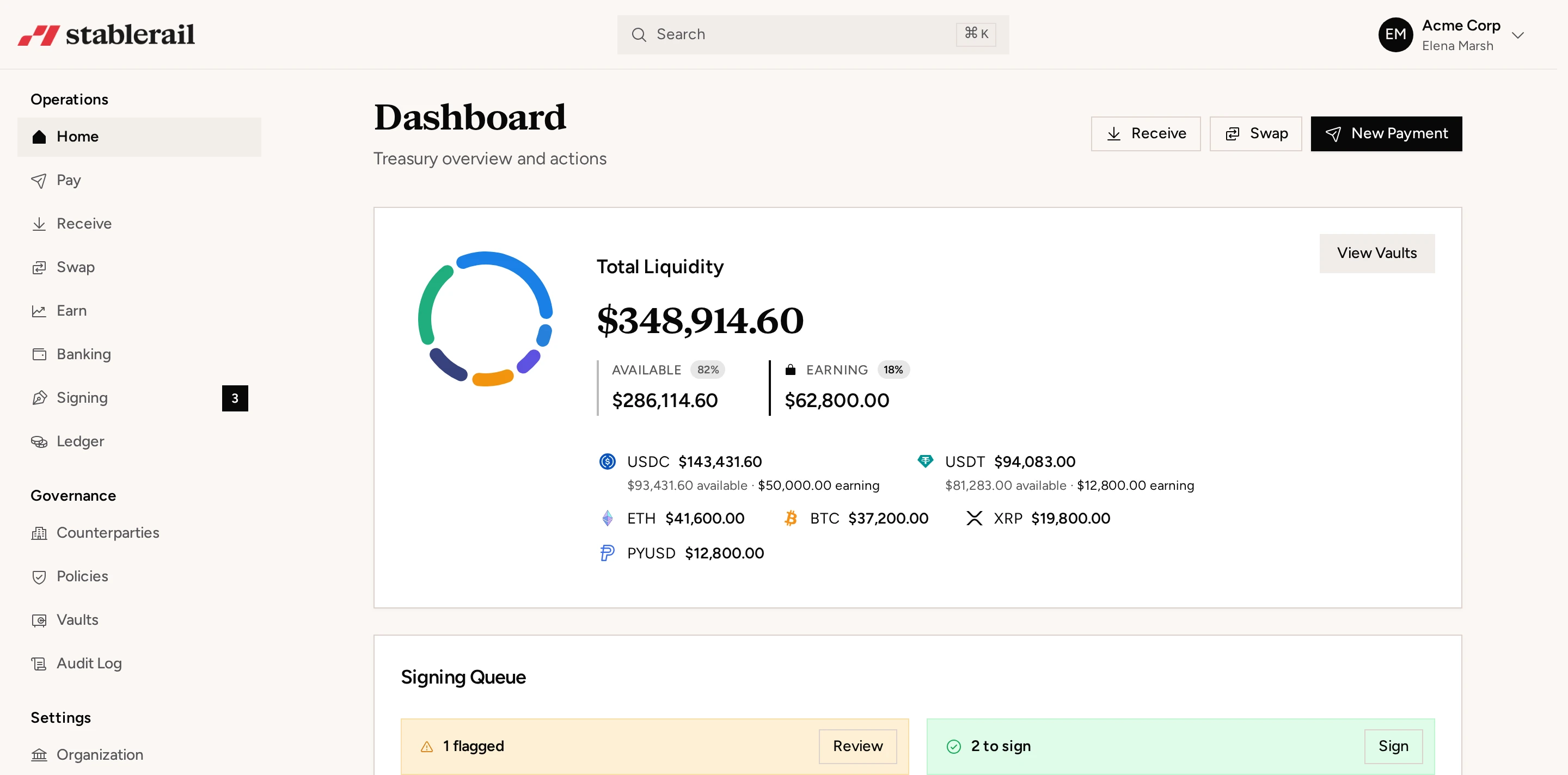
Stablerail provides one business account for USDC and USDT treasury operations, with approvals and signing quorum, sanctions and address screening before send, global payouts, fiat off-ramp, corporate cards, and exportable audit evidence. Where a treasury platform and a specialist analytics vendor are used together, document which system generates the risk signal, which one blocks or releases the payment, and where the authoritative evidence is retained.
Make the final decision on evidence, not feature labels
The right stablecoin risk monitoring platform covers the company’s actual chains and payment flows while producing a complete, reviewable record. Before signing, obtain written answers on network coverage, retention, role design, administrative logging, point-in-time reports, integrations, and module dependencies.
Choose the provider that performs consistently under identical test cases and lets an independent reviewer reconstruct each decision. That standard is more useful than the number of risk categories, the appearance of a dashboard, or a generic claim that USDC and USDT are supported.
Frequently asked questions
What is a stablecoin risk monitoring platform?
A stablecoin risk monitoring platform screens blockchain addresses and transactions for sanctions, illicit-finance exposure, and other defined risk indicators. Enterprise platforms may also provide alerts, investigations, case management, user permissions, audit logs, APIs, and evidence exports.
What should an audit log record for USDC and USDT transactions?
The log should record screening requests, results, assignments, notes, dispositions, approvals, rule changes, access changes, exports, and API activity with users and timestamps. It should also link the decision to the relevant address, asset, network, transaction hash, and internal ledger or payment reference.
How should a company compare stablecoin monitoring vendors?
Run identical proof-of-concept scenarios using the company’s actual networks, transaction types, roles, and integrations. Compare point-in-time evidence, chain coverage, RBAC, case workflows, administrative logs, exports, API behavior, retention, and product-module requirements.
Does support for USDC or USDT mean every network is covered?
No. Stablecoins exist on multiple networks, and a provider may support a token on one chain but not another or may offer different capabilities by chain. Request a written token-by-network coverage matrix and test each production route.
Is wallet screening enough for stablecoin compliance?
Wallet screening is useful before a transfer, but it does not replace ongoing transaction monitoring, investigation, payment approval, or evidence retention. A complete workflow should also account for changed attribution, rescreening, separation of duties, and post-transaction review.
What evidence should be retained after clearing a stablecoin alert?
Retain the address, asset, network, amount, timestamp, risk findings, exposure paths, analyst notes, supporting files, approvers, disposition reason, and transaction hash where applicable. The record should preserve what was known at decision time rather than replacing it with a later risk assessment.
Finance writers covering stablecoin treasury, payments, compliance, and risk controls.
More about the Stablerail team- Stablecoin treasury managementApprovals, limits, yield and reporting on one balance.
- Stablecoin payoutsBatch contractor and vendor payments with screening.
- USDT vs USDCWhich stablecoin your company should settle in.
- Stablecoin finance glossaryMPC, off-ramp, travel rule and the rest, in plain English.
- Product updatesEverything we ship, month by month.