
Multi-Currency Business Accounts for USD, EUR, GBP and Stablecoins
Learn how to hold USD, EUR, GBP, USDC and USDT together, connect local payment rails, manage FX and stablecoin conversions, and simplify treasury reconciliation.
%22%20x1%3D%220%22%20y1%3D%220%22%20x2%3D%221%22%20y2%3D%221%22%3E%0A%20%20%20%20%20%20%20%20%3Cstop%20offset%3D%220%25%22%20stop-color%3D%22%23360A0E%22%20%2F%3E%0A%20%20%20%20%20%20%20%20%3Cstop%20offset%3D%2250%25%22%20stop-color%3D%22%23551217%22%20%2F%3E%0A%20%20%20%20%20%20%20%20%3Cstop%20offset%3D%22100%25%22%20stop-color%3D%22%237A1D20%22%20%2F%3E%0A%20%20%20%20%20%20%3C%2FlinearGradient%3E%0A%20%20%20%20%20%20%3CradialGradient%20id%3D%22glow%22%20cx%3D%22998%22%20cy%3D%22-150%22%20r%3D%22520%22%20gradientUnits%3D%22userSpaceOnUse%22%3E%0A%20%20%20%20%20%20%20%20%3Cstop%20offset%3D%220%25%22%20stop-color%3D%22%23FFA587%22%20stop-opacity%3D%220.45%22%20%2F%3E%0A%20%20%20%20%20%20%20%20%3Cstop%20offset%3D%2255%25%22%20stop-color%3D%22%23FFA587%22%20stop-opacity%3D%220.08%22%20%2F%3E%0A%20%20%20%20%20%20%20%20%3Cstop%20offset%3D%22100%25%22%20stop-color%3D%22%23FFA587%22%20stop-opacity%3D%220%22%20%2F%3E%0A%20%20%20%20%20%20%3C%2FradialGradient%3E%0A%20%20%20%20%20%20%3ClinearGradient%20id%3D%22glass%22%20x1%3D%220%22%20y1%3D%220%22%20x2%3D%221%22%20y2%3D%221%22%3E%0A%20%20%20%20%20%20%20%20%3Cstop%20offset%3D%220%25%22%20stop-color%3D%22%23F8D6D2%22%20stop-opacity%3D%220.26%22%20%2F%3E%0A%20%20%20%20%20%20%20%20%3Cstop%20offset%3D%22100%25%22%20stop-color%3D%22%23FFFFFF%22%20stop-opacity%3D%220.08%22%20%2F%3E%0A%20%20%20%20%20%20%3C%2FlinearGradient%3E%0A%20%20%20%20%20%20%3ClinearGradient%20id%3D%22accent%22%20x1%3D%220%22%20y1%3D%220%22%20x2%3D%221%22%20y2%3D%221%22%3E%0A%20%20%20%20%20%20%20%20%3Cstop%20offset%3D%220%25%22%20stop-color%3D%22%23FFA587%22%20%2F%3E%0A%20%20%20%20%20%20%20%20%3Cstop%20offset%3D%22100%25%22%20stop-color%3D%22%23DC4A38%22%20%2F%3E%0A%20%20%20%20%20%20%3C%2FlinearGradient%3E%0A%20%20%20%20%20%20%3Cfilter%20id%3D%22soft%22%3E%3CfeGaussianBlur%20stdDeviation%3D%2210%22%20%2F%3E%3C%2Ffilter%3E%0A%20%20%20%20%3C%2Fdefs%3E%0A%20%20%20%20%3Crect%20width%3D%221600%22%20height%3D%22900%22%20fill%3D%22url(%23bg)%22%20%2F%3E%0A%20%20%20%20%3Crect%20width%3D%221600%22%20height%3D%22900%22%20fill%3D%22url(%23glow)%22%20%2F%3E%0A%20%20%20%20%3Cline%20x1%3D%22262%22%20y1%3D%22301%22%20x2%3D%22262%22%20y2%3D%22382%22%20stroke%3D%22%23F8D6D2%22%20stroke-opacity%3D%220.6%22%20stroke-width%3D%223%22%2F%3E%0A%20%20%20%20%20%20%3Crect%20x%3D%22240%22%20y%3D%22341%22%20width%3D%2244%22%20height%3D%221%22%20fill%3D%22%23F8D6D2%22%20opacity%3D%220.5%22%2F%3E%3Cline%20x1%3D%22362%22%20y1%3D%22281%22%20x2%3D%22362%22%20y2%3D%22361%22%20stroke%3D%22%23FF8E72%22%20stroke-opacity%3D%220.6%22%20stroke-width%3D%223%22%2F%3E%0A%20%20%20%20%20%20%3Crect%20x%3D%22340%22%20y%3D%22321%22%20width%3D%2244%22%20height%3D%220%22%20fill%3D%22url(%23accent)%22%20opacity%3D%221%22%2F%3E%3Cline%20x1%3D%22462%22%20y1%3D%22300%22%20x2%3D%22462%22%20y2%3D%22410%22%20stroke%3D%22%23F8D6D2%22%20stroke-opacity%3D%220.6%22%20stroke-width%3D%223%22%2F%3E%0A%20%20%20%20%20%20%3Crect%20x%3D%22440%22%20y%3D%22340%22%20width%3D%2244%22%20height%3D%2230%22%20fill%3D%22%23F8D6D2%22%20opacity%3D%220.5%22%2F%3E%3Cline%20x1%3D%22562%22%20y1%3D%22310%22%20x2%3D%22562%22%20y2%3D%22435%22%20stroke%3D%22%23F8D6D2%22%20stroke-opacity%3D%220.6%22%20stroke-width%3D%223%22%2F%3E%0A%20%20%20%20%20%20%3Crect%20x%3D%22540%22%20y%3D%22350%22%20width%3D%2244%22%20height%3D%2245%22%20fill%3D%22%23F8D6D2%22%20opacity%3D%220.5%22%2F%3E%3Cline%20x1%3D%22662%22%20y1%3D%22315%22%20x2%3D%22662%22%20y2%3D%22417%22%20stroke%3D%22%23F8D6D2%22%20stroke-opacity%3D%220.6%22%20stroke-width%3D%223%22%2F%3E%0A%20%20%20%20%20%20%3Crect%20x%3D%22640%22%20y%3D%22355%22%20width%3D%2244%22%20height%3D%2222%22%20fill%3D%22%23F8D6D2%22%20opacity%3D%220.5%22%2F%3E%3Cline%20x1%3D%22762%22%20y1%3D%22268%22%20x2%3D%22762%22%20y2%3D%22368%22%20stroke%3D%22%23FF8E72%22%20stroke-opacity%3D%220.6%22%20stroke-width%3D%223%22%2F%3E%0A%20%20%20%20%20%20%3Crect%20x%3D%22740%22%20y%3D%22308%22%20width%3D%2244%22%20height%3D%2220%22%20fill%3D%22url(%23accent)%22%20opacity%3D%221%22%2F%3E%3Cline%20x1%3D%22862%22%20y1%3D%22233%22%20x2%3D%22862%22%20y2%3D%22354%22%20stroke%3D%22%23FF8E72%22%20stroke-opacity%3D%220.6%22%20stroke-width%3D%223%22%2F%3E%0A%20%20%20%20%20%20%3Crect%20x%3D%22840%22%20y%3D%22273%22%20width%3D%2244%22%20height%3D%2241%22%20fill%3D%22url(%23accent)%22%20opacity%3D%221%22%2F%3E%3Cline%20x1%3D%22962%22%20y1%3D%22216%22%20x2%3D%22962%22%20y2%3D%22347%22%20stroke%3D%22%23FF8E72%22%20stroke-opacity%3D%220.6%22%20stroke-width%3D%223%22%2F%3E%0A%20%20%20%20%20%20%3Crect%20x%3D%22940%22%20y%3D%22256%22%20width%3D%2244%22%20height%3D%2251%22%20fill%3D%22url(%23accent)%22%20opacity%3D%221%22%2F%3E%3Cline%20x1%3D%221062%22%20y1%3D%22207%22%20x2%3D%221062%22%20y2%3D%22343%22%20stroke%3D%22%23F8D6D2%22%20stroke-opacity%3D%220.6%22%20stroke-width%3D%223%22%2F%3E%0A%20%20%20%20%20%20%3Crect%20x%3D%221040%22%20y%3D%22247%22%20width%3D%2244%22%20height%3D%2256%22%20fill%3D%22%23F8D6D2%22%20opacity%3D%220.5%22%2F%3E%3Cline%20x1%3D%221162%22%20y1%3D%22233%22%20x2%3D%221162%22%20y2%3D%22342%22%20stroke%3D%22%23FF8E72%22%20stroke-opacity%3D%220.6%22%20stroke-width%3D%223%22%2F%3E%0A%20%20%20%20%20%20%3Crect%20x%3D%221140%22%20y%3D%22273%22%20width%3D%2244%22%20height%3D%2229%22%20fill%3D%22url(%23accent)%22%20opacity%3D%221%22%2F%3E%3Cline%20x1%3D%221262%22%20y1%3D%22276%22%20x2%3D%221262%22%20y2%3D%22371%22%20stroke%3D%22%23FF8E72%22%20stroke-opacity%3D%220.6%22%20stroke-width%3D%223%22%2F%3E%0A%20%20%20%20%20%20%3Crect%20x%3D%221240%22%20y%3D%22316%22%20width%3D%2244%22%20height%3D%2215%22%20fill%3D%22url(%23accent)%22%20opacity%3D%221%22%2F%3E%3Cline%20x1%3D%221362%22%20y1%3D%22267%22%20x2%3D%221362%22%20y2%3D%22355%22%20stroke%3D%22%23F8D6D2%22%20stroke-opacity%3D%220.6%22%20stroke-width%3D%223%22%2F%3E%0A%20%20%20%20%20%20%3Crect%20x%3D%221340%22%20y%3D%22307%22%20width%3D%2244%22%20height%3D%228%22%20fill%3D%22%23F8D6D2%22%20opacity%3D%220.5%22%2F%3E%0A%20%20%20%20%3Crect%20x%3D%2226%22%20y%3D%2226%22%20width%3D%221548%22%20height%3D%22848%22%20rx%3D%2218%22%20fill%3D%22none%22%20stroke%3D%22%23F2D0C8%22%20stroke-opacity%3D%220.12%22%2F%3E%0A%20%20%3C%2Fsvg%3E)
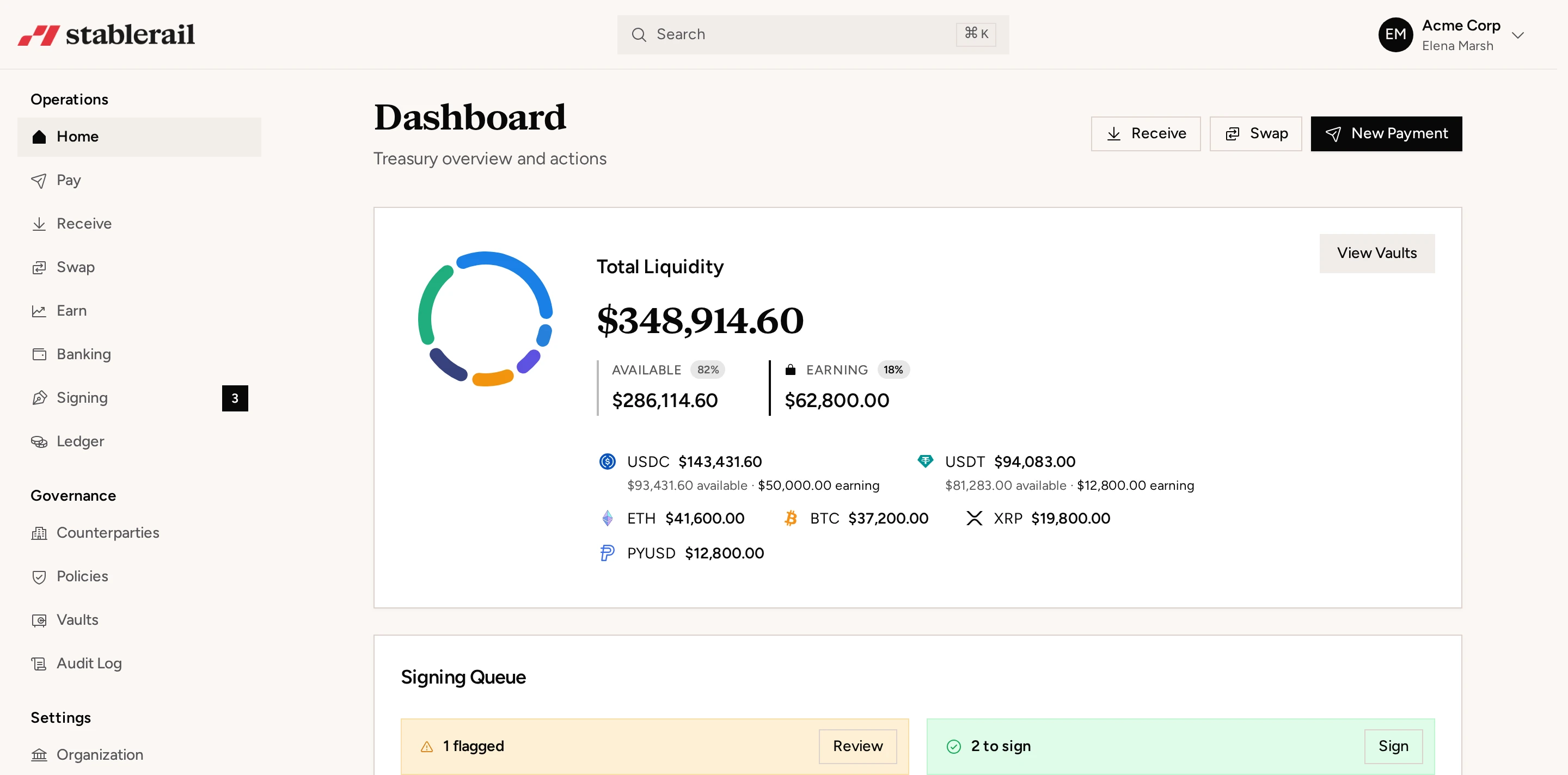
A multi-currency account lets a finance team manage fiat and stablecoin balances without treating each currency, wallet and payment rail as a separate workflow. With Stablerail, businesses can hold USD, EUR and GBP alongside USDC and USDT, move funds over local and international rails, and convert between fiat and stablecoins when needed.
The practical benefit is not simply seeing balances on one screen. It is having a connected operating model for collections, supplier payments, treasury transfers and reconciliation. A company can receive euros through an IBAN, pay a UK contractor in pounds, convert dollars into USDC, and send stablecoins over a supported blockchain from the same treasury environment.
What a multi-currency account includes
A Stablerail multi-currency setup combines three components:
- Fiat balances: USD, EUR and GBP accounts connected to domestic and cross-border payment rails.
- Stablecoin balances: USDC and USDT held in self-custodial MPC vaults. MPC, or multi-party computation, distributes signing authority so that no single private key controls the treasury.
- Conversion and payment workflows: on- and off-ramps between fiat and stablecoins, FX between supported fiat currencies, and payouts to bank accounts or blockchain addresses.
This structure provides a practical USD EUR GBP account while retaining the capabilities of a stablecoin account. The balances remain distinct: one dollar, one euro and one USDC are separate assets with different issuers, settlement systems and risks. The advantage is that they can be operated and reconciled through one workspace.
Payment rails and typical timings
The correct rail depends on the currency, destination, amount and urgency. Actual availability, cut-off times and limits depend on the account setup, banking partners and recipient institution.
| Currency | Rail | Typical use | Indicative timing |
|---|---|---|---|
| EUR | SEPA | Routine euro transfers | Usually same or next business day |
| EUR | SEPA Instant | Urgent eligible euro payments | Usually seconds, 24/7 |
| USD | ACH | Lower-cost domestic collections and payments | Same day or 1–3 business days, depending on service and cut-off |
| USD | Fedwire | Urgent or higher-value US transfers | Generally same business day before cut-off |
| GBP | Faster Payments | Everyday UK payments | Usually seconds or minutes |
| GBP | CHAPS | Urgent, higher-value UK payments | Same business day before cut-off |
| GBP | BACS | Payroll and planned bulk payments | Commonly three working days |
| Multiple | SWIFT | Cross-border bank transfers | Often 1–5 business days |
Virtual IBANs can help identify incoming payments and allocate them to the right customer, entity or invoice. They are particularly useful when many counterparties pay into a shared treasury structure. Availability depends on the business, jurisdiction and account configuration.
Moving between fiat and stablecoins
A connected on-ramp converts fiat into USDC or USDT. An off-ramp converts stablecoins into fiat for withdrawal to a bank account. A typical workflow is:
- Fund the USD, EUR or GBP balance through an eligible bank rail.
- Select the source currency, destination stablecoin, amount and blockchain network.
- Review the conversion quote, fees and expected destination amount.
- Approve the transaction under the company’s signing policy.
- Receive the stablecoins in the treasury vault or send them to an approved address.
Stablecoin transfers can be made across supported networks including Ethereum, Base, Arbitrum, Polygon, Tron, BNB Chain, Optimism and Solana. Network selection matters because fees, confirmation times and recipient compatibility differ. USDT on Tron, for example, is not interchangeable at the wallet level with USDT on Ethereum. The recipient must support the selected token and network.
Before converting, finance teams should review the published corridor pricing for the specific fiat currency, stablecoin and direction. The total cost may include an FX rate or spread, conversion fee, bank fee and blockchain network fee. Stablerail presents applicable pricing for the corridor rather than assuming that every USD-to-USDC or EUR-to-USDT route costs the same.
How to manage FX without losing visibility
A multi-currency account reduces unnecessary conversions. If a company collects EUR and has euro-denominated expenses, it can retain those receipts in EUR rather than converting them immediately into USD and then back into EUR for payments.
For each conversion, capture:
- The currencies and gross amounts exchanged.
- The quoted exchange rate and timestamp.
- Any spread, conversion charge or transfer fee.
- The net amount credited to the destination balance.
- The legal entity and business purpose associated with the transaction.
Stablecoins also require currency treatment in the ledger. USDC and USDT are designed to track the US dollar, but they are not bank deposits and may not always trade at exactly $1. Finance teams should define how stablecoins are classified under their accounting policy and how gains, losses and fees are recorded.
Reconciliation across bank and blockchain transactions
Bank statements typically use account numbers, payment references and value dates. Blockchain records use wallet addresses, transaction hashes, token amounts and network fees. A combined treasury workflow needs to preserve both sets of data.
A useful reconciliation record links the internal payment ID to:
- The source and destination balance.
- The counterparty, invoice or payroll batch.
- The bank reference or blockchain transaction hash.
- The initiated, approved and settled timestamps.
- The exchange rate and fees, where a conversion occurred.
- The approvers and supporting documents.
This creates a traceable path from the accounting entry to the underlying bank or blockchain settlement. Audit logs and downloadable evidence packs can support month-end close and external review without relying on screenshots from several providers.
Managing entities, approvals and access
Groups with subsidiaries should avoid mixing ownership merely for convenience. Balances, transactions and supporting records need to remain attributable to the correct legal entity. Stablerail supports treasury structures for businesses managing multiple entities while maintaining entity-level visibility. See the multi-entity treasury solution for more detail.
Teams can apply approval limits, quorum signing and address allowlists to fiat and stablecoin workflows. Sanctions and wallet screening can be used before stablecoin transfers. These controls are most useful when they match the company’s existing payment authority matrix rather than creating a separate process solely for digital assets.
What is needed to open an account
Onboarding includes know-your-business checks, along with jurisdiction and industry eligibility reviews. The exact documents depend on the company structure, but businesses should generally prepare:
- Certificate of incorporation and registered address details.
- Ownership and director information.
- Identity documents for relevant controllers and beneficial owners.
- A description of expected payment activity, currencies and volumes.
- Source-of-funds information and supporting business documents.
- Details of intended stablecoin networks and counterparties.
Once approved, the finance team can configure user roles, approval thresholds, fiat accounts, stablecoin vaults and permitted payment destinations.
Choosing the right operating model
A multi-currency account is most useful when the company actively receives, holds or pays in more than one currency. The aim is not to convert every balance into stablecoins or centralise every transaction automatically. It is to give finance teams a consistent way to choose the appropriate asset and settlement rail for each obligation.
Before going live, map expected collections and payments by currency, identify which conversions are genuinely required, confirm recipient network support, and agree how bank and blockchain activity will enter the general ledger. That groundwork makes a combined USD, EUR, GBP and stablecoin treasury easier to operate and reconcile.
Finance writers covering stablecoin treasury, payments, compliance, and risk controls.
More about the Stablerail team- Stablecoin treasury managementApprovals, limits, yield and reporting on one balance.
- Stablecoin payoutsBatch contractor and vendor payments with screening.
- USDT vs USDCWhich stablecoin your company should settle in.
- Stablecoin finance glossaryMPC, off-ramp, travel rule and the rest, in plain English.
- Product updatesEverything we ship, month by month.