
Multi-Currency Business Account for USD, EUR, GBP and Stablecoins
Learn how to manage USD, EUR, GBP, USDC and USDT across bank and blockchain rails, including conversion costs, approvals, reconciliation and KYB.
A multi-currency business account lets finance teams receive, hold, convert and pay in currencies such as USD, EUR and GBP while coordinating USDC and USDT treasury activity. Each asset remains a distinct balance rather than one pooled currency. The benefit is operational: teams can select the appropriate bank or blockchain rail, control approvals, reduce unnecessary conversions and reconcile fiat and stablecoin transactions in one workflow.
%22%20x1%3D%220%22%20y1%3D%220%22%20x2%3D%221%22%20y2%3D%221%22%3E%0A%20%20%20%20%20%20%20%20%3Cstop%20offset%3D%220%25%22%20stop-color%3D%22%23360A0E%22%20%2F%3E%0A%20%20%20%20%20%20%20%20%3Cstop%20offset%3D%2250%25%22%20stop-color%3D%22%23551217%22%20%2F%3E%0A%20%20%20%20%20%20%20%20%3Cstop%20offset%3D%22100%25%22%20stop-color%3D%22%237A1D20%22%20%2F%3E%0A%20%20%20%20%20%20%3C%2FlinearGradient%3E%0A%20%20%20%20%20%20%3CradialGradient%20id%3D%22glow%22%20cx%3D%22448%22%20cy%3D%22221%22%20r%3D%22520%22%20gradientUnits%3D%22userSpaceOnUse%22%3E%0A%20%20%20%20%20%20%20%20%3Cstop%20offset%3D%220%25%22%20stop-color%3D%22%23FFA587%22%20stop-opacity%3D%220.45%22%20%2F%3E%0A%20%20%20%20%20%20%20%20%3Cstop%20offset%3D%2255%25%22%20stop-color%3D%22%23FFA587%22%20stop-opacity%3D%220.08%22%20%2F%3E%0A%20%20%20%20%20%20%20%20%3Cstop%20offset%3D%22100%25%22%20stop-color%3D%22%23FFA587%22%20stop-opacity%3D%220%22%20%2F%3E%0A%20%20%20%20%20%20%3C%2FradialGradient%3E%0A%20%20%20%20%20%20%3ClinearGradient%20id%3D%22glass%22%20x1%3D%220%22%20y1%3D%220%22%20x2%3D%221%22%20y2%3D%221%22%3E%0A%20%20%20%20%20%20%20%20%3Cstop%20offset%3D%220%25%22%20stop-color%3D%22%23F8D6D2%22%20stop-opacity%3D%220.26%22%20%2F%3E%0A%20%20%20%20%20%20%20%20%3Cstop%20offset%3D%22100%25%22%20stop-color%3D%22%23FFFFFF%22%20stop-opacity%3D%220.08%22%20%2F%3E%0A%20%20%20%20%20%20%3C%2FlinearGradient%3E%0A%20%20%20%20%20%20%3ClinearGradient%20id%3D%22accent%22%20x1%3D%220%22%20y1%3D%220%22%20x2%3D%221%22%20y2%3D%221%22%3E%0A%20%20%20%20%20%20%20%20%3Cstop%20offset%3D%220%25%22%20stop-color%3D%22%23FFA587%22%20%2F%3E%0A%20%20%20%20%20%20%20%20%3Cstop%20offset%3D%22100%25%22%20stop-color%3D%22%23DC4A38%22%20%2F%3E%0A%20%20%20%20%20%20%3C%2FlinearGradient%3E%0A%20%20%20%20%20%20%3Cfilter%20id%3D%22soft%22%3E%3CfeGaussianBlur%20stdDeviation%3D%2210%22%20%2F%3E%3C%2Ffilter%3E%0A%20%20%20%20%3C%2Fdefs%3E%0A%20%20%20%20%3Crect%20width%3D%221600%22%20height%3D%22900%22%20fill%3D%22url(%23bg)%22%20%2F%3E%0A%20%20%20%20%3Crect%20width%3D%221600%22%20height%3D%22900%22%20fill%3D%22url(%23glow)%22%20%2F%3E%0A%20%20%20%20%0A%20%20%20%20%3Cpath%20d%3D%22M%20500%20600%20A%20300%20300%200%200%201%201100%20600%22%20fill%3D%22none%22%20stroke%3D%22url(%23glass)%22%20stroke-width%3D%2260%22%2F%3E%0A%20%20%20%20%3Cpath%20d%3D%22M%20500%20600%20A%20300%20300%200%200%201%20940.8414688357673%20335.11572214232194%22%20fill%3D%22none%22%20stroke%3D%22url(%23accent)%22%20stroke-width%3D%2260%22%20stroke-linecap%3D%22round%22%2F%3E%0A%20%20%20%20%3Ccircle%20cx%3D%22800%22%20cy%3D%22600%22%20r%3D%2232%22%20fill%3D%22%233E090D%22%20stroke%3D%22url(%23accent)%22%20stroke-width%3D%226%22%2F%3E%0A%20%20%20%20%3Cline%20x1%3D%22800%22%20y1%3D%22600%22%20x2%3D%22912.6731750686138%22%20y2%3D%22388.0925777138575%22%20stroke%3D%22%23FFF1ED%22%20stroke-width%3D%2210%22%20stroke-linecap%3D%22round%22%2F%3E%0A%20%20%0A%20%20%20%20%3Crect%20x%3D%2226%22%20y%3D%2226%22%20width%3D%221548%22%20height%3D%22848%22%20rx%3D%2218%22%20fill%3D%22none%22%20stroke%3D%22%23F2D0C8%22%20stroke-opacity%3D%220.12%22%2F%3E%0A%20%20%3C%2Fsvg%3E)
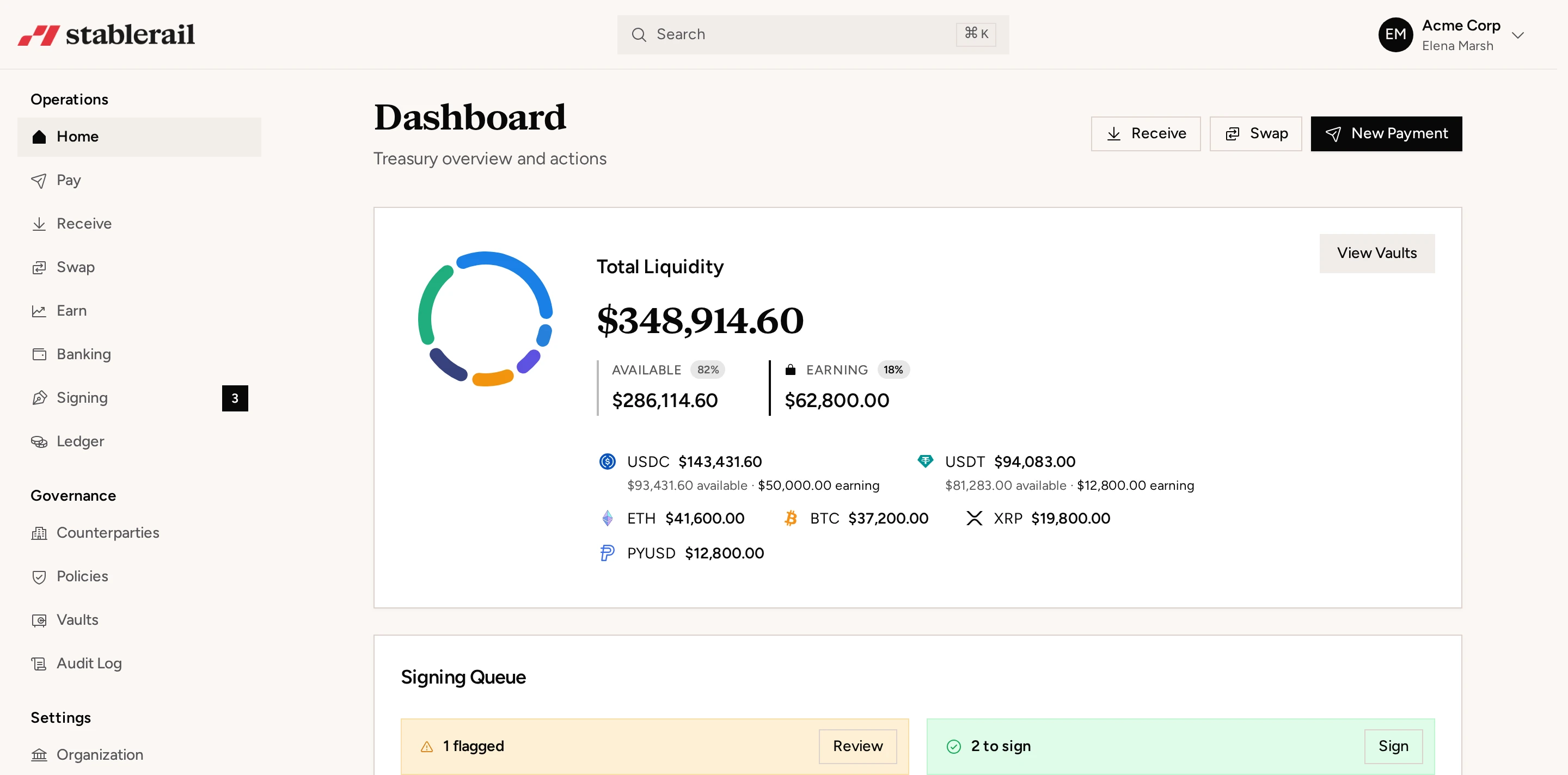
A multi-currency business account gives finance teams one operating environment for USD, EUR, GBP and stablecoin activity while keeping each asset separately recorded. It can connect local bank rails, international wires, fiat-to-stablecoin conversion and on-chain transfers without treating the currencies as interchangeable. Stablerail provides one business account for USDC and USDT treasury, including global payouts and fiat off-ramp capabilities.
The value is not simply a consolidated balance screen. A useful setup must help a company receive funds, choose a settlement rail, review conversion costs, approve transfers and produce evidence for accounting and audit. Availability of currencies, local account details and payment methods still depends on the provider, legal entity, corridor and compliance review.
How a multi-currency account works
USD, EUR, GBP, USDC and USDT should each be treated as separate ledger balances. Stablecoins may need further separation by blockchain network. For example, USDC on Ethereum and USDC on Base are the same named asset on different networks, with different addresses, transaction fees and operational requirements.
The account or treasury platform should expose the receiving details and payment rails attached to each balance. A finance team might collect a US invoice through ACH, pay a euro-denominated supplier through SEPA, send GBP to a contractor through Faster Payments and settle a digital-asset invoice on-chain.
| Balance or asset | Common rails | Typical operational timing | Key checks |
|---|---|---|---|
| USD | ACH, Fedwire and SWIFT | ACH commonly takes one to three business days. Eligible same-day ACH and Fedwire transfers may settle the same business day before applicable cut-offs. | Routing details, account type, cut-off time and fee allocation |
| EUR | SEPA, SEPA Instant and SWIFT | Standard SEPA commonly arrives the same or next business day. SEPA Instant can process within seconds when both institutions participate. | IBAN, beneficiary name, institution participation and payment purpose |
| GBP | Faster Payments, CHAPS, BACS and SWIFT | Faster Payments often completes within seconds or minutes. CHAPS is generally same-day before cut-off, while BACS uses a three-working-day cycle. | Sort code, account number, rail limits and cut-off time |
| USDC or USDT | Supported blockchain networks | Often minutes, but timing depends on network congestion, required confirmations and transaction screening. | Exact asset, network, wallet address, screening result and network fee |
These timings are indicative, not guaranteed. Bank holidays, intermediary banks, compliance reviews, incorrect beneficiary details and local cut-offs can delay fiat payments. Blockchain transfers may be delayed by congestion, wallet review or a receiving platform’s confirmation requirements.
Connecting fiat and stablecoin balances
An on-ramp converts fiat into a stablecoin; an off-ramp converts a stablecoin into fiat. These conversions make it possible to receive customer funds through bank rails, deploy part of the balance on-chain and later return funds to fiat for payroll, tax or supplier obligations.
- Receive USD, EUR or GBP through the appropriate local or international bank rail.
- Review the conversion quote, including the exchange rate, explicit service charge, expected delivery amount and any blockchain fee.
- Select the stablecoin and blockchain network required by the receiving wallet.
- Obtain the approvals required by the company’s treasury policy.
- Send the stablecoin to a verified address or retain it in the company’s approved treasury wallet.
- Record the fiat debit, stablecoin credit, fees, approvals and transaction hash.
Network selection is a critical payment instruction, not a technical afterthought. The sender should confirm the asset, network and destination address through an authenticated channel. Sending to an unsupported network may make funds difficult or impossible to recover. A small test payment is prudent when using a new beneficiary or route.
Compare the full cost, not only the FX rate
Fiat-to-fiat FX, such as EUR to USD, is different from fiat-to-stablecoin conversion, such as USD to USDC. A quoted rate may include a spread, while other charges may appear separately. Treasury teams should compare the amount delivered after all charges rather than looking only at the headline rate.
| Cost component | What finance should verify | How it affects the decision |
|---|---|---|
| FX rate or spread | Compare the quote with a relevant market reference observed at the same time. | Determines the base cost of exchanging one fiat currency for another. |
| Conversion charge | Check whether it is fixed, percentage-based or incorporated into the rate. | Can make a route uneconomic for small or large transfers. |
| Bank rail fee | Review sending, receiving and return-payment charges for the selected rail. | A faster rail may cost more than a standard local payment. |
| Intermediary fee | Confirm whether correspondent banks may deduct charges from a SWIFT payment. | The beneficiary may receive less than the instructed amount. |
| Blockchain fee | Check the fee for the chosen network when the transfer is approved. | Network demand can change the total cost before execution. |
| Timing and conversion risk | Consider how long funds remain unsettled or exposed to exchange-rate movement. | The cheapest nominal route may not meet a payment deadline. |
Holding local-currency balances can avoid unnecessary round trips. EUR receipts can fund SEPA expenses directly rather than being converted to USD and then back to EUR. Treasury can convert only the net surplus needed for other obligations or stablecoin liquidity.
Controls for bank and blockchain payments
Combining payment methods should not mean applying weaker controls to on-chain transactions. Finance teams should use role separation so that one person does not create, approve and release a material payment. Approval thresholds should reflect the legal entity, currency, destination and payment amount.
Useful controls include beneficiary allowlists, out-of-band verification of changed instructions, wallet address screening, transaction limits and retained approval records. Stablerail supports approvals and signing quorum, sanctions and address screening before send, and exportable audit evidence. A signing quorum requires more than one authorised participant to approve a transfer, reducing dependence on a single signer.
Operational rule: Treat a wallet address change like a bank account change. Stop the payment, verify the new instruction through a trusted contact method and document the verification.
Reconciliation across currencies and networks
A unified account improves visibility, but the accounting records must still distinguish every asset. Create separate general ledger accounts for USD, EUR, GBP, USDC and USDT. If the same stablecoin is used on multiple networks, network-level subaccounts can make wallet reconciliation and fee analysis clearer.
For fiat transactions, retain the bank reference, counterparty, booking date, value date, original currency, settlement currency, applied exchange rate and fees. Virtual account details or payment references can help attribute receipts to the correct customer, invoice or group entity.
For stablecoin transactions, record the asset amount, accounting value, network, sending and receiving addresses, transaction hash, network fee, conversion charge and linked invoice or approval. Reconcile the internal ledger against bank statements and blockchain records at month-end, with unresolved items assigned to an owner.
The accounting policy should specify the recognition source and time used to value stablecoin transactions and how subsequent movements are treated. USDC and USDT are intended to track the US dollar, but they are not bank deposits and can trade above or below their target value.
Preserving separation across legal entities
A shared dashboard must not result in commingled funds. Each bank detail, balance, wallet and transaction should be assigned to the legal entity that owns it. Intercompany transfers need the same documentation, approvals and accounting treatment as transfers executed through separate banking systems.
Configure users according to their responsibilities and entities. Approval limits may vary by payment size or subsidiary, while audit logs should show who created, reviewed, approved and released each instruction. Corporate cards should also be issued and reconciled against the correct entity and funding source.
What companies need to open an account
Opening a business multi-currency or stablecoin account normally requires Know Your Business checks. Eligibility depends on factors including jurisdiction, industry, ownership structure, expected activity and counterparties. Finance teams should prepare:
- Certificate of incorporation and registered business address
- Details of directors and ultimate beneficial owners
- An ownership chart for a multi-entity or layered structure
- A description of products, customers and payment flows
- Expected volumes, currencies, corridors and destination countries
- Source-of-funds or source-of-wealth evidence where requested
- Information about external wallets and stablecoin counterparties
After approval, do not fund the account immediately at full scale. Configure users, approval quorum, transaction limits and approved beneficiaries first, then test each new bank and blockchain route with a controlled amount.
Finance team implementation checklist
- Map expected inflows and outflows by currency, entity and month.
- Identify which local and international payment rails each corridor requires.
- Set target fiat balances for payroll, tax and near-term supplier obligations.
- Document who can request, approve and release FX and stablecoin transfers.
- Create separate ledger accounts by currency, stablecoin and relevant network.
- Define how quotes, bank confirmations, transaction hashes and approvals will be retained.
- Verify every new beneficiary and run a small test payment before scaling.
- Review delivered amounts, fees, failed payments and unreconciled items regularly.
The right multi-currency structure reduces fragmented bank and wallet workflows without obscuring legal ownership or accounting detail. The objective is to use the best rail for each obligation while maintaining clear approvals, predictable conversion decisions and a complete record from receipt through final settlement.
Frequently asked questions
Can a business account hold USD, EUR, GBP and stablecoins together?
A multi-currency setup can present USD, EUR, GBP, USDC and USDT activity in one operating environment, subject to provider and jurisdictional availability. Each currency or stablecoin remains a separate balance and should have its own accounting treatment.
What is the difference between a multi-currency account and a stablecoin wallet?
A multi-currency account connects fiat balances or payment flows to bank rails such as ACH, SEPA and Faster Payments. A stablecoin wallet holds and transfers assets on blockchain networks; an integrated treasury setup coordinates both while preserving separate balances, controls and records.
How do businesses convert USDC or USDT into USD, EUR or GBP?
A fiat off-ramp converts the stablecoin into the required fiat currency and sends the proceeds through an available bank rail. Finance should review the conversion rate, fees, beneficiary details, network and expected delivered amount before approving the transaction.
How should stablecoin transfers be reconciled in accounting records?
Record the stablecoin amount, accounting value, blockchain network, wallet addresses, transaction hash, network fee and linked approval or invoice. Reconcile these details against blockchain records and the internal ledger, using a documented policy for valuation and foreign exchange treatment.
Which payment rail should a finance team use for international payments?
Choose the rail based on destination, currency, deadline, beneficiary access, total delivered cost and compliance requirements. Local rails are often suitable for domestic payments, SWIFT provides broader bank reach, and stablecoins can support on-chain settlement when the counterparty is prepared to receive the exact asset and network.
Finance writers covering stablecoin treasury, payments, compliance, and risk controls.
More about the Stablerail team- Stablecoin treasury managementApprovals, limits, yield and reporting on one balance.
- Stablecoin payoutsBatch contractor and vendor payments with screening.
- USDT vs USDCWhich stablecoin your company should settle in.
- Stablecoin finance glossaryMPC, off-ramp, travel rule and the rest, in plain English.
- Product updatesEverything we ship, month by month.