
How to Manage Business Expenses with Stablecoins and Corporate Cards
Learn how to connect USDC or USDT treasury balances to corporate cards, choose the right payment rail, control employee spend and reconcile every transaction.
Businesses can manage expenses from USDC or USDT by allocating treasury funds to corporate cards, setting limits by employee and purpose, and retaining receipts, approvals and conversion records. Cards work best for subscriptions, travel and employee purchases; large invoices may suit bank transfers or stablecoin payouts. Finance should reconcile authorisations, settlements, fees, refunds and treasury debits rather than treating each card charge as a simple stablecoin payment.
%22%20x1%3D%220%22%20y1%3D%220%22%20x2%3D%221%22%20y2%3D%221%22%3E%0A%20%20%20%20%20%20%20%20%3Cstop%20offset%3D%220%25%22%20stop-color%3D%22%232A0608%22%20%2F%3E%0A%20%20%20%20%20%20%20%20%3Cstop%20offset%3D%2250%25%22%20stop-color%3D%22%23420D12%22%20%2F%3E%0A%20%20%20%20%20%20%20%20%3Cstop%20offset%3D%22100%25%22%20stop-color%3D%22%23621619%22%20%2F%3E%0A%20%20%20%20%20%20%3C%2FlinearGradient%3E%0A%20%20%20%20%20%20%3CradialGradient%20id%3D%22glow%22%20cx%3D%22439%22%20cy%3D%22546%22%20r%3D%22520%22%20gradientUnits%3D%22userSpaceOnUse%22%3E%0A%20%20%20%20%20%20%20%20%3Cstop%20offset%3D%220%25%22%20stop-color%3D%22%23FF9577%22%20stop-opacity%3D%220.45%22%20%2F%3E%0A%20%20%20%20%20%20%20%20%3Cstop%20offset%3D%2255%25%22%20stop-color%3D%22%23FF9577%22%20stop-opacity%3D%220.08%22%20%2F%3E%0A%20%20%20%20%20%20%20%20%3Cstop%20offset%3D%22100%25%22%20stop-color%3D%22%23FF9577%22%20stop-opacity%3D%220%22%20%2F%3E%0A%20%20%20%20%20%20%3C%2FradialGradient%3E%0A%20%20%20%20%20%20%3ClinearGradient%20id%3D%22glass%22%20x1%3D%220%22%20y1%3D%220%22%20x2%3D%221%22%20y2%3D%221%22%3E%0A%20%20%20%20%20%20%20%20%3Cstop%20offset%3D%220%25%22%20stop-color%3D%22%23F8D6D2%22%20stop-opacity%3D%220.26%22%20%2F%3E%0A%20%20%20%20%20%20%20%20%3Cstop%20offset%3D%22100%25%22%20stop-color%3D%22%23FFFFFF%22%20stop-opacity%3D%220.08%22%20%2F%3E%0A%20%20%20%20%20%20%3C%2FlinearGradient%3E%0A%20%20%20%20%20%20%3ClinearGradient%20id%3D%22accent%22%20x1%3D%220%22%20y1%3D%220%22%20x2%3D%221%22%20y2%3D%221%22%3E%0A%20%20%20%20%20%20%20%20%3Cstop%20offset%3D%220%25%22%20stop-color%3D%22%23FF9577%22%20%2F%3E%0A%20%20%20%20%20%20%20%20%3Cstop%20offset%3D%22100%25%22%20stop-color%3D%22%23D03B2D%22%20%2F%3E%0A%20%20%20%20%20%20%3C%2FlinearGradient%3E%0A%20%20%20%20%20%20%3Cfilter%20id%3D%22soft%22%3E%3CfeGaussianBlur%20stdDeviation%3D%2210%22%20%2F%3E%3C%2Ffilter%3E%0A%20%20%20%20%3C%2Fdefs%3E%0A%20%20%20%20%3Crect%20width%3D%221600%22%20height%3D%22900%22%20fill%3D%22url(%23bg)%22%20%2F%3E%0A%20%20%20%20%3Crect%20width%3D%221600%22%20height%3D%22900%22%20fill%3D%22url(%23glow)%22%20%2F%3E%0A%20%20%20%20%3Crect%20x%3D%22340%22%20y%3D%22220%22%20width%3D%22118%22%20height%3D%22108%22%20rx%3D%2210%22%20fill%3D%22url(%23accent)%22%20fill-opacity%3D%220.9%22%20stroke%3D%22%23F4CDC5%22%20stroke-opacity%3D%220.4%22%2F%3E%3Crect%20x%3D%22480%22%20y%3D%22220%22%20width%3D%22118%22%20height%3D%22108%22%20rx%3D%2210%22%20fill%3D%22url(%23accent)%22%20fill-opacity%3D%220.9%22%20stroke%3D%22%23F4CDC5%22%20stroke-opacity%3D%220.4%22%2F%3E%3Crect%20x%3D%22620%22%20y%3D%22220%22%20width%3D%22118%22%20height%3D%22108%22%20rx%3D%2210%22%20fill%3D%22url(%23glass)%22%20fill-opacity%3D%221%22%20stroke%3D%22%23F4CDC5%22%20stroke-opacity%3D%220.4%22%2F%3E%3Crect%20x%3D%22760%22%20y%3D%22220%22%20width%3D%22118%22%20height%3D%22108%22%20rx%3D%2210%22%20fill%3D%22url(%23glass)%22%20fill-opacity%3D%221%22%20stroke%3D%22%23F4CDC5%22%20stroke-opacity%3D%220.4%22%2F%3E%3Crect%20x%3D%22900%22%20y%3D%22220%22%20width%3D%22118%22%20height%3D%22108%22%20rx%3D%2210%22%20fill%3D%22url(%23glass)%22%20fill-opacity%3D%221%22%20stroke%3D%22%23F4CDC5%22%20stroke-opacity%3D%220.4%22%2F%3E%3Crect%20x%3D%221040%22%20y%3D%22220%22%20width%3D%22118%22%20height%3D%22108%22%20rx%3D%2210%22%20fill%3D%22url(%23accent)%22%20fill-opacity%3D%220.9%22%20stroke%3D%22%23F4CDC5%22%20stroke-opacity%3D%220.4%22%2F%3E%3Crect%20x%3D%221180%22%20y%3D%22220%22%20width%3D%22118%22%20height%3D%22108%22%20rx%3D%2210%22%20fill%3D%22url(%23glass)%22%20fill-opacity%3D%221%22%20stroke%3D%22%23F4CDC5%22%20stroke-opacity%3D%220.4%22%2F%3E%3Crect%20x%3D%22340%22%20y%3D%22350%22%20width%3D%22118%22%20height%3D%22108%22%20rx%3D%2210%22%20fill%3D%22url(%23accent)%22%20fill-opacity%3D%220.9%22%20stroke%3D%22%23F4CDC5%22%20stroke-opacity%3D%220.4%22%2F%3E%3Crect%20x%3D%22480%22%20y%3D%22350%22%20width%3D%22118%22%20height%3D%22108%22%20rx%3D%2210%22%20fill%3D%22url(%23glass)%22%20fill-opacity%3D%221%22%20stroke%3D%22%23F4CDC5%22%20stroke-opacity%3D%220.4%22%2F%3E%3Crect%20x%3D%22620%22%20y%3D%22350%22%20width%3D%22118%22%20height%3D%22108%22%20rx%3D%2210%22%20fill%3D%22url(%23glass)%22%20fill-opacity%3D%221%22%20stroke%3D%22%23F4CDC5%22%20stroke-opacity%3D%220.4%22%2F%3E%3Crect%20x%3D%22760%22%20y%3D%22350%22%20width%3D%22118%22%20height%3D%22108%22%20rx%3D%2210%22%20fill%3D%22url(%23accent)%22%20fill-opacity%3D%220.9%22%20stroke%3D%22%23F4CDC5%22%20stroke-opacity%3D%220.4%22%2F%3E%3Crect%20x%3D%22900%22%20y%3D%22350%22%20width%3D%22118%22%20height%3D%22108%22%20rx%3D%2210%22%20fill%3D%22url(%23accent)%22%20fill-opacity%3D%220.9%22%20stroke%3D%22%23F4CDC5%22%20stroke-opacity%3D%220.4%22%2F%3E%3Crect%20x%3D%221040%22%20y%3D%22350%22%20width%3D%22118%22%20height%3D%22108%22%20rx%3D%2210%22%20fill%3D%22url(%23glass)%22%20fill-opacity%3D%221%22%20stroke%3D%22%23F4CDC5%22%20stroke-opacity%3D%220.4%22%2F%3E%3Crect%20x%3D%221180%22%20y%3D%22350%22%20width%3D%22118%22%20height%3D%22108%22%20rx%3D%2210%22%20fill%3D%22url(%23accent)%22%20fill-opacity%3D%220.9%22%20stroke%3D%22%23F4CDC5%22%20stroke-opacity%3D%220.4%22%2F%3E%3Crect%20x%3D%22340%22%20y%3D%22480%22%20width%3D%22118%22%20height%3D%22108%22%20rx%3D%2210%22%20fill%3D%22url(%23accent)%22%20fill-opacity%3D%220.9%22%20stroke%3D%22%23F4CDC5%22%20stroke-opacity%3D%220.4%22%2F%3E%3Crect%20x%3D%22480%22%20y%3D%22480%22%20width%3D%22118%22%20height%3D%22108%22%20rx%3D%2210%22%20fill%3D%22url(%23glass)%22%20fill-opacity%3D%221%22%20stroke%3D%22%23F4CDC5%22%20stroke-opacity%3D%220.4%22%2F%3E%3Crect%20x%3D%22620%22%20y%3D%22480%22%20width%3D%22118%22%20height%3D%22108%22%20rx%3D%2210%22%20fill%3D%22url(%23glass)%22%20fill-opacity%3D%221%22%20stroke%3D%22%23F4CDC5%22%20stroke-opacity%3D%220.4%22%2F%3E%3Crect%20x%3D%22760%22%20y%3D%22480%22%20width%3D%22118%22%20height%3D%22108%22%20rx%3D%2210%22%20fill%3D%22url(%23glass)%22%20fill-opacity%3D%221%22%20stroke%3D%22%23F4CDC5%22%20stroke-opacity%3D%220.4%22%2F%3E%3Crect%20x%3D%22900%22%20y%3D%22480%22%20width%3D%22118%22%20height%3D%22108%22%20rx%3D%2210%22%20fill%3D%22url(%23glass)%22%20fill-opacity%3D%221%22%20stroke%3D%22%23F4CDC5%22%20stroke-opacity%3D%220.4%22%2F%3E%3Crect%20x%3D%221040%22%20y%3D%22480%22%20width%3D%22118%22%20height%3D%22108%22%20rx%3D%2210%22%20fill%3D%22url(%23glass)%22%20fill-opacity%3D%221%22%20stroke%3D%22%23F4CDC5%22%20stroke-opacity%3D%220.4%22%2F%3E%3Crect%20x%3D%221180%22%20y%3D%22480%22%20width%3D%22118%22%20height%3D%22108%22%20rx%3D%2210%22%20fill%3D%22url(%23accent)%22%20fill-opacity%3D%220.9%22%20stroke%3D%22%23F4CDC5%22%20stroke-opacity%3D%220.4%22%2F%3E%3Crect%20x%3D%22340%22%20y%3D%22610%22%20width%3D%22118%22%20height%3D%22108%22%20rx%3D%2210%22%20fill%3D%22url(%23accent)%22%20fill-opacity%3D%220.9%22%20stroke%3D%22%23F4CDC5%22%20stroke-opacity%3D%220.4%22%2F%3E%3Crect%20x%3D%22480%22%20y%3D%22610%22%20width%3D%22118%22%20height%3D%22108%22%20rx%3D%2210%22%20fill%3D%22url(%23accent)%22%20fill-opacity%3D%220.9%22%20stroke%3D%22%23F4CDC5%22%20stroke-opacity%3D%220.4%22%2F%3E%3Crect%20x%3D%22620%22%20y%3D%22610%22%20width%3D%22118%22%20height%3D%22108%22%20rx%3D%2210%22%20fill%3D%22url(%23glass)%22%20fill-opacity%3D%221%22%20stroke%3D%22%23F4CDC5%22%20stroke-opacity%3D%220.4%22%2F%3E%3Crect%20x%3D%22760%22%20y%3D%22610%22%20width%3D%22118%22%20height%3D%22108%22%20rx%3D%2210%22%20fill%3D%22url(%23glass)%22%20fill-opacity%3D%221%22%20stroke%3D%22%23F4CDC5%22%20stroke-opacity%3D%220.4%22%2F%3E%3Crect%20x%3D%22900%22%20y%3D%22610%22%20width%3D%22118%22%20height%3D%22108%22%20rx%3D%2210%22%20fill%3D%22url(%23accent)%22%20fill-opacity%3D%220.9%22%20stroke%3D%22%23F4CDC5%22%20stroke-opacity%3D%220.4%22%2F%3E%3Crect%20x%3D%221040%22%20y%3D%22610%22%20width%3D%22118%22%20height%3D%22108%22%20rx%3D%2210%22%20fill%3D%22url(%23glass)%22%20fill-opacity%3D%221%22%20stroke%3D%22%23F4CDC5%22%20stroke-opacity%3D%220.4%22%2F%3E%3Crect%20x%3D%221180%22%20y%3D%22610%22%20width%3D%22118%22%20height%3D%22108%22%20rx%3D%2210%22%20fill%3D%22url(%23accent)%22%20fill-opacity%3D%220.9%22%20stroke%3D%22%23F4CDC5%22%20stroke-opacity%3D%220.4%22%2F%3E%0A%20%20%20%20%3Crect%20x%3D%2226%22%20y%3D%2226%22%20width%3D%221548%22%20height%3D%22848%22%20rx%3D%2218%22%20fill%3D%22none%22%20stroke%3D%22%23F2D0C8%22%20stroke-opacity%3D%220.12%22%2F%3E%0A%20%20%3C%2Fsvg%3E)
How stablecoin-funded business expenses work
Companies holding USDC or USDT still need to pay ordinary costs such as software, advertising, cloud services, travel and local purchases. Paying every expense on-chain is rarely practical because many merchants accept only cards or bank transfers. A stablecoin expense programme connects the treasury balance to those familiar payment methods without removing finance controls.
The operating model matters. Finance needs to know when stablecoins are converted, which balance backs card authorisations, how final settlement differs from the initial hold and what evidence reaches the accounting system. These details determine available spend, foreign exchange treatment and the entries required at month-end.
A typical card transaction follows these stages:
- Funding: Finance allocates stablecoin funds, or fiat converted from them, to the card programme.
- Authorisation: The card network checks the card status, spending controls and available balance. An approved authorisation may temporarily reduce available funds before the transaction settles.
- Conversion: If the treasury asset, card settlement currency and merchant currency differ, conversion may occur during funding, authorisation or settlement. The programme terms determine the actual point.
- Clearing and settlement: The merchant submits the final charge. It may differ from the authorisation because of tips, deposits, exchange-rate changes or merchant adjustments.
- Reconciliation: Finance matches the settled transaction to the cardholder, receipt, business purpose, approval and ledger category.
Before issuing cards, confirm supported stablecoins and networks, card currencies, conversion timing, pricing, fees, geographic availability, cardholder eligibility and funding rules. The business and intended users will normally need to complete the provider’s verification and eligibility checks.
Choose the right payment rail for each expense
Corporate cards are useful, but they should not replace every payment method. Choose the rail based on vendor acceptance, transaction size, currency, urgency, approval requirements and the quality of the resulting payment reference.
| Expense or situation | Preferred method | Why it fits | Control to apply |
|---|---|---|---|
| Recurring software or cloud service | Dedicated virtual card | Isolates the vendor and makes price changes or unwanted renewals easier to identify | Vendor-specific limit and named owner |
| Travel and employee purchases | Named corporate card | Avoids personal outlay and creates a cardholder-level transaction record | Daily or monthly limit, category controls and receipt deadline |
| Large supplier invoice | Bank transfer or stablecoin payout | Supports invoice references and avoids dependence on card acceptance or card limits | Invoice approval, beneficiary verification and treasury signing quorum |
| Stablecoin-native vendor | USDC or USDT payout | Pays the vendor directly on a mutually supported network | Confirm asset, network and address; screen before sending |
| One-off low-value purchase | Limited virtual card | Restricts exposure to a defined amount or short period | Single-purpose limit and automatic closure where available |
| Merchant that does not accept the company card | Reimbursement | Returns approved personal expenditure to the employee | Separate claim, receipt and manager approval |
Do not choose a rail solely because the treasury holds stablecoins. A direct payout can be efficient for a willing vendor, but sending an asset on the wrong network can be irreversible. Bank transfers may be preferable when a supplier requires a conventional remittance reference. Cards are usually strongest where speed, merchant acceptance and delegated employee spending matter.
Build card controls around real spending patterns
A useful card policy explains who may spend, what they may buy, which evidence they must submit and who can approve exceptions. It should be short enough for employees to follow and specific enough for finance to enforce.
Set limits by role and purpose
A single company-wide ceiling creates unnecessary risk for some users and needless declines for others. Set per-transaction, daily or monthly limits based on the employee’s responsibilities. A traveller may need a temporary increase, while a subscription card can be limited to the expected recurring charge.
- Assign every card to an employee, team, cost centre or vendor.
- Use dedicated cards for important recurring subscriptions.
- Require approval above a defined amount.
- Give temporary limit increases an owner, reason and expiry date.
- Close cards promptly when an employee leaves or a vendor relationship ends.
Use merchant category controls carefully
Merchant category codes classify the type of business accepting a card. Finance can permit expected categories, such as software or airlines, and block categories outside policy. However, category codes are assigned through the acquiring chain and may be broader or different from what the buyer expects. Maintain a documented process for reviewing legitimate declines and granting time-limited exceptions.
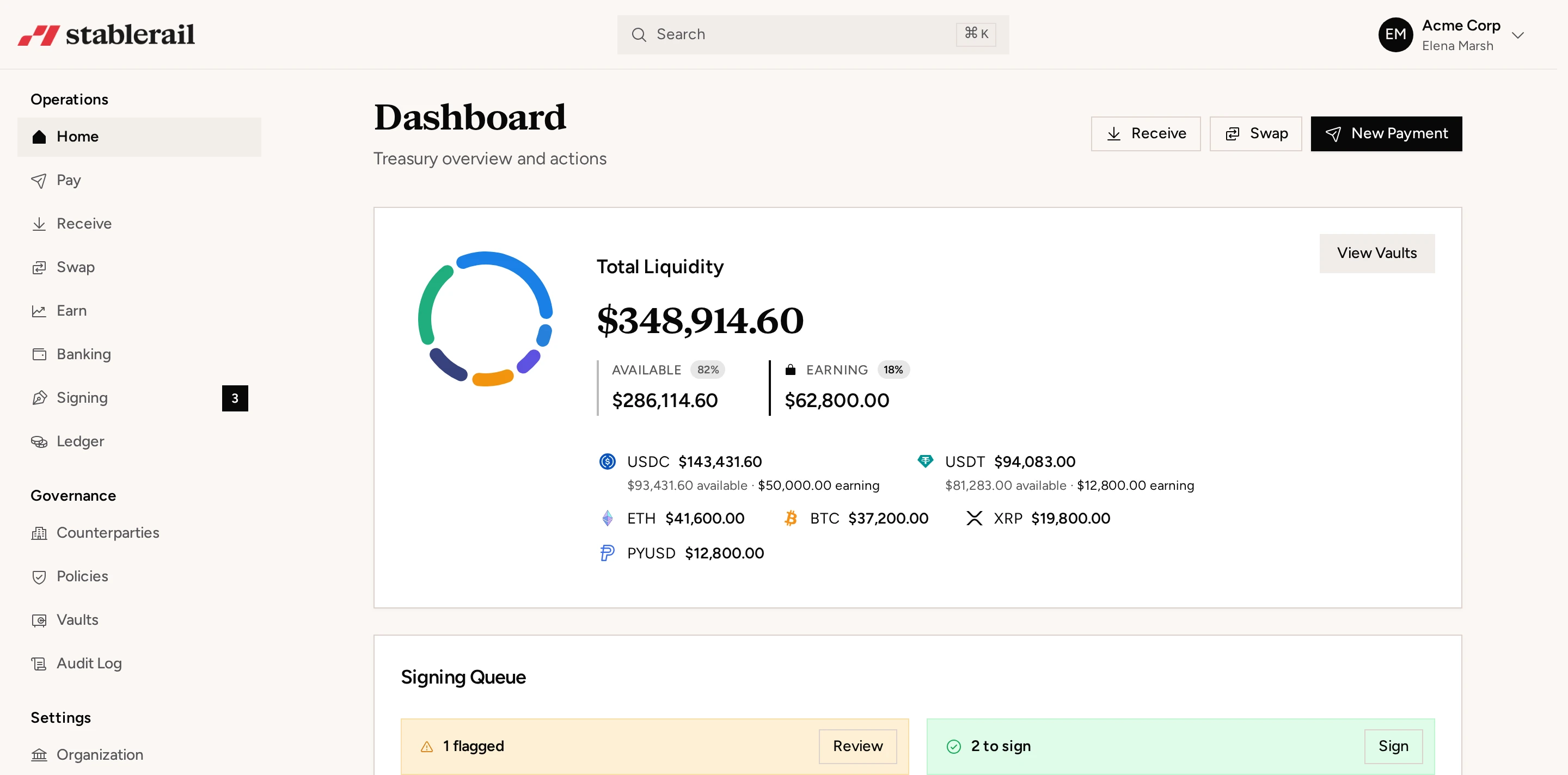
Stablerail brings corporate cards and USDC or USDT treasury activity into one business account, alongside approvals and signing quorum. Finance teams should still separate card-level controls from treasury approvals: approving an employee’s expense is not the same control as authorising a treasury transfer.
Collect evidence while the purchase is fresh
Card data proves that a payment occurred, but it does not establish the business purpose. Require the employee to provide the receipt, category, cost centre or project, and a short explanation. Travel, meals and client entertainment may require additional information under the company’s tax policy and local rules.
A practical evidence workflow is:
- Notify the cardholder after the transaction.
- Collect the receipt and business purpose within a defined period.
- Route transactions above the relevant threshold to a manager.
- Review missing evidence, possible duplicates and policy exceptions.
- Export approved records to the accounting system and retain the source evidence.
A receipt deadline should fit the reporting cycle. For example, a company may require submission within several business days so finance can resolve missing documents before close. Reimbursements should use a separate workflow because they have a different payer, approval trail and potential tax treatment; they should not be disguised as card transactions.
Account for conversion, authorisation and settlement differences
A stablecoin balance and a card purchase can involve several units. If the treasury holds USDC and an employee pays a hotel in euros, the records may show the original EUR amount, a card settlement amount, a stablecoin debit and one or more conversion or cross-border charges.
Capture the original transaction amount and currency, settlement amount and currency, treasury deduction, supplied exchange rate, fees, reversals, refunds and disputes. Do not assume that one unit of USDC or USDT always creates exactly one US dollar of card spending capacity. Conversion spreads, programme fees and market-price differences can affect the amount available or deducted.
Open authorisations also need attention. Hotels, vehicle rental companies and some online merchants may place an initial hold and submit a different final amount. A reversed authorisation can restore available spend without becoming a settled expense. Finance should therefore distinguish pending holds from posted transactions instead of booking every authorisation to the general ledger.
Map transactions to the accounting policy
Create a standard expense category list aligned with the chart of accounts, such as software, advertising, travel, meals, professional services and payment fees. Map each card to a cardholder, department, entity and project where relevant. Consistent dimensions reduce manual recoding and make budget-versus-actual reporting more reliable.
The accounting treatment for stablecoins depends on the reporting framework, jurisdiction and company policy. If the company does not account for them as cash, converting or disposing of stablecoins to fund card spending may require entries beyond the operating expense itself. Finance should agree the policy with its accounting adviser before month-end, including how to record conversion differences, network fees and gains or losses where applicable.
Run a three-way month-end reconciliation
A complete reconciliation connects the card ledger, treasury or funding records, and general ledger. Reconciling only settled card purchases can leave unexplained differences caused by open authorisations, refunds, fees or funding transfers.
- Export authorisations, settled transactions, reversals, refunds, disputes and fees for the period.
- Match settled transactions to cardholders, receipts, approvals and accounting categories.
- Compare stablecoin debits and fiat conversions with card funding records.
- List open authorisations separately and investigate unusually old holds.
- Confirm that reimbursements, bank payments and stablecoin payouts were not also recorded as card expenses.
- Post approved fees and conversion differences to the designated ledger accounts.
- Retain statements, exports, receipts, exception approvals and reconciliation sign-off as the period evidence pack.
Ownership should be explicit: employees explain purchases, managers approve business purpose and finance reviews policy exceptions and ledger treatment. Stablerail can provide sanctions and address screening before stablecoin sends, global payouts and fiat off-ramp, plus exportable audit evidence. Those records should be incorporated into the company’s existing close and retention procedures rather than treated as a substitute for them.
Implementation checklist for finance teams
- Complete business verification and confirm company, user and jurisdiction eligibility.
- Document supported assets, networks, currencies, conversion points and fees.
- Define which expenses use cards, bank transfers, stablecoin payouts or reimbursements.
- Assign card owners, limits, merchant controls and exception approvers.
- Test authorisations, reversals, refunds and foreign-currency purchases before broad rollout.
- Map transaction fields to the chart of accounts and accounting dimensions.
- Set receipt deadlines, escalation rules and card closure procedures.
- Reconcile the card ledger, treasury records and general ledger every reporting period.
Frequently asked questions
Can a company fund corporate cards with USDC or USDT?
Yes, if the card programme supports funding from those assets. Confirm whether conversion occurs when funds are allocated, when a purchase is authorised or when it settles, because that timing affects available spend and reconciliation.
How should stablecoin-funded card expenses be recorded?
Record the operating expense using the settled transaction and retain the original currency, settlement currency, treasury deduction, conversion details and fees. The stablecoin funding or conversion step may require separate entries depending on the company’s accounting framework and policy.
Are corporate cards better than direct stablecoin payments?
Neither method is universally better. Cards generally suit subscriptions, travel and employee purchases, while direct stablecoin payouts can suit vendors that accept USDC or USDT on an agreed network; large invoices may be better paid by bank transfer.
How do finance teams reconcile pending card authorisations?
Track pending authorisations separately from settled expenses because a hold can reduce available spend without becoming a final charge. At close, identify open holds, reversals and merchant adjustments and book only transactions supported by the company’s accounting policy.
What controls should apply to employee stablecoin-funded cards?
Assign each card to a named owner and apply limits based on role and purpose. Add merchant category restrictions, receipt deadlines, approval thresholds, temporary exception expiry dates and a prompt card closure process for departures or cancelled vendors.
Finance writers covering stablecoin treasury, payments, compliance, and risk controls.
More about the Stablerail team- Stablecoin treasury managementApprovals, limits, yield and reporting on one balance.
- Stablecoin payoutsBatch contractor and vendor payments with screening.
- USDT vs USDCWhich stablecoin your company should settle in.
- Stablecoin finance glossaryMPC, off-ramp, travel rule and the rest, in plain English.
- Product updatesEverything we ship, month by month.