
How to Pay Vendors in USDC or USDT
A practical accounts payable workflow for USDC and USDT vendor payments, covering wallet verification, network selection, approvals, fees, settlement evidence and reconciliation.
To pay a vendor in USDC or USDT, verify the invoice, collect the exact stablecoin, blockchain network, token version and wallet address, then independently confirm those instructions. Screen the destination, obtain approvals, ensure you have both the payment asset and any required gas token, and send the funds. Finally, retain the transaction hash, confirmation status, fees, approvals and invoice mapping for reconciliation and audit evidence.
%22%20x1%3D%220%22%20y1%3D%220%22%20x2%3D%221%22%20y2%3D%221%22%3E%0A%20%20%20%20%20%20%20%20%3Cstop%20offset%3D%220%25%22%20stop-color%3D%22%23360A0E%22%20%2F%3E%0A%20%20%20%20%20%20%20%20%3Cstop%20offset%3D%2250%25%22%20stop-color%3D%22%23551217%22%20%2F%3E%0A%20%20%20%20%20%20%20%20%3Cstop%20offset%3D%22100%25%22%20stop-color%3D%22%237A1D20%22%20%2F%3E%0A%20%20%20%20%20%20%3C%2FlinearGradient%3E%0A%20%20%20%20%20%20%3CradialGradient%20id%3D%22glow%22%20cx%3D%221168%22%20cy%3D%22-190%22%20r%3D%22520%22%20gradientUnits%3D%22userSpaceOnUse%22%3E%0A%20%20%20%20%20%20%20%20%3Cstop%20offset%3D%220%25%22%20stop-color%3D%22%23FFA587%22%20stop-opacity%3D%220.45%22%20%2F%3E%0A%20%20%20%20%20%20%20%20%3Cstop%20offset%3D%2255%25%22%20stop-color%3D%22%23FFA587%22%20stop-opacity%3D%220.08%22%20%2F%3E%0A%20%20%20%20%20%20%20%20%3Cstop%20offset%3D%22100%25%22%20stop-color%3D%22%23FFA587%22%20stop-opacity%3D%220%22%20%2F%3E%0A%20%20%20%20%20%20%3C%2FradialGradient%3E%0A%20%20%20%20%20%20%3ClinearGradient%20id%3D%22glass%22%20x1%3D%220%22%20y1%3D%220%22%20x2%3D%221%22%20y2%3D%221%22%3E%0A%20%20%20%20%20%20%20%20%3Cstop%20offset%3D%220%25%22%20stop-color%3D%22%23F8D6D2%22%20stop-opacity%3D%220.26%22%20%2F%3E%0A%20%20%20%20%20%20%20%20%3Cstop%20offset%3D%22100%25%22%20stop-color%3D%22%23FFFFFF%22%20stop-opacity%3D%220.08%22%20%2F%3E%0A%20%20%20%20%20%20%3C%2FlinearGradient%3E%0A%20%20%20%20%20%20%3ClinearGradient%20id%3D%22accent%22%20x1%3D%220%22%20y1%3D%220%22%20x2%3D%221%22%20y2%3D%221%22%3E%0A%20%20%20%20%20%20%20%20%3Cstop%20offset%3D%220%25%22%20stop-color%3D%22%23FFA587%22%20%2F%3E%0A%20%20%20%20%20%20%20%20%3Cstop%20offset%3D%22100%25%22%20stop-color%3D%22%23DC4A38%22%20%2F%3E%0A%20%20%20%20%20%20%3C%2FlinearGradient%3E%0A%20%20%20%20%20%20%3Cfilter%20id%3D%22soft%22%3E%3CfeGaussianBlur%20stdDeviation%3D%2210%22%20%2F%3E%3C%2Ffilter%3E%0A%20%20%20%20%3C%2Fdefs%3E%0A%20%20%20%20%3Crect%20width%3D%221600%22%20height%3D%22900%22%20fill%3D%22url(%23bg)%22%20%2F%3E%0A%20%20%20%20%3Crect%20width%3D%221600%22%20height%3D%22900%22%20fill%3D%22url(%23glow)%22%20%2F%3E%0A%20%20%20%20%3Crect%20x%3D%22340%22%20y%3D%22220%22%20width%3D%22118%22%20height%3D%22108%22%20rx%3D%2210%22%20fill%3D%22url(%23glass)%22%20fill-opacity%3D%221%22%20stroke%3D%22%23F4CDC5%22%20stroke-opacity%3D%220.4%22%2F%3E%3Crect%20x%3D%22480%22%20y%3D%22220%22%20width%3D%22118%22%20height%3D%22108%22%20rx%3D%2210%22%20fill%3D%22url(%23glass)%22%20fill-opacity%3D%221%22%20stroke%3D%22%23F4CDC5%22%20stroke-opacity%3D%220.4%22%2F%3E%3Crect%20x%3D%22620%22%20y%3D%22220%22%20width%3D%22118%22%20height%3D%22108%22%20rx%3D%2210%22%20fill%3D%22url(%23accent)%22%20fill-opacity%3D%220.9%22%20stroke%3D%22%23F4CDC5%22%20stroke-opacity%3D%220.4%22%2F%3E%3Crect%20x%3D%22760%22%20y%3D%22220%22%20width%3D%22118%22%20height%3D%22108%22%20rx%3D%2210%22%20fill%3D%22url(%23accent)%22%20fill-opacity%3D%220.9%22%20stroke%3D%22%23F4CDC5%22%20stroke-opacity%3D%220.4%22%2F%3E%3Crect%20x%3D%22900%22%20y%3D%22220%22%20width%3D%22118%22%20height%3D%22108%22%20rx%3D%2210%22%20fill%3D%22url(%23glass)%22%20fill-opacity%3D%221%22%20stroke%3D%22%23F4CDC5%22%20stroke-opacity%3D%220.4%22%2F%3E%3Crect%20x%3D%221040%22%20y%3D%22220%22%20width%3D%22118%22%20height%3D%22108%22%20rx%3D%2210%22%20fill%3D%22url(%23accent)%22%20fill-opacity%3D%220.9%22%20stroke%3D%22%23F4CDC5%22%20stroke-opacity%3D%220.4%22%2F%3E%3Crect%20x%3D%221180%22%20y%3D%22220%22%20width%3D%22118%22%20height%3D%22108%22%20rx%3D%2210%22%20fill%3D%22url(%23glass)%22%20fill-opacity%3D%221%22%20stroke%3D%22%23F4CDC5%22%20stroke-opacity%3D%220.4%22%2F%3E%3Crect%20x%3D%22340%22%20y%3D%22350%22%20width%3D%22118%22%20height%3D%22108%22%20rx%3D%2210%22%20fill%3D%22url(%23glass)%22%20fill-opacity%3D%221%22%20stroke%3D%22%23F4CDC5%22%20stroke-opacity%3D%220.4%22%2F%3E%3Crect%20x%3D%22480%22%20y%3D%22350%22%20width%3D%22118%22%20height%3D%22108%22%20rx%3D%2210%22%20fill%3D%22url(%23accent)%22%20fill-opacity%3D%220.9%22%20stroke%3D%22%23F4CDC5%22%20stroke-opacity%3D%220.4%22%2F%3E%3Crect%20x%3D%22620%22%20y%3D%22350%22%20width%3D%22118%22%20height%3D%22108%22%20rx%3D%2210%22%20fill%3D%22url(%23glass)%22%20fill-opacity%3D%221%22%20stroke%3D%22%23F4CDC5%22%20stroke-opacity%3D%220.4%22%2F%3E%3Crect%20x%3D%22760%22%20y%3D%22350%22%20width%3D%22118%22%20height%3D%22108%22%20rx%3D%2210%22%20fill%3D%22url(%23accent)%22%20fill-opacity%3D%220.9%22%20stroke%3D%22%23F4CDC5%22%20stroke-opacity%3D%220.4%22%2F%3E%3Crect%20x%3D%22900%22%20y%3D%22350%22%20width%3D%22118%22%20height%3D%22108%22%20rx%3D%2210%22%20fill%3D%22url(%23accent)%22%20fill-opacity%3D%220.9%22%20stroke%3D%22%23F4CDC5%22%20stroke-opacity%3D%220.4%22%2F%3E%3Crect%20x%3D%221040%22%20y%3D%22350%22%20width%3D%22118%22%20height%3D%22108%22%20rx%3D%2210%22%20fill%3D%22url(%23glass)%22%20fill-opacity%3D%221%22%20stroke%3D%22%23F4CDC5%22%20stroke-opacity%3D%220.4%22%2F%3E%3Crect%20x%3D%221180%22%20y%3D%22350%22%20width%3D%22118%22%20height%3D%22108%22%20rx%3D%2210%22%20fill%3D%22url(%23glass)%22%20fill-opacity%3D%221%22%20stroke%3D%22%23F4CDC5%22%20stroke-opacity%3D%220.4%22%2F%3E%3Crect%20x%3D%22340%22%20y%3D%22480%22%20width%3D%22118%22%20height%3D%22108%22%20rx%3D%2210%22%20fill%3D%22url(%23accent)%22%20fill-opacity%3D%220.9%22%20stroke%3D%22%23F4CDC5%22%20stroke-opacity%3D%220.4%22%2F%3E%3Crect%20x%3D%22480%22%20y%3D%22480%22%20width%3D%22118%22%20height%3D%22108%22%20rx%3D%2210%22%20fill%3D%22url(%23glass)%22%20fill-opacity%3D%221%22%20stroke%3D%22%23F4CDC5%22%20stroke-opacity%3D%220.4%22%2F%3E%3Crect%20x%3D%22620%22%20y%3D%22480%22%20width%3D%22118%22%20height%3D%22108%22%20rx%3D%2210%22%20fill%3D%22url(%23glass)%22%20fill-opacity%3D%221%22%20stroke%3D%22%23F4CDC5%22%20stroke-opacity%3D%220.4%22%2F%3E%3Crect%20x%3D%22760%22%20y%3D%22480%22%20width%3D%22118%22%20height%3D%22108%22%20rx%3D%2210%22%20fill%3D%22url(%23glass)%22%20fill-opacity%3D%221%22%20stroke%3D%22%23F4CDC5%22%20stroke-opacity%3D%220.4%22%2F%3E%3Crect%20x%3D%22900%22%20y%3D%22480%22%20width%3D%22118%22%20height%3D%22108%22%20rx%3D%2210%22%20fill%3D%22url(%23accent)%22%20fill-opacity%3D%220.9%22%20stroke%3D%22%23F4CDC5%22%20stroke-opacity%3D%220.4%22%2F%3E%3Crect%20x%3D%221040%22%20y%3D%22480%22%20width%3D%22118%22%20height%3D%22108%22%20rx%3D%2210%22%20fill%3D%22url(%23glass)%22%20fill-opacity%3D%221%22%20stroke%3D%22%23F4CDC5%22%20stroke-opacity%3D%220.4%22%2F%3E%3Crect%20x%3D%221180%22%20y%3D%22480%22%20width%3D%22118%22%20height%3D%22108%22%20rx%3D%2210%22%20fill%3D%22url(%23glass)%22%20fill-opacity%3D%221%22%20stroke%3D%22%23F4CDC5%22%20stroke-opacity%3D%220.4%22%2F%3E%3Crect%20x%3D%22340%22%20y%3D%22610%22%20width%3D%22118%22%20height%3D%22108%22%20rx%3D%2210%22%20fill%3D%22url(%23accent)%22%20fill-opacity%3D%220.9%22%20stroke%3D%22%23F4CDC5%22%20stroke-opacity%3D%220.4%22%2F%3E%3Crect%20x%3D%22480%22%20y%3D%22610%22%20width%3D%22118%22%20height%3D%22108%22%20rx%3D%2210%22%20fill%3D%22url(%23glass)%22%20fill-opacity%3D%221%22%20stroke%3D%22%23F4CDC5%22%20stroke-opacity%3D%220.4%22%2F%3E%3Crect%20x%3D%22620%22%20y%3D%22610%22%20width%3D%22118%22%20height%3D%22108%22%20rx%3D%2210%22%20fill%3D%22url(%23glass)%22%20fill-opacity%3D%221%22%20stroke%3D%22%23F4CDC5%22%20stroke-opacity%3D%220.4%22%2F%3E%3Crect%20x%3D%22760%22%20y%3D%22610%22%20width%3D%22118%22%20height%3D%22108%22%20rx%3D%2210%22%20fill%3D%22url(%23accent)%22%20fill-opacity%3D%220.9%22%20stroke%3D%22%23F4CDC5%22%20stroke-opacity%3D%220.4%22%2F%3E%3Crect%20x%3D%22900%22%20y%3D%22610%22%20width%3D%22118%22%20height%3D%22108%22%20rx%3D%2210%22%20fill%3D%22url(%23accent)%22%20fill-opacity%3D%220.9%22%20stroke%3D%22%23F4CDC5%22%20stroke-opacity%3D%220.4%22%2F%3E%3Crect%20x%3D%221040%22%20y%3D%22610%22%20width%3D%22118%22%20height%3D%22108%22%20rx%3D%2210%22%20fill%3D%22url(%23glass)%22%20fill-opacity%3D%221%22%20stroke%3D%22%23F4CDC5%22%20stroke-opacity%3D%220.4%22%2F%3E%3Crect%20x%3D%221180%22%20y%3D%22610%22%20width%3D%22118%22%20height%3D%22108%22%20rx%3D%2210%22%20fill%3D%22url(%23accent)%22%20fill-opacity%3D%220.9%22%20stroke%3D%22%23F4CDC5%22%20stroke-opacity%3D%220.4%22%2F%3E%0A%20%20%20%20%3Crect%20x%3D%2226%22%20y%3D%2226%22%20width%3D%221548%22%20height%3D%22848%22%20rx%3D%2218%22%20fill%3D%22none%22%20stroke%3D%22%23F2D0C8%22%20stroke-opacity%3D%220.12%22%2F%3E%0A%20%20%3C%2Fsvg%3E)
How a USDC or USDT vendor payment works
Paying a vendor in stablecoins follows the same control principles as a bank payment, but the settlement instructions are different. Instead of an account number and routing code, accounts payable needs a wallet address, stablecoin, blockchain network and, in some cases, a specific token version or destination memo.
These details must match. USDC sent on one network does not automatically arrive in a USDC account on another network, and USDC and USDT are not interchangeable. A valid-looking wallet address also does not prove that the vendor controls it. Because an on-chain transfer generally cannot be recalled, verification needs to happen before signing.
A controlled process has seven stages: validate the invoice, collect complete payment instructions, select the asset and network, verify and screen the destination, approve and fund the transfer, execute the payout, and reconcile the result.
1. Validate the invoice and vendor change
Start with the controls used for any accounts payable transaction. Match the vendor’s legal name, invoice number, amount, currency, due date, purchase order and purchasing approval to your records. Confirm that the contract or invoice permits payment in the proposed stablecoin and establish whether the stablecoin amount is fixed or calculated from a fiat-denominated obligation.
Treat a new wallet or a change to existing wallet instructions like a bank-account change. Confirm it through a known contact or another independently established channel. Do not use the phone number or contact information included only in the message requesting the change. Email compromise can replace genuine payment instructions with an attacker’s address.
The vendor master record should capture:
- Vendor legal name and verified billing contact
- Invoice, contract and purchase-order references
- USDC or USDT and the exact blockchain network
- Full wallet address and any required memo or destination tag
- Token version, including whether the recipient accepts native or bridged assets
- Evidence of independent confirmation
- Agreed amount basis and treatment of transaction fees
2. Collect complete stablecoin payment instructions
“Pay 5,000 USDT” is incomplete. USDT is issued on multiple networks, while USDC can appear as both native and bridged forms. A receiving exchange, custodian or payment platform may support the token on one network but not another. Sending an unsupported token can require manual recovery, and recovery may be delayed, costly or unavailable.
| Required field | Example | Control purpose |
|---|---|---|
| Stablecoin | USDC | Prevents substitution between USDC, USDT or another asset |
| Network | Base | Ensures the sender uses the recipient’s supported blockchain |
| Token version | Native USDC | Avoids depositing an unsupported bridged representation |
| Wallet address | Complete digitally supplied address | Identifies the on-chain destination |
| Memo or tag | Recipient-provided identifier, if required | Allows a platform to credit the correct customer account |
| Amount basis | Vendor receives exactly 5,000 USDC | Clarifies whether network fees are separate from the invoice |
Ask the vendor to copy instructions directly from its receiving platform and state that the platform currently accepts the chosen asset and network. Screenshots can support the record, but payment data should also be supplied as text so the full address can be compared without retyping it.
3. Choose USDC or USDT and the network
Use the asset specified in the contract or invoice. If the vendor accepts either, consider what it can receive without conversion, where your treasury liquidity already sits, whether the token is native to the network, and what operational work is required to bridge or swap funds. Moving treasury assets solely to access a cheaper payment network can add smart-contract, counterparty and reconciliation steps.
| Network type or route | Potential advantage | Finance-team consideration |
|---|---|---|
| Ethereum mainnet | Broad wallet and platform support | Fees vary with demand and require the network’s native asset unless abstracted by a provider |
| Ethereum-compatible lower-cost networks | Often lower transaction fees than Ethereum mainnet | Confirm the recipient supports the exact network, not merely an address beginning with 0x |
| Tron | Commonly used for USDT transfers | Confirm TRC-20 support and the availability of TRX or another fee arrangement |
| Solana | Low-cost transfers and quick on-chain processing | Confirm the correct token mint and whether the receiving platform supports Solana deposits |
| Fiat off-ramp | Vendor receives money in its bank account | Review conversion pricing, bank details, cut-off times, compliance review and possible intermediary fees |
Do not promise a precise arrival time based only on blockchain speed. A transaction can be confirmed on-chain while the receiving platform waits for additional confirmations, performs compliance checks or credits deposits in batches. Define completion as both sufficient on-chain confirmation and successful identification or credit by the vendor.
Also agree who bears the network fee. A clean accounting approach is often to send the exact invoice amount and record the fee separately as a payment expense. Confirm the treatment before payment because fee mechanics differ by wallet and network.
4. Verify and screen the destination wallet
Address format is only a basic warning signal. Ethereum-compatible addresses generally begin with 0x, Tron addresses commonly begin with T, and Solana uses a different format. An address can be correctly formatted yet belong to the wrong entity, be pasted for the wrong network or have sanctions exposure.
- Compare the complete address with the independently confirmed vendor instructions.
- Confirm every new or changed address through a second channel using a known contact.
- Screen the destination for sanctions and relevant address-risk indicators before sending.
- Use an approved-address list where appropriate, with controlled procedures for additions and changes.
- For a new, material destination, consider a small test payment before releasing the balance.
A test transfer can detect copying, network and deposit-crediting problems, but it does not independently establish the vendor’s legal ownership if the original instructions were fraudulent. Agree whether the test amount reduces the invoice balance, and retain both transaction hashes.
5. Obtain approvals and prepare funding
Attach the invoice, vendor record, independent confirmation, screening result and amount calculation to the payment request. Approval requirements should reflect payment value and destination risk. A routine payment to an established address may follow normal accounts payable limits; a new address, unusual amount or urgent request may require an additional approver.
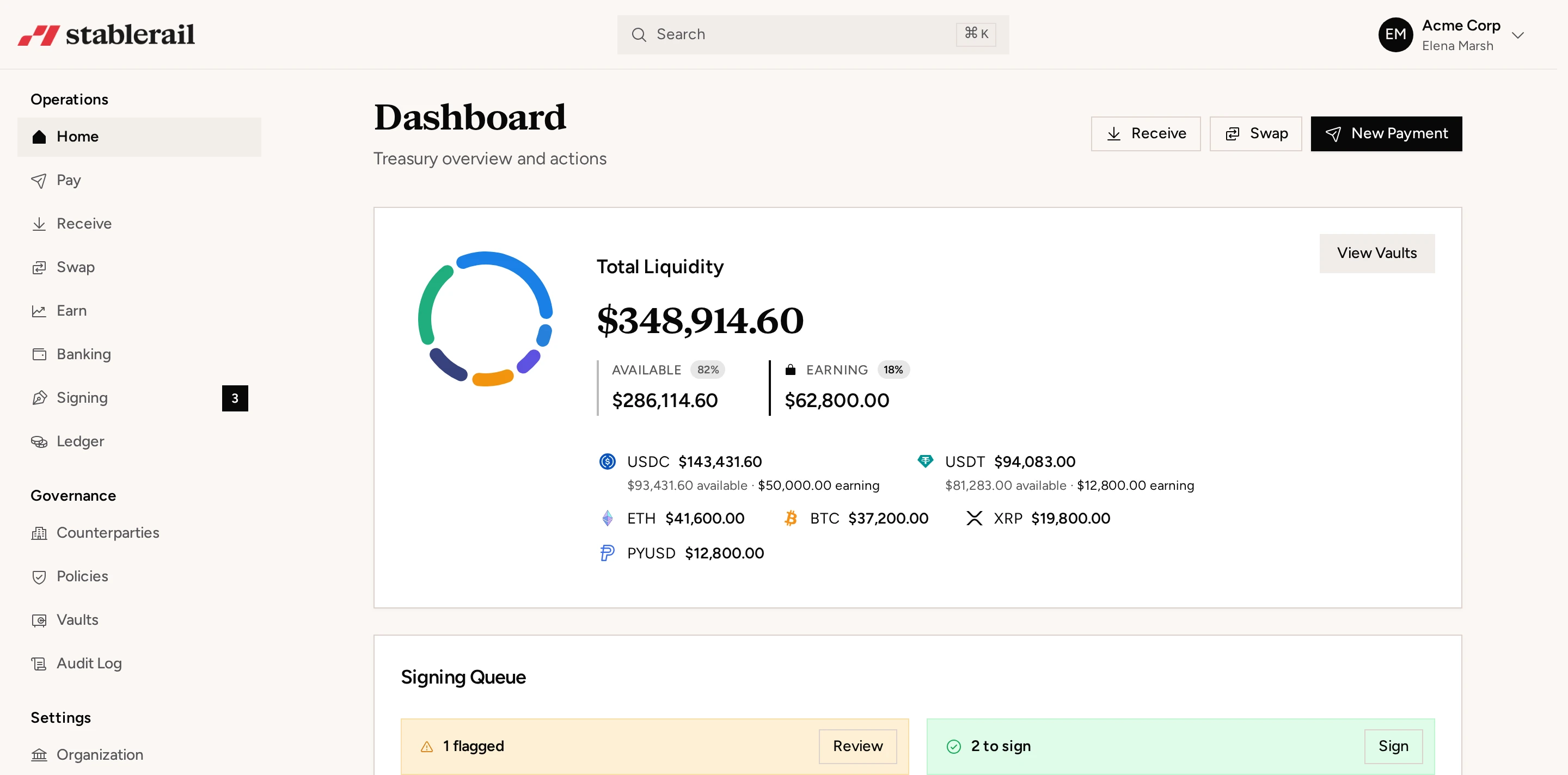
Where signing authority is distributed, use a signing quorum so one person cannot unilaterally release funds. Keep payment preparation separate from final approval where staffing permits. Stablerail provides approvals and signing quorum, sanctions and address screening before send, and exportable evidence for stablecoin treasury activity.
Check both balances before approval: the required USDC or USDT and the network’s fee asset. For example, a wallet may hold enough USDC but still be unable to send if it lacks the relevant gas token and the provider does not abstract fees. Include expected fees in the funding calculation without assuming that an estimate is a guaranteed final charge.
6. Execute an individual or batch payout
At the final signing screen, review the wallet, asset, network and amount again. Do not assume imported invoice data is correct. The signing view is the last practical control before an irreversible broadcast.
For batches, use a unique payment reference for every row and include vendor name, invoice number, wallet, asset, network and amount. Validate duplicates, totals, decimal precision, unsupported assets and blank fields before approval. Separating batches by network or asset makes funding, fee analysis and reconciliation easier.
Batch control: The sum of approved invoice rows should equal the payment total, while network fees should remain separately identifiable.
If one failed row can stop or complicate an entire batch, document how exceptions will be handled before release. Never reuse a corrected file without version control and a fresh total check.
7. Confirm, notify and reconcile
After broadcast, retain the transaction hash, blockchain network, sending and receiving addresses, asset, token amount, fee, timestamp, confirmation status and internal approval reference. A block explorer can show that a transaction was included on-chain, but the vendor should still confirm that its wallet or platform credited the deposit.
Send a payment notice containing the invoice number, stablecoin amount, network and transaction hash. Avoid calling the invoice settled until the transaction has the required confirmations and the recipient can identify it.
For accounting, apply the company’s documented valuation and stablecoin accounting policy. Record the invoice settlement, separately capture network fees and their denomination, and recognize any conversion or disposal effects required by the applicable accounting framework. Attach the invoice, approvals, wallet verification, screening evidence, transaction record and vendor confirmation to the ledger entry. For a batch, preserve a row-level mapping between each invoice and its payment result.
When the vendor wants fiat instead
Do not require a vendor to operate a wallet if the agreement calls for fiat. Verify its bank details through normal change controls, convert the treasury’s USDC or USDT through an available off-ramp, and pay using the appropriate domestic or cross-border bank rail. Depending on currency, location and eligibility, that may include ACH, Fedwire, SEPA, Faster Payments, CHAPS, BACS or SWIFT.
Compare the full outcome rather than only the headline exchange rate: conversion spread, platform or corridor fee, sending and receiving-bank charges, cut-off time, compliance review and expected net amount. Stablerail combines USDC and USDT treasury management with global payouts and fiat off-ramp capabilities, subject to route availability.
Final pre-send checklist
- The invoice, contract terms and purchasing approval are valid.
- The vendor’s legal name matches the approved payment record.
- The stablecoin, network, token version and full wallet address are confirmed.
- New or changed instructions were verified through an independent channel.
- The destination was screened and required approvals are complete.
- The payment amount and fee treatment are documented.
- The wallet has enough stablecoin and any required network-fee asset.
- The transaction hash, approval evidence and invoice mapping will be retained.
Frequently asked questions
What information do I need to pay a vendor in USDC or USDT?
You need the vendor’s full wallet address, the exact stablecoin, blockchain network, token version and any required memo or destination tag. You should also document the invoice amount, fee treatment and independent confirmation that the vendor controls or uses the destination.
Can I send USDC or USDT to any wallet address?
No. The wallet or receiving platform must support the exact stablecoin and blockchain network you use. A valid address format does not prove network compatibility, token support or ownership, so confirm and screen the destination before sending.
Who should pay the network fee on a stablecoin invoice?
The contract or payment instructions should specify the treatment. A common operational approach is to send the exact invoiced stablecoin amount and record the network fee separately, preventing the vendor from receiving less than the agreed amount.
Should I make a test payment before paying a vendor in stablecoins?
A small test payment can be useful for a new or material destination because it checks the address, network and recipient-crediting process. It does not replace independent verification, and the parties should agree whether the test amount counts toward the invoice.
How do I prove a USDC or USDT vendor payment was completed?
Retain the transaction hash, network, addresses, asset, amount, fee, timestamp and confirmation status, along with the invoice and approval evidence. The blockchain record proves on-chain execution, while vendor confirmation shows that the recipient identified or received credit for the deposit.
Finance writers covering stablecoin treasury, payments, compliance, and risk controls.
More about the Stablerail team- Stablecoin treasury managementApprovals, limits, yield and reporting on one balance.
- Stablecoin payoutsBatch contractor and vendor payments with screening.
- USDT vs USDCWhich stablecoin your company should settle in.
- Stablecoin finance glossaryMPC, off-ramp, travel rule and the rest, in plain English.
- Product updatesEverything we ship, month by month.