
How Sanctions Screening Works for Stablecoin Payments
A practical guide to sanctions screening for USDC and USDT payments, covering counterparties, wallet exposure, transaction review, escalation and audit records.
Sanctions screening for stablecoin payments should verify the payment counterparty, destination wallet and transaction context before funds are signed and broadcast. It should also repeat when data changes because sanctions lists and blockchain attribution evolve. Finance teams need documented thresholds for approval, review and rejection, plus evidence showing the screening result, reviewer, supporting records, approvals and final transaction outcome.
%22%20x1%3D%220%22%20y1%3D%220%22%20x2%3D%221%22%20y2%3D%221%22%3E%0A%20%20%20%20%20%20%20%20%3Cstop%20offset%3D%220%25%22%20stop-color%3D%22%23450B10%22%20%2F%3E%0A%20%20%20%20%20%20%20%20%3Cstop%20offset%3D%2250%25%22%20stop-color%3D%22%23681A1F%22%20%2F%3E%0A%20%20%20%20%20%20%20%20%3Cstop%20offset%3D%22100%25%22%20stop-color%3D%22%238A2A2D%22%20%2F%3E%0A%20%20%20%20%20%20%3C%2FlinearGradient%3E%0A%20%20%20%20%20%20%3CradialGradient%20id%3D%22glow%22%20cx%3D%22552%22%20cy%3D%22-378%22%20r%3D%22520%22%20gradientUnits%3D%22userSpaceOnUse%22%3E%0A%20%20%20%20%20%20%20%20%3Cstop%20offset%3D%220%25%22%20stop-color%3D%22%23FF7A59%22%20stop-opacity%3D%220.45%22%20%2F%3E%0A%20%20%20%20%20%20%20%20%3Cstop%20offset%3D%2255%25%22%20stop-color%3D%22%23FF7A59%22%20stop-opacity%3D%220.08%22%20%2F%3E%0A%20%20%20%20%20%20%20%20%3Cstop%20offset%3D%22100%25%22%20stop-color%3D%22%23FF7A59%22%20stop-opacity%3D%220%22%20%2F%3E%0A%20%20%20%20%20%20%3C%2FradialGradient%3E%0A%20%20%20%20%20%20%3ClinearGradient%20id%3D%22glass%22%20x1%3D%220%22%20y1%3D%220%22%20x2%3D%221%22%20y2%3D%221%22%3E%0A%20%20%20%20%20%20%20%20%3Cstop%20offset%3D%220%25%22%20stop-color%3D%22%23F8D6D2%22%20stop-opacity%3D%220.26%22%20%2F%3E%0A%20%20%20%20%20%20%20%20%3Cstop%20offset%3D%22100%25%22%20stop-color%3D%22%23FFFFFF%22%20stop-opacity%3D%220.08%22%20%2F%3E%0A%20%20%20%20%20%20%3C%2FlinearGradient%3E%0A%20%20%20%20%20%20%3ClinearGradient%20id%3D%22accent%22%20x1%3D%220%22%20y1%3D%220%22%20x2%3D%221%22%20y2%3D%221%22%3E%0A%20%20%20%20%20%20%20%20%3Cstop%20offset%3D%220%25%22%20stop-color%3D%22%23FF7A59%22%20%2F%3E%0A%20%20%20%20%20%20%20%20%3Cstop%20offset%3D%22100%25%22%20stop-color%3D%22%23C73128%22%20%2F%3E%0A%20%20%20%20%20%20%3C%2FlinearGradient%3E%0A%20%20%20%20%20%20%3Cfilter%20id%3D%22soft%22%3E%3CfeGaussianBlur%20stdDeviation%3D%2210%22%20%2F%3E%3C%2Ffilter%3E%0A%20%20%20%20%3C%2Fdefs%3E%0A%20%20%20%20%3Crect%20width%3D%221600%22%20height%3D%22900%22%20fill%3D%22url(%23bg)%22%20%2F%3E%0A%20%20%20%20%3Crect%20width%3D%221600%22%20height%3D%22900%22%20fill%3D%22url(%23glow)%22%20%2F%3E%0A%20%20%20%20%0A%20%20%3Cpath%20d%3D%22M400%20360%20L%20800%20220%20L%201200%20360%20L%201200%20410%20L%20400%20410%20Z%22%20fill%3D%22url(%23glass)%22%20stroke%3D%22%23F4CDC5%22%20stroke-opacity%3D%220.6%22%2F%3E%0A%20%20%3Crect%20x%3D%22460%22%20y%3D%22430%22%20width%3D%2280%22%20height%3D%22240%22%20fill%3D%22url(%23accent)%22%20stroke%3D%22%23F4CDC5%22%20stroke-opacity%3D%220.5%22%2F%3E%3Crect%20x%3D%22640%22%20y%3D%22430%22%20width%3D%2280%22%20height%3D%22240%22%20fill%3D%22url(%23glass)%22%20stroke%3D%22%23F4CDC5%22%20stroke-opacity%3D%220.5%22%2F%3E%3Crect%20x%3D%22820%22%20y%3D%22430%22%20width%3D%2280%22%20height%3D%22240%22%20fill%3D%22url(%23glass)%22%20stroke%3D%22%23F4CDC5%22%20stroke-opacity%3D%220.5%22%2F%3E%3Crect%20x%3D%221000%22%20y%3D%22430%22%20width%3D%2280%22%20height%3D%22240%22%20fill%3D%22url(%23glass)%22%20stroke%3D%22%23F4CDC5%22%20stroke-opacity%3D%220.5%22%2F%3E%0A%20%20%3Crect%20x%3D%22380%22%20y%3D%22690%22%20width%3D%22840%22%20height%3D%2236%22%20rx%3D%226%22%20fill%3D%22url(%23glass)%22%20stroke%3D%22%23F4CDC5%22%20stroke-opacity%3D%220.6%22%2F%3E%0A%20%20%3Ccircle%20cx%3D%22800%22%20cy%3D%22310%22%20r%3D%2222%22%20fill%3D%22url(%23accent)%22%2F%3E%0A%0A%20%20%20%20%3Crect%20x%3D%2226%22%20y%3D%2226%22%20width%3D%221548%22%20height%3D%22848%22%20rx%3D%2218%22%20fill%3D%22none%22%20stroke%3D%22%23F2D0C8%22%20stroke-opacity%3D%220.12%22%2F%3E%0A%20%20%3C%2Fsvg%3E)
Sanctions screening is a layered control
A wallet check alone is not sufficient sanctions screening. A reliable process connects four layers: the company making the payment, the person or business receiving it, the blockchain address and the transaction itself. Each layer answers a different question, and no single result proves that a payment is permissible.
For example, a newly created wallet may have no adverse transaction history, but its owner could still be sanctioned. Conversely, a legitimate counterparty may use an address that receives incidental funds from a high-volume exchange with some indirect exposure to risky activity. The first case may not be visible through blockchain analytics; the second may generate an alert that requires context rather than automatic rejection.
| Screening layer | What is checked | When to check | Possible outcome |
|---|---|---|---|
| Company and users | Legal entity, beneficial owners, directors and authorized users | During onboarding and after material changes | Approve, request evidence, restrict or reject |
| Counterparty | Recipient or sender identity, jurisdiction and payment purpose | Before payment and when identity details change | Clear, investigate a possible match or stop |
| Wallet | Direct designations, attributed owner and blockchain exposure | Before each transfer or under a documented rescreening rule | Clear, review or prevent use |
| Transaction | Asset, network, amount, route and behavior against the expected profile | Before execution and after settlement | Release, hold, reject or investigate |
1. Screen the company and authorized users
Company-level screening normally begins during know-your-business onboarding. Relevant data includes the entity’s legal name, registration number, jurisdiction, directors, beneficial owners and people authorized to initiate or approve payments.
The lists that apply depend on the company’s jurisdiction, ownership, banking relationships and payment corridors. A US person or US-connected transaction will commonly require consideration of sanctions administered by the US Office of Foreign Assets Control. UK, EU, UN and other national regimes may also be relevant. Finance teams should obtain legal advice on which programs apply rather than treating one provider’s default list selection as the company’s policy.
Name screening is rarely a simple exact match. Aliases, transliterations, abbreviations and different name orders can produce both missed matches and false positives. Reviewers should compare secondary identifiers such as date of birth, nationality, address, ownership and company registration information before resolving a potential match.
2. Screen the payment counterparty
The recipient or sender should be screened separately from the company using the treasury platform. For a supplier payment, collect the vendor’s legal name, jurisdiction, invoice, payment purpose and confirmation of wallet ownership or control. Contractor and payroll payments may require the individual’s full name, residence and other identifying data.
This identity layer matters because blockchain addresses are pseudonymous. A wallet with no adverse history does not establish that its controller is unsanctioned, particularly when the address is new. The finance team should also verify changes to payment instructions through a trusted channel to reduce both sanctions and payment-fraud risk.
3. Screen the blockchain address
Wallet screening asks whether an address is expressly identified by a sanctions authority or attributed to a sanctioned person, and whether it has blockchain exposure to other flagged addresses. OFAC can include digital currency addresses as identifying information in sanctions records, but an address does not need to appear publicly on a list for an analytics provider to associate it with an identified entity.
Direct exposure means the address transacted with a flagged address. Indirect exposure means assets passed through one or more intermediate addresses. Screening tools may consider the category and severity of the activity, value or proportion of exposed funds, number of transaction hops, recency and confidence of the attribution.
A wallet risk score is an investigative input, not a legal conclusion. Indirect exposure does not automatically mean the wallet owner is sanctioned, while a low score does not prove the wallet is safe.
Sanctions screening should also be distinguished from broader financial-crime screening. Labels involving theft, scams, darknet markets or mixers may be relevant to company risk policy, but they are not necessarily sanctions designations. The review record should identify the exact alert category and the rule used to decide the case.
4. Evaluate the transaction in context
Transaction review considers whether the proposed payment is consistent with the known counterparty and business purpose. Relevant signals include a material change in amount, an unexpected jurisdiction, a new wallet, rapid movement across several addresses, repeated payments structured around an internal review threshold or an asset and network that differ from the invoice instructions.
The control should cover both outgoing and incoming activity. An outbound payment can usually be paused before signing. An unsolicited inbound transfer cannot necessarily be prevented because anyone can send tokens to a public address. The response may therefore involve avoiding onward movement, separating the accounting treatment, preserving evidence and escalating for legal or compliance review.
A practical pre-payment workflow
- Collect the payment record: Capture the counterparty name, wallet, asset, network, amount, purpose and supporting invoice, contract or payroll record.
- Validate the instructions: Confirm the address and network through an approved channel. Sending USDC or USDT on an unintended network can result in loss or difficult recovery.
- Screen the counterparty: Check the relevant legal name and identifiers against the sanctions regimes in the company’s policy.
- Screen the wallet: Review direct designations, owner attribution, exposure, recency and data confidence.
- Apply a documented decision rule: Clear routine results, send ambiguous alerts to manual review and stop confirmed prohibited activity.
- Approve and sign: Apply payment limits, separation of duties and the required signing quorum only after screening is complete.
- Preserve evidence: Store the results, timestamps, reviewer decision, approvals and transaction hash together.
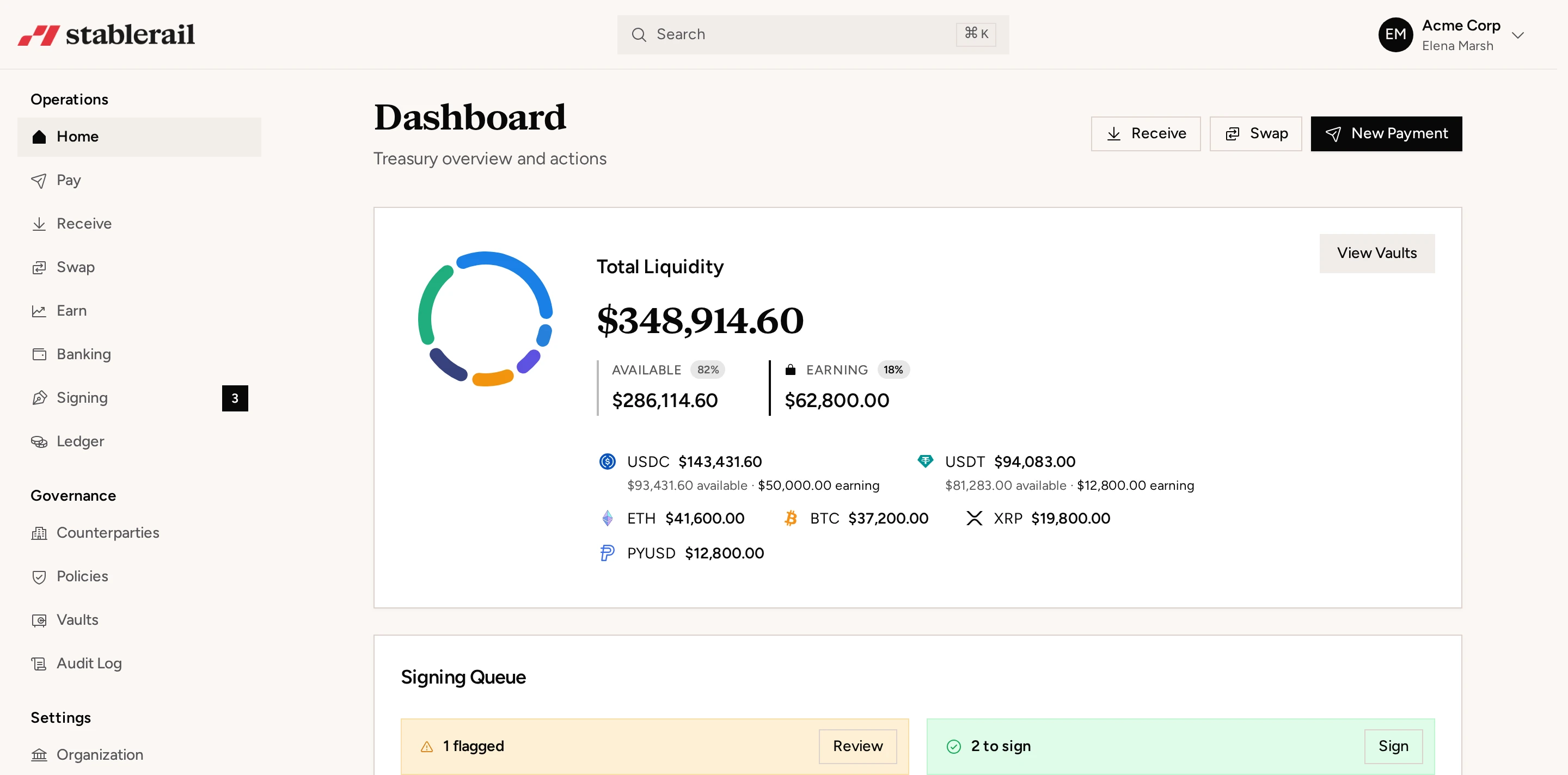
Stablerail supports sanctions and address screening before send, payment approvals and signing quorum for corporate USDC and USDT treasury activity. It also provides exportable audit evidence so finance teams can connect the payment request, checks, approval and transaction outcome.
Set decision rules before an alert occurs
Finance teams should not invent thresholds while a payment is waiting. The sanctions policy should define which results can be cleared operationally, which require specialist review and which prohibit execution. Rules should account for attribution confidence and the nature of exposure rather than relying only on a single composite score.
| Screening result | Default operational action | Evidence to retain |
|---|---|---|
| No identified match or material alert | Continue through normal approval controls | Timestamped result, data source and payment record |
| Possible name match | Pause and compare secondary identifiers | Identifiers reviewed, documents and resolution notes |
| Low-confidence or indirect wallet exposure | Review attribution, value, recency, hops and business context | Alert details, transaction analysis and rationale |
| Direct match to a designated address or person | Stop execution and escalate immediately | List entry, screening result, legal guidance and actions taken |
| Unsolicited inbound funds with a serious alert | Avoid onward movement and obtain legal or compliance direction | Transaction hash, wallet analysis and disposition record |
Handle false positives with structured review
False positives can arise from common names, incomplete identity data, low-confidence labels or indirect exposure involving a large shared service. Reviewers should not clear an alert merely because the recipient is familiar or has been paid before.
A structured review compares identifying information, checks the source and confidence of the match, examines relevant transaction history and requests additional evidence when necessary. The case record should state who reviewed the alert, what evidence was considered, which policy rule applied and why the payment was released or stopped.
Repeated false positives may justify refining a documented threshold or matching rule. They do not justify permanently exempting the counterparty or wallet from future screening because ownership, activity and sanctions data can change.
Rescreen when relevant facts change
A wallet cleared previously can present a different risk later. A sanctions authority may add a person or address, the wallet may interact with newly designated activity, or an analytics provider may revise an attribution after further investigation.
Useful rescreening triggers include a new payment, replacement wallet, material increase in value, ownership change, unusual payment purpose or updated sanctions designation. Scheduled reviews can supplement these event-driven checks, but screening immediately before execution gives the finance team the best opportunity to prevent an outbound transfer.
Escalation, rejection and blocking are not interchangeable
An uncertain alert should be paused for review; a confirmed prohibition may create legal obligations. Depending on the applicable regime and facts, the company may need to reject a payment, block or freeze property, restrict further activity or report to a sanctions authority.
These terms can have specific legal meanings. Under OFAC-administered sanctions, blocked property is generally frozen and reported rather than returned, while a rejected transaction is not processed. The correct response depends on the sanctions program, the company’s legal status and whether it possesses or controls the property. A finance team should escalate promptly rather than attempting to resolve a confirmed match through ordinary payment operations.
Build an audit-ready evidence pack
The final record should connect the commercial obligation to the compliance decision and blockchain outcome. Retain the counterparty identity, invoice or payroll record, wallet and network, screening timestamp, lists and data sources checked, full alert details, review notes, approvals, transaction hash and any required external reports.
Save the result as it appeared when the decision was made because lists, risk scores and attribution can change later. Records should be searchable, access-controlled and retained for the period required by the applicable sanctions regime and company policy.
Blockchain analytics is valuable because public ledgers expose transaction paths, but it cannot reliably identify every wallet controller or determine the legality of a payment by itself. The strongest process combines identity screening, wallet intelligence, transaction context, human review and evidence that explains the final decision.
Frequently asked questions
Do all stablecoin payments need sanctions screening?
A company should screen stablecoin payments according to the sanctions regimes and risk controls that apply to its business. Screening immediately before an outbound payment helps identify changes to lists, wallet attribution or counterparty details before funds become irreversible.
Is a low wallet risk score enough to approve a USDC payment?
No. A low score does not identify the wallet controller or prove that the counterparty is unsanctioned. Approval should also consider identity screening, payment purpose, ownership information and transaction context.
What should a company do if a stablecoin wallet has indirect sanctions exposure?
Pause the payment and review the source, value, recency, number of transaction hops and confidence of the attribution. Indirect exposure is not automatically a sanctions violation, so the decision should follow documented policy and be escalated for legal advice when the facts are uncertain.
How often should stablecoin wallets be rescreened?
Screen before payment and whenever relevant information changes, such as the wallet, counterparty ownership, payment value or sanctions designation. Scheduled rescreening can supplement event-driven checks, but it should not replace a current pre-transfer result.
What sanctions records should a stablecoin treasury team keep?
Keep counterparty identifiers, the wallet and network, screening timestamps, data sources, alert details, review notes, supporting payment documents, approvals and the transaction hash. Preserve the screening result as it appeared at decision time because sanctions and attribution data may later change.
Finance writers covering stablecoin treasury, payments, compliance, and risk controls.
More about the Stablerail team- Stablecoin treasury managementApprovals, limits, yield and reporting on one balance.
- Stablecoin payoutsBatch contractor and vendor payments with screening.
- USDT vs USDCWhich stablecoin your company should settle in.
- Stablecoin finance glossaryMPC, off-ramp, travel rule and the rest, in plain English.
- Product updatesEverything we ship, month by month.