
Evaluating Utila for Non-Custodial Business Wallets: Controls, Chains, and Integrations
A finance-led framework for evaluating Utila’s MPC wallets, including practical custody, signer controls, recovery, chain support, integrations and audit evidence.
Utila can support businesses that need MPC wallets, approval workflows, blockchain connectivity and programmable transactions. Whether it is genuinely non-custodial for your company depends on who controls signing shares, policy administration and recovery. Before funding a wallet, verify that your team can authorize transactions, remove signers, recover from outages and exit the platform without depending on a single employee or an undisclosed provider-controlled process.
%22%20x1%3D%220%22%20y1%3D%220%22%20x2%3D%221%22%20y2%3D%221%22%3E%0A%20%20%20%20%20%20%20%20%3Cstop%20offset%3D%220%25%22%20stop-color%3D%22%233E090D%22%20%2F%3E%0A%20%20%20%20%20%20%20%20%3Cstop%20offset%3D%2250%25%22%20stop-color%3D%22%235C1218%22%20%2F%3E%0A%20%20%20%20%20%20%20%20%3Cstop%20offset%3D%22100%25%22%20stop-color%3D%22%237B1F22%22%20%2F%3E%0A%20%20%20%20%20%20%3C%2FlinearGradient%3E%0A%20%20%20%20%20%20%3CradialGradient%20id%3D%22glow%22%20cx%3D%22855%22%20cy%3D%22172%22%20r%3D%22520%22%20gradientUnits%3D%22userSpaceOnUse%22%3E%0A%20%20%20%20%20%20%20%20%3Cstop%20offset%3D%220%25%22%20stop-color%3D%22%23FF8E72%22%20stop-opacity%3D%220.45%22%20%2F%3E%0A%20%20%20%20%20%20%20%20%3Cstop%20offset%3D%2255%25%22%20stop-color%3D%22%23FF8E72%22%20stop-opacity%3D%220.08%22%20%2F%3E%0A%20%20%20%20%20%20%20%20%3Cstop%20offset%3D%22100%25%22%20stop-color%3D%22%23FF8E72%22%20stop-opacity%3D%220%22%20%2F%3E%0A%20%20%20%20%20%20%3C%2FradialGradient%3E%0A%20%20%20%20%20%20%3ClinearGradient%20id%3D%22glass%22%20x1%3D%220%22%20y1%3D%220%22%20x2%3D%221%22%20y2%3D%221%22%3E%0A%20%20%20%20%20%20%20%20%3Cstop%20offset%3D%220%25%22%20stop-color%3D%22%23F8D6D2%22%20stop-opacity%3D%220.26%22%20%2F%3E%0A%20%20%20%20%20%20%20%20%3Cstop%20offset%3D%22100%25%22%20stop-color%3D%22%23FFFFFF%22%20stop-opacity%3D%220.08%22%20%2F%3E%0A%20%20%20%20%20%20%3C%2FlinearGradient%3E%0A%20%20%20%20%20%20%3ClinearGradient%20id%3D%22accent%22%20x1%3D%220%22%20y1%3D%220%22%20x2%3D%221%22%20y2%3D%221%22%3E%0A%20%20%20%20%20%20%20%20%3Cstop%20offset%3D%220%25%22%20stop-color%3D%22%23FF8E72%22%20%2F%3E%0A%20%20%20%20%20%20%20%20%3Cstop%20offset%3D%22100%25%22%20stop-color%3D%22%23D94030%22%20%2F%3E%0A%20%20%20%20%20%20%3C%2FlinearGradient%3E%0A%20%20%20%20%20%20%3Cfilter%20id%3D%22soft%22%3E%3CfeGaussianBlur%20stdDeviation%3D%2210%22%20%2F%3E%3C%2Ffilter%3E%0A%20%20%20%20%3C%2Fdefs%3E%0A%20%20%20%20%3Crect%20width%3D%221600%22%20height%3D%22900%22%20fill%3D%22url(%23bg)%22%20%2F%3E%0A%20%20%20%20%3Crect%20width%3D%221600%22%20height%3D%22900%22%20fill%3D%22url(%23glow)%22%20%2F%3E%0A%20%20%20%20%3Cpath%20d%3D%22M180%20280%20C%20600%20280%2C%20600%20380%2C%201420%20380%22%20stroke%3D%22url(%23accent)%22%20stroke-width%3D%2255%22%20fill%3D%22none%22%20opacity%3D%220.75%22%2F%3E%3Cpath%20d%3D%22M180%20440%20C%20600%20440%2C%20600%20520%2C%201420%20520%22%20stroke%3D%22%23F8D6D2%22%20stroke-width%3D%2239%22%20fill%3D%22none%22%20opacity%3D%220.4%22%2F%3E%3Cpath%20d%3D%22M180%20600%20C%20600%20600%2C%20600%20660%2C%201420%20660%22%20stroke%3D%22url(%23accent)%22%20stroke-width%3D%2238%22%20fill%3D%22none%22%20opacity%3D%220.55%22%2F%3E%3Crect%20x%3D%22140%22%20y%3D%22240%22%20width%3D%2240%22%20height%3D%22420%22%20rx%3D%226%22%20fill%3D%22%23F8D6D2%22%20opacity%3D%220.7%22%2F%3E%3Crect%20x%3D%221420%22%20y%3D%22340%22%20width%3D%2240%22%20height%3D%22360%22%20rx%3D%226%22%20fill%3D%22url(%23accent)%22%2F%3E%0A%20%20%20%20%3Crect%20x%3D%2226%22%20y%3D%2226%22%20width%3D%221548%22%20height%3D%22848%22%20rx%3D%2218%22%20fill%3D%22none%22%20stroke%3D%22%23F2D0C8%22%20stroke-opacity%3D%220.12%22%2F%3E%0A%20%20%3C%2Fsvg%3E)
Start with practical control, not the non-custodial label
Utila provides operational wallet infrastructure for businesses holding and moving digital assets. Its proposition combines multi-party computation, or MPC, with transaction policies, blockchain connectivity, application integrations and APIs. That differs from depositing assets into an exchange account or engaging a traditional custodian to hold them.
For a CFO or treasury lead, the central question is whether the company retains effective control during normal operations, employee departures, security incidents and vendor outages. The answer depends on the complete operating model, not simply whether one party possesses a conventional private key.
Product features and contractual terms can change. Confirm the current architecture, supported networks, security documentation and recovery procedures in Utila’s technical materials, trust center and contract.
| Decision area | Evidence to request | Acceptable outcome | Warning sign |
|---|---|---|---|
| Signing control | Architecture diagram, share locations and signing threshold | No single employee or provider can move funds outside the approved process | A provider-held share can bypass the customer’s quorum |
| Administration | Role matrix and policy-change workflow | Policy changes require controlled, recorded authorization | One administrator can weaken controls and immediately transact |
| Recovery | Live recovery demonstration and written runbook | The company can recover after device loss, departure or outage | Recovery depends on an undocumented manual exception |
| Exit | Migration procedure, timing and dependencies | Assets can be moved or recovered under a tested exit plan | Leaving requires unavailable signers or proprietary intervention |
| Chain support | Network, asset and transaction-level support matrix | Every required operation is supported and tested | Support is described only through chain logos |
| Auditability | Sample transaction and administration exports | Exports identify initiators, approvers, fees, hashes and policy results | Finance must reconstruct approvals from screenshots or messages |
Examine the MPC architecture
MPC allows multiple cryptographic shares to participate in signing without reconstructing a complete private key in one place. This can remove the obvious single point of failure created by a seed phrase, but it does not automatically eliminate concentration, insider or recovery risk.
Ask Utila to document the full signing path:
- Share generation: Identify where each share is created and whether the underlying material is ever exposed to Utila, a cloud provider or another third party.
- Share storage: Determine whether shares reside on employee devices, company-controlled systems, vendor infrastructure or a combination.
- Signing threshold: Confirm how many shares are required, who selects the threshold and whether changing it creates a new address.
- Device security: Record the hardware, operating-system, authentication and enrollment controls protecting each signer.
- Rotation: Test whether a lost device or departing employee can be removed without transferring every asset to a new wallet.
- Provider authority: Establish whether Utila can sign, block, delay or redirect a transaction without the customer’s authorized participants.
Technical control and legal custody are related but not identical. Review the contract for ownership of wallet assets, authority over signing components, suspension rights, insolvency treatment, subcontractors and obligations during termination.
Test recovery before funding production wallets
A recovery process that exists only in documentation is not sufficient. Conduct a supervised exercise with limited funds and preserve the evidence. The test should cover a lost signer device, an unavailable administrator and loss of access to the normal application.
Document who can initiate recovery, who must approve it, what identity verification applies and whether the process includes a waiting period. Identify any encrypted backups, recovery shares or vendor-operated steps. A strong runbook also specifies who contacts the provider, how an emergency is authenticated and how restored access is independently verified.
Exit planning is equally important. Determine whether the signing setup can be recovered in another compatible environment or whether every asset must be transferred to new addresses. An on-chain migration can involve network fees, token approvals, staking or withdrawal delays, counterparty notifications and updates to address allowlists. Those are operating dependencies, not minor implementation details.
Validate chains, assets and transaction types precisely
Do not assess blockchain coverage by counting supported-network logos. Request a current matrix showing each network, asset and permitted operation. A wallet may support basic transfers on a network without supporting staking, contract calls, fee replacement or the specific token contract your treasury uses.
| Requirement | What finance should verify | Production test |
|---|---|---|
| USDC and USDT | Exact network and token contract; native and bridged assets must be distinguished | Receive, approve and send a small amount on every intended network |
| EVM transactions | Token transfers, contract calls, nonce handling and fee replacement | Submit concurrent transactions and replace a delayed transaction |
| Bitcoin and UTXO networks | Address formats, fee selection, change handling and confirmation rules | Receive and spend from a test wallet using the intended approval flow |
| Solana, Tron or other networks | Token standards, fee assets, account behavior and transaction decoding | Test the exact stablecoin contract and destination format |
| Memo-based destinations | Support for memos, tags or other destination identifiers | Send to a controlled account that requires the identifier |
| Smart-contract activity | Approvals, swaps, bridges, staking and contract-specific controls | Inspect the decoded request and revoke a token allowance |
Stablecoins with the same ticker on different networks are not interchangeable. Treasury procedures should record the chain, contract address and destination format alongside the quantity and ticker.
Treat transaction policies as financial controls
Approval thresholds, role permissions and destination allowlists are useful only if they cannot be casually bypassed. Determine whether controls are enforced in the signing process or exist mainly as application workflow. Then establish who can edit a policy and whether that person can immediately initiate or approve a transaction under the revised rule.
Run these five scenarios:
- Send a routine payment within a user’s delegated authority.
- Submit a higher-value payment requiring multiple approvers.
- Attempt a transfer to a new or unapproved address.
- Request an unlimited token allowance from a smart contract.
- Initiate an urgent payment while a required approver is unavailable.
Capture notifications, approval records and failure messages for each test. Also determine whether sanctions or address screening is native, supplied by another provider or performed outside the wallet. Screening should occur before signing, with a documented process for reviewing alerts and false positives.
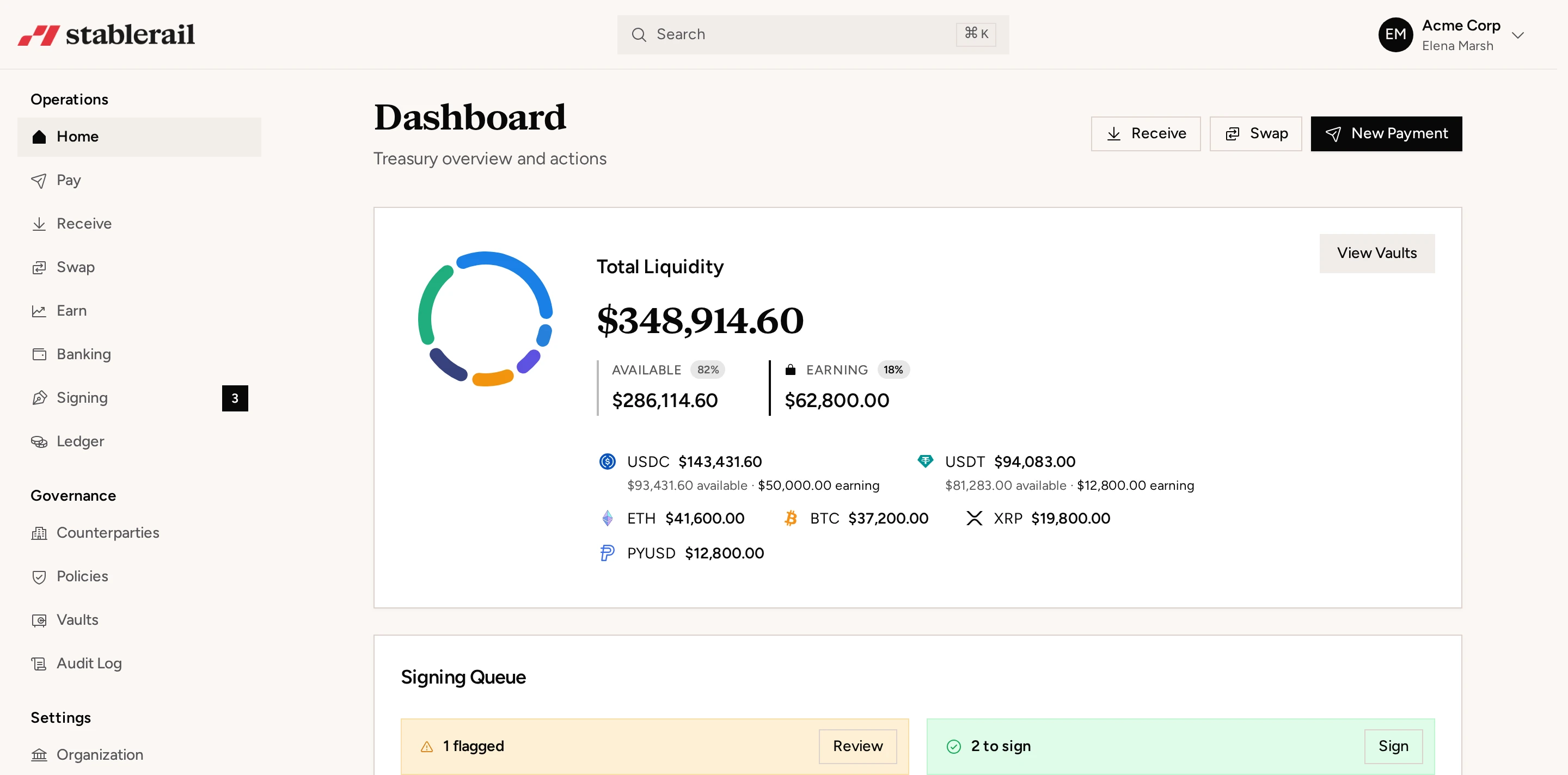
For companies focused specifically on managing their own USDC or USDT, a broader treasury platform may reduce the number of connected systems. Stablerail combines approval and signing quorum, pre-send sanctions and address screening, corporate cards, global payouts, fiat conversion and exportable audit evidence. The relevant comparison is not wallet feature count, but which option covers the company’s complete treasury workflow with fewer uncontrolled handoffs.
Assess APIs and decentralized application access
If Utila’s APIs will create wallet operations, review authentication, service-account permissions, idempotency, rate limits, webhook verification, retries and test-environment behavior. Confirm that API-created transactions enter the same approval process as transactions entered through the interface. Automation must not become an alternative signing path.
Test duplicate requests, delayed webhooks, expired credentials and partial outages before using automation for payroll, vendor batches or other time-sensitive payments. Reconciliation should rely on a durable transaction identifier and on-chain hash rather than a webhook alone.
Decentralized application access introduces different risks. A valid signature can still authorize a malicious contract, an unlimited token allowance or a transaction with unexpected economic effects. Verify what transaction details are decoded for reviewers and whether access can be limited by user, wallet, contract or action. Keep experimental DeFi activity separate from core operating balances where practical.
Confirm reporting, security evidence and accountability
Finance needs more than a block explorer. Request sample exports containing wallet address, network, asset quantity, network fee, transaction hash, initiator, approvers, timestamps and policy result. Confirm the retention period and whether administrative changes, signer enrollment and recovery events are included in the audit trail.
Accounting will generally need to add fiat valuation, legal-entity ownership, counterparty data and general-ledger classification. Decide which system is authoritative for each field and how corrections are documented without overwriting original wallet evidence.
If certifications or external audits influence the decision, obtain the current report or certificate rather than relying on a website badge. Check the audited legal entity, review period, system scope, exceptions and subservice providers. Also review penetration-testing coverage, vulnerability management, incident-notification terms, business continuity and cyber-insurance evidence. These materials evaluate the control environment; they do not prove that your particular wallet configuration is safe.
Make the decision with a production-style pilot
Use limited funds but realistic roles, networks and workflows. A finance-led pilot should complete this checklist:
- Create separate operating and test wallets with named owners.
- Enroll multiple signers and verify separation between administration, initiation and approval.
- Execute transactions on at least two required networks.
- Test a rejected destination and a higher-threshold payment.
- Generate one transaction through the API, if automation is in scope.
- Remove a signer and complete a recovery exercise.
- Export the evidence and reconcile it to an internal ledger record.
- Document the migration procedure, responsible people and emergency contacts.
Utila may fit organizations that need flexible MPC wallets, broad on-chain operations and programmable integrations. The corresponding trade-off is greater responsibility for signer governance, transaction review, recovery and accounting integration. Approve the platform only after the company has demonstrated control of signing, administration, recovery and exit under realistic conditions.
Frequently asked questions
Is Utila a non-custodial wallet?
Utila is positioned as wallet infrastructure using MPC, but the non-custodial label alone does not establish practical control. Verify who holds each signing share, whether the provider can act independently and whether your company can recover and migrate wallets without discretionary provider intervention.
What should a CFO test before using Utila?
Test signer enrollment and removal, multi-person approvals, blocked destinations, policy changes, device loss, recovery and platform exit. The pilot should also cover every required network and asset, plus API-created transactions if automation is planned.
Can an MPC wallet be recovered if a signer leaves the company?
It depends on the threshold, share design and recovery process. Confirm through a live test that the departing signer can be removed and a replacement enrolled without losing access or transferring all assets to new addresses.
How should finance verify Utila’s blockchain support?
Request a current matrix by network, token contract and transaction type rather than relying on chain logos. Test receiving, approving, sending, fee handling and confirmation tracking for the exact stablecoins and networks the company will use.
What audit evidence should a business wallet provide?
Exports should identify wallet addresses, networks, asset quantities, fees, transaction hashes, initiators, approvers, timestamps and policy outcomes. Administrative changes, signer enrollment and recovery events should also be retained so finance can reconstruct who controlled each action.
Finance writers covering stablecoin treasury, payments, compliance, and risk controls.
More about the Stablerail team- Stablecoin treasury managementApprovals, limits, yield and reporting on one balance.
- Stablecoin payoutsBatch contractor and vendor payments with screening.
- USDT vs USDCWhich stablecoin your company should settle in.
- Stablecoin finance glossaryMPC, off-ramp, travel rule and the rest, in plain English.
- Product updatesEverything we ship, month by month.