
Evaluating Utila for Non-Custodial Business Wallets
A finance and security diligence guide to Utila’s non-custodial MPC wallets, covering key ownership, recovery, transaction controls, APIs, chain support and reporting.
Utila is an institutional wallet platform for businesses that want MPC-based transaction signing without transferring full control of private keys to a traditional custodian. Its suitability depends on more than the non-custodial label: teams should verify key-share ownership, recovery independence, approval enforcement, chain-specific support, API security, reporting and the ability to access funds during a vendor outage before committing treasury assets.
%22%20x1%3D%220%22%20y1%3D%220%22%20x2%3D%221%22%20y2%3D%221%22%3E%0A%20%20%20%20%20%20%20%20%3Cstop%20offset%3D%220%25%22%20stop-color%3D%22%23450B10%22%20%2F%3E%0A%20%20%20%20%20%20%20%20%3Cstop%20offset%3D%2250%25%22%20stop-color%3D%22%23681A1F%22%20%2F%3E%0A%20%20%20%20%20%20%20%20%3Cstop%20offset%3D%22100%25%22%20stop-color%3D%22%238A2A2D%22%20%2F%3E%0A%20%20%20%20%20%20%3C%2FlinearGradient%3E%0A%20%20%20%20%20%20%3CradialGradient%20id%3D%22glow%22%20cx%3D%22952%22%20cy%3D%22-28%22%20r%3D%22520%22%20gradientUnits%3D%22userSpaceOnUse%22%3E%0A%20%20%20%20%20%20%20%20%3Cstop%20offset%3D%220%25%22%20stop-color%3D%22%23FF7A59%22%20stop-opacity%3D%220.45%22%20%2F%3E%0A%20%20%20%20%20%20%20%20%3Cstop%20offset%3D%2255%25%22%20stop-color%3D%22%23FF7A59%22%20stop-opacity%3D%220.08%22%20%2F%3E%0A%20%20%20%20%20%20%20%20%3Cstop%20offset%3D%22100%25%22%20stop-color%3D%22%23FF7A59%22%20stop-opacity%3D%220%22%20%2F%3E%0A%20%20%20%20%20%20%3C%2FradialGradient%3E%0A%20%20%20%20%20%20%3ClinearGradient%20id%3D%22glass%22%20x1%3D%220%22%20y1%3D%220%22%20x2%3D%221%22%20y2%3D%221%22%3E%0A%20%20%20%20%20%20%20%20%3Cstop%20offset%3D%220%25%22%20stop-color%3D%22%23F8D6D2%22%20stop-opacity%3D%220.26%22%20%2F%3E%0A%20%20%20%20%20%20%20%20%3Cstop%20offset%3D%22100%25%22%20stop-color%3D%22%23FFFFFF%22%20stop-opacity%3D%220.08%22%20%2F%3E%0A%20%20%20%20%20%20%3C%2FlinearGradient%3E%0A%20%20%20%20%20%20%3ClinearGradient%20id%3D%22accent%22%20x1%3D%220%22%20y1%3D%220%22%20x2%3D%221%22%20y2%3D%221%22%3E%0A%20%20%20%20%20%20%20%20%3Cstop%20offset%3D%220%25%22%20stop-color%3D%22%23FF7A59%22%20%2F%3E%0A%20%20%20%20%20%20%20%20%3Cstop%20offset%3D%22100%25%22%20stop-color%3D%22%23C73128%22%20%2F%3E%0A%20%20%20%20%20%20%3C%2FlinearGradient%3E%0A%20%20%20%20%20%20%3Cfilter%20id%3D%22soft%22%3E%3CfeGaussianBlur%20stdDeviation%3D%2210%22%20%2F%3E%3C%2Ffilter%3E%0A%20%20%20%20%3C%2Fdefs%3E%0A%20%20%20%20%3Crect%20width%3D%221600%22%20height%3D%22900%22%20fill%3D%22url(%23bg)%22%20%2F%3E%0A%20%20%20%20%3Crect%20width%3D%221600%22%20height%3D%22900%22%20fill%3D%22url(%23glow)%22%20%2F%3E%0A%20%20%20%20%3Crect%20x%3D%22240%22%20y%3D%22240%22%20width%3D%22360%22%20height%3D%22420%22%20rx%3D%2220%22%20fill%3D%22url(%23glass)%22%20stroke%3D%22%23F4CDC5%22%20stroke-opacity%3D%220.55%22%2F%3E%0A%20%20%20%20%20%20%3Crect%20x%3D%22270%22%20y%3D%22290%22%20width%3D%22160%22%20height%3D%2218%22%20rx%3D%224%22%20fill%3D%22%23F8D6D2%22%20opacity%3D%220.6%22%2F%3E%0A%20%20%20%20%20%20%3Crect%20x%3D%22270%22%20y%3D%22370%22%20width%3D%22260%22%20height%3D%2248%22%20rx%3D%226%22%20fill%3D%22%23F8D6D2%22%20opacity%3D%220.8%22%2F%3E%0A%20%20%20%20%20%20%3Cpolyline%20points%3D%22270%2C590%20330%2C560%20390%2C580%20450%2C520%20510%2C540%20570%2C490%22%20fill%3D%22none%22%20stroke%3D%22%23FF8E72%22%20stroke-width%3D%225%22%2F%3E%3Crect%20x%3D%22640%22%20y%3D%22240%22%20width%3D%22360%22%20height%3D%22420%22%20rx%3D%2220%22%20fill%3D%22url(%23accent)%22%20stroke%3D%22%23F4CDC5%22%20stroke-opacity%3D%220.55%22%2F%3E%0A%20%20%20%20%20%20%3Crect%20x%3D%22670%22%20y%3D%22290%22%20width%3D%22160%22%20height%3D%2218%22%20rx%3D%224%22%20fill%3D%22%23F8D6D2%22%20opacity%3D%220.6%22%2F%3E%0A%20%20%20%20%20%20%3Crect%20x%3D%22670%22%20y%3D%22370%22%20width%3D%22260%22%20height%3D%2248%22%20rx%3D%226%22%20fill%3D%22%23F8D6D2%22%20opacity%3D%220.95%22%2F%3E%0A%20%20%20%20%20%20%3Cpolyline%20points%3D%22670%2C590%20730%2C560%20790%2C580%20850%2C520%20910%2C540%20970%2C490%22%20fill%3D%22none%22%20stroke%3D%22%23FFF1ED%22%20stroke-width%3D%225%22%2F%3E%3Crect%20x%3D%221040%22%20y%3D%22240%22%20width%3D%22360%22%20height%3D%22420%22%20rx%3D%2220%22%20fill%3D%22url(%23glass)%22%20stroke%3D%22%23F4CDC5%22%20stroke-opacity%3D%220.55%22%2F%3E%0A%20%20%20%20%20%20%3Crect%20x%3D%221070%22%20y%3D%22290%22%20width%3D%22160%22%20height%3D%2218%22%20rx%3D%224%22%20fill%3D%22%23F8D6D2%22%20opacity%3D%220.6%22%2F%3E%0A%20%20%20%20%20%20%3Crect%20x%3D%221070%22%20y%3D%22370%22%20width%3D%22260%22%20height%3D%2248%22%20rx%3D%226%22%20fill%3D%22%23F8D6D2%22%20opacity%3D%220.8%22%2F%3E%0A%20%20%20%20%20%20%3Cpolyline%20points%3D%221070%2C590%201130%2C560%201190%2C580%201250%2C520%201310%2C540%201370%2C490%22%20fill%3D%22none%22%20stroke%3D%22%23FF8E72%22%20stroke-width%3D%225%22%2F%3E%0A%20%20%20%20%3Crect%20x%3D%2226%22%20y%3D%2226%22%20width%3D%221548%22%20height%3D%22848%22%20rx%3D%2218%22%20fill%3D%22none%22%20stroke%3D%22%23F2D0C8%22%20stroke-opacity%3D%220.12%22%2F%3E%0A%20%20%3C%2Fsvg%3E)
Utila is designed for organisations that need multi-user digital asset wallets, transaction approvals and programmatic blockchain access without placing a conventional private key with a custodian. The decisive diligence questions are who controls the MPC key shares, whether controls are enforced during signing, and how the company recovers assets if users, devices or Utila’s service become unavailable.
What Utila provides
Utila positions its product as non-custodial institutional wallet infrastructure. Its multi-party computation, or MPC, model divides signing authority among cryptographic shares instead of storing a complete private key or seed phrase in one place. The parties jointly produce a valid signature without reconstructing the full key.
According to its product positioning, the platform supports wallet creation, role-based access, multi-user transaction approval, policy controls, APIs and connectivity to blockchain applications. Finance teams should confirm each required capability in the current product documentation and test environment because support may differ by network, asset and transaction type.
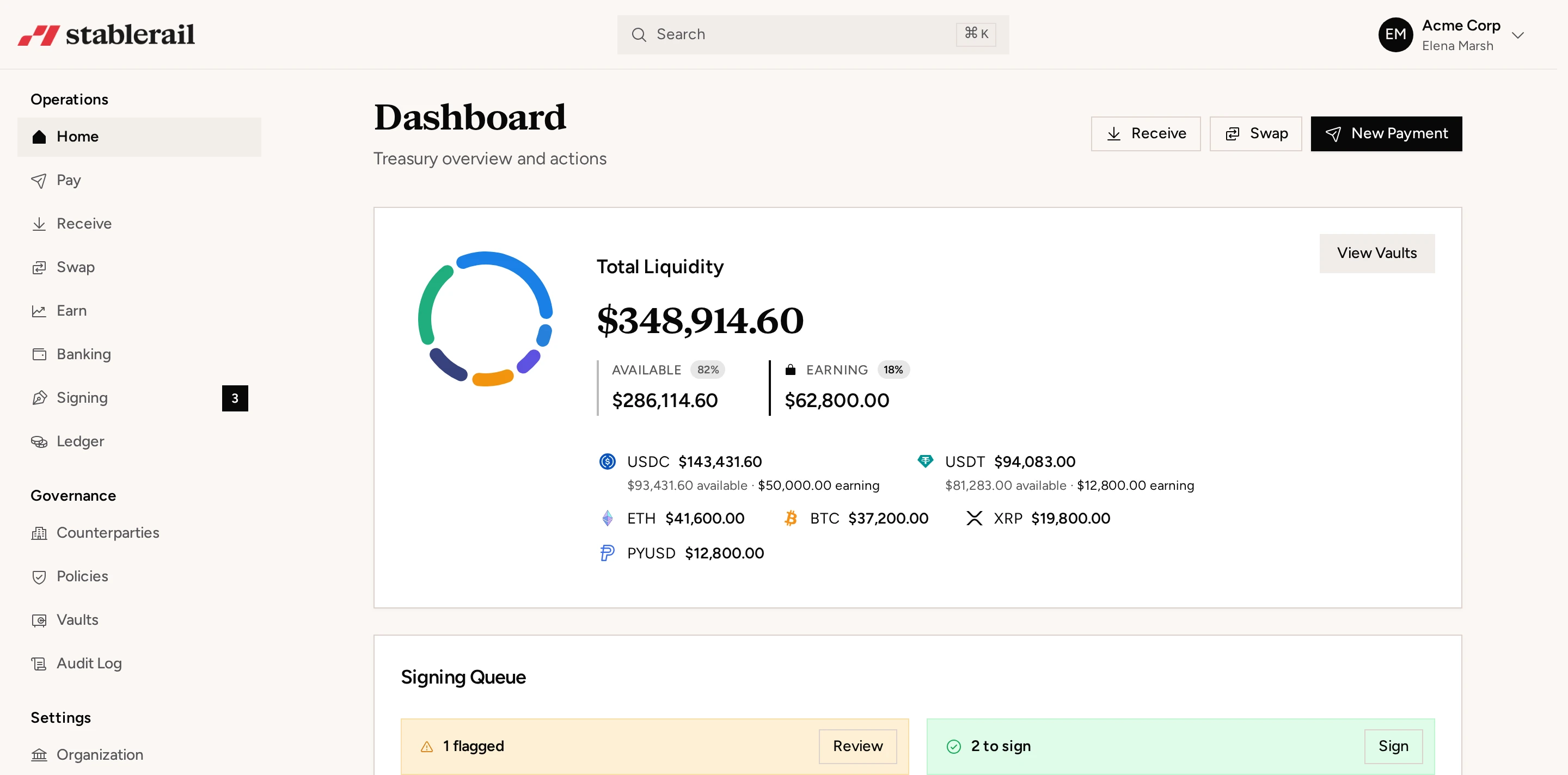
Utila should be evaluated as wallet and signing infrastructure, not automatically as a complete business banking or accounting stack. A company may still need separate providers for fiat accounts, stablecoin conversion, cards, beneficiary payouts, tax records and general-ledger reconciliation. By comparison, Stablerail combines a business account for USDC and USDT with approvals and signing quorum, address screening before send, corporate cards, global payouts, fiat off-ramp and exportable audit evidence.
MPC architecture does not settle the custody question
The term non-custodial is useful only when supported by a precise description of the signing and recovery architecture. MPC can eliminate the single seed phrase as a point of failure, but it does not by itself establish who has practical control of assets.
Ask Utila to map every key share and participant for wallet creation, routine signing, employee replacement and platform-level recovery. The explanation should identify where shares are generated, where encrypted material is stored, which threshold is required and whether any party can replace a participant.
| Control question | Evidence to request | Risk exposed |
|---|---|---|
| Who holds each key share? | Architecture diagram covering customer devices, hosted components and recovery participants | Unexpected vendor or administrator control |
| What is the signing threshold? | Technical description of the MPC ceremony for each wallet type | A lower practical threshold than the approval workflow suggests |
| Can Utila sign alone? | Written confirmation backed by a witnessed signing test | Custodial control despite non-custodial positioning |
| Can an administrator replace approvers? | Role matrix, audit events and replacement procedure | Account takeover bypassing transaction quorum |
| What happens if the service disappears? | Platform-recovery documentation and customer-held recovery material | Assets becoming operationally inaccessible |
| How are API wallets different? | Separate share, authentication and recovery diagrams for API-created wallets | Automation introducing a different custody model |
Distinguish cryptographic ownership from operational availability. Utila might be unable to take the funds while its hosted policy service, device enrolment or transaction-building layer remains necessary to move them. For a treasury team, prolonged inability to transact can be as consequential as a custody failure.
Recovery and business continuity
Do not accept recovery as a paper exercise. Run a controlled test before depositing material balances. At minimum, test a lost approver device, an employee departure, a locked administrator account and unavailability of a component needed to submit or approve transactions.
The resulting runbook should identify the recovery participants, identity checks, backups, waiting periods, notifications and escalation path. It should separate user recovery, where one employee or device is replaced, from platform recovery, where the organisation must regain control without the normal vendor workflow.
Finance should also document liquidity contingencies. That can include maintaining an independently controlled reserve wallet, prefunding another payment route or setting balance limits based on how quickly the business could recover access. A recovery capability that has never been tested should not be treated as a functioning control.
Verify chain and asset support workflow by workflow
A headline count of supported blockchains is not enough. Record the exact network, token contract, signing format and transaction type for every intended use. USDC and USDT exist on multiple networks, and operational support for one version does not imply support for another.
| Workflow | What to test |
|---|---|
| Stablecoin payment | Correct token contract, token decimals, destination format, fee asset and fee estimation |
| EVM contract call | Method decoding, typed-data signing, spending allowance display and gas controls |
| Layer-2 transfer | Exact network identifier, deposit and withdrawal path, and outage handling |
| Bitcoin, Solana or Tron | Required address types, signing formats and transaction features for that chain |
| Token approval or bridge | Human-readable payload, allowance limits, contract screening and revocation process |
| Network upgrade | Change monitoring, customer notice and procedure for paused or incompatible transactions |
A network appearing in a wallet interface does not prove that staking, contract deployment, message signing, token approvals or bridging are supported. Test the real transaction from creation through approval, broadcast, confirmation and reporting.
Approval policies and administrative controls
An institutional wallet should make it harder for one compromised user to move funds. Validate approval thresholds by amount, asset, wallet and network; destination allowlists; transfer limits; and separation among creators, approvers and administrators.
The order of enforcement matters. Address checks, transaction policies and approvals should occur before signing. Ask whether a policy administrator can lower a threshold, add a destination and approve the resulting transfer in one session. If so, the transaction quorum can be undermined by administrative access.
Review how policy changes themselves are authorised. High-risk changes should create an immutable event showing the previous value, new value, actor, approvers and timestamp. Test rejected, edited, expired and cancelled requests as well as successful transfers. Also verify whether device revocation immediately prevents an already authenticated user from signing.
API automation and DeFi connectivity
APIs can support exchange sweeps, customer withdrawals and batch payouts, but they add service accounts, credentials and retry behaviour to the control environment. Review authentication, permission scope, network restrictions, credential rotation, rate limits, webhook verification and the availability of a non-production environment.
Every payment instruction should carry a unique internal reference or idempotency key. Retrying a request after a timeout must not create a second blockchain transfer. Confirm how the API reports whether a transaction was merely accepted, signed, broadcast or confirmed; these states are not interchangeable.
For DeFi, determine how sessions connect and what approvers can see. The approval view should expose the network, contract address, method, token amount and spending allowance. Restrict or prohibit blind signing when the payload cannot be interpreted. Unlimited token approvals should receive separate scrutiny because they can permit later transfers without another wallet signature.
Screening, reporting and reconciliation
A wallet approval rule is not the same as sanctions or blockchain address screening. Establish whether destination screening is included, performed by an integrated third party or handled in another system. Document when screening occurs, what happens after an alert and whether a previously approved address is rechecked before future transfers.
Finance teams need structured records rather than explorer links. Request an export or API response containing the wallet, asset, network, token contract, gross amount, network fee, transaction hash, internal reference, initiator, approvers and timestamps. Test the treatment of pending, failed, dropped and replaced transactions.
Determine whether reports preserve approval and policy-change evidence or only on-chain activity. Blockchain data shows that a transfer happened; it does not show who requested it, which internal control approved it or why the payment was made. If accounting classifications, fiat values or cost basis are absent, assign those functions to a separate ledger or reconciliation system.
Security assurance and contractual diligence
Security certifications and audit claims can change in scope and validity. If Utila represents that it has SOC 2, ISO 27001 or other assurance, obtain the current report or certificate directly. Verify the covered legal entity, product scope, audit period, exceptions, complementary customer controls and relevant subservice organisations.
The evidence pack should also address penetration testing, vulnerability management, privileged employee access, encryption, incident response, data residency, disaster recovery and breach notification. Ask specifically whether the MPC implementation, device enrolment and recovery process were evaluated. A broad review of cloud controls does not necessarily validate the cryptographic protocol or custody design.
Contracts should state data ownership, export rights, service termination procedures and the assistance available during migration. Legal review should also determine which entity contracts with the customer and whether limitations of liability are appropriate for the expected asset exposure.
Finance-team diligence checklist
- Map every required wallet, network, asset and transaction type.
- Obtain diagrams for key generation, signing, API wallets and recovery.
- Prove that neither the vendor nor one administrator can move funds alone.
- Test policy changes, destination additions, rejected payments and device revocation.
- Run user-recovery and platform-outage exercises with documented evidence.
- Reconcile sample transactions from instruction through ledger entry, including fees.
- Review current assurance documents, contract terms and migration procedures.
- Set wallet balance limits and an alternative liquidity route before production use.
When Utila may be a fit
Utila may suit organisations that need programmable MPC wallets, multi-user governance and access to several blockchain applications. Its value is strongest when those capabilities match a defined operating model and the customer has the security and finance resources to govern wallet infrastructure.
It may be less complete for a company whose primary need is an integrated workflow spanning fiat, stablecoin conversion, cards, payouts and accounting evidence. The selection decision should therefore compare the entire operating stack, not wallet licensing or chain coverage in isolation.
The final decision should rest on demonstrated control rather than terminology. Before funding a production wallet, require evidence that signing authority is genuinely distributed, recovery works without a single privileged actor, policies cannot be silently weakened and transaction records support audit and reconciliation.
Frequently asked questions
Is Utila a non-custodial wallet?
Utila positions its institutional MPC wallet platform as non-custodial. A business should still verify who holds each key share, whether Utila can participate in recovery, and whether funds remain accessible if its hosted services are unavailable.
What should a CFO check before using Utila?
Check key-share ownership, signing thresholds, administrator powers, recovery, exact chain and token support, API controls, transaction reporting and current security evidence. The team should test these controls with real low-value transactions rather than relying only on product descriptions.
Can an MPC wallet still depend on the wallet provider?
Yes. The provider may be unable to sign alone while its infrastructure remains necessary for policy evaluation, device enrolment, transaction construction or recovery. This creates operational availability risk even when the provider does not have unilateral custody.
Does Utila replace a business bank account or accounting system?
Utila is primarily wallet and digital-asset operations infrastructure. Businesses may still need separate fiat accounts, conversion providers, cards, payout tools, tax systems and accounting reconciliation, depending on their operating model.
How should a company test Utila’s wallet recovery?
Run exercises covering a lost device, departed approver, inaccessible administrator and vendor-service outage. Document the participants, identity checks, backups, waiting periods and whether the company can regain signing control without relying on one vendor or employee.
Finance writers covering stablecoin treasury, payments, compliance, and risk controls.
More about the Stablerail team- Stablecoin treasury managementApprovals, limits, yield and reporting on one balance.
- Stablecoin payoutsBatch contractor and vendor payments with screening.
- USDT vs USDCWhich stablecoin your company should settle in.
- Stablecoin finance glossaryMPC, off-ramp, travel rule and the rest, in plain English.
- Product updatesEverything we ship, month by month.