
How to Build a Complete Audit Trail for Crypto Payments
Learn how to connect each crypto payment’s business purpose, approvals, screening, transaction hash, fiat value and ledger entry in one exportable audit trail.
A complete crypto payment audit trail links the business document, approval history, destination screening, signing event, blockchain transaction, fiat valuation, journal entry and reconciliation result under one payment ID. A transaction hash alone is insufficient because it does not explain the counterparty, purpose, authorization or accounting treatment. Create the record before execution, preserve every change and reconcile operational, on-chain and ledger data through final settlement.
%22%20x1%3D%220%22%20y1%3D%220%22%20x2%3D%221%22%20y2%3D%221%22%3E%0A%20%20%20%20%20%20%20%20%3Cstop%20offset%3D%220%25%22%20stop-color%3D%22%232E0709%22%20%2F%3E%0A%20%20%20%20%20%20%20%20%3Cstop%20offset%3D%2250%25%22%20stop-color%3D%22%234A0F14%22%20%2F%3E%0A%20%20%20%20%20%20%20%20%3Cstop%20offset%3D%22100%25%22%20stop-color%3D%22%236B181C%22%20%2F%3E%0A%20%20%20%20%20%20%3C%2FlinearGradient%3E%0A%20%20%20%20%20%20%3CradialGradient%20id%3D%22glow%22%20cx%3D%22831%22%20cy%3D%22270%22%20r%3D%22520%22%20gradientUnits%3D%22userSpaceOnUse%22%3E%0A%20%20%20%20%20%20%20%20%3Cstop%20offset%3D%220%25%22%20stop-color%3D%22%23FFB199%22%20stop-opacity%3D%220.45%22%20%2F%3E%0A%20%20%20%20%20%20%20%20%3Cstop%20offset%3D%2255%25%22%20stop-color%3D%22%23FFB199%22%20stop-opacity%3D%220.08%22%20%2F%3E%0A%20%20%20%20%20%20%20%20%3Cstop%20offset%3D%22100%25%22%20stop-color%3D%22%23FFB199%22%20stop-opacity%3D%220%22%20%2F%3E%0A%20%20%20%20%20%20%3C%2FradialGradient%3E%0A%20%20%20%20%20%20%3ClinearGradient%20id%3D%22glass%22%20x1%3D%220%22%20y1%3D%220%22%20x2%3D%221%22%20y2%3D%221%22%3E%0A%20%20%20%20%20%20%20%20%3Cstop%20offset%3D%220%25%22%20stop-color%3D%22%23F8D6D2%22%20stop-opacity%3D%220.26%22%20%2F%3E%0A%20%20%20%20%20%20%20%20%3Cstop%20offset%3D%22100%25%22%20stop-color%3D%22%23FFFFFF%22%20stop-opacity%3D%220.08%22%20%2F%3E%0A%20%20%20%20%20%20%3C%2FlinearGradient%3E%0A%20%20%20%20%20%20%3ClinearGradient%20id%3D%22accent%22%20x1%3D%220%22%20y1%3D%220%22%20x2%3D%221%22%20y2%3D%221%22%3E%0A%20%20%20%20%20%20%20%20%3Cstop%20offset%3D%220%25%22%20stop-color%3D%22%23FFB199%22%20%2F%3E%0A%20%20%20%20%20%20%20%20%3Cstop%20offset%3D%22100%25%22%20stop-color%3D%22%23E85D3A%22%20%2F%3E%0A%20%20%20%20%20%20%3C%2FlinearGradient%3E%0A%20%20%20%20%20%20%3Cfilter%20id%3D%22soft%22%3E%3CfeGaussianBlur%20stdDeviation%3D%2210%22%20%2F%3E%3C%2Ffilter%3E%0A%20%20%20%20%3C%2Fdefs%3E%0A%20%20%20%20%3Crect%20width%3D%221600%22%20height%3D%22900%22%20fill%3D%22url(%23bg)%22%20%2F%3E%0A%20%20%20%20%3Crect%20width%3D%221600%22%20height%3D%22900%22%20fill%3D%22url(%23glow)%22%20%2F%3E%0A%20%20%20%20%0A%20%20%3Cpath%20d%3D%22M800%20180%20L%201020%20260%20L%201020%20470%20C%201020%20600%2C%20920%20700%2C%20800%20740%20C%20680%20700%2C%20580%20600%2C%20580%20470%20L%20580%20260%20Z%22%20fill%3D%22url(%23glass)%22%20stroke%3D%22%23F4CDC5%22%20stroke-opacity%3D%220.7%22%20stroke-width%3D%223%22%2F%3E%0A%20%20%3Cpath%20d%3D%22M800%20220%20L%20980%20290%20L%20980%20460%20C%20980%20570%2C%20900%20660%2C%20800%20700%20C%20700%20660%2C%20620%20570%2C%20620%20460%20L%20620%20290%20Z%22%20fill%3D%22url(%23accent)%22%20opacity%3D%220.85%22%2F%3E%0A%20%20%3Cpath%20d%3D%22M710%20460%20L%20780%20530%20L%20900%20380%22%20fill%3D%22none%22%20stroke%3D%22%23FFF1ED%22%20stroke-width%3D%2222%22%20stroke-linecap%3D%22round%22%20stroke-linejoin%3D%22round%22%2F%3E%0A%0A%20%20%20%20%3Crect%20x%3D%2226%22%20y%3D%2226%22%20width%3D%221548%22%20height%3D%22848%22%20rx%3D%2218%22%20fill%3D%22none%22%20stroke%3D%22%23F2D0C8%22%20stroke-opacity%3D%220.12%22%2F%3E%0A%20%20%3C%2Fsvg%3E)
A complete crypto payment audit trail must show why a payment was made, who authorized it, where the assets went, what fiat value was recorded and how the transaction reached the general ledger. The most reliable method is to create a unique payment ID before funds move, then attach every document, decision, wallet event, valuation and accounting entry to that ID.
Why a transaction hash is not a complete audit trail
A blockchain transaction hash records an on-chain event. It can help a reviewer verify the source and destination addresses, token amount, network fee, block or slot, and transaction status. It does not ordinarily identify the supplier’s legal name, prove an invoice was valid, show who approved the expense or explain which ledger account was used.
The hash also cannot establish that the destination was screened before execution. A check performed after a payment has settled does not demonstrate that the control operated at the required time. Finance teams need a continuous chain of evidence from the original payment request through final reconciliation.
Core control: Every invoice, approval, screening result, signing event, transaction hash, journal entry and exception should carry the same durable payment ID.
What every crypto payment record should contain
Create the payment record when the request is submitted, not after the wallet transfer. Separate the asset from the network: USDC on Ethereum and USDC on Solana are different payment instructions even though the asset ticker is the same.
- Payment identity: Unique payment ID, reporting entity, request date and payment status.
- Counterparty: Legal name, internal supplier or contractor ID, and verified contact details.
- Business evidence: Invoice, contract, purchase order, payroll file or approved expense record.
- Instructions: Asset, token contract or mint where relevant, amount, destination address, network and requested date.
- Purpose and coding: Description, department, cost centre, project and proposed ledger accounts.
- Authorization: Approvers, decisions, timestamps, comments, required threshold and signing participants.
- Screening: Address, network, screening provider, check time, result and related case notes.
- Execution: Source wallet, transaction hash, fee, broadcast time, confirmation status and settlement time.
- Valuation: Fiat currency, exchange rate, source, timestamp and associated conversion fees.
- Accounting: Journal ID, ledger accounts, posting period, reconciliation status and reviewer.
Preserve a change history for sensitive fields. If an operator edits the destination address, network or amount, retain the previous value, new value, editor, timestamp and reason. Material changes should invalidate earlier approvals when the approved instruction no longer matches the instruction being signed.
Evidence required at each stage
| Evidence layer | Minimum record | Control question answered |
|---|---|---|
| Business document | Original invoice or contract, counterparty, amount, due date and payment ID | Why is the company paying? |
| Approval log | Approvers, timestamps, decisions, threshold and instruction version | Was the exact payment authorized? |
| Address screening | Address, network, provider, timestamp, result and case reference | Was the final destination checked before sending? |
| Signing and execution | Source wallet, signing event, transaction hash, token, network and fee | What instruction was executed? |
| Settlement | Block or slot, confirmation status, settlement time and failure or replacement details | Did the transfer reach the defined final state? |
| Valuation | Rate pair, source, timestamp, methodology and fees | What reporting-currency value was used? |
| Accounting | Journal ID, entity, ledger accounts, period and preparer | How was the payment recorded? |
| Reconciliation | Matched records, exceptions, reviewer and resolution | Do operational, on-chain and ledger records agree? |
Build the audit trail in five stages
1. Capture the request and original documents
Retain the source document as received, rather than keeping only extracted fields. Record the invoice number, stated currency, gross amount, due date and beneficiary with the original file. For batch vendor payments or payroll, preserve both the submitted source file and the normalized list used to create individual transfers.
Validate the destination address and network through a documented process. A wallet address copied from an invoice should not automatically be treated as verified payment instructions, particularly when bank or wallet details have changed. Record how the instructions were confirmed and who performed the check.
2. Record business approval and signing separately
Business approval confirms that the company intends to pay the obligation. Signing authorization permits the wallet to execute the transfer. These controls may involve different people, systems and timestamps, so the audit trail should not collapse them into one generic “approved” status.
Save the approval policy or version that applied at the time, the eligible approvers, the required threshold and the people who approved. For a wallet using multiparty or quorum signing, record the participants or devices involved without exposing private keys, seed phrases or other secret material.
Destination allowlists can reduce repeated data entry, but they do not replace counterparty records. An allowlisted address should remain linked to a legal counterparty, supported networks and verification history. Changes in ownership or payment instructions should trigger review.
3. Preserve screening and execution evidence
Screen the final destination address on the selected network before signing or broadcast. Save structured results rather than relying only on a screenshot. The evidence should identify the address checked, screening time, provider, result, reviewer and any escalation or case reference.
After broadcast, attach the transaction hash and capture the token contract or mint where relevant, token amount and decimal precision, source and destination addresses, network fee and fee asset, block number or slot, and current confirmation status. Preserve information about failed, dropped, replaced or cancelled transactions instead of overwriting the original attempt.
Do not mark a payment settled merely because it was submitted. Document a confirmation policy for each supported network and account for any additional crediting requirements imposed by an exchange, custodian or recipient platform. Store both the on-chain status and the operational payment status.
4. Apply a consistent fiat valuation
USDC and USDT are designed to track the US dollar, but a finance team should not automatically record every token as exactly one dollar in every circumstance. The required value depends on the company’s accounting policy, reporting currency, transaction time, selected rate source and any conversion or execution fees.
Store the asset-to-reporting-currency pair, rate, source and exact timestamp for every payment. If fiat was converted into stablecoins before the payment, link the bank reference, fiat amount, stablecoin amount, fees and receiving wallet to the payment or funding batch.
Apply the documented methodology consistently. A company might use the executed conversion rate where an actual trade occurred and a specified reference rate for a direct stablecoin expense. The appropriate treatment should be agreed with the company’s accountant or auditor under the applicable reporting framework.
5. Reconcile three sources of truth
Crypto payment reconciliation should compare operational records, blockchain activity and accounting entries. A two-way match can miss unauthorized wallet movements or approved payments that were never posted to the ledger.
- Operational: Approved instructions, payment IDs, counterparties and workflow statuses.
- On-chain: Token movements, source and destination addresses, transaction status and network fees.
- Accounting: Supplier balances, expenses, stablecoin or digital-asset accounts, cash accounts and fees.
Investigate transfers without payment IDs, duplicate invoices, wrong-network transfers, failed or replaced transactions, unexpected tokens, returns from counterparties and differences caused by fees. Record network fees separately from the invoice amount when appropriate because the fee may use another asset, such as ETH or SOL.
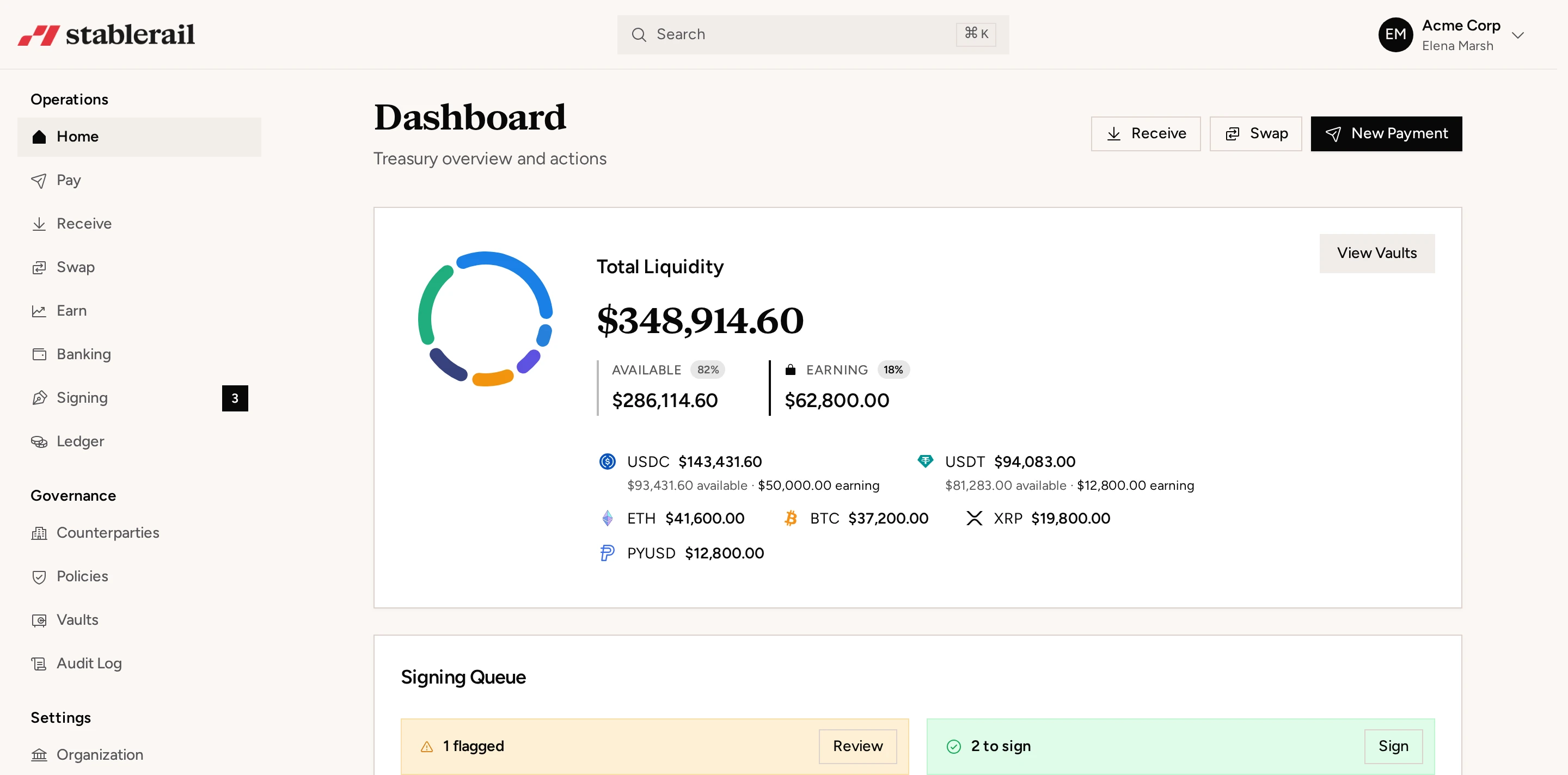
For higher-volume operations, a controlled payout workflow is easier to evidence than unrelated transfers initiated manually from multiple wallets. Stablerail provides one business account for USDC and USDT treasury, with approvals and signing quorum, sanctions and address screening before send, global payouts, fiat off-ramp and exportable audit evidence.
Create an exportable audit evidence pack
An evidence pack should remain understandable without live access to the wallet or payment platform. Use structured exports such as CSV for transaction testing, alongside copies of invoices, contracts and exception notes. Each file must carry the same payment ID so a reviewer can move from a journal entry to the source document and then to the on-chain transfer.
A period-end evidence pack should include the payment register, approval log, address-screening report, wallet transaction report, exchange-rate file, journal listing, reconciliation summary and unresolved-exception report.
Period-close checklist
- Confirm every in-scope wallet movement has a payment ID or documented classification.
- Match each completed payment to its final transaction hash and settlement status.
- Check that approval and screening timestamps precede execution.
- Recalculate token amounts, fiat valuations and network fees for a sample.
- Trace ledger entries forward to blockchain settlement and wallet transfers back to approved documents.
- Review unresolved exceptions, failed transactions, returned funds and post-approval changes.
- Export the evidence pack and verify that files can be joined using the payment ID.
If a sample cannot be traced in both directions, the audit trail is incomplete. The objective is not to accumulate screenshots and transaction exports; it is to maintain a continuous, searchable chain of evidence connecting business purpose, authorization, execution, valuation and accounting.
Frequently asked questions
What should a crypto payment audit trail include?
It should include the original business document, counterparty, payment instructions, approval history, destination screening, signing evidence, transaction hash, settlement status, fiat valuation, journal entry and reconciliation result. Every item should be connected by one unique payment ID.
Is a blockchain transaction hash enough for an audit?
No. A transaction hash helps verify an on-chain transfer, but it does not explain the business purpose, identify the legal counterparty, prove authorization or show the accounting treatment. It must be linked to internal and external supporting evidence.
How should stablecoin payments be valued for accounting?
Record the reporting-currency rate, rate source, currency pair and exact valuation timestamp under a documented methodology. Do not assume every USDC or USDT payment must be recorded at exactly one US dollar; confirm the treatment with your accountant or auditor under the applicable framework.
How do you reconcile crypto payments?
Compare approved operational records, actual blockchain movements and general-ledger entries. Investigate missing payment IDs, duplicate invoices, failed or replaced transfers, network fees, returned funds and transactions that appear in only one of the three sources.
What crypto payment records should be provided to auditors?
Provide a payment register, approval log, screening report, wallet transaction report, exchange-rate file, journal listing, reconciliation summary and supporting documents. Use the same payment ID in every file so auditors can trace samples in both directions.
Finance writers covering stablecoin treasury, payments, compliance, and risk controls.
More about the Stablerail team- Stablecoin treasury managementApprovals, limits, yield and reporting on one balance.
- Stablecoin payoutsBatch contractor and vendor payments with screening.
- USDT vs USDCWhich stablecoin your company should settle in.
- Stablecoin finance glossaryMPC, off-ramp, travel rule and the rest, in plain English.
- Product updatesEverything we ship, month by month.