
Stablecoin Accounting Entries and Audit Evidence: A Practical Guide
Practical stablecoin journal entries for receipts, payouts, fiat conversions and month-end close, plus the documents and on-chain records auditors typically need.
%22%20x1%3D%220%22%20y1%3D%220%22%20x2%3D%221%22%20y2%3D%221%22%3E%0A%20%20%20%20%20%20%20%20%3Cstop%20offset%3D%220%25%22%20stop-color%3D%22%232A0608%22%20%2F%3E%0A%20%20%20%20%20%20%20%20%3Cstop%20offset%3D%2250%25%22%20stop-color%3D%22%23420D12%22%20%2F%3E%0A%20%20%20%20%20%20%20%20%3Cstop%20offset%3D%22100%25%22%20stop-color%3D%22%23621619%22%20%2F%3E%0A%20%20%20%20%20%20%3C%2FlinearGradient%3E%0A%20%20%20%20%20%20%3CradialGradient%20id%3D%22glow%22%20cx%3D%221359%22%20cy%3D%22453%22%20r%3D%22520%22%20gradientUnits%3D%22userSpaceOnUse%22%3E%0A%20%20%20%20%20%20%20%20%3Cstop%20offset%3D%220%25%22%20stop-color%3D%22%23FF9577%22%20stop-opacity%3D%220.45%22%20%2F%3E%0A%20%20%20%20%20%20%20%20%3Cstop%20offset%3D%2255%25%22%20stop-color%3D%22%23FF9577%22%20stop-opacity%3D%220.08%22%20%2F%3E%0A%20%20%20%20%20%20%20%20%3Cstop%20offset%3D%22100%25%22%20stop-color%3D%22%23FF9577%22%20stop-opacity%3D%220%22%20%2F%3E%0A%20%20%20%20%20%20%3C%2FradialGradient%3E%0A%20%20%20%20%20%20%3ClinearGradient%20id%3D%22glass%22%20x1%3D%220%22%20y1%3D%220%22%20x2%3D%221%22%20y2%3D%221%22%3E%0A%20%20%20%20%20%20%20%20%3Cstop%20offset%3D%220%25%22%20stop-color%3D%22%23F8D6D2%22%20stop-opacity%3D%220.26%22%20%2F%3E%0A%20%20%20%20%20%20%20%20%3Cstop%20offset%3D%22100%25%22%20stop-color%3D%22%23FFFFFF%22%20stop-opacity%3D%220.08%22%20%2F%3E%0A%20%20%20%20%20%20%3C%2FlinearGradient%3E%0A%20%20%20%20%20%20%3ClinearGradient%20id%3D%22accent%22%20x1%3D%220%22%20y1%3D%220%22%20x2%3D%221%22%20y2%3D%221%22%3E%0A%20%20%20%20%20%20%20%20%3Cstop%20offset%3D%220%25%22%20stop-color%3D%22%23FF9577%22%20%2F%3E%0A%20%20%20%20%20%20%20%20%3Cstop%20offset%3D%22100%25%22%20stop-color%3D%22%23D03B2D%22%20%2F%3E%0A%20%20%20%20%20%20%3C%2FlinearGradient%3E%0A%20%20%20%20%20%20%3Cfilter%20id%3D%22soft%22%3E%3CfeGaussianBlur%20stdDeviation%3D%2210%22%20%2F%3E%3C%2Ffilter%3E%0A%20%20%20%20%3C%2Fdefs%3E%0A%20%20%20%20%3Crect%20width%3D%221600%22%20height%3D%22900%22%20fill%3D%22url(%23bg)%22%20%2F%3E%0A%20%20%20%20%3Crect%20width%3D%221600%22%20height%3D%22900%22%20fill%3D%22url(%23glow)%22%20%2F%3E%0A%20%20%20%20%3Cpath%20d%3D%22M180%20280%20C%20600%20280%2C%20600%20380%2C%201420%20380%22%20stroke%3D%22url(%23accent)%22%20stroke-width%3D%2249%22%20fill%3D%22none%22%20opacity%3D%220.75%22%2F%3E%3Cpath%20d%3D%22M180%20440%20C%20600%20440%2C%20600%20520%2C%201420%20520%22%20stroke%3D%22%23F8D6D2%22%20stroke-width%3D%2252%22%20fill%3D%22none%22%20opacity%3D%220.4%22%2F%3E%3Cpath%20d%3D%22M180%20600%20C%20600%20600%2C%20600%20660%2C%201420%20660%22%20stroke%3D%22url(%23accent)%22%20stroke-width%3D%2238%22%20fill%3D%22none%22%20opacity%3D%220.55%22%2F%3E%3Crect%20x%3D%22140%22%20y%3D%22240%22%20width%3D%2240%22%20height%3D%22420%22%20rx%3D%226%22%20fill%3D%22%23F8D6D2%22%20opacity%3D%220.7%22%2F%3E%3Crect%20x%3D%221420%22%20y%3D%22340%22%20width%3D%2240%22%20height%3D%22360%22%20rx%3D%226%22%20fill%3D%22url(%23accent)%22%2F%3E%0A%20%20%20%20%3Crect%20x%3D%2226%22%20y%3D%2226%22%20width%3D%221548%22%20height%3D%22848%22%20rx%3D%2218%22%20fill%3D%22none%22%20stroke%3D%22%23F2D0C8%22%20stroke-opacity%3D%220.12%22%2F%3E%0A%20%20%3C%2Fsvg%3E)
Stablecoin accounting starts with the same questions as any treasury asset: what happened, when did control transfer, what was the functional-currency value, and which documents support the entry? The difference is that a bank statement is replaced or supplemented by wallet records, transaction hashes, exchange rates and custody evidence.
This guide provides example stablecoin journal entries for receipts, payouts, fiat conversions and month-end. The amounts are illustrative. The correct classification and measurement depend on your accounting framework, jurisdiction and approved accounting policy, so confirm the treatment with your auditor.
Set the accounting policy before posting transactions
Do not assume that USDC or USDT is automatically accounted for as cash because it targets a value of one US dollar. Depending on the applicable rules and contractual rights, a stablecoin may be treated as a crypto asset, an intangible asset, inventory in limited circumstances, or another financial asset.
Under US GAAP, certain crypto assets within the scope of FASB ASU 2023-08 are measured at fair value through earnings. Under IFRS, holdings are often assessed under IAS 38 or, for qualifying broker-traders, IAS 2. Whether a particular stablecoin meets the relevant criteria requires analysis of its terms and the holder's rights.
Your written policy should define:
- The balance-sheet classification for each stablecoin.
- Initial and subsequent measurement.
- The source and timestamp used for functional-currency valuation.
- How transaction, network and conversion fees are recorded.
- When a blockchain transaction is considered complete.
- How realized and unrealized gains or losses are presented.
- Which wallets, networks and legal entities belong in each ledger account.
Example 1: receiving a customer payment
Assume a customer settles a USD 10,000 invoice by sending 10,000 USDC. The company controls the destination wallet, and the transfer has reached the confirmation threshold in its accounting policy.
| Account | Debit | Credit |
|---|---|---|
| Stablecoin asset — USDC | $10,000 | |
| Accounts receivable | $10,000 |
If there was no prior invoice, the credit may instead be revenue, deferred revenue or a customer deposit, depending on when the performance obligation is satisfied. Revenue recognition does not change merely because payment arrived on-chain.
Useful audit evidence includes the customer invoice, wallet address, transaction hash, network, block timestamp, amount received, valuation source and evidence linking the destination wallet to the company. A transaction hash proves that a transfer occurred; it does not by itself prove the business purpose or ownership of the wallet.
Example 2: paying a vendor in stablecoins
Assume the company pays a $25,000 vendor liability using 25,000 USDC. The carrying value of the USDC is also $25,000.
| Account | Debit | Credit |
|---|---|---|
| Accounts payable | $25,000 | |
| Stablecoin asset — USDC | $25,000 |
If the stablecoin's carrying amount differs from the amount used to settle the payable, record the difference according to the accounting policy, commonly as a realized gain or loss. Network fees should also be recorded. For example, an $8 fee paid using ETH could debit network fee expense and credit the ETH asset balance for $8, subject to any gain or loss on disposal.
The evidence file should connect the vendor invoice and payment approval to the exact destination address and transaction hash. For batch payments, retain the batch instruction, item-level payment report and totals reconciliation. Stablerail's stablecoin payout workflows can provide payment records alongside approval and transaction data.
Example 3: converting USDT to fiat
Assume the company converts 50,000 USDT with a carrying value of $50,000. Gross fiat proceeds are $49,950, an explicit conversion fee is $50, and $49,900 reaches the USD account.
| Account | Debit | Credit |
|---|---|---|
| USD bank balance | $49,900 | |
| Conversion fee expense | $50 | |
| Realized loss on stablecoin | $50 | |
| Stablecoin asset — USDT | $50,000 |
Keep the conversion order, quoted rate, executed rate, fee breakdown, trade confirmation, blockchain transaction and fiat account statement. The evidence should distinguish an explicit fee from a price difference or spread. When using an on/off-ramp, compare the executed result with the provider's published corridor pricing and retain the version applicable at execution.
If the conversion spans a reporting cutoff, the stablecoin may have left the wallet before fiat appears in the bank account. Consider whether an in-transit account is required based on when control transfers under the provider's terms.
Example 4: month-end remeasurement
Assume the company holds 200,000 USDC at month-end. Its policy requires fair-value measurement through earnings, and the approved pricing source shows $0.999 per USDC. Fair value is therefore $199,800 compared with a $200,000 carrying amount.
| Account | Debit | Credit |
|---|---|---|
| Unrealized loss on stablecoin | $200 | |
| Stablecoin asset — USDC | $200 |
This entry only applies where the accounting policy requires fair-value remeasurement through earnings. Other classification models may produce different entries, disclosures or impairment considerations.
Retain the balance by wallet and network, token contract address, price source, exact valuation timestamp, calculation workbook and reviewer approval. Use the correct contract address because symbols can be copied by unrelated or fraudulent tokens.
Build a month-end stablecoin reconciliation
A practical reconciliation should roll each asset forward from opening to closing balance:
Opening units + receipts − payouts − conversions − network fees = closing units.
Complete the roll-forward separately for USDC, USDT and any native tokens used for fees. Also separate balances by legal entity, wallet and network. USDC on Ethereum and USDC on Solana may have the same economic label, but they produce different transaction records and operational risks.
Investigate differences caused by pending transfers, failed payouts, bridges, internal wallet movements, provider timing or fees deducted from proceeds. Internal transfers should not create revenue or expense, although network fees still require accounting.
What an audit evidence pack should contain
A complete evidence pack connects ledger entries to both the blockchain and the underlying commercial event. Include:
- Wallet inventory showing legal owner, network, purpose and approval authority.
- Period-end wallet balances and transaction exports.
- Transaction hashes linked to invoices, payroll files or conversion orders.
- Fiat statements for ACH, Fedwire, SEPA, SWIFT or other connected rails.
- Pricing sources and timestamps used for initial recognition and month-end valuation.
- Fee reports separating network, conversion and service charges.
- Approval logs, including quorum signatures for self-custodial MPC vaults.
- Counterparty details, wallet screening results and sanctions review where relevant.
- A list of pending, failed, replaced or reversed transactions at cutoff.
- Reviewer sign-off and explanations for reconciliation differences.
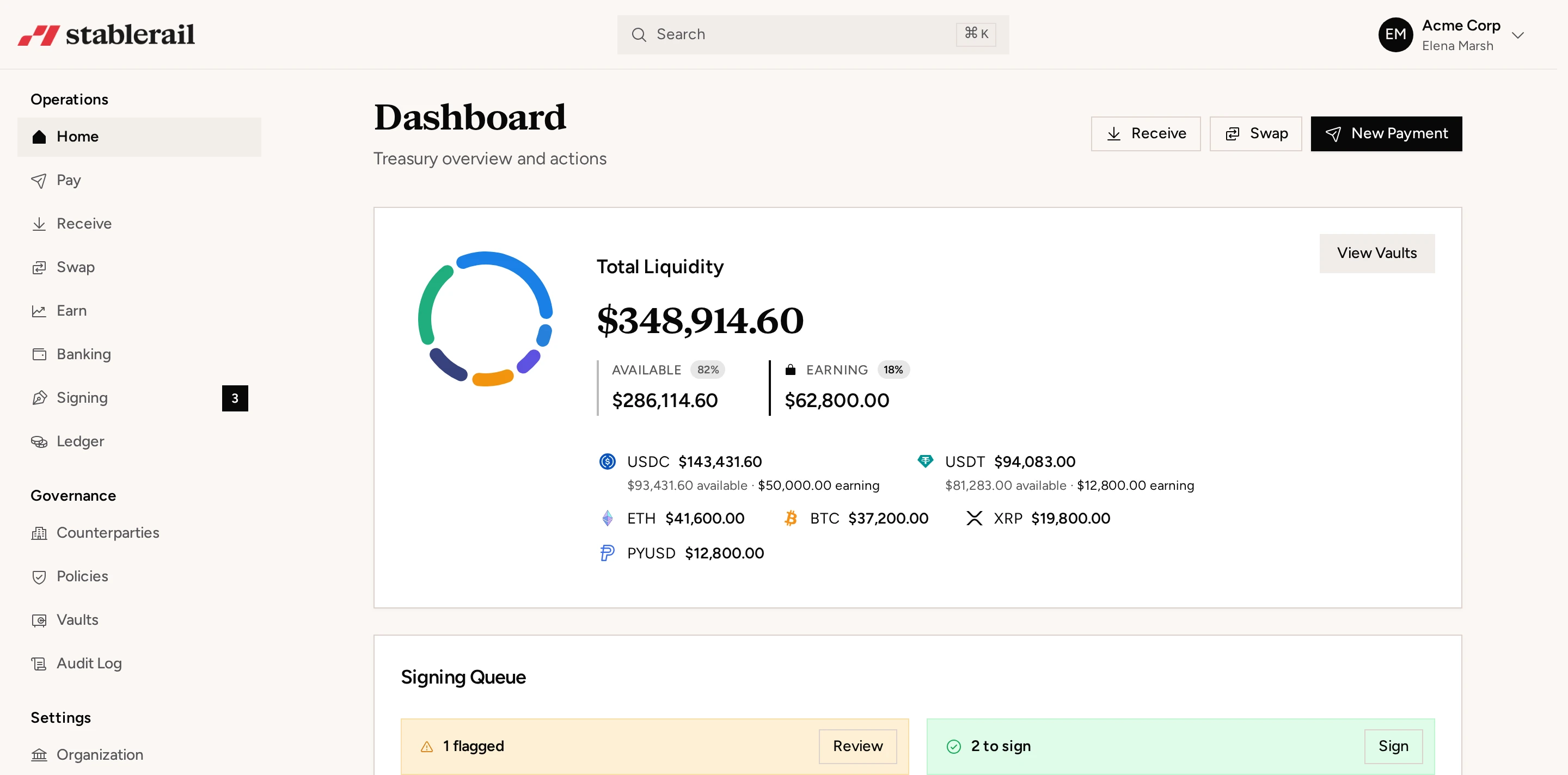
Stablerail maintains transaction records, approval history and evidence data for treasury activity. Finance teams should still retain invoices, contracts and the accounting rationale in their own close files. Wallet screening can support counterparty review, but it does not replace invoice validation or vendor onboarding; see the wallet checker for operational screening.
Close with traceability, not just transaction exports
The strongest stablecoin accounting process creates a clear chain from business document to approval, wallet transaction, valuation and general-ledger entry. Define the policy first, post fees and gains or losses separately, and reconcile units before values. That gives auditors evidence of what happened, why it happened, who approved it and how the reported amount was calculated.
Finance writers covering stablecoin treasury, payments, compliance, and risk controls.
More about the Stablerail team- Stablecoin treasury managementApprovals, limits, yield and reporting on one balance.
- Stablecoin payoutsBatch contractor and vendor payments with screening.
- USDT vs USDCWhich stablecoin your company should settle in.
- Stablecoin finance glossaryMPC, off-ramp, travel rule and the rest, in plain English.
- Product updatesEverything we ship, month by month.