
Best Stablecoin Tools for Managing a Multi-Chain Treasury
A practical comparison of stablecoin tools for holding, moving, swapping and reconciling USDC and USDT across multiple blockchains and fiat rails.
%22%20x1%3D%220%22%20y1%3D%220%22%20x2%3D%221%22%20y2%3D%221%22%3E%0A%20%20%20%20%20%20%20%20%3Cstop%20offset%3D%220%25%22%20stop-color%3D%22%232A0608%22%20%2F%3E%0A%20%20%20%20%20%20%20%20%3Cstop%20offset%3D%2250%25%22%20stop-color%3D%22%23420D12%22%20%2F%3E%0A%20%20%20%20%20%20%20%20%3Cstop%20offset%3D%22100%25%22%20stop-color%3D%22%23621619%22%20%2F%3E%0A%20%20%20%20%20%20%3C%2FlinearGradient%3E%0A%20%20%20%20%20%20%3CradialGradient%20id%3D%22glow%22%20cx%3D%22819%22%20cy%3D%22469%22%20r%3D%22520%22%20gradientUnits%3D%22userSpaceOnUse%22%3E%0A%20%20%20%20%20%20%20%20%3Cstop%20offset%3D%220%25%22%20stop-color%3D%22%23FF9577%22%20stop-opacity%3D%220.45%22%20%2F%3E%0A%20%20%20%20%20%20%20%20%3Cstop%20offset%3D%2255%25%22%20stop-color%3D%22%23FF9577%22%20stop-opacity%3D%220.08%22%20%2F%3E%0A%20%20%20%20%20%20%20%20%3Cstop%20offset%3D%22100%25%22%20stop-color%3D%22%23FF9577%22%20stop-opacity%3D%220%22%20%2F%3E%0A%20%20%20%20%20%20%3C%2FradialGradient%3E%0A%20%20%20%20%20%20%3ClinearGradient%20id%3D%22glass%22%20x1%3D%220%22%20y1%3D%220%22%20x2%3D%221%22%20y2%3D%221%22%3E%0A%20%20%20%20%20%20%20%20%3Cstop%20offset%3D%220%25%22%20stop-color%3D%22%23F8D6D2%22%20stop-opacity%3D%220.26%22%20%2F%3E%0A%20%20%20%20%20%20%20%20%3Cstop%20offset%3D%22100%25%22%20stop-color%3D%22%23FFFFFF%22%20stop-opacity%3D%220.08%22%20%2F%3E%0A%20%20%20%20%20%20%3C%2FlinearGradient%3E%0A%20%20%20%20%20%20%3ClinearGradient%20id%3D%22accent%22%20x1%3D%220%22%20y1%3D%220%22%20x2%3D%221%22%20y2%3D%221%22%3E%0A%20%20%20%20%20%20%20%20%3Cstop%20offset%3D%220%25%22%20stop-color%3D%22%23FF9577%22%20%2F%3E%0A%20%20%20%20%20%20%20%20%3Cstop%20offset%3D%22100%25%22%20stop-color%3D%22%23D03B2D%22%20%2F%3E%0A%20%20%20%20%20%20%3C%2FlinearGradient%3E%0A%20%20%20%20%20%20%3Cfilter%20id%3D%22soft%22%3E%3CfeGaussianBlur%20stdDeviation%3D%2210%22%20%2F%3E%3C%2Ffilter%3E%0A%20%20%20%20%3C%2Fdefs%3E%0A%20%20%20%20%3Crect%20width%3D%221600%22%20height%3D%22900%22%20fill%3D%22url(%23bg)%22%20%2F%3E%0A%20%20%20%20%3Crect%20width%3D%221600%22%20height%3D%22900%22%20fill%3D%22url(%23glow)%22%20%2F%3E%0A%20%20%20%20%3Cellipse%20cx%3D%22380%22%20cy%3D%22660%22%20rx%3D%2278%22%20ry%3D%2218%22%20fill%3D%22url(%23glass)%22%20stroke%3D%22%23F4CDC5%22%20stroke-opacity%3D%220.5%22%2F%3E%3Cellipse%20cx%3D%22380%22%20cy%3D%22630%22%20rx%3D%2278%22%20ry%3D%2218%22%20fill%3D%22url(%23glass)%22%20stroke%3D%22%23F4CDC5%22%20stroke-opacity%3D%220.5%22%2F%3E%3Cellipse%20cx%3D%22380%22%20cy%3D%22600%22%20rx%3D%2278%22%20ry%3D%2218%22%20fill%3D%22url(%23glass)%22%20stroke%3D%22%23F4CDC5%22%20stroke-opacity%3D%220.5%22%2F%3E%3Cellipse%20cx%3D%22380%22%20cy%3D%22570%22%20rx%3D%2278%22%20ry%3D%2218%22%20fill%3D%22url(%23glass)%22%20stroke%3D%22%23F4CDC5%22%20stroke-opacity%3D%220.5%22%2F%3E%3Cellipse%20cx%3D%22380%22%20cy%3D%22540%22%20rx%3D%2278%22%20ry%3D%2218%22%20fill%3D%22url(%23glass)%22%20stroke%3D%22%23F4CDC5%22%20stroke-opacity%3D%220.5%22%2F%3E%3Cellipse%20cx%3D%22380%22%20cy%3D%22510%22%20rx%3D%2278%22%20ry%3D%2218%22%20fill%3D%22url(%23glass)%22%20stroke%3D%22%23F4CDC5%22%20stroke-opacity%3D%220.5%22%2F%3E%3Cellipse%20cx%3D%22380%22%20cy%3D%22480%22%20rx%3D%2278%22%20ry%3D%2218%22%20fill%3D%22url(%23glass)%22%20stroke%3D%22%23F4CDC5%22%20stroke-opacity%3D%220.5%22%2F%3E%3Cellipse%20cx%3D%22380%22%20cy%3D%22450%22%20rx%3D%2278%22%20ry%3D%2218%22%20fill%3D%22url(%23glass)%22%20stroke%3D%22%23F4CDC5%22%20stroke-opacity%3D%220.5%22%2F%3E%3Cellipse%20cx%3D%22380%22%20cy%3D%22420%22%20rx%3D%2278%22%20ry%3D%2218%22%20fill%3D%22url(%23glass)%22%20stroke%3D%22%23F4CDC5%22%20stroke-opacity%3D%220.5%22%2F%3E%3Cellipse%20cx%3D%22560%22%20cy%3D%22660%22%20rx%3D%2278%22%20ry%3D%2218%22%20fill%3D%22url(%23glass)%22%20stroke%3D%22%23F4CDC5%22%20stroke-opacity%3D%220.5%22%2F%3E%3Cellipse%20cx%3D%22560%22%20cy%3D%22630%22%20rx%3D%2278%22%20ry%3D%2218%22%20fill%3D%22url(%23glass)%22%20stroke%3D%22%23F4CDC5%22%20stroke-opacity%3D%220.5%22%2F%3E%3Cellipse%20cx%3D%22560%22%20cy%3D%22600%22%20rx%3D%2278%22%20ry%3D%2218%22%20fill%3D%22url(%23glass)%22%20stroke%3D%22%23F4CDC5%22%20stroke-opacity%3D%220.5%22%2F%3E%3Cellipse%20cx%3D%22560%22%20cy%3D%22570%22%20rx%3D%2278%22%20ry%3D%2218%22%20fill%3D%22url(%23glass)%22%20stroke%3D%22%23F4CDC5%22%20stroke-opacity%3D%220.5%22%2F%3E%3Cellipse%20cx%3D%22560%22%20cy%3D%22540%22%20rx%3D%2278%22%20ry%3D%2218%22%20fill%3D%22url(%23glass)%22%20stroke%3D%22%23F4CDC5%22%20stroke-opacity%3D%220.5%22%2F%3E%3Cellipse%20cx%3D%22560%22%20cy%3D%22510%22%20rx%3D%2278%22%20ry%3D%2218%22%20fill%3D%22url(%23glass)%22%20stroke%3D%22%23F4CDC5%22%20stroke-opacity%3D%220.5%22%2F%3E%3Cellipse%20cx%3D%22740%22%20cy%3D%22660%22%20rx%3D%2278%22%20ry%3D%2218%22%20fill%3D%22url(%23glass)%22%20stroke%3D%22%23F4CDC5%22%20stroke-opacity%3D%220.5%22%2F%3E%3Cellipse%20cx%3D%22740%22%20cy%3D%22630%22%20rx%3D%2278%22%20ry%3D%2218%22%20fill%3D%22url(%23glass)%22%20stroke%3D%22%23F4CDC5%22%20stroke-opacity%3D%220.5%22%2F%3E%3Cellipse%20cx%3D%22740%22%20cy%3D%22600%22%20rx%3D%2278%22%20ry%3D%2218%22%20fill%3D%22url(%23glass)%22%20stroke%3D%22%23F4CDC5%22%20stroke-opacity%3D%220.5%22%2F%3E%3Cellipse%20cx%3D%22740%22%20cy%3D%22570%22%20rx%3D%2278%22%20ry%3D%2218%22%20fill%3D%22url(%23glass)%22%20stroke%3D%22%23F4CDC5%22%20stroke-opacity%3D%220.5%22%2F%3E%3Cellipse%20cx%3D%22740%22%20cy%3D%22540%22%20rx%3D%2278%22%20ry%3D%2218%22%20fill%3D%22url(%23glass)%22%20stroke%3D%22%23F4CDC5%22%20stroke-opacity%3D%220.5%22%2F%3E%3Cellipse%20cx%3D%22740%22%20cy%3D%22510%22%20rx%3D%2278%22%20ry%3D%2218%22%20fill%3D%22url(%23glass)%22%20stroke%3D%22%23F4CDC5%22%20stroke-opacity%3D%220.5%22%2F%3E%3Cellipse%20cx%3D%22740%22%20cy%3D%22480%22%20rx%3D%2278%22%20ry%3D%2218%22%20fill%3D%22url(%23glass)%22%20stroke%3D%22%23F4CDC5%22%20stroke-opacity%3D%220.5%22%2F%3E%3Cellipse%20cx%3D%22740%22%20cy%3D%22450%22%20rx%3D%2278%22%20ry%3D%2218%22%20fill%3D%22url(%23glass)%22%20stroke%3D%22%23F4CDC5%22%20stroke-opacity%3D%220.5%22%2F%3E%3Cellipse%20cx%3D%22920%22%20cy%3D%22660%22%20rx%3D%2278%22%20ry%3D%2218%22%20fill%3D%22url(%23glass)%22%20stroke%3D%22%23F4CDC5%22%20stroke-opacity%3D%220.5%22%2F%3E%3Cellipse%20cx%3D%22920%22%20cy%3D%22630%22%20rx%3D%2278%22%20ry%3D%2218%22%20fill%3D%22url(%23glass)%22%20stroke%3D%22%23F4CDC5%22%20stroke-opacity%3D%220.5%22%2F%3E%3Cellipse%20cx%3D%22920%22%20cy%3D%22600%22%20rx%3D%2278%22%20ry%3D%2218%22%20fill%3D%22url(%23glass)%22%20stroke%3D%22%23F4CDC5%22%20stroke-opacity%3D%220.5%22%2F%3E%3Cellipse%20cx%3D%22920%22%20cy%3D%22570%22%20rx%3D%2278%22%20ry%3D%2218%22%20fill%3D%22url(%23glass)%22%20stroke%3D%22%23F4CDC5%22%20stroke-opacity%3D%220.5%22%2F%3E%3Cellipse%20cx%3D%22920%22%20cy%3D%22540%22%20rx%3D%2278%22%20ry%3D%2218%22%20fill%3D%22url(%23glass)%22%20stroke%3D%22%23F4CDC5%22%20stroke-opacity%3D%220.5%22%2F%3E%3Cellipse%20cx%3D%22920%22%20cy%3D%22510%22%20rx%3D%2278%22%20ry%3D%2218%22%20fill%3D%22url(%23glass)%22%20stroke%3D%22%23F4CDC5%22%20stroke-opacity%3D%220.5%22%2F%3E%3Cellipse%20cx%3D%22920%22%20cy%3D%22480%22%20rx%3D%2278%22%20ry%3D%2218%22%20fill%3D%22url(%23glass)%22%20stroke%3D%22%23F4CDC5%22%20stroke-opacity%3D%220.5%22%2F%3E%3Cellipse%20cx%3D%22920%22%20cy%3D%22450%22%20rx%3D%2278%22%20ry%3D%2218%22%20fill%3D%22url(%23glass)%22%20stroke%3D%22%23F4CDC5%22%20stroke-opacity%3D%220.5%22%2F%3E%3Cellipse%20cx%3D%22920%22%20cy%3D%22420%22%20rx%3D%2278%22%20ry%3D%2218%22%20fill%3D%22url(%23glass)%22%20stroke%3D%22%23F4CDC5%22%20stroke-opacity%3D%220.5%22%2F%3E%3Cellipse%20cx%3D%221100%22%20cy%3D%22660%22%20rx%3D%2278%22%20ry%3D%2218%22%20fill%3D%22url(%23glass)%22%20stroke%3D%22%23F4CDC5%22%20stroke-opacity%3D%220.5%22%2F%3E%3Cellipse%20cx%3D%221100%22%20cy%3D%22630%22%20rx%3D%2278%22%20ry%3D%2218%22%20fill%3D%22url(%23glass)%22%20stroke%3D%22%23F4CDC5%22%20stroke-opacity%3D%220.5%22%2F%3E%3Cellipse%20cx%3D%221100%22%20cy%3D%22600%22%20rx%3D%2278%22%20ry%3D%2218%22%20fill%3D%22url(%23glass)%22%20stroke%3D%22%23F4CDC5%22%20stroke-opacity%3D%220.5%22%2F%3E%3Cellipse%20cx%3D%221100%22%20cy%3D%22570%22%20rx%3D%2278%22%20ry%3D%2218%22%20fill%3D%22url(%23glass)%22%20stroke%3D%22%23F4CDC5%22%20stroke-opacity%3D%220.5%22%2F%3E%3Cellipse%20cx%3D%221100%22%20cy%3D%22540%22%20rx%3D%2278%22%20ry%3D%2218%22%20fill%3D%22url(%23glass)%22%20stroke%3D%22%23F4CDC5%22%20stroke-opacity%3D%220.5%22%2F%3E%3Cellipse%20cx%3D%221100%22%20cy%3D%22510%22%20rx%3D%2278%22%20ry%3D%2218%22%20fill%3D%22url(%23accent)%22%20stroke%3D%22%23F4CDC5%22%20stroke-opacity%3D%220.5%22%2F%3E%0A%20%20%20%20%3Crect%20x%3D%2226%22%20y%3D%2226%22%20width%3D%221548%22%20height%3D%22848%22%20rx%3D%2218%22%20fill%3D%22none%22%20stroke%3D%22%23F2D0C8%22%20stroke-opacity%3D%220.12%22%2F%3E%0A%20%20%3C%2Fsvg%3E)
Managing USDC and USDT across several blockchains is not just a wallet problem. Finance teams need to control who can move funds, choose the correct asset and network, account for fees, convert between fiat and stablecoins, and reconcile every transaction.
The best stablecoin tools bring these tasks into one operating workflow. They should reduce manual wallet management without hiding the details finance teams need: balances by asset and chain, approval evidence, transaction hashes, fees, counterparties and fiat settlement records.
What a multi-chain treasury tool needs to cover
A multi-chain treasury may hold the same stablecoin on Ethereum, Base, Arbitrum, Polygon, Solana or other networks. USDT is also widely used on Tron and BNB Chain. Each asset-network combination is a separate balance with its own address format, transaction fee and operational risk.
Before comparing providers, document the flows the treasury actually needs:
- Holding: which entities own the funds, which stablecoins they hold and on which networks.
- Moving: vendor payments, contractor payouts, internal transfers and customer refunds.
- Swapping: conversions between USDC, USDT and fiat, plus any movement between chains.
- Reconciliation: matching blockchain transfers, conversion records, invoices and bank entries.
- Off-ramping: converting stablecoins to EUR, USD, GBP or another operating currency.
A tool may be strong in one area and weak in another. A wallet can secure assets but offer limited accounting exports. An exchange can convert assets but may not provide the approval structure required for corporate treasury operations.
Comparing the main types of stablecoin tools
| Tool type | Best suited to | Main strengths | Common gaps to assess |
|---|---|---|---|
| Single-signature wallet | Small balances and testing | Simple setup and direct blockchain access | Key-person risk, limited approvals and weak reporting |
| Multi-signature or MPC wallet | Controlled corporate holdings | Multiple approvers, policy controls and self-custody | Fiat rails, accounting data and supported asset-network pairs |
| Centralised exchange | Trading and asset conversion | Liquidity and broad token support | Custody exposure, withdrawal controls and bank settlement terms |
| Payment platform | Batch payouts and collections | Beneficiary workflows, payment status and exports | Whether balances are self-custodial and how conversion is priced |
| Integrated treasury platform | End-to-end stablecoin operations | Wallets, approvals, payouts, fiat rails and reconciliation in one system | Jurisdiction eligibility, chain coverage, limits and corridor pricing |
For many finance teams, the practical choice is an integrated platform combined with an accounting or enterprise resource planning system. Specialist exchanges may still be useful for particular trades, but they should not become the unofficial system of record.
Seven criteria for selecting stablecoin tools
1. Wallet ownership and access controls
Start by determining who controls the assets. Self-custody means the company retains control rather than relying on a provider to approve withdrawals. However, self-custody should not mean one employee holds a seed phrase.
Multi-party computation, or MPC, distributes signing authority so that no single key needs to exist in one place. Quorum signing requires a defined number of authorised participants to approve a transaction. For example, a policy might require two of three approvers, although the appropriate structure depends on the company.
Look for role-based access, transaction limits, beneficiary allowlists and different approval requirements by amount, asset or destination.
2. Asset and chain coverage
Do not accept “USDC and USDT supported” as a complete answer. Ask for the exact asset-network combinations available for deposits, storage, swaps and withdrawals. Native USDC on one chain is not operationally identical to a bridged representation of USDC on another.
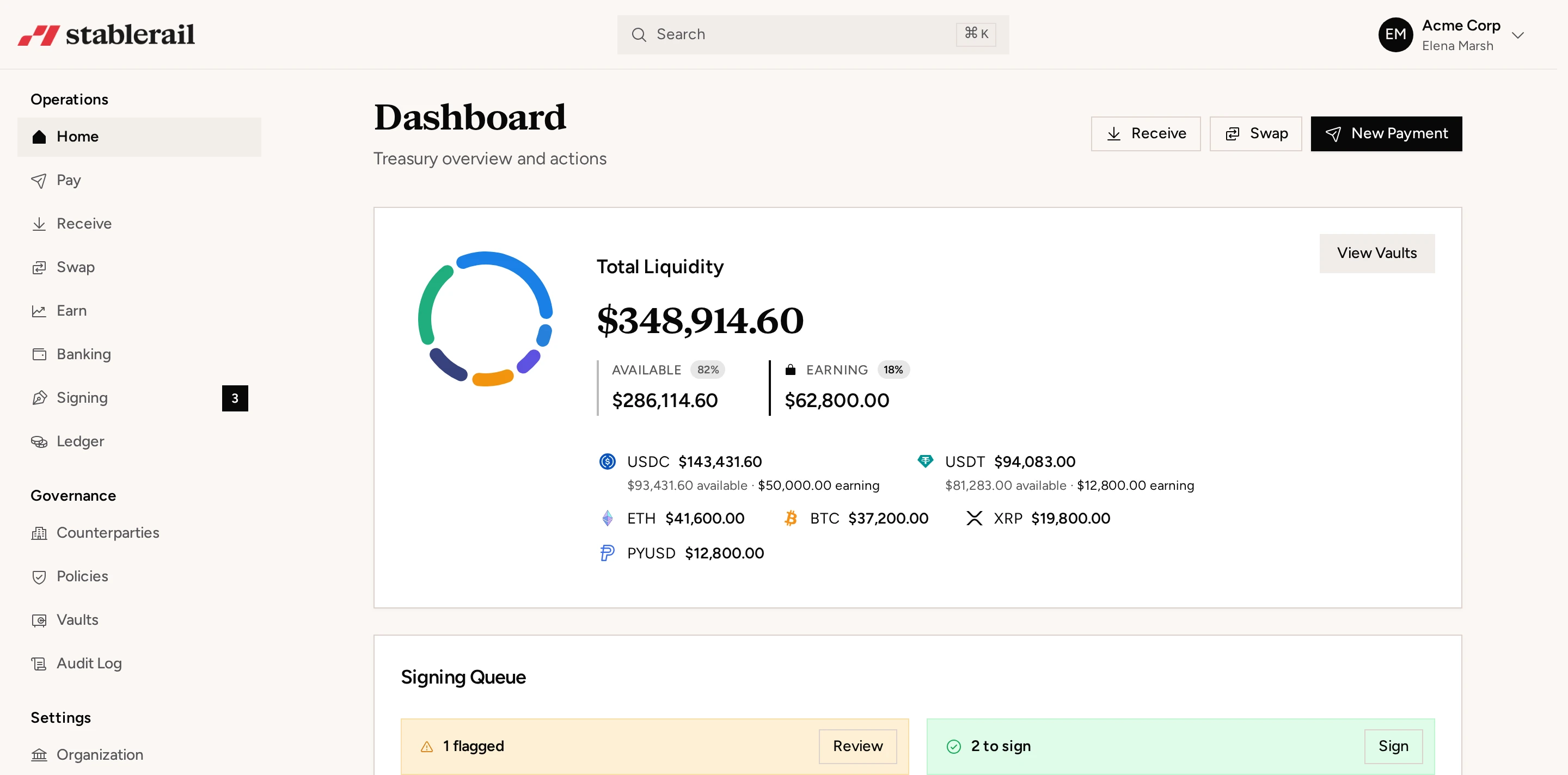
Stablerail supports treasury workflows and payouts across Ethereum, Base, Arbitrum, Polygon, Tron, BNB Chain, Optimism and Solana. Availability can differ by token and transaction type, so confirm the required pairing during onboarding. The stablecoin payouts workflow is designed for batch vendor and contractor payments across supported networks.
3. Transaction and conversion costs
Total cost has several components:
- Network fee: the blockchain fee paid to process a transaction. It varies by network and demand.
- Platform fee: any fee charged for sending, receiving or processing a payout.
- Conversion spread or fee: the cost of converting USDC, USDT or fiat.
- Banking fee: possible charges for SWIFT, wire or other fiat transfers.
- Bridge cost: fees and slippage when moving value between chains.
Lower network fees do not automatically mean lower total cost. A cheap transfer that requires an additional bridge, swap or manual reconciliation step may cost more overall. Compare providers using a representative month of transactions and request published corridor pricing or a clear quote for each conversion route.
4. Approval workflow
A finance-grade workflow should show who created, reviewed and signed each transaction. Batch payments should retain individual beneficiary details rather than appearing as an unexplained aggregate.
Check whether the platform supports approval thresholds, quorum signing, wallet allowlists, sanctions and wallet screening, and a tamper-evident audit log. These controls are especially useful when a company operates several wallets or legal entities.
5. Reconciliation and reporting
Reliable reconciliation requires more than a blockchain explorer link. Each record should include the legal entity, wallet, asset, network, amount, network fee, destination, transaction hash, timestamp and internal payment reference.
Test whether exports separate USDC on Ethereum from USDC on Base and distinguish principal amounts from fees. The tool should also preserve failed, cancelled and pending transactions so that the ledger matches the actual workflow. Evidence packs can help finance teams connect approvals, screening results and transaction records to an invoice or payout batch.
6. Fiat on-ramps and off-ramps
A multi-chain treasury eventually needs access to bank money. Assess both the currencies and the rails available. Relevant options may include SEPA and SEPA Instant for EUR, ACH and Fedwire for USD, Faster Payments, CHAPS and BACS for GBP, and SWIFT for cross-border transfers.
Stablerail combines stablecoin on/off-ramps with fiat accounts, virtual IBANs and multi-currency balances. Settlement timing still depends on the rail, cut-off times, compliance review and receiving bank. Ask which party is shown as sender, what reference data is preserved and whether pricing is displayed before confirming a conversion.
7. Onboarding and operating limits
Corporate access generally requires know-your-business checks. Expect to provide incorporation documents, ownership information, director details, business activity, expected volumes and source-of-funds information. Jurisdiction and industry eligibility may affect availability.
Confirm deposit, withdrawal and conversion limits before moving treasury balances. Also ask whether higher limits require additional documents and how long manual reviews typically take. Operational limits matter as much as headline chain coverage.
A practical evaluation process
Run a controlled test before consolidating balances:
- Map every required asset, chain, currency and banking rail.
- Create a sample approval policy with preparer and signer roles.
- Deposit a small amount of USDC or USDT on each required network.
- Send individual and batch payments to allowlisted addresses.
- Convert a small balance to fiat and withdraw it through the intended rail.
- Export the records and complete reconciliation without editing transaction data manually.
- Review the total fees, settlement times and evidence generated.
Use the same test cases for every provider. This exposes differences that feature lists often miss, such as whether a platform records network fees separately or retains beneficiary references through an off-ramp.
Choosing the right operating model
The best stablecoin tools are those that fit the company’s real payment routes and accounting process. Prioritise secure wallet management and clear approvals for holding funds, broad but precise chain support for moving them, transparent pricing for swapping, and complete data for reconciliation.
Stablerail brings self-custodial MPC vaults, quorum signing, USDC and USDT operations, multi-chain payouts and fiat rails into one corporate treasury workflow. Finance teams evaluating the platform can review account and operational questions through the help centre and assess wallet destinations using the wallet checker.
Whichever provider you choose, avoid evaluating chain count in isolation. The strongest multi-chain treasury setup is the one that can move funds from a controlled wallet to a verified counterparty or bank account, while leaving finance with a complete and reconcilable record.
Finance writers covering stablecoin treasury, payments, compliance, and risk controls.
More about the Stablerail team- Stablecoin treasury managementApprovals, limits, yield and reporting on one balance.
- Stablecoin payoutsBatch contractor and vendor payments with screening.
- USDT vs USDCWhich stablecoin your company should settle in.
- Stablecoin finance glossaryMPC, off-ramp, travel rule and the rest, in plain English.
- Product updatesEverything we ship, month by month.