
Best Stablecoin Tools for Managing a Multi-Chain Treasury
A practical framework for choosing stablecoin treasury tools across wallets, exchanges, accounting systems and fiat rails, with controls for USDC and USDT.
The best stablecoin tools combine asset-and-network coverage, multi-user approvals, pre-send address screening, transparent conversion costs, accounting-ready exports and dependable fiat routes. Most finance teams need either an integrated business stablecoin account or a controlled wallet paired with an exchange and reconciliation software. Compare tools against the exact USDC and USDT routes you use—not broad claims of “multi-chain support.”
%22%20x1%3D%220%22%20y1%3D%220%22%20x2%3D%221%22%20y2%3D%221%22%3E%0A%20%20%20%20%20%20%20%20%3Cstop%20offset%3D%220%25%22%20stop-color%3D%22%233E090D%22%20%2F%3E%0A%20%20%20%20%20%20%20%20%3Cstop%20offset%3D%2250%25%22%20stop-color%3D%22%235C1218%22%20%2F%3E%0A%20%20%20%20%20%20%20%20%3Cstop%20offset%3D%22100%25%22%20stop-color%3D%22%237B1F22%22%20%2F%3E%0A%20%20%20%20%20%20%3C%2FlinearGradient%3E%0A%20%20%20%20%20%20%3CradialGradient%20id%3D%22glow%22%20cx%3D%221270%22%20cy%3D%22323%22%20r%3D%22520%22%20gradientUnits%3D%22userSpaceOnUse%22%3E%0A%20%20%20%20%20%20%20%20%3Cstop%20offset%3D%220%25%22%20stop-color%3D%22%23FF8E72%22%20stop-opacity%3D%220.45%22%20%2F%3E%0A%20%20%20%20%20%20%20%20%3Cstop%20offset%3D%2255%25%22%20stop-color%3D%22%23FF8E72%22%20stop-opacity%3D%220.08%22%20%2F%3E%0A%20%20%20%20%20%20%20%20%3Cstop%20offset%3D%22100%25%22%20stop-color%3D%22%23FF8E72%22%20stop-opacity%3D%220%22%20%2F%3E%0A%20%20%20%20%20%20%3C%2FradialGradient%3E%0A%20%20%20%20%20%20%3ClinearGradient%20id%3D%22glass%22%20x1%3D%220%22%20y1%3D%220%22%20x2%3D%221%22%20y2%3D%221%22%3E%0A%20%20%20%20%20%20%20%20%3Cstop%20offset%3D%220%25%22%20stop-color%3D%22%23F8D6D2%22%20stop-opacity%3D%220.26%22%20%2F%3E%0A%20%20%20%20%20%20%20%20%3Cstop%20offset%3D%22100%25%22%20stop-color%3D%22%23FFFFFF%22%20stop-opacity%3D%220.08%22%20%2F%3E%0A%20%20%20%20%20%20%3C%2FlinearGradient%3E%0A%20%20%20%20%20%20%3ClinearGradient%20id%3D%22accent%22%20x1%3D%220%22%20y1%3D%220%22%20x2%3D%221%22%20y2%3D%221%22%3E%0A%20%20%20%20%20%20%20%20%3Cstop%20offset%3D%220%25%22%20stop-color%3D%22%23FF8E72%22%20%2F%3E%0A%20%20%20%20%20%20%20%20%3Cstop%20offset%3D%22100%25%22%20stop-color%3D%22%23D94030%22%20%2F%3E%0A%20%20%20%20%20%20%3C%2FlinearGradient%3E%0A%20%20%20%20%20%20%3Cfilter%20id%3D%22soft%22%3E%3CfeGaussianBlur%20stdDeviation%3D%2210%22%20%2F%3E%3C%2Ffilter%3E%0A%20%20%20%20%3C%2Fdefs%3E%0A%20%20%20%20%3Crect%20width%3D%221600%22%20height%3D%22900%22%20fill%3D%22url(%23bg)%22%20%2F%3E%0A%20%20%20%20%3Crect%20width%3D%221600%22%20height%3D%22900%22%20fill%3D%22url(%23glow)%22%20%2F%3E%0A%20%20%20%20%3Cline%20x1%3D%22200%22%20y1%3D%22250%22%20x2%3D%221400%22%20y2%3D%22250%22%20stroke%3D%22%23F4CDC5%22%20stroke-opacity%3D%220.12%22%2F%3E%3Cline%20x1%3D%22200%22%20y1%3D%22340%22%20x2%3D%221400%22%20y2%3D%22340%22%20stroke%3D%22%23F4CDC5%22%20stroke-opacity%3D%220.12%22%2F%3E%3Cline%20x1%3D%22200%22%20y1%3D%22430%22%20x2%3D%221400%22%20y2%3D%22430%22%20stroke%3D%22%23F4CDC5%22%20stroke-opacity%3D%220.12%22%2F%3E%3Cline%20x1%3D%22200%22%20y1%3D%22520%22%20x2%3D%221400%22%20y2%3D%22520%22%20stroke%3D%22%23F4CDC5%22%20stroke-opacity%3D%220.12%22%2F%3E%3Cline%20x1%3D%22200%22%20y1%3D%22610%22%20x2%3D%221400%22%20y2%3D%22610%22%20stroke%3D%22%23F4CDC5%22%20stroke-opacity%3D%220.12%22%2F%3E%3Cpolyline%20points%3D%22200%2C250%20350%2C294%20500%2C440%20650%2C388%20800%2C346%20950%2C306%201100%2C371%201250%2C344%201400%2C481%22%20fill%3D%22none%22%20stroke%3D%22url(%23accent)%22%20stroke-width%3D%2210%22%20stroke-linejoin%3D%22round%22%20stroke-linecap%3D%22round%22%2F%3E%3Ccircle%20cx%3D%22200%22%20cy%3D%22250%22%20r%3D%229%22%20fill%3D%22%23F8D6D2%22%2F%3E%3Ccircle%20cx%3D%22350%22%20cy%3D%22294%22%20r%3D%229%22%20fill%3D%22%23F8D6D2%22%2F%3E%3Ccircle%20cx%3D%22500%22%20cy%3D%22440%22%20r%3D%229%22%20fill%3D%22%23F8D6D2%22%2F%3E%3Ccircle%20cx%3D%22650%22%20cy%3D%22388%22%20r%3D%229%22%20fill%3D%22%23F8D6D2%22%2F%3E%3Ccircle%20cx%3D%22800%22%20cy%3D%22346%22%20r%3D%229%22%20fill%3D%22%23F8D6D2%22%2F%3E%3Ccircle%20cx%3D%22950%22%20cy%3D%22306%22%20r%3D%229%22%20fill%3D%22%23F8D6D2%22%2F%3E%3Ccircle%20cx%3D%221100%22%20cy%3D%22371%22%20r%3D%229%22%20fill%3D%22%23F8D6D2%22%2F%3E%3Ccircle%20cx%3D%221250%22%20cy%3D%22344%22%20r%3D%229%22%20fill%3D%22%23F8D6D2%22%2F%3E%3Ccircle%20cx%3D%221400%22%20cy%3D%22481%22%20r%3D%229%22%20fill%3D%22%23F8D6D2%22%2F%3E%0A%20%20%20%20%3Crect%20x%3D%2226%22%20y%3D%2226%22%20width%3D%221548%22%20height%3D%22848%22%20rx%3D%2218%22%20fill%3D%22none%22%20stroke%3D%22%23F2D0C8%22%20stroke-opacity%3D%220.12%22%2F%3E%0A%20%20%3C%2Fsvg%3E)
Managing a multi-chain treasury requires more than a wallet. Finance teams must control USDC and USDT on specific networks, maintain gas assets, approve transfers, convert balances, reconcile transactions and reach fiat banking rails. The best setup covers those workflows without obscuring custody, authority, cost or accounting evidence.
Start by documenting every required combination of asset, network, source and destination. USDC on Ethereum and USDC on Base are separate balances, even though both are denominated in US dollars. A provider supporting one does not necessarily support deposits, withdrawals or conversions for the other.
Compare tools against four treasury jobs
A useful evaluation tests each tool against four practical jobs:
- Holding: Securing stablecoins and maintaining the native assets needed for network fees.
- Moving: Sending funds to vendors, customers, exchanges, bank accounts or company-controlled wallets on the intended network.
- Converting: Swapping stablecoins, moving value between networks or converting stablecoins to fiat.
- Reconciling: Matching balances and transactions to counterparties, invoices, legal entities and general-ledger entries.
No category is automatically best. An exchange may offer liquidity and fiat withdrawals but lack the approval workflow required for operating payments. A wallet platform may provide strong signing controls but depend on other providers for conversions and accounting.
| Tool category | Best suited to | Primary strength | Main diligence question |
|---|---|---|---|
| Business stablecoin account | Operating treasury and payouts | Combines wallet controls, payments, reporting and fiat routes | Which asset-network-corridor combinations are available? |
| Institutional wallet platform | Securing and administering onchain assets | Signing quorums, roles and destination controls | Which conversions, off-ramps and accounting functions require third parties? |
| Centralised exchange | Trading and liquidity | Stablecoin conversion and access to supported fiat markets | Who controls the assets, and what withdrawal limits or holds can apply? |
| Browser or hardware wallet | Technical users and limited balances | Direct network access and broad token compatibility | Can it provide multi-user approvals, continuity and audit evidence? |
| Treasury or accounting software | Visibility and reconciliation | Consolidated balances, classification and ledger integrations | Does it initiate transactions or only observe external accounts? |
Many companies use a controlled operating account or wallet, an exchange or liquidity provider for conversions, and accounting software for the ledger. An integrated account can reduce handoffs, but consolidation should not come at the expense of clear custody, pricing or exportable records.
Verify coverage at the asset-network level
“Multi-chain support” is not precise enough for treasury diligence. Build a matrix listing each pair you expect to use, such as USDC on Ethereum, Base, Arbitrum, Polygon or Solana and USDT on Ethereum or Tron. For every pair, verify deposits, withdrawals, payouts, swaps and off-ramping separately.
Confirm the token contract or mint rather than relying on its ticker. A familiar symbol can refer to a bridged token instead of an asset issued natively on that network. Native and bridged versions can have different issuer, smart-contract, liquidity and redemption risks. The receiving exchange or wallet may also support one version but not the other.
Record the native fee asset for every network and decide who keeps it funded. Stablecoin balances can become operationally stranded when a wallet lacks enough ETH, TRX, BNB, POL or SOL to submit a transaction. Where the provider abstracts gas, establish how that cost appears in quotes and accounting exports.
Evaluate custody, approvals and payment controls
A single signer or shared seed phrase creates concentration and continuity risk. Business-grade tools should separate transaction creation, review and approval. Some use multi-party computation, while others use smart-contract multisignature or another signing design. Finance teams should evaluate the full operating model rather than treating a technical label as proof of control.
Test whether the platform can enforce a signing quorum, such as two approvals from three authorised signers. The appropriate quorum depends on transaction value, staff coverage and recovery procedures. Also determine what happens when a signer leaves, loses access or is unavailable at period-end.
| Control | What to verify | Evidence to retain |
|---|---|---|
| Role separation | Creators cannot approve their own instructions where segregation is required | User and role export |
| Signing quorum | The required number of authorised signers is technically enforced | Approval record for each transfer |
| Recipient control | New or changed addresses receive independent review | Address change history |
| Pre-send screening | Sanctions and address checks occur before release, with an escalation process | Screening result and reviewer action |
| Access recovery | Documented procedures cover lost credentials and personnel changes | Recovery test and access review |
| Audit trail | Records show who created, edited, approved and submitted an instruction | Immutable identifiers and exported logs |
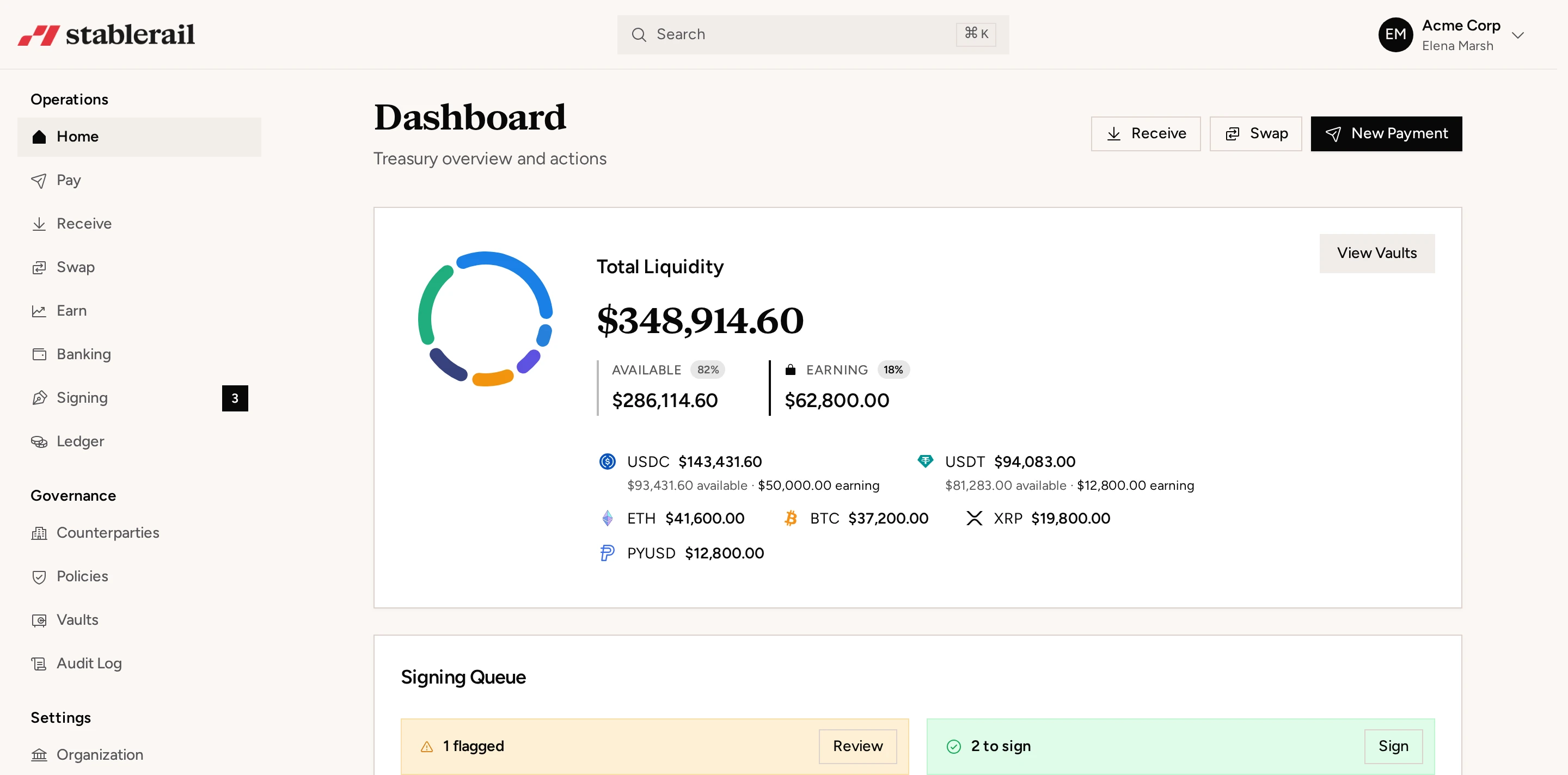
Stablerail brings USDC and USDT treasury into one business account with approval and signing quorum, sanctions and address screening before send, global payouts, a fiat off-ramp, corporate cards and exportable audit evidence. As with any provider, availability should be checked for the exact asset, network, destination and jurisdiction before funds are committed.
Calculate the complete transaction cost
Network gas is only one component. Compare the opening treasury value with the amount ultimately received by the beneficiary or settled in fiat. A route that advertises a low transfer fee can still be expensive after spreads, bridge costs and banking charges.
| Cost component | Where it arises | How finance should compare it |
|---|---|---|
| Network fee | Submitting an onchain transaction | Test normal and congested conditions for each route |
| Platform fee | Transfer, payout, withdrawal or account service | Separate fixed and percentage charges |
| Conversion spread | Stablecoin or fiat conversion | Compare the quoted output with a contemporaneous reference price |
| Bridge cost | Moving value between networks | Include fees, gas on both networks and slippage |
| Fiat rail charge | Bank payout or receipt | Compare by currency, country, amount and delivery method |
Run small end-to-end tests before moving a material balance. Confirm that the destination credits the correct token and network, that the net amount matches the quote and that the transaction can be reconciled without manual reconstruction.
Separate swaps from cross-chain transfers
A swap changes the asset, such as USDT to USDC. A bridge changes the network, such as moving USDC from Ethereum to Base. A workflow can do both, creating multiple execution steps and risk points.
Before approval, require a quote showing the input, expected output, exchange rate, fees, destination network and quote expiry. For material conversions, compare the execution with an observable market reference. Also assess whether off-ramping one balance and funding the required network through an approved on-ramp is simpler than bridging.
Test reconciliation with real transactions
A transaction hash proves that an onchain event occurred, but it does not explain the business purpose. Accounting records also need the counterparty, invoice, legal entity, department, approval history and treatment of fees.
Exports should provide opening and closing balances by wallet, asset and network; hashes and timestamps; source and destination addresses; network fees; stable internal identifiers; and records of failed, rejected or returned payments. Test whether those identifiers remain consistent across the interface, API and exported files.
Pay particular attention to internal wallet transfers, fees paid in a different token, stablecoin conversions and transactions submitted before but confirmed after period-end. Define how each event maps to ledger accounts and how unrealised or realised differences are handled under the company’s accounting policy.
Review fiat off-ramps as individual routes
Fiat access should be evaluated by currency, beneficiary country, bank rail, cutoff, transaction limit and expected settlement path. Confirm the name and reference shown on the beneficiary’s bank statement because unclear remittance information can delay reconciliation.
Do not treat “global payouts” or “fiat support” as universal coverage. Ask for the exact route from a specific stablecoin and network to the intended fiat currency and beneficiary type. Review the final quote each time because conversion and network costs can change.
Use a weighted scorecard
Score shortlisted tools against actual transaction volume and risk, not the longest feature list. One reasonable starting point is 25% for custody and approvals, 20% for asset-network coverage, 20% for reconciliation, 15% for total cost, 10% for fiat routes and 10% for operational resilience. Adjust the weights to reflect your business.
Rate each category consistently, multiply the rating by its weight and document the evidence supporting the score. A provider should also fail the review if it misses a mandatory control, even when its weighted total is high.
Finance-team selection checklist
- List required assets, networks, destinations, entities and monthly transaction patterns.
- Mark every capability as mandatory, preferred or unnecessary.
- Map custody, signer recovery and segregation of duties.
- Obtain end-to-end quotes rather than comparing headline fees.
- Run deposit, payout, conversion, failure and period-end reconciliation tests.
- Export approval, screening and transaction evidence for a sample audit file.
- Document fallback routes for a network outage, provider restriction or unavailable signer.
The best multi-chain treasury tool is the one that safely completes your real routes with the fewest uncontrolled handoffs. Asset-network precision, enforceable approvals, transparent economics and accounting-ready evidence matter more than the number of chains shown on a product page.
Frequently asked questions
What is the best stablecoin treasury tool for USDC and USDT?
The best choice depends on your required networks, custody model, approval controls, conversion needs and fiat destinations. Many finance teams choose either an integrated business stablecoin account or a controlled wallet combined with an exchange and reconciliation platform.
How should a company manage USDC across multiple chains?
Track USDC separately for every network and verify the exact token contract or mint. Maintain the required gas assets, define approved transfer routes and reconcile each network as a distinct balance while retaining transaction-level references.
Is a multi-chain wallet enough for a corporate stablecoin treasury?
Usually not by itself. A corporate treasury also needs role separation, signing approvals, recipient controls, pre-send screening, accounting exports, conversion routes and access to fiat.
What is the difference between swapping and bridging stablecoins?
A swap changes one asset into another, while a bridge moves value from one blockchain network to another. A transaction may involve both, so finance teams should review each fee, smart-contract interaction and execution step separately.
How do you reconcile stablecoin transactions in accounting software?
Export balances and transaction data with hashes, timestamps, addresses, fees and stable internal identifiers. Add business context such as the legal entity, counterparty, invoice and purpose, then define specific treatments for gas, internal transfers, conversions and period-end transactions.
Finance writers covering stablecoin treasury, payments, compliance, and risk controls.
More about the Stablerail team- Stablecoin treasury managementApprovals, limits, yield and reporting on one balance.
- Stablecoin payoutsBatch contractor and vendor payments with screening.
- USDT vs USDCWhich stablecoin your company should settle in.
- Stablecoin finance glossaryMPC, off-ramp, travel rule and the rest, in plain English.
- Product updatesEverything we ship, month by month.