
ACH vs wire vs stablecoin: paying US vendors without overpaying
Compare standard ACH, Same Day ACH, Fedwire and USDC by timing, limits, finality, total cost and operational risk for US vendor payments.
Use standard ACH for routine US vendor payments, Same Day ACH when dollars must arrive that banking day, and Fedwire when urgency, value or contractual finality justifies the higher fee. Use USDC when the vendor accepts it on the agreed network and 24/7 settlement provides a real benefit. Compare total cost, cut-offs, conversion requirements and recovery risk—not just the transfer fee.
%22%20x1%3D%220%22%20y1%3D%220%22%20x2%3D%221%22%20y2%3D%221%22%3E%0A%20%20%20%20%20%20%20%20%3Cstop%20offset%3D%220%25%22%20stop-color%3D%22%23360A0E%22%20%2F%3E%0A%20%20%20%20%20%20%20%20%3Cstop%20offset%3D%2250%25%22%20stop-color%3D%22%23551217%22%20%2F%3E%0A%20%20%20%20%20%20%20%20%3Cstop%20offset%3D%22100%25%22%20stop-color%3D%22%237A1D20%22%20%2F%3E%0A%20%20%20%20%20%20%3C%2FlinearGradient%3E%0A%20%20%20%20%20%20%3CradialGradient%20id%3D%22glow%22%20cx%3D%22218%22%20cy%3D%22-174%22%20r%3D%22520%22%20gradientUnits%3D%22userSpaceOnUse%22%3E%0A%20%20%20%20%20%20%20%20%3Cstop%20offset%3D%220%25%22%20stop-color%3D%22%23FFA587%22%20stop-opacity%3D%220.45%22%20%2F%3E%0A%20%20%20%20%20%20%20%20%3Cstop%20offset%3D%2255%25%22%20stop-color%3D%22%23FFA587%22%20stop-opacity%3D%220.08%22%20%2F%3E%0A%20%20%20%20%20%20%20%20%3Cstop%20offset%3D%22100%25%22%20stop-color%3D%22%23FFA587%22%20stop-opacity%3D%220%22%20%2F%3E%0A%20%20%20%20%20%20%3C%2FradialGradient%3E%0A%20%20%20%20%20%20%3ClinearGradient%20id%3D%22glass%22%20x1%3D%220%22%20y1%3D%220%22%20x2%3D%221%22%20y2%3D%221%22%3E%0A%20%20%20%20%20%20%20%20%3Cstop%20offset%3D%220%25%22%20stop-color%3D%22%23F8D6D2%22%20stop-opacity%3D%220.26%22%20%2F%3E%0A%20%20%20%20%20%20%20%20%3Cstop%20offset%3D%22100%25%22%20stop-color%3D%22%23FFFFFF%22%20stop-opacity%3D%220.08%22%20%2F%3E%0A%20%20%20%20%20%20%3C%2FlinearGradient%3E%0A%20%20%20%20%20%20%3ClinearGradient%20id%3D%22accent%22%20x1%3D%220%22%20y1%3D%220%22%20x2%3D%221%22%20y2%3D%221%22%3E%0A%20%20%20%20%20%20%20%20%3Cstop%20offset%3D%220%25%22%20stop-color%3D%22%23FFA587%22%20%2F%3E%0A%20%20%20%20%20%20%20%20%3Cstop%20offset%3D%22100%25%22%20stop-color%3D%22%23DC4A38%22%20%2F%3E%0A%20%20%20%20%20%20%3C%2FlinearGradient%3E%0A%20%20%20%20%20%20%3Cfilter%20id%3D%22soft%22%3E%3CfeGaussianBlur%20stdDeviation%3D%2210%22%20%2F%3E%3C%2Ffilter%3E%0A%20%20%20%20%3C%2Fdefs%3E%0A%20%20%20%20%3Crect%20width%3D%221600%22%20height%3D%22900%22%20fill%3D%22url(%23bg)%22%20%2F%3E%0A%20%20%20%20%3Crect%20width%3D%221600%22%20height%3D%22900%22%20fill%3D%22url(%23glow)%22%20%2F%3E%0A%20%20%20%20%0A%20%20%3Crect%20x%3D%22480%22%20y%3D%22200%22%20width%3D%22640%22%20height%3D%22500%22%20rx%3D%2232%22%20fill%3D%22url(%23glass)%22%20stroke%3D%22%23F4CDC5%22%20stroke-opacity%3D%220.6%22%20stroke-width%3D%223%22%2F%3E%0A%20%20%3Ccircle%20cx%3D%22800%22%20cy%3D%22450%22%20r%3D%22180%22%20fill%3D%22none%22%20stroke%3D%22%23F4CDC5%22%20stroke-opacity%3D%220.6%22%20stroke-width%3D%226%22%2F%3E%0A%20%20%3Ccircle%20cx%3D%22800%22%20cy%3D%22450%22%20r%3D%22130%22%20fill%3D%22url(%23glass)%22%20stroke%3D%22%23F4CDC5%22%20stroke-opacity%3D%220.5%22%2F%3E%0A%20%20%3Ccircle%20cx%3D%22800%22%20cy%3D%22450%22%20r%3D%2236%22%20fill%3D%22url(%23accent)%22%2F%3E%0A%20%20%3Crect%20x%3D%22929.9018818811763%22%20y%3D%22539.7407581819901%22%20width%3D%2216%22%20height%3D%2236%22%20rx%3D%223%22%20fill%3D%22%23F4CDC5%22%20opacity%3D%220.7%22%20transform%3D%22rotate(38%20937.9018818811763%20557.7407581819901)%22%2F%3E%3Crect%20x%3D%22813.3271350959008%22%20y%3D%22605.6955765372313%22%20width%3D%2216%22%20height%3D%2236%22%20rx%3D%223%22%20fill%3D%22%23F4CDC5%22%20opacity%3D%220.7%22%20transform%3D%22rotate(83%20821.3271350959008%20623.6955765372313)%22%2F%3E%3Crect%20x%3D%22684.2592418180097%22%20y%3D%22569.9018818811763%22%20width%3D%2216%22%20height%3D%2236%22%20rx%3D%223%22%20fill%3D%22%23F4CDC5%22%20opacity%3D%220.7%22%20transform%3D%22rotate(128%20692.2592418180097%20587.9018818811763)%22%2F%3E%3Crect%20x%3D%22618.3044234627687%22%20y%3D%22453.3271350959008%22%20width%3D%2216%22%20height%3D%2236%22%20rx%3D%223%22%20fill%3D%22%23F4CDC5%22%20opacity%3D%220.7%22%20transform%3D%22rotate(173%20626.3044234627687%20471.3271350959008)%22%2F%3E%3Crect%20x%3D%22654.0981181188235%22%20y%3D%22324.25924181800985%22%20width%3D%2216%22%20height%3D%2236%22%20rx%3D%223%22%20fill%3D%22%23F4CDC5%22%20opacity%3D%220.7%22%20transform%3D%22rotate(218%20662.0981181188235%20342.25924181800985)%22%2F%3E%3Crect%20x%3D%22770.6728649040992%22%20y%3D%22258.3044234627686%22%20width%3D%2216%22%20height%3D%2236%22%20rx%3D%223%22%20fill%3D%22%23F4CDC5%22%20opacity%3D%220.7%22%20transform%3D%22rotate(263%20778.6728649040992%20276.3044234627686)%22%2F%3E%3Crect%20x%3D%22899.7407581819903%22%20y%3D%22294.09811811882366%22%20width%3D%2216%22%20height%3D%2236%22%20rx%3D%223%22%20fill%3D%22%23F4CDC5%22%20opacity%3D%220.7%22%20transform%3D%22rotate(308%20907.7407581819903%20312.09811811882366)%22%2F%3E%3Crect%20x%3D%22965.6955765372313%22%20y%3D%22410.6728649040991%22%20width%3D%2216%22%20height%3D%2236%22%20rx%3D%223%22%20fill%3D%22%23F4CDC5%22%20opacity%3D%220.7%22%20transform%3D%22rotate(353%20973.6955765372313%20428.6728649040991)%22%2F%3E%0A%0A%20%20%20%20%3Crect%20x%3D%2226%22%20y%3D%2226%22%20width%3D%221548%22%20height%3D%22848%22%20rx%3D%2218%22%20fill%3D%22none%22%20stroke%3D%22%23F2D0C8%22%20stroke-opacity%3D%220.12%22%2F%3E%0A%20%20%3C%2Fsvg%3E)
Choose the rail based on the vendor’s required outcome
The cheapest suitable rail for most US vendor payments is standard ACH. It is designed for high-volume bank-account transfers and is usually more economical than a domestic wire. When an invoice must be paid later the same banking day, Same Day ACH may preserve that cost advantage if the payment is within the applicable limit and reaches your provider before its cut-off.
Fedwire is better suited to urgent, high-value or contractually time-sensitive payments where final bank settlement matters more than the fee. USDC adds a different capability: blockchain settlement outside banking hours. It is useful only if the vendor accepts USDC on the selected network or there is a dependable, cost-effective route from USDC to the vendor’s USD bank account.
The decision should begin with four questions: What asset must the vendor receive? When must it arrive? How much will the entire route cost? What happens if the destination details are wrong?
How each payment method works
Standard and Same Day ACH
ACH moves dollars between US bank accounts through a batch-based network. Standard ACH credits commonly arrive on the next banking day, although submission time, provider processing and the receiving bank can affect the exact timing. Because transactions are processed in batches, standard ACH is generally the appropriate default for scheduled invoice runs, recurring suppliers and other payments with at least one banking day of lead time.
Same Day ACH provides three processing windows on banking days. The current network submission deadlines and target settlement times published by Nacha are:
| Network submission deadline | Target settlement time | Operational consideration |
|---|---|---|
| 10:30 a.m. ET | 1:00 p.m. ET | The originating provider may require approval earlier. |
| 2:45 p.m. ET | 5:00 p.m. ET | Allow time for internal review and file processing. |
| 4:45 p.m. ET | 6:00 p.m. ET | Many providers stop accepting customer instructions before this deadline. |
Same Day ACH is limited to $1 million per payment. Banks and payment providers may apply lower transaction, daily or account limits. A payment approved internally at 4:30 p.m. ET may therefore miss the provider’s customer cut-off even though the ACH operator still has a later processing window.
ACH charges depend on the originating provider. Check the origination fee, Same Day surcharge, monthly plan, return fee and any charge for correcting payment instructions. Do not assume that an advertised transfer price represents the complete cost.
Fedwire
Fedwire is the Federal Reserve’s real-time gross settlement system. Transfers settle individually in central bank money rather than waiting for a batch. Once settlement is complete, the receiving bank has final funds, making Fedwire appropriate when a closing, shipment release or contractual deadline depends on confirmed bank settlement.
The Fedwire Funds Service generally operates on US business days from 9:00 p.m. ET on the preceding calendar day until 7:00 p.m. ET. The network deadline for third-party transfers is earlier, and banks typically impose their own customer cut-offs. A properly instructed domestic wire can reach the beneficiary bank on the same business day, often shortly after release, but compliance review, incorrect details or beneficiary-bank controls can delay the recipient’s access.
Outgoing and incoming wire fees may both apply. That makes Fedwire inefficient for frequent, low-value invoices, but the fee can be rational when the cost of missing a deadline is materially higher.
USDC
USDC can move on supported blockchain networks at any time, including weekends and US bank holidays. A transfer is often visible within seconds or minutes, although recipients may wait for a specified number of confirmations before crediting it. The sender and vendor must agree on the exact token, blockchain network and destination address. A correct address on an unsupported network is not a correct payment instruction.
The blockchain fee is only one component of cost. The complete route can include the cost of acquiring USDC, platform charges, network fees, conversion spread and the vendor’s off-ramp cost. Network fees also vary with blockchain demand and design.
USDC is not automatically equivalent to delivering dollars into a US bank account. If the invoice requires bank USD, either the sender or recipient must convert the stablecoin and originate a fiat payout. That step can reintroduce provider processing times, banking cut-offs and compliance review. A fast on-chain transfer does not guarantee immediate USD availability.
ACH vs wire vs USDC comparison
| Factor | Standard ACH | Same Day ACH | Fedwire | USDC |
|---|---|---|---|---|
| Best use | Routine vendor runs | Banking-day urgency | Urgent, high-value or time-sensitive transfers | 24/7 payment to a USDC-accepting vendor |
| Typical timing | Commonly next banking day | Same banking day if submitted before cut-off | Same business day after release | Usually seconds or minutes on-chain |
| Availability | Banking-day processing | Three banking-day windows | US business-day service | Blockchain operates continuously |
| Important limit | Provider and account limits | $1 million per payment, plus provider limits | Provider and account limits | Provider, wallet and network limits |
| Cost profile | Usually the lowest-cost bank rail | Standard ACH cost plus possible surcharge | Generally higher bank-rail fees | Network, platform and possible conversion costs |
| Recovery position | Returns and limited reversals exist | Returns and limited reversals exist | Generally final; recall is not guaranteed | Confirmed transfer is operationally irreversible |
| Main control risk | Fraudulent or outdated bank details | Cut-off and payment-limit failure | Wrong beneficiary details on a final payment | Wrong address, token or network |
A practical decision table for vendor payments
| Payment situation | Usually appropriate | Why |
|---|---|---|
| Routine invoice with at least one banking day available | Standard ACH | Avoids paying for speed the business does not need. |
| Payment of $1 million or less required later today | Same Day ACH | Can be less expensive than a wire if submitted before the provider’s cut-off. |
| Urgent payment above the Same Day ACH limit | Fedwire | Provides individual same-day bank settlement without the Same Day ACH cap. |
| Closing, shipment or release depends on final bank funds | Fedwire | Final settlement can justify the higher fee. |
| Weekend payment to a vendor that accepts USDC | USDC | On-chain settlement is available when US bank rails are closed. |
| Vendor requires USD in a bank account | ACH or Fedwire | A direct bank rail avoids an unnecessary stablecoin conversion step. |
| Material USDC payment to a new address | Small test, then USDC | A test helps validate the token, network and destination before the main transfer. |
Do not divide a payment merely to bypass a transaction or approval limit. Ask the provider to approve the required capacity, schedule the payment earlier or use a rail designed for the transaction size.
Reversibility changes the control requirements
An ACH credit can be returned by the receiving bank. An originator may also initiate a reversal in limited circumstances, such as a duplicate payment, incorrect amount or payment sent on the wrong date, subject to ACH rules and deadlines. A reversal is not a general refund tool, and finance teams should not treat ACH as reliably recoverable after vendor fraud.
A completed Fedwire payment is generally final. The sending bank can request a recall, but recovery may require action or consent from the beneficiary bank and recipient. There is no assurance that the money will be returned.
A confirmed USDC transfer cannot be reversed by a bank or blockchain operator. If funds go to the wrong address, the wrong network or an unsupported deposit address, recovery may be impossible. Screen addresses before sending, independently verify new payment instructions and use a small test transfer for a new destination when the amount is material.
For bank payments, treat a vendor’s request to change account details as a fraud event until verified. Confirm the change through a known contact and an independently sourced communication channel rather than replying to the email that requested it.
Calculate the full cost of the route
A useful cost comparison includes both direct fees and execution consequences:
- ACH: origination fee, Same Day surcharge, return charges and correction costs.
- Fedwire: outgoing fee, potential incoming fee and any intermediary charge.
- USDC: acquisition cost, provider fee, blockchain fee, conversion spread and off-ramp charge.
- Timing: the cost of missing a discount, shipment, closing or contractual deadline.
- Operations: staff time for approval, reconciliation, exception handling and evidence collection.
If the vendor keeps USDC, the stablecoin route may avoid an immediate off-ramp. If the vendor requires bank USD, compare the entire USDC-to-USD corridor with a direct ACH or wire—not the blockchain fee in isolation.
Pre-release checklist for finance teams
- Confirm whether the invoice requires USD in a bank account or allows USDC.
- Record the actual due time, including the applicable time zone.
- Check the provider’s customer cut-off and transaction limit.
- Verify changed bank details or wallet instructions out of band.
- For USDC, confirm the token, network, address and recipient support.
- Apply the required approvals and signing quorum before release.
- Screen the beneficiary or blockchain address before sending.
- Retain the invoice, approval record, payment confirmation and reconciliation evidence.
Run multiple rails without fragmenting treasury controls
Using different rails does not require different control standards. Finance should maintain one beneficiary record, a consistent approval matrix and a common evidence trail regardless of whether a payment leaves by ACH, Fedwire or USDC. The rail should change because the payment requirement changes—not because one employee happens to have access to a particular portal or wallet.
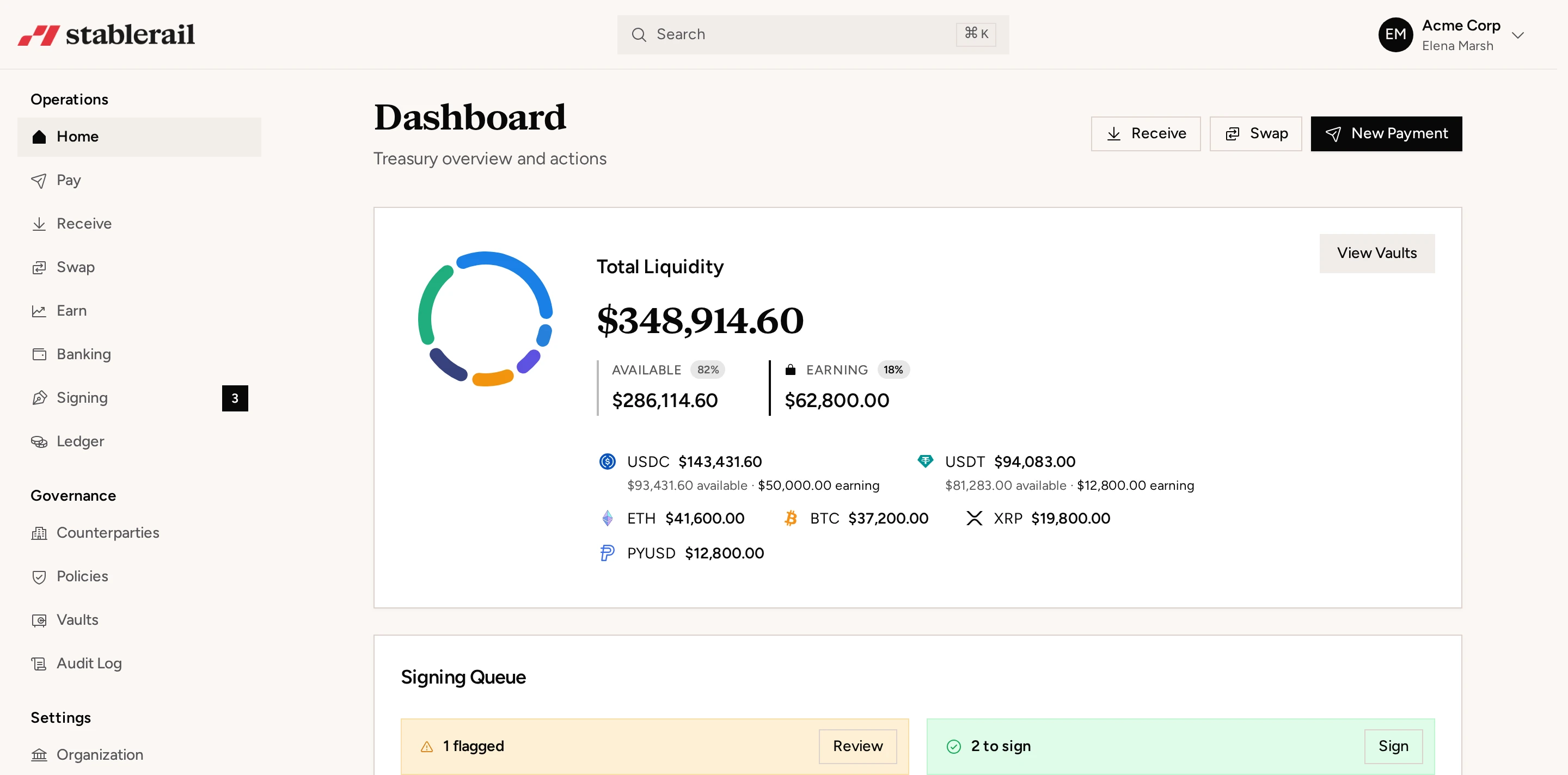
Stablerail provides one business account for stablecoin treasury, including USDC and USDT, with approvals and signing quorum, sanctions and address screening before send, global payouts, fiat off-ramp and exportable audit evidence. That type of consolidated workflow can help teams select the appropriate route while keeping payment authorization and records together.
The operating policy is straightforward: default to standard ACH, use Same Day ACH when the payment must arrive that banking day, choose Fedwire when urgency or final bank settlement justifies the fee, and use USDC when continuous settlement solves a genuine requirement. This prevents routine invoices from becoming expensive wires while preserving faster options for the payments that need them.
Frequently asked questions
Is ACH or wire better for paying US vendors?
ACH is usually better for routine US vendor invoices because it is generally less expensive. Use a wire when same-day final bank settlement, a high payment value or a contractual deadline makes speed and finality more important than the fee.
What is the limit for a Same Day ACH payment?
The Same Day ACH network limit is $1 million per payment. Your bank or payment provider may impose a lower transaction, daily or account limit, as well as an earlier customer cut-off.
Can USDC replace ACH for vendor payments?
USDC can replace ACH when the vendor agrees to receive USDC on the selected blockchain network. If the vendor requires dollars in a bank account, conversion and off-ramp steps may make direct ACH simpler and less expensive.
Can an ACH, wire or USDC payment be reversed?
ACH permits returns and limited reversals under specific rules, but recovery is not guaranteed. Completed wires are generally final and recalls depend on cooperation, while confirmed USDC transfers are operationally irreversible.
What is the cheapest way to pay a US vendor quickly?
Same Day ACH is often the first option to check when payment must arrive on the same banking day and is no more than $1 million. Fedwire may be necessary after the provider’s ACH cut-off, above the Same Day ACH limit or when final bank settlement is required.
Finance writers covering stablecoin treasury, payments, compliance, and risk controls.
More about the Stablerail team- Stablecoin treasury managementApprovals, limits, yield and reporting on one balance.
- Stablecoin payoutsBatch contractor and vendor payments with screening.
- USDT vs USDCWhich stablecoin your company should settle in.
- Stablecoin finance glossaryMPC, off-ramp, travel rule and the rest, in plain English.
- Product updatesEverything we ship, month by month.