
Stablecoin Payroll: Paying Contractors and Employees Across Borders
Stablecoins can simplify cross-border contractor payments, but employee wage rules may require fiat. Compare payout routes and build a controlled payroll process.
Stablecoin payroll is usually most practical for cross-border contractors who agree to receive USDC or USDT and can legally access a supported wallet and off-ramp. Employees require greater caution because local law may mandate wages in official currency or through domestic payroll rails. Finance teams should choose the route by country and worker type, verify wallet details, apply approval controls, document exchange rates and retain complete payroll evidence.
%22%20x1%3D%220%22%20y1%3D%220%22%20x2%3D%221%22%20y2%3D%221%22%3E%0A%20%20%20%20%20%20%20%20%3Cstop%20offset%3D%220%25%22%20stop-color%3D%22%23360A0E%22%20%2F%3E%0A%20%20%20%20%20%20%20%20%3Cstop%20offset%3D%2250%25%22%20stop-color%3D%22%23551217%22%20%2F%3E%0A%20%20%20%20%20%20%20%20%3Cstop%20offset%3D%22100%25%22%20stop-color%3D%22%237A1D20%22%20%2F%3E%0A%20%20%20%20%20%20%3C%2FlinearGradient%3E%0A%20%20%20%20%20%20%3CradialGradient%20id%3D%22glow%22%20cx%3D%22793%22%20cy%3D%22-63%22%20r%3D%22520%22%20gradientUnits%3D%22userSpaceOnUse%22%3E%0A%20%20%20%20%20%20%20%20%3Cstop%20offset%3D%220%25%22%20stop-color%3D%22%23FFA587%22%20stop-opacity%3D%220.45%22%20%2F%3E%0A%20%20%20%20%20%20%20%20%3Cstop%20offset%3D%2255%25%22%20stop-color%3D%22%23FFA587%22%20stop-opacity%3D%220.08%22%20%2F%3E%0A%20%20%20%20%20%20%20%20%3Cstop%20offset%3D%22100%25%22%20stop-color%3D%22%23FFA587%22%20stop-opacity%3D%220%22%20%2F%3E%0A%20%20%20%20%20%20%3C%2FradialGradient%3E%0A%20%20%20%20%20%20%3ClinearGradient%20id%3D%22glass%22%20x1%3D%220%22%20y1%3D%220%22%20x2%3D%221%22%20y2%3D%221%22%3E%0A%20%20%20%20%20%20%20%20%3Cstop%20offset%3D%220%25%22%20stop-color%3D%22%23F8D6D2%22%20stop-opacity%3D%220.26%22%20%2F%3E%0A%20%20%20%20%20%20%20%20%3Cstop%20offset%3D%22100%25%22%20stop-color%3D%22%23FFFFFF%22%20stop-opacity%3D%220.08%22%20%2F%3E%0A%20%20%20%20%20%20%3C%2FlinearGradient%3E%0A%20%20%20%20%20%20%3ClinearGradient%20id%3D%22accent%22%20x1%3D%220%22%20y1%3D%220%22%20x2%3D%221%22%20y2%3D%221%22%3E%0A%20%20%20%20%20%20%20%20%3Cstop%20offset%3D%220%25%22%20stop-color%3D%22%23FFA587%22%20%2F%3E%0A%20%20%20%20%20%20%20%20%3Cstop%20offset%3D%22100%25%22%20stop-color%3D%22%23DC4A38%22%20%2F%3E%0A%20%20%20%20%20%20%3C%2FlinearGradient%3E%0A%20%20%20%20%20%20%3Cfilter%20id%3D%22soft%22%3E%3CfeGaussianBlur%20stdDeviation%3D%2210%22%20%2F%3E%3C%2Ffilter%3E%0A%20%20%20%20%3C%2Fdefs%3E%0A%20%20%20%20%3Crect%20width%3D%221600%22%20height%3D%22900%22%20fill%3D%22url(%23bg)%22%20%2F%3E%0A%20%20%20%20%3Crect%20width%3D%221600%22%20height%3D%22900%22%20fill%3D%22url(%23glow)%22%20%2F%3E%0A%20%20%20%20%3Cpath%20d%3D%22M180%20280%20C%20600%20280%2C%20600%20380%2C%201420%20380%22%20stroke%3D%22url(%23accent)%22%20stroke-width%3D%2253%22%20fill%3D%22none%22%20opacity%3D%220.75%22%2F%3E%3Cpath%20d%3D%22M180%20440%20C%20600%20440%2C%20600%20520%2C%201420%20520%22%20stroke%3D%22%23F8D6D2%22%20stroke-width%3D%2219%22%20fill%3D%22none%22%20opacity%3D%220.4%22%2F%3E%3Cpath%20d%3D%22M180%20600%20C%20600%20600%2C%20600%20660%2C%201420%20660%22%20stroke%3D%22url(%23accent)%22%20stroke-width%3D%2210%22%20fill%3D%22none%22%20opacity%3D%220.55%22%2F%3E%3Crect%20x%3D%22140%22%20y%3D%22240%22%20width%3D%2240%22%20height%3D%22420%22%20rx%3D%226%22%20fill%3D%22%23F8D6D2%22%20opacity%3D%220.7%22%2F%3E%3Crect%20x%3D%221420%22%20y%3D%22340%22%20width%3D%2240%22%20height%3D%22360%22%20rx%3D%226%22%20fill%3D%22url(%23accent)%22%2F%3E%0A%20%20%20%20%3Crect%20x%3D%2226%22%20y%3D%2226%22%20width%3D%221548%22%20height%3D%22848%22%20rx%3D%2218%22%20fill%3D%22none%22%20stroke%3D%22%23F2D0C8%22%20stroke-opacity%3D%220.12%22%2F%3E%0A%20%20%3C%2Fsvg%3E)
How stablecoin payroll works
Stablecoin payroll uses tokens such as USDC or USDT to settle wages, contractor invoices or other compensation. The company calculates the obligation through its normal payroll or contractor-management process, then sends the approved net amount to the recipient’s wallet. If the obligation is denominated in fiat, the company must also document how that fiat amount was converted into tokens.
The main benefit is operational: an on-chain payment can reach a cross-border recipient without passing through several correspondent banks. It also produces a transaction hash, timestamp and destination address that finance can use during reconciliation. However, blockchain settlement does not replace payroll calculation, tax withholding, worker classification, payslips or local wage compliance.
Stablecoin payroll is therefore not one universal payment method. A global payroll run may combine direct stablecoin transfers, domestic bank payments and stablecoin-funded fiat payouts, depending on the worker and jurisdiction.
Choose the payout route by worker and country
Contractors generally have more freedom to agree on the asset and payment channel used to settle an invoice. Employees are more likely to be covered by mandatory wage-payment rules. Some jurisdictions require wages to be paid in legal tender, through a domestic account or using an approved payroll process; employee consent may not override those requirements.
| Payout route | Best fit | Use it when | Key finance checks |
|---|---|---|---|
| USDC or USDT to a wallet | Independent contractors | The contractor requests stablecoins, local rules permit the arrangement and the recipient supports the exact asset and network | Contract terms, wallet verification, network compatibility, exchange-rate record, screening, fees and off-ramp access |
| Fiat to a bank account | Employees and contractors requiring local currency | Wage law, payroll rules, recipient preference or limited stablecoin access makes fiat appropriate | Payroll-provider requirements, bank cut-offs, holidays, beneficiary validation and payment references |
| Partial stablecoin and partial fiat | Eligible employees or contractors requesting a split | Local rules permit it and written terms define each component | Consent, statutory wage minimums, withholding, valuation method and payslip presentation |
| Stablecoin-funded fiat payout | Companies holding USDC or USDT when recipients need fiat | The treasury wants to convert stablecoins before sending funds over a bank rail | Conversion quote, payout fee, corridor support, bank timing, beneficiary requirements and accounting treatment |
Make the decision for each country and worker type rather than setting a single global rule. Before launch, obtain country-specific advice on wage-payment law, payroll withholding, social contributions, payslip requirements and the valuation point used for reporting.
Contractor agreements should define the payment mechanics
Stablecoins are often a clearer fit for contractor payments because the parties can specify the settlement method in the services agreement or invoice. The documentation should remove ambiguity about what the company owes and when the obligation is discharged.
- Denomination: State whether the obligation is a fixed fiat amount, a fixed quantity of USDC or USDT, or another agreed calculation.
- Asset and network: Name both. “USDC” alone is incomplete when the token exists on multiple blockchains.
- Exchange rate: For fiat-denominated invoices, identify the rate source, valuation timestamp and rounding method.
- Fees: Specify who bears network fees, conversion charges and recipient off-ramp costs.
- Completion: Define whether payment is complete when broadcast, confirmed on-chain or credited to the recipient’s wallet.
- Instruction changes: Establish how a new wallet address is authenticated and when it becomes effective.
Payment in stablecoins does not determine worker classification. A person described as a contractor may still be treated as an employee under local tests concerning control, working patterns, integration and economic dependence.
Employees need additional legal and payroll checks
Employee payroll involves obligations that cannot be solved by obtaining a wallet address. Local law may restrict non-cash wages, require payment in an official currency, protect a minimum cash wage or mandate a particular payroll channel. The employer may also need to withhold tax and social contributions in fiat even when part of the net amount is paid in stablecoins.
If direct stablecoin wages are not permitted or operationally practical, a company holding USDC or USDT can convert treasury funds and pay the employee in fiat. This preserves the required employee payment method while allowing the company to fund the payment from its stablecoin treasury.
Finance should also consider the effect of a token trading away from its intended reference value. A fiat-denominated wage should not silently become a fixed-token obligation unless the agreement and applicable law clearly support that result. Establish a documented fallback, such as conversion to fiat or postponement of the token component, before payroll day.
Run payroll from an approved payment file
A controlled run starts with the final payroll register or approved contractor invoice file, not a collection of messages and manual wallet transfers. Each payment record should include the recipient’s legal name or internal ID, amount, denomination, asset, network, destination, payment reference and relevant country.
- Confirm the obligation. Finalise gross pay, deductions, reimbursements, bonuses and net pay in the system of record.
- Select the route. Assign stablecoin or fiat based on local rules, worker status, written terms and recipient capability.
- Validate instructions. Check the exact wallet and network or validate the bank beneficiary details. Independently confirm recent changes.
- Review the batch. Compare recipient counts and totals with the approved register, identify duplicates and separate exceptions.
- Approve and sign. Apply approval limits, segregation of duties and the required signing quorum before release.
- Fund and send. Hold sufficient stablecoins and, where required, the blockchain’s native fee token. Allow time for compliance review and bank cut-offs.
- Reconcile. Match every payment status and transaction hash or bank reference to the payroll register and general ledger.
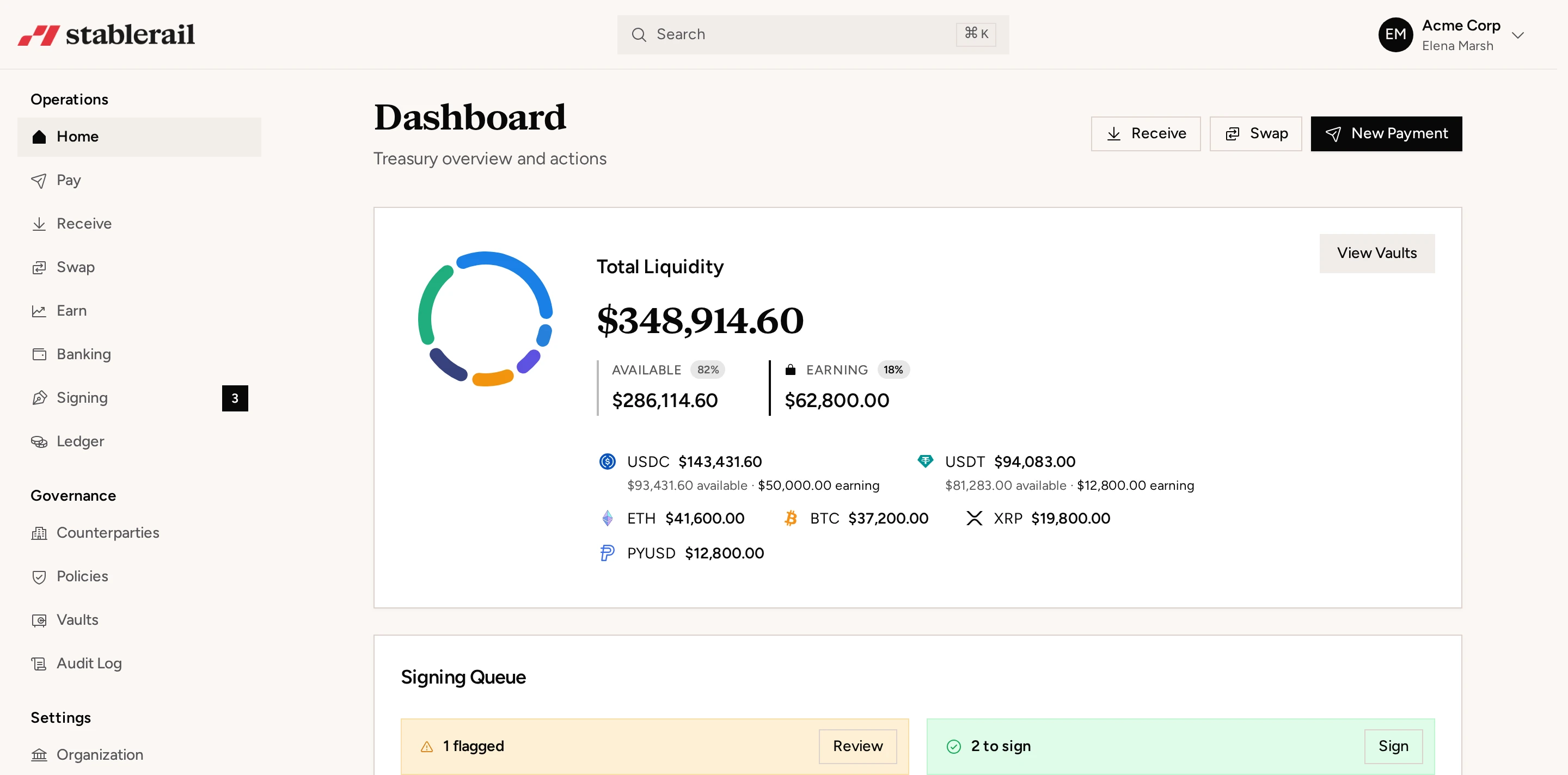
Stablerail supports corporate stablecoin treasury operations for a company’s own funds, including approvals and signing quorum, sanctions and address screening before send, fiat conversion, global payouts and exportable audit evidence. Those controls support execution and reconciliation, but they do not replace a payroll engine, statutory reports or local tax filings.
Select the stablecoin and network carefully
The token symbol and blockchain network are separate payment fields. A recipient may support USDC on one network but not another, and sending to an address format that appears valid does not guarantee the recipient’s wallet or exchange will credit the transfer. Recovery can be difficult or impossible.
Evaluate each asset-network combination against four criteria:
- Recipient compatibility: Confirm support using the recipient’s wallet or exchange deposit interface, not assumption.
- Conversion access: Check whether the recipient can lawfully and reliably convert the token in their location without unsupported bridges or informal intermediaries.
- Total cost: Compare blockchain fees, treasury conversion costs, payout charges and any likely recipient off-ramp fee.
- Operational consistency: Limiting routine runs to a controlled set of networks reduces funding, review and reconciliation errors.
A small test payment can help verify a new destination, but it does not prove ownership by the intended recipient. Verify wallet instructions through a trusted channel separate from the original submission, especially after any change request.
Controls for stablecoin payroll batches
Payroll files combine sensitive personal data with high-value payment instructions. Access should be limited by role, and the person who prepares the run should not be its only approver or signer. Material batches should receive at least an independent review appropriate to the company’s treasury policy.
Before release, use this checklist:
- Recipient count and total value match the approved payroll or invoice register.
- No recipient, invoice number or payment reference is duplicated.
- New or changed wallets have been independently authenticated.
- Every token matches the intended network and recipient capability.
- Sanctions and address screening has completed before funds are sent.
- The treasury has enough token, fiat and network-fee balances.
- Blocked, incomplete or disputed payments have been removed for separate review.
- A fallback route exists for time-sensitive employee wages.
Run the batch early enough to resolve exceptions. A blockchain may confirm quickly, but the complete process also includes payroll approval, instruction verification, screening, treasury funding, conversions and recipient support.
Retain evidence beyond the transaction hash
A transaction hash proves that a transfer was recorded on a blockchain. It does not show why the company paid the recipient, how net pay was calculated, whether the wallet was verified or which exchange rate was used.
For each payment, retain the employment agreement, contractor agreement or invoice; verified payment instructions; gross, deduction and net figures where applicable; fiat value and token quantity; rate source and timestamp; asset and network; destination address; transaction hash or bank reference; approval and screening evidence; fees; payment status; and the relevant payslip or remittance advice.
Export the evidence in a format that payroll, accounting and auditors can connect to the underlying obligation and ledger entry. Retention periods should follow the employment, tax, accounting and privacy requirements of each relevant jurisdiction.
Plan exceptions before payday
Define procedures for failed screening, incorrect networks, inaccessible wallets, token price deviations, insufficient fee balances and missed bank cut-offs. Do not improvise with time-sensitive wages. A pre-approved fiat route can protect the payment deadline when a stablecoin transfer cannot proceed safely or legally.
The strongest model is a hybrid one: use stablecoins where the worker, contract and jurisdiction support them, retain fiat where wage law or recipient access requires it, and apply the same approval, evidence and reconciliation standards to both.
Frequently asked questions
Can a company legally pay employees in stablecoins?
It depends on the employee’s jurisdiction. Some countries require wages to be paid in legal tender, through a domestic account or under a prescribed payroll process, and employee consent may not override those rules. Obtain country-specific advice before adding USDC or USDT to employee payroll.
Can independent contractors be paid in USDC or USDT?
Contractors can often agree to stablecoin payment where local law permits it. The contract or invoice should specify the amount or fiat conversion method, token, blockchain network, fees, completion point and process for changing wallet details.
How should stablecoin payroll be recorded in accounting?
Record the underlying payroll or contractor expense and the disposal or transfer of the stablecoin using the company’s applicable accounting policy. Retain the fiat value, exchange-rate source and timestamp, token amount, network, wallet address, transaction hash, fees and approval evidence.
Is a transaction hash enough evidence for a payroll audit?
No. A transaction hash shows that an on-chain transfer occurred, but it does not establish the business purpose, payroll calculation, recipient identity, wallet verification or exchange rate. Keep the payroll register, agreement or invoice, approvals, screening result and remittance record with it.
Which blockchain network should a company use for stablecoin payroll?
Use a network supported by both the treasury and the recipient’s exact wallet or exchange deposit route. Compare recipient access, conversion liquidity, total fees and operational complexity, and independently verify new wallet instructions before sending.
Finance writers covering stablecoin treasury, payments, compliance, and risk controls.
More about the Stablerail team- Stablecoin treasury managementApprovals, limits, yield and reporting on one balance.
- Stablecoin payoutsBatch contractor and vendor payments with screening.
- USDT vs USDCWhich stablecoin your company should settle in.
- Stablecoin finance glossaryMPC, off-ramp, travel rule and the rest, in plain English.
- Product updatesEverything we ship, month by month.