
Stablecoin Payroll: Paying Contractors and Employees Across Borders
A practical guide to cross-border stablecoin payroll, covering worker classification, local wage rules, USDC and USDT payouts, approvals, fees, reconciliation and audit evidence.
Stablecoin payroll can speed up cross-border payments and simplify settlement for contractors who use USDC or USDT, but it does not replace payroll compliance. Finance teams must first classify each worker, confirm local wage and tax rules, calculate pay in the required currency, approve and screen the payout, and retain evidence linking each transfer to an invoice or payroll record. Employees often still need local fiat payroll.
%22%20x1%3D%220%22%20y1%3D%220%22%20x2%3D%221%22%20y2%3D%221%22%3E%0A%20%20%20%20%20%20%20%20%3Cstop%20offset%3D%220%25%22%20stop-color%3D%22%232A0608%22%20%2F%3E%0A%20%20%20%20%20%20%20%20%3Cstop%20offset%3D%2250%25%22%20stop-color%3D%22%23420D12%22%20%2F%3E%0A%20%20%20%20%20%20%20%20%3Cstop%20offset%3D%22100%25%22%20stop-color%3D%22%23621619%22%20%2F%3E%0A%20%20%20%20%20%20%3C%2FlinearGradient%3E%0A%20%20%20%20%20%20%3CradialGradient%20id%3D%22glow%22%20cx%3D%221379%22%20cy%3D%2223%22%20r%3D%22520%22%20gradientUnits%3D%22userSpaceOnUse%22%3E%0A%20%20%20%20%20%20%20%20%3Cstop%20offset%3D%220%25%22%20stop-color%3D%22%23FF9577%22%20stop-opacity%3D%220.45%22%20%2F%3E%0A%20%20%20%20%20%20%20%20%3Cstop%20offset%3D%2255%25%22%20stop-color%3D%22%23FF9577%22%20stop-opacity%3D%220.08%22%20%2F%3E%0A%20%20%20%20%20%20%20%20%3Cstop%20offset%3D%22100%25%22%20stop-color%3D%22%23FF9577%22%20stop-opacity%3D%220%22%20%2F%3E%0A%20%20%20%20%20%20%3C%2FradialGradient%3E%0A%20%20%20%20%20%20%3ClinearGradient%20id%3D%22glass%22%20x1%3D%220%22%20y1%3D%220%22%20x2%3D%221%22%20y2%3D%221%22%3E%0A%20%20%20%20%20%20%20%20%3Cstop%20offset%3D%220%25%22%20stop-color%3D%22%23F8D6D2%22%20stop-opacity%3D%220.26%22%20%2F%3E%0A%20%20%20%20%20%20%20%20%3Cstop%20offset%3D%22100%25%22%20stop-color%3D%22%23FFFFFF%22%20stop-opacity%3D%220.08%22%20%2F%3E%0A%20%20%20%20%20%20%3C%2FlinearGradient%3E%0A%20%20%20%20%20%20%3ClinearGradient%20id%3D%22accent%22%20x1%3D%220%22%20y1%3D%220%22%20x2%3D%221%22%20y2%3D%221%22%3E%0A%20%20%20%20%20%20%20%20%3Cstop%20offset%3D%220%25%22%20stop-color%3D%22%23FF9577%22%20%2F%3E%0A%20%20%20%20%20%20%20%20%3Cstop%20offset%3D%22100%25%22%20stop-color%3D%22%23D03B2D%22%20%2F%3E%0A%20%20%20%20%20%20%3C%2FlinearGradient%3E%0A%20%20%20%20%20%20%3Cfilter%20id%3D%22soft%22%3E%3CfeGaussianBlur%20stdDeviation%3D%2210%22%20%2F%3E%3C%2Ffilter%3E%0A%20%20%20%20%3C%2Fdefs%3E%0A%20%20%20%20%3Crect%20width%3D%221600%22%20height%3D%22900%22%20fill%3D%22url(%23bg)%22%20%2F%3E%0A%20%20%20%20%3Crect%20width%3D%221600%22%20height%3D%22900%22%20fill%3D%22url(%23glow)%22%20%2F%3E%0A%20%20%20%20%0A%20%20%3Cpath%20d%3D%22M400%20360%20L%20800%20220%20L%201200%20360%20L%201200%20410%20L%20400%20410%20Z%22%20fill%3D%22url(%23glass)%22%20stroke%3D%22%23F4CDC5%22%20stroke-opacity%3D%220.6%22%2F%3E%0A%20%20%3Crect%20x%3D%22460%22%20y%3D%22430%22%20width%3D%2280%22%20height%3D%22240%22%20fill%3D%22url(%23glass)%22%20stroke%3D%22%23F4CDC5%22%20stroke-opacity%3D%220.5%22%2F%3E%3Crect%20x%3D%22640%22%20y%3D%22430%22%20width%3D%2280%22%20height%3D%22240%22%20fill%3D%22url(%23glass)%22%20stroke%3D%22%23F4CDC5%22%20stroke-opacity%3D%220.5%22%2F%3E%3Crect%20x%3D%22820%22%20y%3D%22430%22%20width%3D%2280%22%20height%3D%22240%22%20fill%3D%22url(%23glass)%22%20stroke%3D%22%23F4CDC5%22%20stroke-opacity%3D%220.5%22%2F%3E%3Crect%20x%3D%221000%22%20y%3D%22430%22%20width%3D%2280%22%20height%3D%22240%22%20fill%3D%22url(%23accent)%22%20stroke%3D%22%23F4CDC5%22%20stroke-opacity%3D%220.5%22%2F%3E%0A%20%20%3Crect%20x%3D%22380%22%20y%3D%22690%22%20width%3D%22840%22%20height%3D%2236%22%20rx%3D%226%22%20fill%3D%22url(%23glass)%22%20stroke%3D%22%23F4CDC5%22%20stroke-opacity%3D%220.6%22%2F%3E%0A%20%20%3Ccircle%20cx%3D%22800%22%20cy%3D%22310%22%20r%3D%2222%22%20fill%3D%22url(%23accent)%22%2F%3E%0A%0A%20%20%20%20%3Crect%20x%3D%2226%22%20y%3D%2226%22%20width%3D%221548%22%20height%3D%22848%22%20rx%3D%2218%22%20fill%3D%22none%22%20stroke%3D%22%23F2D0C8%22%20stroke-opacity%3D%220.12%22%2F%3E%0A%20%20%3C%2Fsvg%3E)
Stablecoin payroll is most useful when an eligible contractor or employee wants USDC or USDT and conventional cross-border banking is slow or difficult. It should be treated as a payment rail, not a substitute for payroll calculation, tax withholding or employment compliance. The safest model is country-specific: use local fiat where wage rules require it and stablecoins where they are permitted, documented and operationally suitable.
Start with worker status, not the payment asset
Before choosing USDC, USDT or a bank transfer, determine whether the recipient is an employee or an independent contractor. A contract label is not conclusive. Authorities may consider managerial control, working hours, exclusivity, equipment, integration into the business and economic dependence.
| Question | Employee | Independent contractor |
|---|---|---|
| What creates the payment obligation? | Employment agreement, payroll rules and applicable wage law | Services agreement and approved invoice or payment schedule |
| How is the amount calculated? | Gross wages less required taxes, social contributions and permitted deductions | Contracted fee, milestone or time-based invoice, plus applicable taxes |
| Can stablecoins be used? | Only where local law permits the selected structure; fiat payroll may still be required | Often more flexible if the contract defines the denomination and settlement method |
| What evidence is needed? | Payroll register, payslip, withholding records, consent where relevant and payment reference | Contract, invoice, approval, wallet details and transaction reference |
| Main finance risk | Non-compliant wages, deductions, reporting or payment timing | Worker misclassification, incorrect invoice settlement or incomplete tax reporting |
Employees
Employee wages may need to be denominated, calculated, reported and paid in local fiat currency. Rules can cover minimum wage, withholding, social insurance, pension contributions, payslips, payment timing, permitted deductions and the use of assets other than legal tender. Written employee consent does not necessarily override these requirements.
Where stablecoin wages are not clearly permitted, the lower-risk route is usually to run payroll through an appropriate local provider and pay net wages through local bank rails. A company considering any stablecoin component should obtain country-specific employment and tax advice, document the employee’s election where relevant and define how the fiat payroll amount is converted.
Contractors
Contractor arrangements usually offer more flexibility, but the agreement must be precise. It should state the invoice currency, settlement asset, blockchain network, fee allocation and the point at which payment is considered complete. It should also explain how conversions are calculated if an invoice denominated in EUR, GBP or another currency is settled in USDC or USDT.
For example, an agreement can specify that a USD-denominated invoice is discharged by delivering the same nominal amount of an agreed dollar stablecoin to a verified address. This avoids ambiguity, but finance must still assess classification, tax reporting, sanctions exposure and the recipient’s ability to use or off-ramp the asset.
Choose the payout route country by country
A global payroll policy does not require one global payment rail. Route each payment according to local law, worker status, recipient preference, banking access, currency needs, timing and total cost.
| Route | Best suited to | Timing factors | Costs and controls |
|---|---|---|---|
| USDC or USDT | Eligible recipients who can custody or off-ramp the selected asset and network | Internal approval time, network confirmation and recipient platform processing | Conversion price, network fee, address screening, network validation and off-ramp cost |
| Local bank rail | Employees who must receive fiat and recipients with suitable local accounts | Local cut-offs, weekends, holidays and beneficiary-bank processing | Transfer fee, FX spread, account validation and return handling |
| SWIFT transfer | Corridors without a suitable local route | Correspondent-bank processing and compliance reviews | Sender, intermediary and recipient charges, FX and payment tracing |
| Hybrid payout | Payroll calculated in fiat with an eligible net amount converted to stablecoins | Payroll close, conversion, approval and blockchain release must be coordinated | Payroll-provider fee, conversion cost, network fee and additional reconciliation |
Do not compare routes using the headline transfer fee alone. Calculate the amount the recipient can actually use after conversion, network charges, intermediary deductions, recipient off-ramp fees and any FX needed to reach their spending currency.
Define the asset and network precisely
“Pay in USDC” is not a complete instruction. The payment record must identify the exact asset and blockchain network. A wallet address that is valid on one network may be unsupported by the recipient’s wallet, exchange or chosen deposit route on another. Sending the right token over the wrong network can result in a delayed recovery or permanent loss.
Collect wallet details through a controlled process rather than email alone. Record the recipient’s legal name, wallet address, network, date of verification and person who approved the change. Treat an address update like a bank-account change: independently verify it using a previously established contact method and do not rely solely on the message requesting the change.
A blockchain address is a payment instruction, not proof of the recipient’s identity or entitlement to payroll.
Build the batch from approved payroll data
A stablecoin payroll run should begin with an approved payroll register or accounts-payable file, not a list pasted directly into a wallet. Give each batch a unique identifier and include enough information to connect the employment or invoice obligation to the final settlement.
- Legal name and internal employee, worker or vendor ID
- Country and employee or contractor classification
- Payroll period, invoice number or service period
- Gross amount, deductions and net amount where applicable
- Denomination currency, settlement asset and blockchain network
- Verified wallet address or bank-account details
- Exchange-rate source, quoted rate and timestamp when conversion applies
- Preparer, approvers and required signing quorum
Fund the payout account with enough fiat or stablecoins to cover the approved batch, conversion costs and network fees. If the treasury uses a wallet requiring multiple signers, include quorum availability in the payroll calendar rather than treating approval as an afterthought.
Run stablecoin payroll through controlled stages
- Freeze the file. Lock changes after payroll or invoice approval and assign the batch ID.
- Validate the data. Check required fields, duplicate rows, unusual amounts, wallet format and asset-network compatibility.
- Confirm eligibility. Verify that the recipient can legally and operationally receive the selected payout.
- Screen the destination. Perform sanctions and address screening before sending, and escalate any alert under a documented process.
- Verify new destinations. Independently confirm wallet changes and, where appropriate, use a small test transfer before the main payment.
- Approve and sign. Apply payment limits, segregation of duties and the required signing quorum.
- Monitor and reconcile. Capture transaction hashes or bank references, investigate exceptions and match completed transfers to payroll records or invoices.
Continuous blockchain operation does not guarantee an exact arrival time. Internal approval queues, network congestion, recipient exchange policies, wallet maintenance and compliance reviews can all delay access. A later fiat off-ramp may also be subject to local bank cut-offs and holidays.
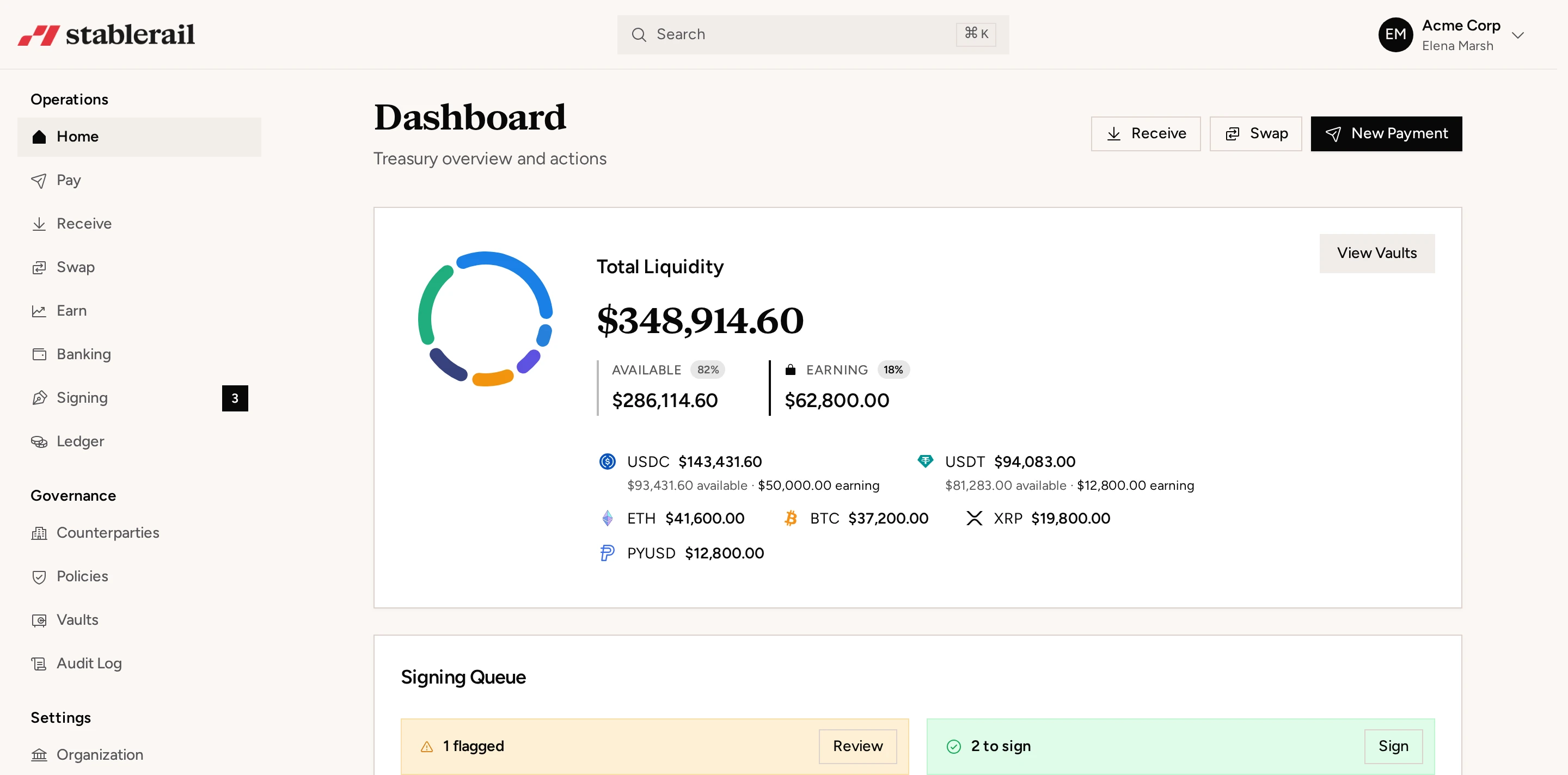
Stablerail brings USDC and USDT treasury, approvals and signing quorum, sanctions and address screening before send, global payouts and fiat off-ramp into one business account. Finance teams can also retain exportable audit evidence rather than reconstructing the batch from separate wallets and spreadsheets.
Make fees and exchange rates explicit
Define whether the company or recipient bears each cost. If a contractor must receive exactly 2,000 USDC, the network fee should not reduce that amount unless the contract permits it and the payment system supports that treatment. Employee deductions may be restricted by wage law even when an employee has agreed to receive stablecoins.
When payroll is calculated in a different currency from the settlement asset, retain the conversion quote, source and timestamp. Finance should also document whether the conversion occurs at payroll approval, funding or payout. Applying the same approved method consistently makes variances easier to explain and reduces disputes over underpayment.
Keep evidence that connects payroll to settlement
A transaction hash proves that tokens moved between blockchain addresses. It does not prove why the transfer occurred, who controlled the destination, whether the amount was correct or whether payroll taxes were handled. Build an evidence pack for every batch containing:
- The approved payroll register or contractor invoices
- Employment or contractor agreements and payment elections
- Payslips, tax calculations and withholding records
- Wallet-verification and address-screening results
- Exchange-rate evidence and conversion receipts
- Approval records, signer logs and exception decisions
- Transaction hashes, bank references and recipient confirmations
- Records of rejected, returned, replaced or duplicate payments
Record the required fiat value for accounting and tax purposes at the applicable recognition time. The correct valuation method depends on jurisdiction and accounting policy, so agree it with the company’s accountant or payroll adviser and apply it consistently.
Use a flexible policy, not a universal mandate
The strongest cross-border payroll model does not force every worker onto the same rail. Define eligible countries, worker types, assets, networks, conversion methods, fee treatment, approval deadlines and retention requirements before the first payment. Keep a documented fallback to local fiat for recipients who cannot legally or practically use stablecoins.
Review the policy when workers move countries, classifications change, a network or wallet becomes unsupported, or tax and wage rules change. Stablecoins can improve cross-border settlement, but reliable payroll still depends on correct classification, controlled payment execution and complete records.
Frequently asked questions
Can a company legally pay employees in stablecoins?
It depends on the employee’s country and the proposed payment structure. Local law may require wages to be calculated, reported or paid in fiat, and employee consent may not override minimum-wage, withholding or legal-tender rules.
Can international contractors be paid in USDC or USDT?
Contractors can often agree to stablecoin settlement if local law permits it. The contract should define the invoice currency, stablecoin, blockchain network, conversion method, fee allocation and when the payment obligation is discharged.
Is stablecoin payroll taxable?
Paying with a stablecoin does not remove payroll, income-tax or reporting obligations. The company and recipient may need to record a fiat value at a specified time, with the applicable method determined by local tax and accounting rules.
What information is needed for a stablecoin payroll payment?
Finance should collect the recipient’s legal name, worker ID, classification, country, payment amount, denomination currency, exact token, blockchain network and verified wallet address. The batch should also retain approvals, exchange-rate evidence, screening results and the final transaction hash.
Should a company use stablecoins or bank transfers for cross-border payroll?
Use the route that satisfies local law and produces the best operational outcome for each recipient. Employees may require local fiat payroll, while eligible contractors who already use USDC or USDT may benefit from stablecoin settlement.
Finance writers covering stablecoin treasury, payments, compliance, and risk controls.
More about the Stablerail team- Stablecoin treasury managementApprovals, limits, yield and reporting on one balance.
- Stablecoin payoutsBatch contractor and vendor payments with screening.
- USDT vs USDCWhich stablecoin your company should settle in.
- Stablecoin finance glossaryMPC, off-ramp, travel rule and the rest, in plain English.
- Product updatesEverything we ship, month by month.