
Multi-Currency Business Account for USD, EUR, GBP and Stablecoins
Learn how a multi-currency business account connects USD, EUR, GBP, USDC and USDT balances with bank rails, on-chain settlement, approvals and unified reporting.
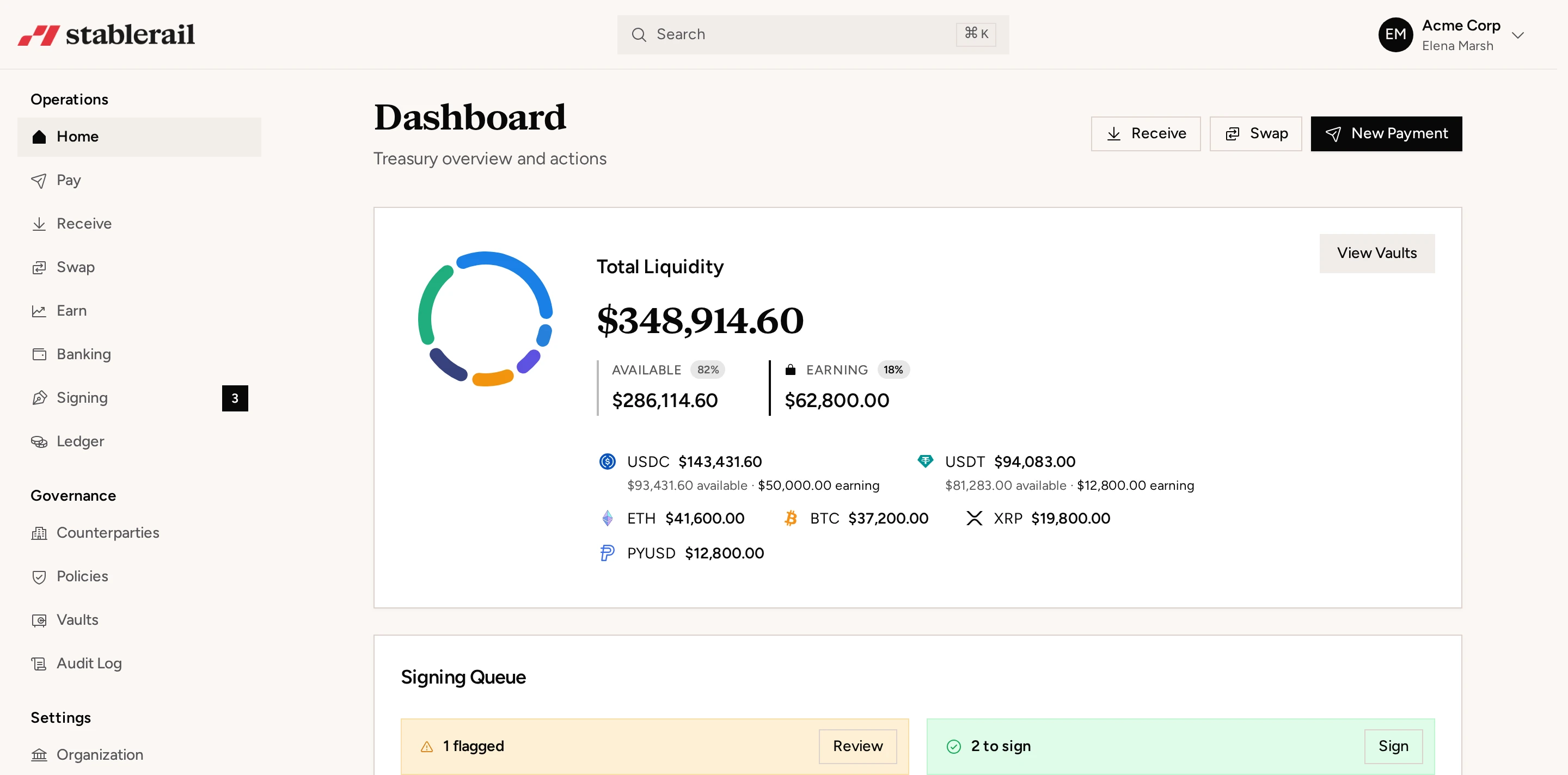
A multi-currency business account lets a finance team manage separate USD, EUR, GBP, USDC and USDT balances through one operating workflow. The company can receive revenue, retain currencies needed for expenses, convert when necessary, pay through local bank rails or stablecoin networks, and reconcile both bank references and blockchain transaction hashes. The currencies remain distinct; the value comes from unified access, controls and reporting.
%22%20x1%3D%220%22%20y1%3D%220%22%20x2%3D%221%22%20y2%3D%221%22%3E%0A%20%20%20%20%20%20%20%20%3Cstop%20offset%3D%220%25%22%20stop-color%3D%22%232A0608%22%20%2F%3E%0A%20%20%20%20%20%20%20%20%3Cstop%20offset%3D%2250%25%22%20stop-color%3D%22%23420D12%22%20%2F%3E%0A%20%20%20%20%20%20%20%20%3Cstop%20offset%3D%22100%25%22%20stop-color%3D%22%23621619%22%20%2F%3E%0A%20%20%20%20%20%20%3C%2FlinearGradient%3E%0A%20%20%20%20%20%20%3CradialGradient%20id%3D%22glow%22%20cx%3D%221009%22%20cy%3D%22306%22%20r%3D%22520%22%20gradientUnits%3D%22userSpaceOnUse%22%3E%0A%20%20%20%20%20%20%20%20%3Cstop%20offset%3D%220%25%22%20stop-color%3D%22%23FF9577%22%20stop-opacity%3D%220.45%22%20%2F%3E%0A%20%20%20%20%20%20%20%20%3Cstop%20offset%3D%2255%25%22%20stop-color%3D%22%23FF9577%22%20stop-opacity%3D%220.08%22%20%2F%3E%0A%20%20%20%20%20%20%20%20%3Cstop%20offset%3D%22100%25%22%20stop-color%3D%22%23FF9577%22%20stop-opacity%3D%220%22%20%2F%3E%0A%20%20%20%20%20%20%3C%2FradialGradient%3E%0A%20%20%20%20%20%20%3ClinearGradient%20id%3D%22glass%22%20x1%3D%220%22%20y1%3D%220%22%20x2%3D%221%22%20y2%3D%221%22%3E%0A%20%20%20%20%20%20%20%20%3Cstop%20offset%3D%220%25%22%20stop-color%3D%22%23F8D6D2%22%20stop-opacity%3D%220.26%22%20%2F%3E%0A%20%20%20%20%20%20%20%20%3Cstop%20offset%3D%22100%25%22%20stop-color%3D%22%23FFFFFF%22%20stop-opacity%3D%220.08%22%20%2F%3E%0A%20%20%20%20%20%20%3C%2FlinearGradient%3E%0A%20%20%20%20%20%20%3ClinearGradient%20id%3D%22accent%22%20x1%3D%220%22%20y1%3D%220%22%20x2%3D%221%22%20y2%3D%221%22%3E%0A%20%20%20%20%20%20%20%20%3Cstop%20offset%3D%220%25%22%20stop-color%3D%22%23FF9577%22%20%2F%3E%0A%20%20%20%20%20%20%20%20%3Cstop%20offset%3D%22100%25%22%20stop-color%3D%22%23D03B2D%22%20%2F%3E%0A%20%20%20%20%20%20%3C%2FlinearGradient%3E%0A%20%20%20%20%20%20%3Cfilter%20id%3D%22soft%22%3E%3CfeGaussianBlur%20stdDeviation%3D%2210%22%20%2F%3E%3C%2Ffilter%3E%0A%20%20%20%20%3C%2Fdefs%3E%0A%20%20%20%20%3Crect%20width%3D%221600%22%20height%3D%22900%22%20fill%3D%22url(%23bg)%22%20%2F%3E%0A%20%20%20%20%3Crect%20width%3D%221600%22%20height%3D%22900%22%20fill%3D%22url(%23glow)%22%20%2F%3E%0A%20%20%20%20%3Crect%20x%3D%22340%22%20y%3D%22220%22%20width%3D%22118%22%20height%3D%22108%22%20rx%3D%2210%22%20fill%3D%22url(%23accent)%22%20fill-opacity%3D%220.9%22%20stroke%3D%22%23F4CDC5%22%20stroke-opacity%3D%220.4%22%2F%3E%3Crect%20x%3D%22480%22%20y%3D%22220%22%20width%3D%22118%22%20height%3D%22108%22%20rx%3D%2210%22%20fill%3D%22url(%23glass)%22%20fill-opacity%3D%221%22%20stroke%3D%22%23F4CDC5%22%20stroke-opacity%3D%220.4%22%2F%3E%3Crect%20x%3D%22620%22%20y%3D%22220%22%20width%3D%22118%22%20height%3D%22108%22%20rx%3D%2210%22%20fill%3D%22url(%23accent)%22%20fill-opacity%3D%220.9%22%20stroke%3D%22%23F4CDC5%22%20stroke-opacity%3D%220.4%22%2F%3E%3Crect%20x%3D%22760%22%20y%3D%22220%22%20width%3D%22118%22%20height%3D%22108%22%20rx%3D%2210%22%20fill%3D%22url(%23accent)%22%20fill-opacity%3D%220.9%22%20stroke%3D%22%23F4CDC5%22%20stroke-opacity%3D%220.4%22%2F%3E%3Crect%20x%3D%22900%22%20y%3D%22220%22%20width%3D%22118%22%20height%3D%22108%22%20rx%3D%2210%22%20fill%3D%22url(%23glass)%22%20fill-opacity%3D%221%22%20stroke%3D%22%23F4CDC5%22%20stroke-opacity%3D%220.4%22%2F%3E%3Crect%20x%3D%221040%22%20y%3D%22220%22%20width%3D%22118%22%20height%3D%22108%22%20rx%3D%2210%22%20fill%3D%22url(%23accent)%22%20fill-opacity%3D%220.9%22%20stroke%3D%22%23F4CDC5%22%20stroke-opacity%3D%220.4%22%2F%3E%3Crect%20x%3D%221180%22%20y%3D%22220%22%20width%3D%22118%22%20height%3D%22108%22%20rx%3D%2210%22%20fill%3D%22url(%23glass)%22%20fill-opacity%3D%221%22%20stroke%3D%22%23F4CDC5%22%20stroke-opacity%3D%220.4%22%2F%3E%3Crect%20x%3D%22340%22%20y%3D%22350%22%20width%3D%22118%22%20height%3D%22108%22%20rx%3D%2210%22%20fill%3D%22url(%23accent)%22%20fill-opacity%3D%220.9%22%20stroke%3D%22%23F4CDC5%22%20stroke-opacity%3D%220.4%22%2F%3E%3Crect%20x%3D%22480%22%20y%3D%22350%22%20width%3D%22118%22%20height%3D%22108%22%20rx%3D%2210%22%20fill%3D%22url(%23glass)%22%20fill-opacity%3D%221%22%20stroke%3D%22%23F4CDC5%22%20stroke-opacity%3D%220.4%22%2F%3E%3Crect%20x%3D%22620%22%20y%3D%22350%22%20width%3D%22118%22%20height%3D%22108%22%20rx%3D%2210%22%20fill%3D%22url(%23glass)%22%20fill-opacity%3D%221%22%20stroke%3D%22%23F4CDC5%22%20stroke-opacity%3D%220.4%22%2F%3E%3Crect%20x%3D%22760%22%20y%3D%22350%22%20width%3D%22118%22%20height%3D%22108%22%20rx%3D%2210%22%20fill%3D%22url(%23glass)%22%20fill-opacity%3D%221%22%20stroke%3D%22%23F4CDC5%22%20stroke-opacity%3D%220.4%22%2F%3E%3Crect%20x%3D%22900%22%20y%3D%22350%22%20width%3D%22118%22%20height%3D%22108%22%20rx%3D%2210%22%20fill%3D%22url(%23accent)%22%20fill-opacity%3D%220.9%22%20stroke%3D%22%23F4CDC5%22%20stroke-opacity%3D%220.4%22%2F%3E%3Crect%20x%3D%221040%22%20y%3D%22350%22%20width%3D%22118%22%20height%3D%22108%22%20rx%3D%2210%22%20fill%3D%22url(%23accent)%22%20fill-opacity%3D%220.9%22%20stroke%3D%22%23F4CDC5%22%20stroke-opacity%3D%220.4%22%2F%3E%3Crect%20x%3D%221180%22%20y%3D%22350%22%20width%3D%22118%22%20height%3D%22108%22%20rx%3D%2210%22%20fill%3D%22url(%23glass)%22%20fill-opacity%3D%221%22%20stroke%3D%22%23F4CDC5%22%20stroke-opacity%3D%220.4%22%2F%3E%3Crect%20x%3D%22340%22%20y%3D%22480%22%20width%3D%22118%22%20height%3D%22108%22%20rx%3D%2210%22%20fill%3D%22url(%23glass)%22%20fill-opacity%3D%221%22%20stroke%3D%22%23F4CDC5%22%20stroke-opacity%3D%220.4%22%2F%3E%3Crect%20x%3D%22480%22%20y%3D%22480%22%20width%3D%22118%22%20height%3D%22108%22%20rx%3D%2210%22%20fill%3D%22url(%23glass)%22%20fill-opacity%3D%221%22%20stroke%3D%22%23F4CDC5%22%20stroke-opacity%3D%220.4%22%2F%3E%3Crect%20x%3D%22620%22%20y%3D%22480%22%20width%3D%22118%22%20height%3D%22108%22%20rx%3D%2210%22%20fill%3D%22url(%23accent)%22%20fill-opacity%3D%220.9%22%20stroke%3D%22%23F4CDC5%22%20stroke-opacity%3D%220.4%22%2F%3E%3Crect%20x%3D%22760%22%20y%3D%22480%22%20width%3D%22118%22%20height%3D%22108%22%20rx%3D%2210%22%20fill%3D%22url(%23accent)%22%20fill-opacity%3D%220.9%22%20stroke%3D%22%23F4CDC5%22%20stroke-opacity%3D%220.4%22%2F%3E%3Crect%20x%3D%22900%22%20y%3D%22480%22%20width%3D%22118%22%20height%3D%22108%22%20rx%3D%2210%22%20fill%3D%22url(%23glass)%22%20fill-opacity%3D%221%22%20stroke%3D%22%23F4CDC5%22%20stroke-opacity%3D%220.4%22%2F%3E%3Crect%20x%3D%221040%22%20y%3D%22480%22%20width%3D%22118%22%20height%3D%22108%22%20rx%3D%2210%22%20fill%3D%22url(%23accent)%22%20fill-opacity%3D%220.9%22%20stroke%3D%22%23F4CDC5%22%20stroke-opacity%3D%220.4%22%2F%3E%3Crect%20x%3D%221180%22%20y%3D%22480%22%20width%3D%22118%22%20height%3D%22108%22%20rx%3D%2210%22%20fill%3D%22url(%23glass)%22%20fill-opacity%3D%221%22%20stroke%3D%22%23F4CDC5%22%20stroke-opacity%3D%220.4%22%2F%3E%3Crect%20x%3D%22340%22%20y%3D%22610%22%20width%3D%22118%22%20height%3D%22108%22%20rx%3D%2210%22%20fill%3D%22url(%23glass)%22%20fill-opacity%3D%221%22%20stroke%3D%22%23F4CDC5%22%20stroke-opacity%3D%220.4%22%2F%3E%3Crect%20x%3D%22480%22%20y%3D%22610%22%20width%3D%22118%22%20height%3D%22108%22%20rx%3D%2210%22%20fill%3D%22url(%23glass)%22%20fill-opacity%3D%221%22%20stroke%3D%22%23F4CDC5%22%20stroke-opacity%3D%220.4%22%2F%3E%3Crect%20x%3D%22620%22%20y%3D%22610%22%20width%3D%22118%22%20height%3D%22108%22%20rx%3D%2210%22%20fill%3D%22url(%23accent)%22%20fill-opacity%3D%220.9%22%20stroke%3D%22%23F4CDC5%22%20stroke-opacity%3D%220.4%22%2F%3E%3Crect%20x%3D%22760%22%20y%3D%22610%22%20width%3D%22118%22%20height%3D%22108%22%20rx%3D%2210%22%20fill%3D%22url(%23accent)%22%20fill-opacity%3D%220.9%22%20stroke%3D%22%23F4CDC5%22%20stroke-opacity%3D%220.4%22%2F%3E%3Crect%20x%3D%22900%22%20y%3D%22610%22%20width%3D%22118%22%20height%3D%22108%22%20rx%3D%2210%22%20fill%3D%22url(%23glass)%22%20fill-opacity%3D%221%22%20stroke%3D%22%23F4CDC5%22%20stroke-opacity%3D%220.4%22%2F%3E%3Crect%20x%3D%221040%22%20y%3D%22610%22%20width%3D%22118%22%20height%3D%22108%22%20rx%3D%2210%22%20fill%3D%22url(%23accent)%22%20fill-opacity%3D%220.9%22%20stroke%3D%22%23F4CDC5%22%20stroke-opacity%3D%220.4%22%2F%3E%3Crect%20x%3D%221180%22%20y%3D%22610%22%20width%3D%22118%22%20height%3D%22108%22%20rx%3D%2210%22%20fill%3D%22url(%23accent)%22%20fill-opacity%3D%220.9%22%20stroke%3D%22%23F4CDC5%22%20stroke-opacity%3D%220.4%22%2F%3E%0A%20%20%20%20%3Crect%20x%3D%2226%22%20y%3D%2226%22%20width%3D%221548%22%20height%3D%22848%22%20rx%3D%2218%22%20fill%3D%22none%22%20stroke%3D%22%23F2D0C8%22%20stroke-opacity%3D%220.12%22%2F%3E%0A%20%20%3C%2Fsvg%3E)
A multi-currency business account lets a finance team manage separate USD, EUR, GBP, USDC and USDT balances through one operating workflow. The company can receive revenue, retain currencies needed for expenses, convert when necessary, pay through local bank rails or stablecoin networks, and reconcile both bank references and blockchain transaction hashes. The currencies remain distinct; the value comes from unified access, controls and reporting.
For companies operating across bank and blockchain infrastructure, that unified workflow can reduce handoffs between banking portals, wallets, exchanges and spreadsheets. Stablerail provides one business account for USDC and USDT treasury operations, with global payouts, fiat off-ramp, corporate cards, approvals and exportable audit evidence. Available currencies, account details, payment methods and limits depend on eligibility, jurisdiction and onboarding.
How a multi-currency business account works
A multi-currency account does not combine every asset into one interchangeable balance. USD, EUR and GBP remain separate fiat balances, while USDC and USDT remain separate stablecoin assets. A finance team decides which balance to fund, retain, convert or spend.
This distinction matters for accounting and risk. A dollar balance at a financial institution is not the same instrument as USDC or USDT on a blockchain. Stablecoins introduce issuer, custody, network, liquidity and potential depegging risks. They also require the sender to choose the correct token and network. A business should document these differences rather than recording every dollar-denominated asset as cash without further analysis.
The practical benefit is the ability to connect each balance to an appropriate settlement route:
| Balance | Common payment routes | When it fits | Operational considerations |
|---|---|---|---|
| USD | ACH, wire and SWIFT | US collections, scheduled vendor payments and urgent high-value transfers | ACH is generally suited to planned payments. Wires can be faster but are subject to operating hours, cut-offs and bank review. |
| EUR | SEPA, SEPA Instant and SWIFT | Euro-area suppliers, customers and payroll | Standard SEPA commonly settles by the next business day. SEPA Instant can settle within seconds when both institutions support it. |
| GBP | Faster Payments, CHAPS, BACS and SWIFT | UK suppliers, payroll and operating expenses | Faster Payments is often near real time. CHAPS supports same-day settlement before cut-off, while BACS follows a multi-day cycle. |
| USDC or USDT | Supported blockchain networks and fiat on/off-ramps | On-chain suppliers, contractors, treasury transfers and off-ramp funding | Confirm the token, network, address and receiving platform. Settlement and finality depend on the network and required confirmations. |
These timings are indicative, not guaranteed. Weekends, local holidays, cut-off times, intermediary banks, beneficiary checks, network congestion and compliance reviews can delay a transfer. The receiving institution may also take time to credit the beneficiary after the payment rail reports settlement.
A typical fiat and stablecoin treasury workflow
The most efficient workflow usually starts by avoiding unnecessary movement. If a company receives EUR and expects EUR expenses, it can retain enough EUR to fund those obligations instead of converting the revenue to USD and later converting it back. The same principle applies when the company receives stablecoins and has known on-chain liabilities.
- Receive funds: Collect customer payments into the relevant fiat account details or approved stablecoin address.
- Identify obligations: Forecast payroll, supplier, card and treasury requirements by currency, entity and due date.
- Retain matching balances: Keep enough of each currency to cover near-term liabilities and agreed liquidity buffers.
- Convert only when needed: Review the exchange rate, spread, explicit fees and destination costs before executing.
- Select the payment rail: Use a local bank rail when possible, SWIFT when broader bank coverage is required, or a supported blockchain when the beneficiary accepts the stablecoin and network.
- Approve and release: Apply the company’s approval thresholds, signing quorum and beneficiary verification process.
- Reconcile: Export the transaction record and match it to the invoice, payroll run, intercompany entry or treasury instruction.
Batch payments can reduce repetitive work for vendor and contractor runs, but batching should not remove review. Finance teams still need to validate beneficiary changes, currency, amount, due date and payment method before release.
How to choose the right payment rail
The fastest rail is not always the most appropriate, and the quoted fee is not always the complete cost. The decision should reflect urgency, beneficiary requirements, transaction value, reversibility and the team’s ability to support the resulting records.
Use local bank rails for domestic or regional payments
ACH, SEPA, Faster Payments and similar local systems are often the first choice when the payer and beneficiary use the same currency area. They can offer predictable references and lower intermediary-bank exposure than an international SWIFT payment. Coverage, transaction limits and return rules vary by institution.
Use wires or SWIFT when coverage matters
A domestic wire can suit an urgent or high-value payment during banking hours. SWIFT provides broad international reach, but the payment may pass through correspondent banks. Intermediaries can add fees, request information or deduct charges from the amount delivered, making arrival times and net proceeds less predictable.
Use stablecoins when the beneficiary is ready for on-chain settlement
USDC or USDT can support transfers outside conventional bank operating hours, but the sender must confirm the exact asset and network. A token symbol can exist on multiple blockchains, and the recipient may support only one of them. Sending to an unsupported network or incompatible address can delay recovery or make funds unrecoverable.
For a new address, consider an independently verified test transfer before sending the full amount. A test does not replace approval or screening, but it can confirm that the beneficiary controls the destination and can identify the incoming asset on the selected network.
Calculate the full cost of conversion and payment
Holding several balances gives treasury more control over when to convert, but it does not eliminate foreign-exchange or settlement costs. Compare routes using the amount the beneficiary will actually receive, not only the displayed exchange rate.
- The base exchange rate and any spread applied to it
- An explicit conversion, corridor or transfer fee
- Sending and receiving bank charges
- Potential SWIFT correspondent-bank deductions
- Blockchain network fees
- Stablecoin on-ramp or off-ramp charges
- Minimum transaction sizes or balance requirements
- The cost of an additional conversion required by the beneficiary
For example, converting EUR to USD, buying a stablecoin and then requiring the recipient to sell it for EUR creates several potential cost points. Paying the original EUR invoice through SEPA may be simpler. Conversely, a supplier that prices and retains USDC may prefer direct on-chain settlement over receiving fiat through an international bank chain.
Reconcile bank and blockchain transactions consistently
Bank and blockchain systems produce different evidence. Bank payments use account details, value dates, payment references and institution-generated transaction IDs. Blockchain transfers use wallet addresses, token contracts, network names, transaction hashes, block timestamps and confirmation status.
A consistent treasury record should capture:
- Legal entity and originating balance
- Original amount, currency or stablecoin
- Converted amount, exchange rate and fees
- Beneficiary name and bank account or wallet address
- Payment rail or blockchain network
- Bank reference or blockchain transaction hash
- Invoice, payroll batch or documented business purpose
- Initiator, approver, release time and completion status
Virtual account details or virtual IBANs, where available, can help attribute incoming payments to a customer, entity or business line. For outgoing transactions, consistent invoice numbers and payment references improve automated matching. On-chain records should always include the network because a wallet address or token ticker alone may be ambiguous.
Accounting teams should also document how transaction fees, FX differences and stablecoin holdings are classified under the company’s applicable accounting framework. The blockchain transaction timestamp may differ from the time a payment is approved, treated as final or credited by an off-ramp provider.
Controls should cover fiat and stablecoin payments
A unified interface is useful only if it preserves separation of duties. No individual should be able to create a beneficiary, initiate a material payment and approve it without independent review. Approval thresholds should reflect currency, transaction value, destination risk and business purpose.
For stablecoin transfers, controls should also address address screening and signing authority. Stablerail supports approvals and signing quorum, sanctions and address screening before send, and exportable audit evidence. Finance teams should still maintain internal procedures for beneficiary verification, incident escalation and periodic access reviews.
A single treasury view should simplify execution without collapsing the distinction between currencies, legal entities, payment rails and approval responsibilities.
Checklist for evaluating an account
- Confirm which legal entities and jurisdictions can be onboarded.
- Verify available USD, EUR and GBP account details and payment rails.
- Check which stablecoins and blockchain networks are supported in each direction.
- Request the full fee schedule for conversion, payment and off-ramp routes.
- Test approval roles, signing quorum and beneficiary-change controls.
- Confirm screening occurs before a stablecoin transfer is released.
- Review exports for bank references, transaction hashes, fees and approver evidence.
- Run a low-value payment and reconciliation test on each critical route.
The right multi-currency business account does not make USD, EUR, GBP, USDC and USDT identical. It gives the finance team one controlled process for deciding what to hold, when to convert, how to pay and what evidence to retain. That can reduce fragmented treasury work while preserving the asset-level detail required for liquidity management, accounting and audit.
Frequently asked questions
Can a business hold USD, EUR, GBP and stablecoins in one account?
A multi-currency business account can provide one operating view for separate USD, EUR, GBP, USDC and USDT balances, subject to provider eligibility and jurisdiction. The assets do not merge into one balance; each retains its own payment routes, risks and accounting treatment.
Is USDC or USDT the same as holding US dollars in a bank account?
No. USDC and USDT are stablecoin assets issued on blockchain networks, while a USD bank balance is a claim within the banking system. Stablecoins introduce issuer, custody, network, liquidity and depegging risks that should be assessed separately.
What is the cheapest way to pay international suppliers?
There is no universally cheapest route. Compare the FX spread, transfer fee, correspondent deductions, receiving charges, blockchain fees and any conversion the supplier must complete. A local currency rail is often efficient when both parties can use it, while stablecoins may suit beneficiaries already operating on-chain.
How do you reconcile stablecoin payments with bank transactions?
Use a common treasury record that captures the legal entity, amount, asset, beneficiary, purpose, fees and approvers. Add the bank transaction reference for fiat payments and the network, wallet address and transaction hash for stablecoin transfers.
What controls should a stablecoin business account have?
Finance teams should require role-based access, separation of duties, approval thresholds, signing quorum and independent beneficiary verification. Stablecoin workflows should also include sanctions and address screening before send, network verification, access reviews and exportable evidence for audit.
Finance writers covering stablecoin treasury, payments, compliance, and risk controls.
More about the Stablerail team- Stablecoin treasury managementApprovals, limits, yield and reporting on one balance.
- Stablecoin payoutsBatch contractor and vendor payments with screening.
- USDT vs USDCWhich stablecoin your company should settle in.
- Stablecoin finance glossaryMPC, off-ramp, travel rule and the rest, in plain English.
- Product updatesEverything we ship, month by month.