
Month-End Close With a Stablecoin Treasury: A Practical Checklist
A practical month-end checklist for reconciling USDC, USDT, fiat, gas assets, transfers in transit, fees, FX, payouts and close evidence.
To close a stablecoin treasury at month-end, freeze the account scope and cut-off, prove every fiat and on-chain balance, reconcile transfers in transit, apply the approved valuation policy, record fees and accruals, and retain reproducible evidence. Track USDC and USDT separately by entity, network and wallet. The close is complete only when exceptions have an owner, accounting treatment and documented reviewer approval.
%22%20x1%3D%220%22%20y1%3D%220%22%20x2%3D%221%22%20y2%3D%221%22%3E%0A%20%20%20%20%20%20%20%20%3Cstop%20offset%3D%220%25%22%20stop-color%3D%22%232A0608%22%20%2F%3E%0A%20%20%20%20%20%20%20%20%3Cstop%20offset%3D%2250%25%22%20stop-color%3D%22%23420D12%22%20%2F%3E%0A%20%20%20%20%20%20%20%20%3Cstop%20offset%3D%22100%25%22%20stop-color%3D%22%23621619%22%20%2F%3E%0A%20%20%20%20%20%20%3C%2FlinearGradient%3E%0A%20%20%20%20%20%20%3CradialGradient%20id%3D%22glow%22%20cx%3D%22264%22%20cy%3D%22385%22%20r%3D%22520%22%20gradientUnits%3D%22userSpaceOnUse%22%3E%0A%20%20%20%20%20%20%20%20%3Cstop%20offset%3D%220%25%22%20stop-color%3D%22%23FF9577%22%20stop-opacity%3D%220.45%22%20%2F%3E%0A%20%20%20%20%20%20%20%20%3Cstop%20offset%3D%2255%25%22%20stop-color%3D%22%23FF9577%22%20stop-opacity%3D%220.08%22%20%2F%3E%0A%20%20%20%20%20%20%20%20%3Cstop%20offset%3D%22100%25%22%20stop-color%3D%22%23FF9577%22%20stop-opacity%3D%220%22%20%2F%3E%0A%20%20%20%20%20%20%3C%2FradialGradient%3E%0A%20%20%20%20%20%20%3ClinearGradient%20id%3D%22glass%22%20x1%3D%220%22%20y1%3D%220%22%20x2%3D%221%22%20y2%3D%221%22%3E%0A%20%20%20%20%20%20%20%20%3Cstop%20offset%3D%220%25%22%20stop-color%3D%22%23F8D6D2%22%20stop-opacity%3D%220.26%22%20%2F%3E%0A%20%20%20%20%20%20%20%20%3Cstop%20offset%3D%22100%25%22%20stop-color%3D%22%23FFFFFF%22%20stop-opacity%3D%220.08%22%20%2F%3E%0A%20%20%20%20%20%20%3C%2FlinearGradient%3E%0A%20%20%20%20%20%20%3ClinearGradient%20id%3D%22accent%22%20x1%3D%220%22%20y1%3D%220%22%20x2%3D%221%22%20y2%3D%221%22%3E%0A%20%20%20%20%20%20%20%20%3Cstop%20offset%3D%220%25%22%20stop-color%3D%22%23FF9577%22%20%2F%3E%0A%20%20%20%20%20%20%20%20%3Cstop%20offset%3D%22100%25%22%20stop-color%3D%22%23D03B2D%22%20%2F%3E%0A%20%20%20%20%20%20%3C%2FlinearGradient%3E%0A%20%20%20%20%20%20%3Cfilter%20id%3D%22soft%22%3E%3CfeGaussianBlur%20stdDeviation%3D%2210%22%20%2F%3E%3C%2Ffilter%3E%0A%20%20%20%20%3C%2Fdefs%3E%0A%20%20%20%20%3Crect%20width%3D%221600%22%20height%3D%22900%22%20fill%3D%22url(%23bg)%22%20%2F%3E%0A%20%20%20%20%3Crect%20width%3D%221600%22%20height%3D%22900%22%20fill%3D%22url(%23glow)%22%20%2F%3E%0A%20%20%20%20%3Cpath%20d%3D%22M%20800%20210%20A%20240%20240%200%200%201%201040%20450%20L%20930%20450%20A%20130%20130%200%200%200%20800%20320%20Z%22%20fill%3D%22url(%23accent)%22%20stroke%3D%22%23F4CDC5%22%20stroke-opacity%3D%220.4%22%2F%3E%3Cpath%20d%3D%22M%201040%20450%20A%20240%20240%200%200%201%20648.5388933617473%20636.1707097690607%20L%20717.9585672376131%20550.8424677915746%20A%20130%20130%200%200%200%20930%20450%20Z%22%20fill%3D%22url(%23glass)%22%20stroke%3D%22%23F4CDC5%22%20stroke-opacity%3D%220.4%22%2F%3E%3Cpath%20d%3D%22M%20648.5388933617473%20636.1707097690607%20A%20240%20240%200%200%201%20565.0198189562425%20401.17055686736796%20L%20672.719068601298%20423.5507183031577%20A%20130%20130%200%200%200%20717.9585672376131%20550.8424677915746%20Z%22%20fill%3D%22url(%23glass)%22%20stroke%3D%22%23F4CDC5%22%20stroke-opacity%3D%220.4%22%2F%3E%3Cpath%20d%3D%22M%20565.0198189562425%20401.17055686736796%20A%20240%20240%200%200%201%20800%20210%20L%20800%20320%20A%20130%20130%200%200%200%20672.719068601298%20423.5507183031577%20Z%22%20fill%3D%22url(%23glass)%22%20stroke%3D%22%23F4CDC5%22%20stroke-opacity%3D%220.4%22%2F%3E%0A%20%20%20%20%3Crect%20x%3D%2226%22%20y%3D%2226%22%20width%3D%221548%22%20height%3D%22848%22%20rx%3D%2218%22%20fill%3D%22none%22%20stroke%3D%22%23F2D0C8%22%20stroke-opacity%3D%220.12%22%2F%3E%0A%20%20%3C%2Fsvg%3E)
A stablecoin treasury close has the same objective as any treasury close: prove that recorded assets exist, apply the company’s accounting policies consistently and explain every reconciling item. The difference is operational complexity. USDC and USDT may be spread across wallets, networks, custodians and payment platforms, while fiat transfers, conversions and blockchain transactions can be pending at the reporting cut-off.
This checklist addresses the operational mechanics of closing a stablecoin treasury. It does not prescribe whether a stablecoin should be classified as cash, a cash equivalent, a financial asset, an intangible asset or another category. Classification depends on the reporting framework, jurisdiction, redemption rights, facts and circumstances, and the policy agreed with the company’s accounting advisers.
Define the close scope before capturing balances
Start with a complete treasury register. Do not record all stablecoins as one consolidated balance: identify the legal owner, token, network, wallet or account, and balance source. The same wallet address format may appear on multiple compatible networks, but each network has a separate transaction history and must be reconciled independently.
| Balance type | Required detail | Primary close evidence | Common exception |
|---|---|---|---|
| Fiat | Legal entity, bank or provider, currency and account identifier | Statement or transaction export | Payment initiated but not settled |
| USDC or USDT | Entity, token, network, wallet address and approved contract | Wallet export plus blockchain reference | Activity recorded on the wrong network |
| Native gas asset | ETH, TRX, BNB, POL, SOL or other network asset | On-chain balance and transaction history | Gas expense omitted or netted into a transfer |
| Custodian or exchange | Entity, platform, account and asset | Platform statement or export | Internal platform balance differs from on-chain holdings |
| Operational account | Card, payroll, payout, collection or prefunding purpose | Provider-level balance and activity report | Pending authorisation treated as posted |
Freeze this register for the close and require approval for additions. New wallets, network migrations and closed accounts should be documented rather than silently inserted into or removed from the reconciliation.
Set one precise cut-off
State the cut-off with a date, time and time zone, such as 23:59:59 UTC on the final calendar day. Record the block number or blockchain timestamp used to capture each network balance. Where a provider reports in a different time zone, retain the source report and document how activity was aligned to the reporting cut-off.
Cut-off is based on transaction status, not the time an employee created an instruction. ACH, Fedwire, SEPA, SWIFT, Faster Payments, CHAPS and BACS have different processing mechanics. Similarly, an approved stablecoin payment may not have been signed, broadcast or confirmed before month-end.
| Target day | Close activity | Required output |
|---|---|---|
| Close day | Freeze scope and capture cut-off balances | Statements, exports, addresses and block references |
| Day 1 | Reconcile fiat, stablecoin and gas balances | Ledger-to-source reconciliations |
| Day 2 | Resolve transfers, conversions, fees and cut-off items | Transaction-level exception report |
| Day 3 | Post valuation, FX, yield and accrual entries | Rate evidence and journal calculations |
| Days 4–5 | Review exceptions, approve journals and archive evidence | Signed checklist and evidence pack |
This timetable is illustrative. High-volume finance teams should reconcile daily so month-end becomes an exception review rather than a reconstruction of the entire period.
1. Capture and prove every closing balance
Export the general ledger balance for every treasury account and compare it with an independent source. Use bank or provider statements for fiat and custodial balances. For self-custodial wallets, retain the address, token contract, network, block reference and machine-readable transaction history where available.
Confirm that each token is the approved USDC or USDT contract for that network. Token symbols are not sufficient because unrelated contracts can use similar names. Preserve balances using the token’s correct decimal precision, and reconcile native assets separately even if they are held only to pay gas.
Investigate unknown deposits, duplicate ledger entries, unsupported manual journals and transactions involving addresses absent from the treasury register. A signing quorum or multi-party approval protects execution, but it does not replace accounting reconciliation.
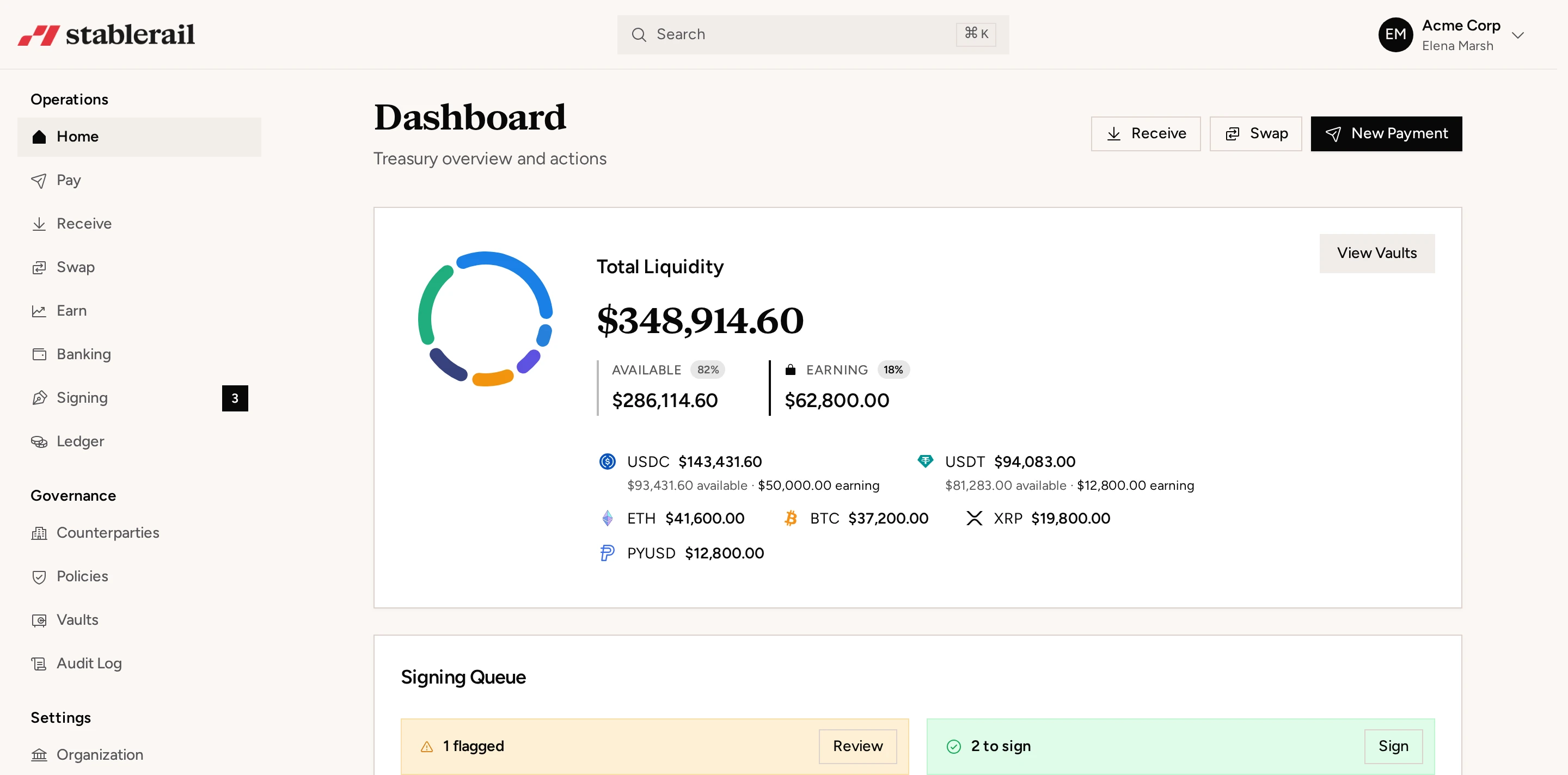
Where one operating account spans stablecoins and fiat, the close must retain the underlying asset detail. For example, Stablerail supports USDC and USDT treasury operations with approvals and signing quorum, pre-send sanctions and address screening, global payouts, fiat off-ramp, corporate cards and exportable audit evidence. Finance should still reconcile each entity, currency, token, network and wallet separately.
2. Reconcile transfers in transit
Match both sides of every treasury movement. An internal transfer between company-controlled wallets is not revenue or expense, but it can create a reconciling item if one side was recorded in a different period.
- Blockchain transfers: retain the transaction hash, network, source, destination, token contract, amount, fee and status.
- Fiat-to-stablecoin conversions: match the fiat debit, token receipt, execution rate and service fee.
- Stablecoin-to-fiat conversions: match the token disposal, fiat credit, FX result and associated charges.
- Cross-chain movements: reconcile the asset leaving the source network to the asset arriving on the destination network, including bridge or service fees.
- Bank payments: distinguish created, approved, submitted, pending, rejected, returned and settled instructions.
For on-chain payments, separate transactions that were merely approved internally from those that were signed, broadcast and confirmed. Review dropped, replaced and failed transactions. A failed transaction may consume gas without moving the stablecoin.
Do not clear an item simply because it settled after month-end. Determine its status at cut-off and apply the approved treatment for cash in transit, receivables, payables or unexecuted instructions. Retain the later settlement as evidence supporting the conclusion.
3. Apply the valuation policy consistently
USDC and USDT are designed to track the US dollar, but a EUR-, GBP- or other non-USD-functional entity still has foreign exchange exposure. A USD-functional entity may also need a policy for differences between a stablecoin’s reference value and observable market price.
For each closing balance, retain the token quantity, token-to-USD rate, USD-to-functional-currency rate, source, timestamp and calculated value. A common calculation is:
Closing functional-currency value = token quantity × token-to-USD rate × USD-to-functional-currency rate
Use an approved, reproducible rate source and align its timestamp with the balance snapshot where practicable. Document whether the policy uses a one-dollar assumption, a redemption value or an observable market rate. Material deviations from the peg should be escalated rather than automatically valued at one dollar.
Keep realised gains or losses from disposals and conversions separate from unrealised remeasurement. The journal presentation depends on the company’s asset classification and reporting framework.
4. Record fees, accruals and card activity
Record costs gross enough to explain the economics of each payment route. Relevant charges can include blockchain gas, on-ramp and off-ramp fees, conversion charges, bank fees, correspondent deductions, payout fees, custody charges and card costs. Avoid reducing the transferred principal by the fee unless that presentation follows the approved accounting policy and the supporting records preserve both amounts.
Accrue a charge when the service has been received but the invoice or transaction has not posted, subject to materiality and company policy. The accrual schedule should show the calculation, counterparty, expected settlement date, reversal and subsequent true-up.
For corporate cards, separate posted transactions from pending authorisations. An authorisation can reduce available spending capacity without becoming a final accounting entry. Review late-presented transactions, reversals and refunds around the cut-off.
5. Reconcile payouts, collections and yield
For vendor, contractor or payroll batches, reconcile the approved control total to individual recipients and final settlement. Keep failed, rejected and returned payments on the exception report until they are retried, cancelled or otherwise resolved. The batch evidence should identify who prepared and approved it and whether the required signing quorum was met.
Match collections to the correct customer, invoice, legal entity, wallet and network. Do not recognise an unidentified stablecoin deposit as revenue merely because it reached a company address. Screen and investigate unexpected deposits under the company’s compliance and accounting procedures.
If treasury assets earn yield, reconcile opening principal, additions, withdrawals, earned amounts, fees and closing principal. Document whether income is accrued or recognised only when credited, together with lock-ups, withdrawal notice periods, liquidity restrictions and counterparty exposure.
6. Assemble a reproducible evidence pack
A reviewer should be able to reproduce balances and journals without relying on screenshots alone. Screenshots can supplement evidence, but exports, statements and transaction references are more useful for testing and re-performance.
- Archive the approved account and wallet register by legal entity.
- Retain fiat statements, platform exports and on-chain balance records.
- Save transaction hashes, block references and approved token contracts.
- Complete ledger-to-source reconciliations with explanations for every difference.
- Attach valuation rates, timestamps and calculation files to remeasurement journals.
- Retain fee invoices, accrual schedules and subsequent true-ups.
- Document pending, failed, returned and in-transit transactions with owners.
- Capture preparer and reviewer approvals, payment approvals and signing records.
Before sign-off, confirm that every ledger balance agrees to an external or independently verifiable source; every exception has an owner, amount and target resolution date; and every journal is supported by the approved accounting policy. Items carried into the next month should remain visible until resolved rather than disappearing from the close record.
Frequently asked questions
How do you reconcile USDC and USDT at month-end?
Reconcile each stablecoin balance by legal entity, token, network and wallet or platform account. Compare the ledger with a wallet export, provider statement or blockchain record, then investigate differences such as transfers in transit, unknown deposits, gas fees and duplicate entries.
What cut-off time should a stablecoin treasury use?
Use a precise date, time and time zone that applies consistently to the reporting entity, such as 23:59:59 UTC on the last calendar day. Record the relevant block number or blockchain timestamp for each network and document how provider reports in other time zones were aligned.
Should USDC and USDT be valued at one dollar for month-end close?
That depends on the company’s approved valuation policy, reporting framework and the facts at the reporting date. The policy should specify whether finance uses a one-dollar assumption, redemption value or observable market rate, and material depegs should be escalated rather than ignored.
How should stablecoin transfers in transit be treated at month-end?
Determine whether the transfer was approved, signed, broadcast, confirmed, failed or settled at the reporting cut-off. Do not clear it solely because it completed later; apply the approved treatment for an unexecuted instruction, receivable, payable or asset in transit and retain subsequent settlement evidence.
What evidence should auditors receive for a stablecoin treasury close?
Provide the wallet and account register, fiat statements, platform exports, blockchain addresses, transaction hashes, block references, reconciliations, valuation support, fee schedules and journal approvals. Evidence should be sufficient for a reviewer to reproduce balances and calculations without relying only on screenshots.
Finance writers covering stablecoin treasury, payments, compliance, and risk controls.
More about the Stablerail team- Stablecoin treasury managementApprovals, limits, yield and reporting on one balance.
- Stablecoin payoutsBatch contractor and vendor payments with screening.
- USDT vs USDCWhich stablecoin your company should settle in.
- Stablecoin finance glossaryMPC, off-ramp, travel rule and the rest, in plain English.
- Product updatesEverything we ship, month by month.