
Corporate Cards Funded From a Stablecoin Balance: How It Works
Learn how corporate cards draw spending capacity from a USDC or USDT treasury balance, including authorization, settlement, FX, controls, refunds and accounting.
A stablecoin-funded corporate card lets employees make ordinary card payments while the company’s USDC or USDT treasury balance supports settlement behind the scenes. Merchants receive fiat through standard card rails; they do not receive stablecoins. At authorization, the program checks available balance and card controls, then reserves funds. The final amount is recorded after clearing, with any FX, fees, reversals or refunds reflected in the card records.
%22%20x1%3D%220%22%20y1%3D%220%22%20x2%3D%221%22%20y2%3D%221%22%3E%0A%20%20%20%20%20%20%20%20%3Cstop%20offset%3D%220%25%22%20stop-color%3D%22%23450B10%22%20%2F%3E%0A%20%20%20%20%20%20%20%20%3Cstop%20offset%3D%2250%25%22%20stop-color%3D%22%23681A1F%22%20%2F%3E%0A%20%20%20%20%20%20%20%20%3Cstop%20offset%3D%22100%25%22%20stop-color%3D%22%238A2A2D%22%20%2F%3E%0A%20%20%20%20%20%20%3C%2FlinearGradient%3E%0A%20%20%20%20%20%20%3CradialGradient%20id%3D%22glow%22%20cx%3D%22732%22%20cy%3D%22339%22%20r%3D%22520%22%20gradientUnits%3D%22userSpaceOnUse%22%3E%0A%20%20%20%20%20%20%20%20%3Cstop%20offset%3D%220%25%22%20stop-color%3D%22%23FF7A59%22%20stop-opacity%3D%220.45%22%20%2F%3E%0A%20%20%20%20%20%20%20%20%3Cstop%20offset%3D%2255%25%22%20stop-color%3D%22%23FF7A59%22%20stop-opacity%3D%220.08%22%20%2F%3E%0A%20%20%20%20%20%20%20%20%3Cstop%20offset%3D%22100%25%22%20stop-color%3D%22%23FF7A59%22%20stop-opacity%3D%220%22%20%2F%3E%0A%20%20%20%20%20%20%3C%2FradialGradient%3E%0A%20%20%20%20%20%20%3ClinearGradient%20id%3D%22glass%22%20x1%3D%220%22%20y1%3D%220%22%20x2%3D%221%22%20y2%3D%221%22%3E%0A%20%20%20%20%20%20%20%20%3Cstop%20offset%3D%220%25%22%20stop-color%3D%22%23F8D6D2%22%20stop-opacity%3D%220.26%22%20%2F%3E%0A%20%20%20%20%20%20%20%20%3Cstop%20offset%3D%22100%25%22%20stop-color%3D%22%23FFFFFF%22%20stop-opacity%3D%220.08%22%20%2F%3E%0A%20%20%20%20%20%20%3C%2FlinearGradient%3E%0A%20%20%20%20%20%20%3ClinearGradient%20id%3D%22accent%22%20x1%3D%220%22%20y1%3D%220%22%20x2%3D%221%22%20y2%3D%221%22%3E%0A%20%20%20%20%20%20%20%20%3Cstop%20offset%3D%220%25%22%20stop-color%3D%22%23FF7A59%22%20%2F%3E%0A%20%20%20%20%20%20%20%20%3Cstop%20offset%3D%22100%25%22%20stop-color%3D%22%23C73128%22%20%2F%3E%0A%20%20%20%20%20%20%3C%2FlinearGradient%3E%0A%20%20%20%20%20%20%3Cfilter%20id%3D%22soft%22%3E%3CfeGaussianBlur%20stdDeviation%3D%2210%22%20%2F%3E%3C%2Ffilter%3E%0A%20%20%20%20%3C%2Fdefs%3E%0A%20%20%20%20%3Crect%20width%3D%221600%22%20height%3D%22900%22%20fill%3D%22url(%23bg)%22%20%2F%3E%0A%20%20%20%20%3Crect%20width%3D%221600%22%20height%3D%22900%22%20fill%3D%22url(%23glow)%22%20%2F%3E%0A%20%20%20%20%3Crect%20x%3D%22260%22%20y%3D%22500%22%20width%3D%22100%22%20height%3D%22118%22%20rx%3D%226%22%20fill%3D%22url(%23glass)%22%20stroke%3D%22%23F4CDC5%22%20stroke-opacity%3D%220.4%22%2F%3E%3Crect%20x%3D%22420%22%20y%3D%22530%22%20width%3D%22100%22%20height%3D%2288%22%20rx%3D%226%22%20fill%3D%22url(%23accent)%22%20stroke%3D%22%23F4CDC5%22%20stroke-opacity%3D%220.4%22%2F%3E%3Crect%20x%3D%22580%22%20y%3D%22530%22%20width%3D%22100%22%20height%3D%2251%22%20rx%3D%226%22%20fill%3D%22url(%23glass)%22%20stroke%3D%22%23F4CDC5%22%20stroke-opacity%3D%220.4%22%2F%3E%3Crect%20x%3D%22740%22%20y%3D%22581%22%20width%3D%22100%22%20height%3D%2266%22%20rx%3D%226%22%20fill%3D%22url(%23glass)%22%20stroke%3D%22%23F4CDC5%22%20stroke-opacity%3D%220.4%22%2F%3E%3Crect%20x%3D%22900%22%20y%3D%22591%22%20width%3D%22100%22%20height%3D%2256%22%20rx%3D%226%22%20fill%3D%22url(%23accent)%22%20stroke%3D%22%23F4CDC5%22%20stroke-opacity%3D%220.4%22%2F%3E%3Crect%20x%3D%221060%22%20y%3D%22591%22%20width%3D%22100%22%20height%3D%2259%22%20rx%3D%226%22%20fill%3D%22url(%23glass)%22%20stroke%3D%22%23F4CDC5%22%20stroke-opacity%3D%220.4%22%2F%3E%3Crect%20x%3D%221220%22%20y%3D%22593%22%20width%3D%22100%22%20height%3D%2257%22%20rx%3D%226%22%20fill%3D%22url(%23accent)%22%20stroke%3D%22%23F4CDC5%22%20stroke-opacity%3D%220.4%22%2F%3E%3Cline%20x1%3D%22240%22%20y1%3D%22720%22%20x2%3D%221400%22%20y2%3D%22720%22%20stroke%3D%22%23F0BBAF%22%20stroke-opacity%3D%220.4%22%20stroke-width%3D%223%22%2F%3E%0A%20%20%20%20%3Crect%20x%3D%2226%22%20y%3D%2226%22%20width%3D%221548%22%20height%3D%22848%22%20rx%3D%2218%22%20fill%3D%22none%22%20stroke%3D%22%23F2D0C8%22%20stroke-opacity%3D%220.12%22%2F%3E%0A%20%20%3C%2Fsvg%3E)
A stablecoin-funded corporate card lets employees make ordinary card payments while the company’s USDC or USDT treasury balance supports settlement behind the scenes. Merchants receive fiat through standard card rails; they do not receive stablecoins. At authorization, the program checks available balance and card controls, then reserves funds. The final amount is recorded after clearing, with any FX, fees, reversals or refunds reflected in the card records.
What “funded from a stablecoin balance” means
The card and the stablecoin treasury perform different jobs. The card provides access to merchant acceptance through established card networks. The treasury balance provides the value used to support card spending and settlement.
A card purchase is therefore not an on-chain transfer from the company’s wallet to the merchant. The merchant submits a normal authorization request denominated in a fiat currency such as USD, EUR or GBP. Behind the card program, sufficient value is reserved against the company’s available balance and later converted or allocated for settlement under the program’s terms.
This structure matters operationally because some business card products require finance to pre-fund a separate card wallet. A card funded against the main treasury balance can remove that recurring top-up step. It does not remove the need for limits, liquidity forecasting or reconciliation: pending authorizations can reduce available spending capacity before the final transaction clears.
From card swipe to final settlement
The transaction moves through authorization, clearing and settlement. These stages can produce different amounts and dates, so finance should not treat a pending authorization as a final expense.
| Stage | What happens | What finance should expect |
|---|---|---|
| Purchase | The employee presents a physical or virtual card to a merchant. | A pending transaction may appear with the merchant, amount and currency. |
| Authorization | The merchant sends a request through the card network. The program checks balance, card status and configured controls. | The request is approved or declined. An approval is not yet a settled expense. |
| Reservation | An estimated amount is reserved against available spending capacity. | Available balance falls while the transaction remains pending. |
| Clearing | The merchant submits the final amount, which may differ from the authorization. | The pending item becomes a completed charge, or the unused reservation is released. |
| Settlement | Value is delivered through the card program in the required settlement currency. | The final deduction, conversion and applicable fees become available for reconciliation. |
Authorization is designed to occur quickly at the point of sale. Clearing and settlement happen later, with timing determined by the merchant, transaction type, card network and program. This separation is why the treasury connection does not require a blockchain transaction to be completed during every card authorization.
How authorization controls a purchase
An authorization request normally contains the transaction amount, currency, merchant information and merchant category code, or MCC. The program evaluates the request against the company’s available funds and card settings.
- Available balance: Is sufficient unreserved value available to support the purchase?
- Card status: Is the card active, valid and not frozen?
- Spending limits: Does the transaction fit applicable per-transaction, daily or monthly limits?
- Merchant category: Is spending at that type of merchant permitted?
- Transaction channel: Where supported, is online, in-person, contactless or cash-withdrawal activity allowed?
- Geography: Where geographic controls apply, is the transaction permitted in that location?
A decline can result from insufficient available balance, a blocked MCC, an exceeded limit, an inactive card, incorrect details or a transaction type the program does not support. Finance should retain the decline reason where available because it helps distinguish a control working as intended from a technical or merchant issue.
Why the final charge can differ from the authorization
Some merchants do not know the final amount when they request authorization. Hotels may include an incidental hold, fuel stations may submit a fixed pre-authorization, and restaurants may add a tip during clearing. Car rental companies may also maintain a reservation until the vehicle is returned and the final charge is submitted.
If the completed charge is lower than the amount reserved, the difference is released. If the merchant cancels the transaction, it should submit an authorization reversal. Release timing depends on the merchant and network process; finance should avoid recording the full reservation as an expense unless it clears.
For liquidity reporting, separate available balance, pending card reservations and completed card charges. Combining them can overstate expenses or understate deployable treasury funds.
No separate card top-up account
With a pre-funded card model, treasury must transfer value into a dedicated card pool before employees can spend. That creates an additional balance to forecast, replenish and reconcile. It can also strand working capital in the card account when expected spending does not occur.
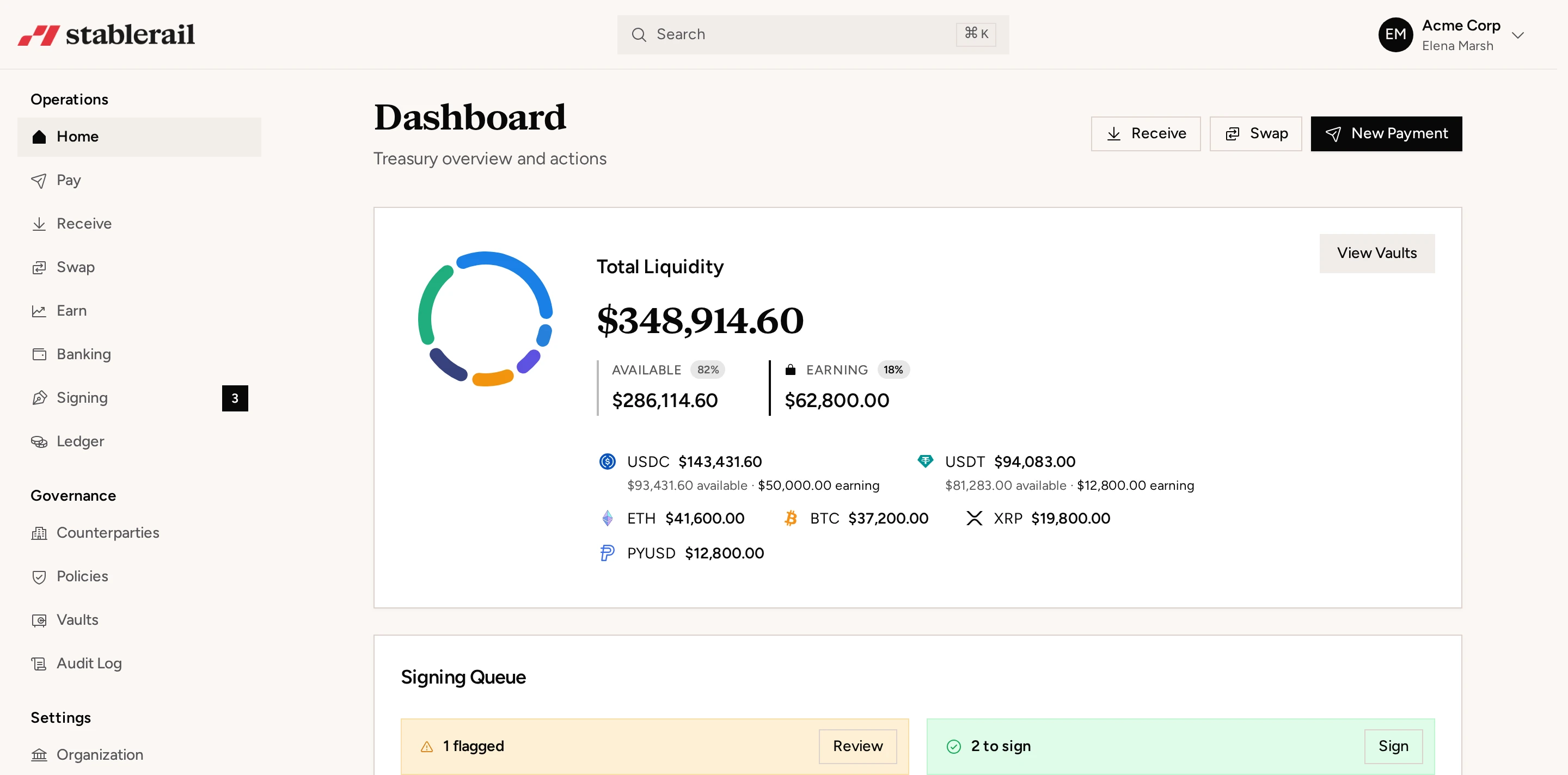
Cards funded against the primary stablecoin treasury instead use that balance as the source of spending capacity, subject to reservations and limits. Stablerail provides virtual and physical corporate cards connected to the same business account used to manage USDC or USDT, so finance can review card activity alongside other treasury movements without maintaining a separate top-up pool.
The practical distinction is balance architecture, not merchant acceptance. In both models, the employee uses a card and the merchant receives funds through card rails. Finance should confirm whether the provider reserves stablecoins, converts value at authorization or settlement, and shows card obligations separately from spendable funds.
How foreign exchange works
FX can arise when the purchase currency differs from the card’s billing or settlement currency. A euro hotel charge made on a USD-billed card, for example, may require EUR-to-USD conversion. A separate stablecoin-to-fiat conversion may also occur to provide the currency needed for card settlement.
| Purchase scenario | Possible conversion | What finance should verify |
|---|---|---|
| USD purchase funded from USDC or USDT | Stablecoin-to-fiat conversion may apply. | Conversion price, timing and any program fee. |
| EUR purchase on a USD-billed card | EUR-to-USD FX plus stablecoin settlement conversion may apply. | Card FX method, cross-border charges and settlement records. |
| Merchant offers dynamic currency conversion | The merchant converts the local price into the card’s billing currency. | The displayed exchange rate and merchant markup before accepting. |
| Foreign-currency refund | The refund is converted using the applicable terms when processed. | Why the credited stablecoin or billing-currency value may differ from the original charge. |
When a merchant offers dynamic currency conversion, or DCC, the employee can pay in the card’s billing currency rather than the merchant’s local currency. DCC provides an immediate converted amount, but the merchant controls that conversion and may include a markup. Paying in local currency instead makes the card program’s applicable FX terms relevant.
USDC and USDT are designed to track the US dollar, but they are not bank deposits and their market prices can vary. Finance should review the provider’s published terms for billing currencies, conversion timing, FX methodology and fees rather than assuming that one stablecoin always converts into exactly one dollar of settlement value.
Statements and month-end reconciliation
Useful card records include the cardholder, card identifier, merchant, MCC, purchase date, clearing date, original amount, original currency, converted amount, status and applicable fees. The export should also identify refunds and reversals so they are not netted into expenses without an audit trail.
A practical close checklist is:
- Export completed transactions for the accounting period.
- Separate settled charges from pending authorizations and expired holds.
- Match receipts, invoices and business purposes to each completed transaction.
- Review refunds, reversals, duplicate charges and disputes separately.
- Map merchants or MCCs to the correct expense and tax treatment.
- Reconcile statement activity to deductions and credits in the treasury ledger.
- Export and retain the supporting evidence with the period’s close records.
A purchase made near month-end may clear in the following period. The company should document whether it recognizes the expense using the purchase date, clearing date or another policy appropriate to its accounting framework. Material pending transactions may require separate accrual consideration.
Refunds, disputes and failed payments
A card refund usually returns through the card network rather than directly to the company’s blockchain address. When processed, it appears as a card credit and is returned to the linked balance under the program’s settlement process. A foreign-currency refund may not equal the original stablecoin value because the applicable exchange rate or conversion price can change.
For an unrecognized or incorrect charge, the card should be frozen promptly and the transaction reported through the provider’s dispute process. Finance may need to supply receipts, merchant correspondence, cancellation evidence or an explanation of why the transaction was unauthorized. Freezing the card limits further activity but does not itself reverse a completed payment.
Setting up the card program
Before issuance, the business generally completes KYB checks covering its legal entity, ownership, jurisdiction and activities. Availability, card type and limits depend on eligibility and the applicable program.
Finance should assign each card to a named employee or defined purpose, use dedicated virtual cards for recurring vendors, block unnecessary categories such as cash withdrawals, and set limits based on expected use rather than maximum available treasury value. Card ownership, receipts, unused cards and exception activity should be reviewed regularly.
The best design keeps employee spending convenient while preserving treasury control. That means understanding exactly when value is reserved, how conversions are priced, what appears in exports and who can issue, freeze or change a card. Those details determine whether a stablecoin-funded card simplifies operations or merely moves reconciliation work to a different system.
Frequently asked questions
Can a corporate card spend USDC directly at a merchant?
Usually not. The merchant receives fiat through standard card rails, while the company’s USDC balance supports conversion or settlement behind the card program. The card purchase itself is not an on-chain transfer to the merchant.
Does a stablecoin corporate card need to be topped up?
It depends on the card program. Some providers require a separate pre-funded card wallet, while others fund card spending against the company’s main USDC or USDT treasury balance. Finance should confirm how pending transactions reduce available funds.
How is FX calculated on a USDC-funded corporate card?
FX may apply when the transaction currency differs from the card’s billing currency, and a separate stablecoin-to-fiat conversion may support settlement. The precise rate, conversion timing and fees depend on the program terms. Dynamic currency conversion is controlled by the merchant and should be evaluated separately.
How should stablecoin-funded card expenses be reconciled?
Reconcile completed card transactions to treasury deductions and credits, while keeping pending authorizations separate. Match receipts and business purposes, review fees and refunds, and retain transaction exports as audit evidence. Document how purchases that clear after month-end are treated.
What happens when a stablecoin-funded card purchase is refunded?
The refund normally returns through the card network and appears as a credit in the card records. It is then returned to the linked treasury balance under the program’s settlement process. For foreign-currency purchases, the credited value may differ from the original charge because conversion rates can change.
Finance writers covering stablecoin treasury, payments, compliance, and risk controls.
More about the Stablerail team- Stablecoin treasury managementApprovals, limits, yield and reporting on one balance.
- Stablecoin payoutsBatch contractor and vendor payments with screening.
- USDT vs USDCWhich stablecoin your company should settle in.
- Stablecoin finance glossaryMPC, off-ramp, travel rule and the rest, in plain English.
- Product updatesEverything we ship, month by month.