
7 BVNK Alternatives for Stablecoin Accounts, Payments, and Fiat Rails
Compare seven BVNK alternatives for stablecoin accounts, fiat rails, custody and embedded payments, with a practical evaluation framework for finance teams.
The best BVNK alternative depends on whether you need a ready-to-use treasury account, direct stablecoin minting, institutional trading and custody, embedded payment APIs, wallet infrastructure, or fiat-first accounts. Compare providers using your actual legal entity, currencies, chains and payout corridors. Verify account ownership, conversion costs, settlement availability, approval controls, reconciliation evidence and the number of providers required to complete each transaction.
%22%20x1%3D%220%22%20y1%3D%220%22%20x2%3D%221%22%20y2%3D%221%22%3E%0A%20%20%20%20%20%20%20%20%3Cstop%20offset%3D%220%25%22%20stop-color%3D%22%233E090D%22%20%2F%3E%0A%20%20%20%20%20%20%20%20%3Cstop%20offset%3D%2250%25%22%20stop-color%3D%22%235C1218%22%20%2F%3E%0A%20%20%20%20%20%20%20%20%3Cstop%20offset%3D%22100%25%22%20stop-color%3D%22%237B1F22%22%20%2F%3E%0A%20%20%20%20%20%20%3C%2FlinearGradient%3E%0A%20%20%20%20%20%20%3CradialGradient%20id%3D%22glow%22%20cx%3D%221175%22%20cy%3D%22-14%22%20r%3D%22520%22%20gradientUnits%3D%22userSpaceOnUse%22%3E%0A%20%20%20%20%20%20%20%20%3Cstop%20offset%3D%220%25%22%20stop-color%3D%22%23FF8E72%22%20stop-opacity%3D%220.45%22%20%2F%3E%0A%20%20%20%20%20%20%20%20%3Cstop%20offset%3D%2255%25%22%20stop-color%3D%22%23FF8E72%22%20stop-opacity%3D%220.08%22%20%2F%3E%0A%20%20%20%20%20%20%20%20%3Cstop%20offset%3D%22100%25%22%20stop-color%3D%22%23FF8E72%22%20stop-opacity%3D%220%22%20%2F%3E%0A%20%20%20%20%20%20%3C%2FradialGradient%3E%0A%20%20%20%20%20%20%3ClinearGradient%20id%3D%22glass%22%20x1%3D%220%22%20y1%3D%220%22%20x2%3D%221%22%20y2%3D%221%22%3E%0A%20%20%20%20%20%20%20%20%3Cstop%20offset%3D%220%25%22%20stop-color%3D%22%23F8D6D2%22%20stop-opacity%3D%220.26%22%20%2F%3E%0A%20%20%20%20%20%20%20%20%3Cstop%20offset%3D%22100%25%22%20stop-color%3D%22%23FFFFFF%22%20stop-opacity%3D%220.08%22%20%2F%3E%0A%20%20%20%20%20%20%3C%2FlinearGradient%3E%0A%20%20%20%20%20%20%3ClinearGradient%20id%3D%22accent%22%20x1%3D%220%22%20y1%3D%220%22%20x2%3D%221%22%20y2%3D%221%22%3E%0A%20%20%20%20%20%20%20%20%3Cstop%20offset%3D%220%25%22%20stop-color%3D%22%23FF8E72%22%20%2F%3E%0A%20%20%20%20%20%20%20%20%3Cstop%20offset%3D%22100%25%22%20stop-color%3D%22%23D94030%22%20%2F%3E%0A%20%20%20%20%20%20%3C%2FlinearGradient%3E%0A%20%20%20%20%20%20%3Cfilter%20id%3D%22soft%22%3E%3CfeGaussianBlur%20stdDeviation%3D%2210%22%20%2F%3E%3C%2Ffilter%3E%0A%20%20%20%20%3C%2Fdefs%3E%0A%20%20%20%20%3Crect%20width%3D%221600%22%20height%3D%22900%22%20fill%3D%22url(%23bg)%22%20%2F%3E%0A%20%20%20%20%3Crect%20width%3D%221600%22%20height%3D%22900%22%20fill%3D%22url(%23glow)%22%20%2F%3E%0A%20%20%20%20%3Cline%20x1%3D%22200%22%20y1%3D%22250%22%20x2%3D%221400%22%20y2%3D%22250%22%20stroke%3D%22%23F4CDC5%22%20stroke-opacity%3D%220.12%22%2F%3E%3Cline%20x1%3D%22200%22%20y1%3D%22340%22%20x2%3D%221400%22%20y2%3D%22340%22%20stroke%3D%22%23F4CDC5%22%20stroke-opacity%3D%220.12%22%2F%3E%3Cline%20x1%3D%22200%22%20y1%3D%22430%22%20x2%3D%221400%22%20y2%3D%22430%22%20stroke%3D%22%23F4CDC5%22%20stroke-opacity%3D%220.12%22%2F%3E%3Cline%20x1%3D%22200%22%20y1%3D%22520%22%20x2%3D%221400%22%20y2%3D%22520%22%20stroke%3D%22%23F4CDC5%22%20stroke-opacity%3D%220.12%22%2F%3E%3Cline%20x1%3D%22200%22%20y1%3D%22610%22%20x2%3D%221400%22%20y2%3D%22610%22%20stroke%3D%22%23F4CDC5%22%20stroke-opacity%3D%220.12%22%2F%3E%3Cpolyline%20points%3D%22200%2C761%20350%2C568%20500%2C614%20650%2C550%20800%2C612%20950%2C724%201100%2C738%201250%2C705%201400%2C596%22%20fill%3D%22none%22%20stroke%3D%22url(%23accent)%22%20stroke-width%3D%2210%22%20stroke-linejoin%3D%22round%22%20stroke-linecap%3D%22round%22%2F%3E%3Ccircle%20cx%3D%22200%22%20cy%3D%22761%22%20r%3D%229%22%20fill%3D%22%23F8D6D2%22%2F%3E%3Ccircle%20cx%3D%22350%22%20cy%3D%22568%22%20r%3D%229%22%20fill%3D%22%23F8D6D2%22%2F%3E%3Ccircle%20cx%3D%22500%22%20cy%3D%22614%22%20r%3D%229%22%20fill%3D%22%23F8D6D2%22%2F%3E%3Ccircle%20cx%3D%22650%22%20cy%3D%22550%22%20r%3D%229%22%20fill%3D%22%23F8D6D2%22%2F%3E%3Ccircle%20cx%3D%22800%22%20cy%3D%22612%22%20r%3D%229%22%20fill%3D%22%23F8D6D2%22%2F%3E%3Ccircle%20cx%3D%22950%22%20cy%3D%22724%22%20r%3D%229%22%20fill%3D%22%23F8D6D2%22%2F%3E%3Ccircle%20cx%3D%221100%22%20cy%3D%22738%22%20r%3D%229%22%20fill%3D%22%23F8D6D2%22%2F%3E%3Ccircle%20cx%3D%221250%22%20cy%3D%22705%22%20r%3D%229%22%20fill%3D%22%23F8D6D2%22%2F%3E%3Ccircle%20cx%3D%221400%22%20cy%3D%22596%22%20r%3D%229%22%20fill%3D%22%23F8D6D2%22%2F%3E%0A%20%20%20%20%3Crect%20x%3D%2226%22%20y%3D%2226%22%20width%3D%221548%22%20height%3D%22848%22%20rx%3D%2218%22%20fill%3D%22none%22%20stroke%3D%22%23F2D0C8%22%20stroke-opacity%3D%220.12%22%2F%3E%0A%20%20%3C%2Fsvg%3E)
The best BVNK alternative is the provider that completes your real stablecoin and fiat corridors with acceptable controls, costs and reconciliation—not the one with the longest feature list. Finance teams should first decide whether they need an operating account, direct stablecoin minting, institutional custody, embedded APIs, wallet infrastructure or fiat-first payment rails. These models solve different problems and are not interchangeable.
Start with the operating model
A platform may support stablecoin conversion without giving your company local fiat account details. A custody provider may secure wallets but require separate banks, exchanges or liquidity providers for on-ramps and off-ramps. An embedded infrastructure platform may expose every step through APIs while leaving your team responsible for engineering, ledgering, exception handling and customer support.
Classify your requirement before requesting proposals:
- Finance account: Your treasury team needs a dashboard for holding, converting and paying with fiat, USDC or USDT.
- Direct issuer access: Your main requirement is minting and redeeming a specific stablecoin.
- Institutional trading and custody: You need execution, portfolio tools and hosted custody across digital assets.
- Embedded infrastructure: You want to add stablecoin accounts or payments to your own product through APIs.
- Wallet infrastructure: You need signing controls and network connectivity, while sourcing fiat rails and liquidity elsewhere.
- Fiat-first infrastructure: You primarily need virtual accounts and bank payments, with stablecoin services supplied separately or through partners.
BVNK alternatives compared by use case
The following comparison describes the providers’ broad operating models. Availability can vary by contracting entity, jurisdiction, industry, transaction type and product configuration. Confirm current capabilities directly with each provider before designing a treasury workflow around them.
| Provider | Best considered for | Fiat and conversion model | Custody or wallet model | Likely implementation burden |
|---|---|---|---|---|
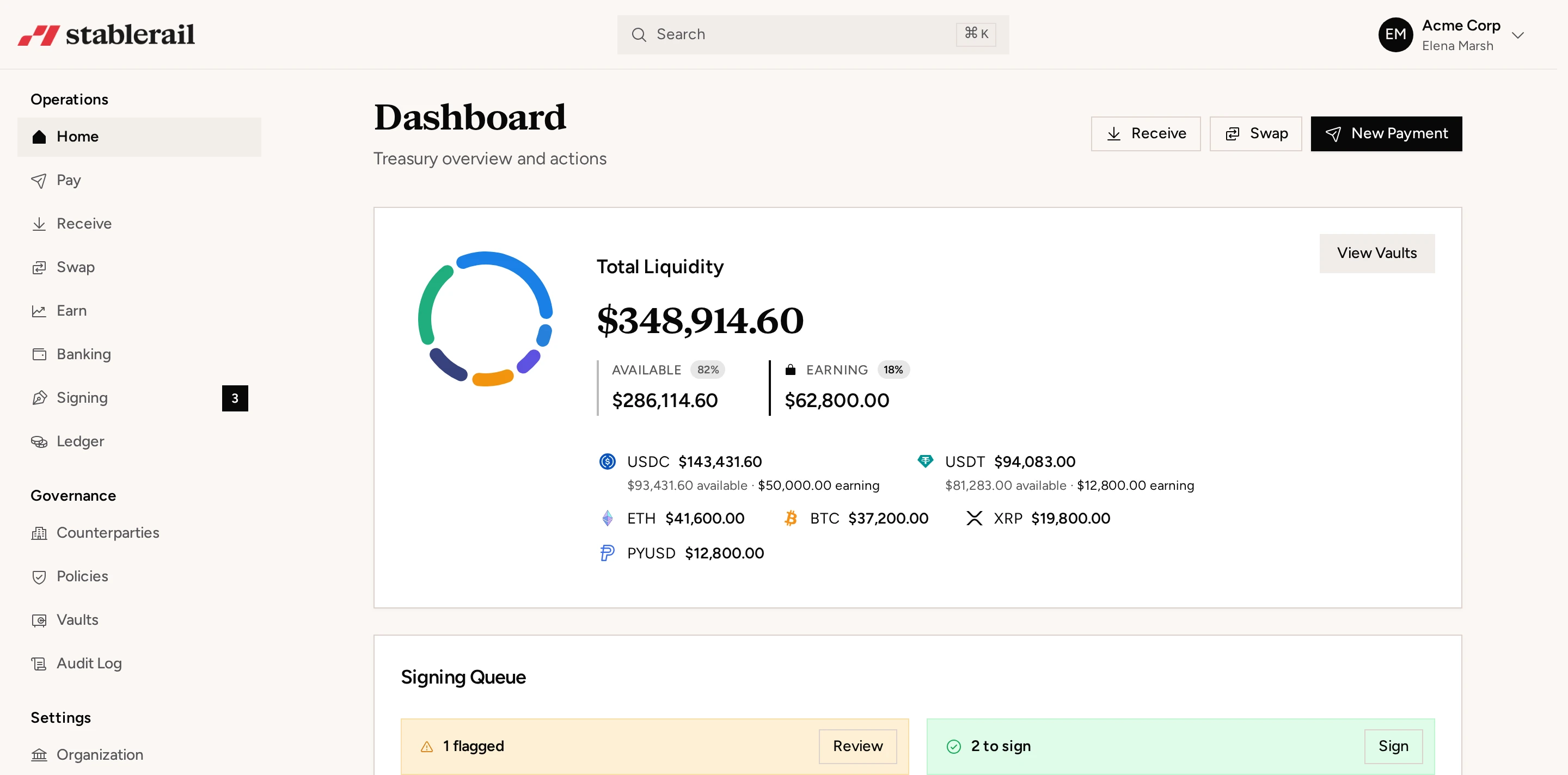
| Stablerail | Finance teams operating USDC, USDT, payouts and fiat off-ramps | Business-account workflow combining stablecoin treasury, global payouts and fiat off-ramp | Approvals and signing quorum for treasury movements | Lower than an API-only stack when the finance team wants a usable account |
| Circle Mint | Direct USDC minting and redemption | Eligible customers fund and redeem through supported banking arrangements | Circle-hosted balance with transfers to supported external wallets | Relatively focused, but additional tools may be needed for USDT or broader payment workflows |
| Coinbase Prime | Institutional trading, custody and treasury execution | Fiat funding and conversion depend on region, entity and account configuration | Hosted institutional custody and wallet services | Moderate; depends on required assets, fiat rails and accounting integration |
| Bridge | Developers embedding stablecoin accounts and payments | API-led virtual account, conversion and cross-border payment workflows | Depends on the wallet and program configuration | Higher because product, engineering, ledgering and support teams must own the integration |
| Zero Hash | Platforms embedding digital-asset and stablecoin functionality | API-based funding, conversion and settlement infrastructure | Custodial infrastructure varies by product and jurisdiction | Higher than a finance dashboard; requires technical and operational integration |
| Fireblocks | Wallet infrastructure, signing workflows and network connectivity | Typically connects to banks, exchanges and liquidity providers rather than replacing every fiat partner | MPC-based wallet infrastructure with transaction controls | Moderate to high because counterparties and fiat routes must be assembled |
| OpenPayd | Fiat-first embedded accounts and payment rails | Virtual accounts, multi-currency infrastructure and bank payment connectivity | Stablecoin custody or conversion may require a separate or connected provider | Moderate; rises when multiple partners must be reconciled |
Where each alternative fits
Stablerail: a stablecoin treasury account
This option is designed for finance teams that want one business account for USDC and USDT treasury rather than infrastructure they must turn into an internal product. Operational features include approval and signing quorum, sanctions and address screening before sends, corporate cards, global payouts, fiat off-ramp and exportable audit evidence. As with any provider, access and corridor availability should be confirmed for the applicant’s entity, jurisdiction and industry.
Circle Mint: direct USDC access
Circle Mint is most relevant when the core workflow is moving between supported fiat and USDC. It can reduce the number of intermediaries in a USDC minting or redemption flow. It is not a USDT account, so companies that owe liabilities in USDT or require multi-stablecoin payout operations may need another provider.
Coinbase Prime: execution and institutional custody
Coinbase Prime is oriented toward institutional trading, custody and portfolio operations. It may suit a treasury that manages stablecoins alongside other digital assets or requires an institutional execution venue. Buyers should verify the exact fiat funding methods, assets, networks and custody services available through the Coinbase entity that would contract with them.
Bridge and Zero Hash: embedded infrastructure
Bridge and Zero Hash are more natural candidates when stablecoin functionality will appear inside your own product. An API model can provide flexibility, but it changes the work required. Your company may need to build user interfaces, internal ledger entries, webhook handling, reconciliation, customer support processes and controls for failed or delayed transactions.
Ask which party contracts with the end customer, performs onboarding, holds funds, screens transactions and produces statements. These responsibilities affect compliance operations and accounting as much as the API documentation does.
Fireblocks: wallet and transaction infrastructure
Fireblocks is worth considering when wallet architecture, signing workflows and connectivity are the priority. It should not be assumed to provide the full equivalent of a stablecoin business account. Map the banks, exchanges, liquidity providers and payment processors needed to receive fiat, convert it, hold stablecoins and pay the final beneficiary.
OpenPayd: fiat-first account infrastructure
OpenPayd is a closer fit where virtual fiat accounts and payment connectivity lead the requirement. Confirm whether stablecoin conversion, blockchain transfers and custody are available directly to your entity or delivered by another provider. A partner-based design may be workable, but each additional contract creates another settlement boundary, fee schedule and reconciliation source.
Map the full route your money takes
Do not evaluate on-ramp pricing in isolation. Document the complete route: incoming fiat, account credit, conversion, stablecoin storage, blockchain transfer, off-ramp and final bank payout. For every stage, record the legal counterparty, account owner, fee, quoted rate, cut-off, expected availability and evidence returned to your ledger.
| Rail | Common processing expectation | What finance should verify |
|---|---|---|
| SEPA | Often by the next business day | IBAN ownership, cut-offs, recall handling and incoming or outgoing fees |
| SEPA Instant | Usually seconds when both institutions participate | Participation, limits, screening delays and round-the-clock availability |
| ACH | Same day or multiple business days, depending on method | Same-day eligibility, cut-offs, returns, reversals and debit support |
| Fedwire | Same business day when accepted before cut-off | Operating hours, beneficiary fields, transfer charges and finality procedures |
| Faster Payments | Typically seconds or minutes | Transaction limits, beneficiary checks and exception handling |
| CHAPS | Same business day before the relevant cut-off | Cut-off time, payment charges and beneficiary requirements |
| BACS | Normally follows a three-working-day cycle | Submission calendars, file formats, payroll support and rejection reports |
| SWIFT | Can take several business days | Correspondent deductions, FX spread, tracking and intermediary-bank requests |
Blockchain submission is not the same as beneficiary availability. A recipient may wait for confirmations, provider screening or an internal ledger credit. Network cost also depends on the chain and current demand, so compare the exact USDC or USDT network your counterparties use rather than treating all blockchain transfers as equivalent.
Controls and evidence matter as much as speed
A fast payment route can still be unsuitable if a single employee can release funds or if transaction evidence cannot be tied to the general ledger. Determine who can create beneficiaries, prepare payments, approve conversions and sign blockchain transactions. Test how the system handles a compromised user, an unavailable approver and a payment sent on the wrong network.
Finance and audit teams should be able to connect the bank receipt, conversion quote, fee, blockchain transaction hash, approvals, payout reference and final beneficiary credit. If evidence comes from several providers, decide which system is the authoritative record and how common identifiers will pass between systems.
Practical evaluation checklist
- Confirm account ownership: Establish whether fiat details are named, virtual and assigned, or part of a pooled arrangement.
- Verify assets and networks: Check the exact USDC and USDT contracts and chains used by your counterparties.
- Price a real transaction: Include provider fees, conversion spread, bank charges, network fees, minimums and recipient deductions.
- Measure available funds: Record when funds become usable, not merely when a payment is submitted.
- Test controls: Review approval quorum, role separation, beneficiary management, screening and emergency access.
- Inspect exports: Obtain sample statements, transaction files, approval records, exchange rates and wallet hashes.
- Check exceptions: Simulate a rejected beneficiary, returned bank payment, delayed transfer and unsupported network.
- Validate eligibility early: Disclose the legal entity, operating countries, industry, expected volumes and source of funds.
Run a corridor test before committing
Shortlist two or three providers and give each the same test. For example: receive EUR by SEPA, convert it to USDC, send it on the required network, off-ramp to USD and pay a beneficiary by ACH or Fedwire. Use a controlled amount and an approved counterparty.
Record total cost, elapsed time, funds-availability time, manual steps, documents requested, ledger data, approval evidence and exception handling. Also count how many providers and contracts are involved. The strongest BVNK alternative is the one that completes your recurring corridors with clear control ownership and the fewest unresolved operational gaps.
Frequently asked questions
What is the best alternative to BVNK for a stablecoin business account?
The answer depends on whether you need a finance account, direct USDC minting, institutional custody, embedded APIs or wallet infrastructure. Compare providers using your legal entity and actual receive-convert-send-off-ramp workflow rather than relying on a general feature list.
Which BVNK alternatives support both USDC and USDT?
Support varies by product, contracting entity, network and jurisdiction. Ask each provider to confirm the exact stablecoin contracts and chains available for custody, conversion, deposits and withdrawals, because supporting an asset on one network does not imply support on every network.
How should a CFO compare stablecoin account fees?
Price a complete transaction rather than comparing one advertised conversion fee. Include the quoted spread, provider charge, bank transfer fee, blockchain fee, withdrawal minimum, correspondent deduction and any monthly or custody charges.
What is the difference between a stablecoin account and stablecoin payment infrastructure?
A stablecoin account gives finance users an operational interface for treasury and payments. Infrastructure providers expose APIs or wallet components that your company must integrate with its own product, ledger, controls, reconciliation and support processes.
What should finance teams test before choosing a BVNK alternative?
Run the same end-to-end corridor through each shortlisted provider, from incoming fiat to final beneficiary credit. Measure total cost, usable-funds timing, approvals, reconciliation data, failed-payment handling and the number of external providers required.
Finance writers covering stablecoin treasury, payments, compliance, and risk controls.
More about the Stablerail team- Stablecoin treasury managementApprovals, limits, yield and reporting on one balance.
- Stablecoin payoutsBatch contractor and vendor payments with screening.
- USDT vs USDCWhich stablecoin your company should settle in.
- Stablecoin finance glossaryMPC, off-ramp, travel rule and the rest, in plain English.
- Product updatesEverything we ship, month by month.