
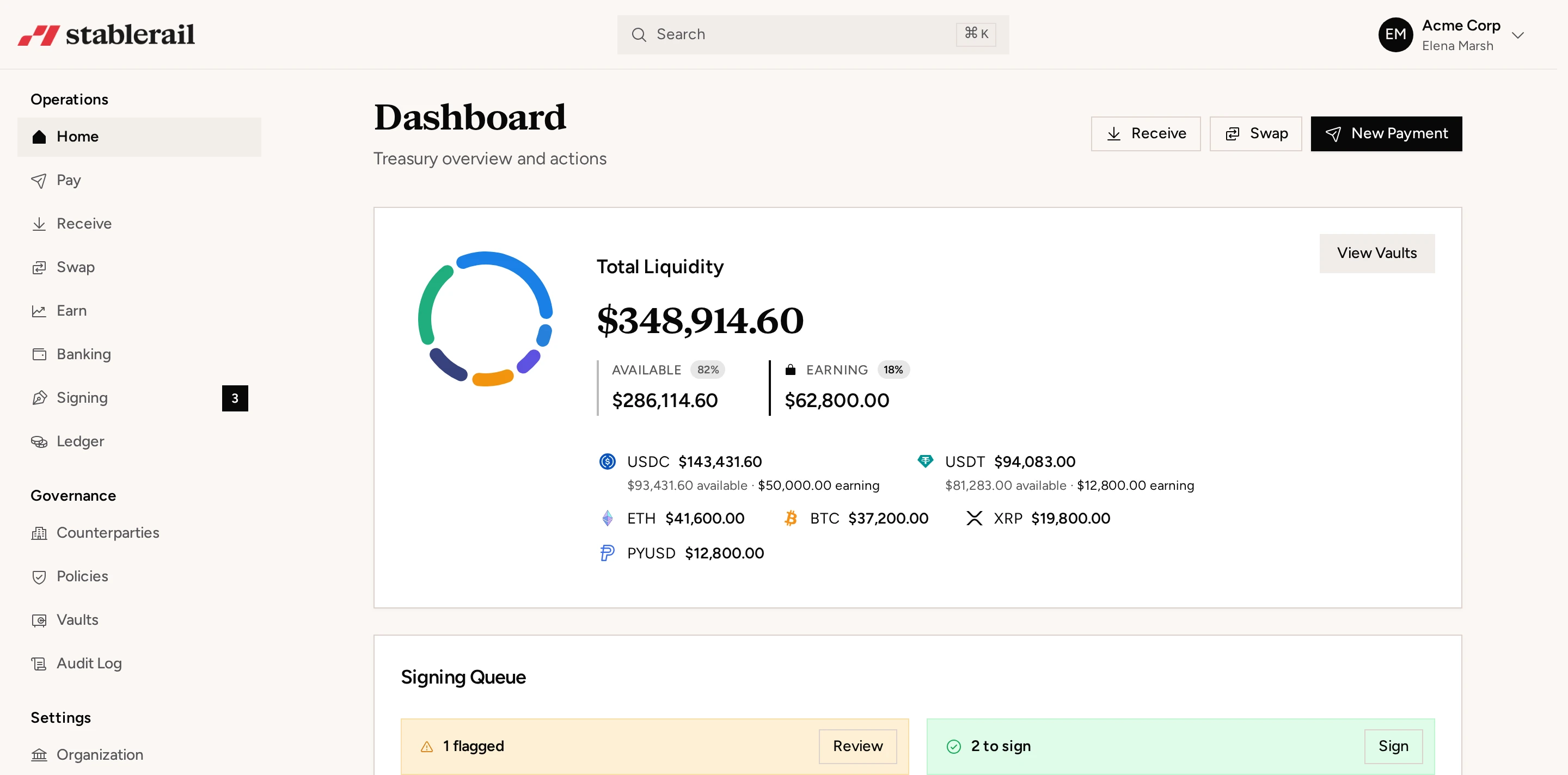
Immutable Audit Trails for CFO-Grade Evidence
Cryptographic, append-only audit trails replace spreadsheets and emails—speeding audits, reducing fraud risk, and providing SEC-compliant, tamper-proof records.

Feb 26, 2026
When it comes to audits, CFOs face a major challenge: proving compliance with accurate, tamper-proof records. Manual methods - like emails, spreadsheets, and logs - are slow, prone to errors, and vulnerable to fraud. Enter immutable audit trails: a system that uses cryptographic methods to create unchangeable records for every transaction, approval, and policy check. These trails provide real-time verification, fraud prevention, and audit reliability, addressing the inefficiencies of manual processes.
Key Points:
Problem: Manual audits are time-consuming, error-prone, and costly, eating up 30% of audit budgets.
Solution: Immutable audit trails ensure unalterable, mathematically verifiable records.
Benefits: Faster audits, reduced fraud risk, and stronger compliance with regulations like SEC Rule 17a-4(f).
Stablerail’s system eliminates the weaknesses of manual audits by providing a tamper-proof, append-only ledger that CFOs can rely on when proving compliance to regulators or boards. This shift from trust-based to proof-based systems is redefining how organizations manage audits and compliance.
How Does Blockchain Create Immutable Audit Trails? - All About SaaS Finance
1. Traditional Audit Methods
Legacy systems often rely on centralized databases and manual spreadsheets, where administrators have the ability to edit, delete, or backdate entries. This flexibility creates what experts call "mutable liabilities" - records that can be changed after the fact, making them unreliable as evidence. For example, when a CFO needs to verify that a $50,000 vendor payment followed the proper approval process, they may find themselves piecing together records from scattered emails and spreadsheets, which is both time-consuming and error-prone.
Alterability
Traditional systems operate on a "trust but verify" principle, which introduces a single point of failure. Auditors must trust that the data custodian has not tampered with the records. A striking example of this risk occurred during the Equifax breach in September 2017, where centralized logs were manipulated to obscure the timeline of the incident. For CFOs, this level of alterability can lead to significant regulatory challenges, especially under strict rules like SEC Rule 17a-4(f), which requires records to be permanent and unalterable. These vulnerabilities in legacy systems underscore the demand for more secure and tamper-proof solutions.
Verification Speed
Manual reconciliation processes in traditional audits can delay results by weeks or even months, leaving CFOs to make decisions based on outdated data. This inefficiency not only slows down verification but also drives up audit costs. In fact, firms that eliminate the need for manual data reformatting can recover 20% to 30% of the engagement hours typically lost to administrative tasks. Streamlining these processes could free up valuable time and resources for more strategic activities.
Fraud Risk
Traditional audits often rely on sampling due to the time and cost involved in testing entire datasets - sometimes examining less than 1% of all transactions. As Artie Minson, CEO of Trullion, explains:
Sampling has historically been a necessity because testing full populations was too time-consuming and expensive. While statistically defensible, it was always a compromise.
This reliance on sampling creates blind spots where fraudulent activity might go unnoticed. Regulatory actions in recent years have highlighted the risks of such gaps, as traditional controls often fail to detect fraudulent patterns. Additionally, the periodic nature of legacy audits - conducted quarterly or annually - provides extended windows during which fraud can remain undetected. These limitations make it difficult for traditional methods to deliver comprehensive fraud detection.
Audit Reliability
The reliability of traditional audits hinges on trust rather than proof. Legacy systems produce fragmented data and probabilistic trust, making forensic reconstruction both challenging and unreliable. Artie Minson underscores this point:
The risk isn't just inefficiency, it's incomplete documentation and regulatory exposure.
The costs of relying on mutable systems extend beyond financial implications - legacy audit cycles can range from $10,000 to over $500,000 - and include the inability to confidently defend decisions when it matters most. These shortcomings highlight the pressing need for systems that offer immutable audit trails and provide definitive proof, ensuring CFOs have reliable evidence at their disposal.
2. Stablerail's Immutable Audit Trails
Unlike traditional systems that allow edits, Stablerail’s framework ensures every transaction remains unchangeable and transparent. By embedding evidence at every stage - covering payment initiators, checks, approval times, and rationales - the platform creates a record that simply can’t be altered. This approach provides what CFOs need: a reliable, tamper-proof trail of every action.
Alterability
Every action, from the moment it's initiated to the final approval, is cryptographically sealed. The system uses hash chaining, where each new log entry includes the cryptographic digest of the previous one. If anyone tries to tamper with an entry, the entire chain becomes invalid, making alterations impossible. Stablerail operates on a Write-Once, Read-Many (WORM) model, which means once something is recorded, it stays that way. Even system administrators lack the ability to edit or delete entries. As accounting expert Jason Berwanger puts it:
"An immutable audit log provides a permanent, tamper-proof record of all system activities. This creates a single source of truth that is non-negotiable for passing audits."
This design eliminates the vulnerabilities of traditional databases, ensuring the integrity of records and building trust in the verification process.
Verification Speed
Traditional audits are time-consuming, often taking weeks of manual reconciliation and eating up over 30% of corporate audit budgets. Stablerail changes the game with its shared ledger architecture, which maintains a single, consistent version of the truth across all departments. This eliminates the need to reconcile fragmented spreadsheets and email chains. Real-time verification replaces periodic reviews, allowing auditors to test every transaction instead of relying on samples. Artie Minson, CEO of Trullion, explains:
"Full-population testing is now as economical as sampling and far more defensible. Instead of testing 100 transactions, firms can test all 10,000 with the same level of effort."
By integrating audit trails directly into payment workflows - capturing invoice PDFs, approvals, Risk Dossiers, and transaction hashes - Stablerail simplifies the verification process while maintaining its unchangeable nature.
Fraud Risk
Stablerail’s multi-signature governance and policy-as-code engine ensure that high-value transactions require multiple approvals, with each step recorded on the immutable trail. Before a payment is executed, specialized agents perform rigorous pre-sign checks. These checks include sanctions screening, anomaly detection (e.g., unusual transaction times or amounts), and counterparty risk assessments. Each check generates a plain-English explanation tied to specific policy clauses and timestamps, providing a clear rationale for every decision. Unlike legacy systems that rely on sampling, which can miss anomalies, Stablerail’s approach examines every single transaction. With federal agencies reporting $236 billion in improper payments in 2023, this method significantly reduces fraud risks and regulatory penalties.
Audit Reliability
Stablerail’s audit trails provide detailed attribution for every action. They capture wallet addresses, transaction hashes, timestamps, and the reasons behind approvals or overrides. This level of detail transforms audits from a manual, time-intensive process into an organized, verifiable system. Thanks to cryptographic finality, the platform delivers absolute integrity without relying on a third-party custodian. For CFOs navigating regulatory scrutiny - especially with the SEC filing 583 enforcement actions and securing $8.2 billion in penalties in 2024 - this capability is essential. ChainScore Labs sums it up well:
"Legacy audit trails are mutable, centralized liabilities, while blockchain ledgers provide a cryptographically verifiable, single source of truth."
With this granular level of tracking, Stablerail not only simplifies audits but also strengthens compliance and regulatory defenses.
Pros and Cons
Traditional vs Immutable Audit Trails: Key Differences in Alterability, Speed, Fraud Risk, and Reliability
Let's take a closer look at how traditional audit methods stack up against Stablerail's immutable audit trails. This comparison highlights the key differences across four essential aspects:
Feature
Traditional Audit Methods
Stablerail's Immutable Audit Trails
Alterability
High; logs can be edited or deleted by system admins
None; append-only records are cryptographically sealed
Verification Speed
Slow; manual reconciliation takes weeks or months
Instant; real-time verification and continuous auditing
Fraud Risk
High; relies on sampling and is prone to human error and omission
Low; built-in forgery prevention and comprehensive testing
Audit Reliability
Probabilistic; reliant on human-managed data
Deterministic; based on mathematical proof and consensus
This comparison makes it clear: Stablerail’s immutable audit trails bring a whole new level of precision and security to the table. Traditional methods often depend on sampling, which can easily overlook anomalies. In contrast, Stablerail uses cryptographic sealing and full-population testing to ensure tamper-proof accuracy.
Artie Minson, CEO of Trullion, captures this shift perfectly:
Full-population testing is now as economical as sampling and far more defensible. Instead of testing 100 transactions, firms can test all 10,000 with the same level of effort.
While traditional systems may feel familiar, the move toward deterministic, tamper-resistant audits marks a major step forward. For CFOs, this is about making governance decisions backed by indisputable evidence, not just probabilities.
Conclusion
Switching from traditional, mutable audit trails to immutable ones fundamentally changes how CFOs provide evidence, turning it into cryptographic proof that can’t be tampered with. Traditional systems rely on logs that administrators can alter, often leading to lengthy reconciliations and hefty manual costs. By contrast, Stablerail’s cryptographically sealed records eliminate this uncertainty, replacing trust-based systems with proof-based ones. This shift transforms compliance from an occasional expense into a continuous, real-time layer of risk management.
For organizations managing stablecoin treasuries under frameworks like SEC Rule 17a-4, MiCA, or DORA, immutable audit trails meet regulatory requirements for permanent, verifiable records. Companies overseeing treasuries worth $1 billion or more, in particular, benefit from moving beyond outdated practices like spreadsheet approvals and opaque multisignature setups. This approach not only ensures compliance but also provides transparency regulators increasingly demand.
Regulatory scrutiny is ramping up. Since 2021, the SEC has levied over $3 billion in penalties, with firms like Blackstone and KKR facing steep fines. In January 2025 alone, 12 companies paid $63.1 million combined for recordkeeping violations. PJT Partners, however, paid just $600,000 because they self-reported, proving the value of proactive compliance systems.
Stablerail’s system captures every step of the process - from initial intent to final approval - within an immutable, append-only trail. This creates a single, unalterable source of truth for auditors, boards, and regulators. Instead of relying on PDFs or manual reports, every decision is backed by cryptographic proof.
The implications for CFO-grade evidence are clear. Organizations should prioritize areas with the highest stakes, such as corporate actions, inter-entity settlements, and regulatory filings. As Artie Minson, CEO of Trullion, puts it:
The result is stronger, more defensible audit evidence... Firms that operate within modern systems differentiate on engagement quality and professionalism.
For finance teams handling stablecoin transactions, adopting this standard is no longer optional - it’s essential for maintaining compliance and credibility.
FAQs
What makes an audit trail truly immutable?
An audit trail is considered truly immutable when it is tamper-proof, meaning it cannot be altered or deleted once created. This guarantees permanent data integrity, security, and verifiability, offering a dependable record for audits and compliance requirements.
How do immutable audit trails speed up audits in practice?
Immutable audit trails speed up audits by offering a tamper-proof, complete record of every transaction and activity. Since these logs can't be altered, the need for lengthy data verification or reconciliation is eliminated, giving auditors a single, reliable source of truth. Their clear chronological order helps auditors quickly pinpoint relevant transactions, check for compliance, and conduct investigations more efficiently. This reduces manual work and simplifies the entire auditing process.
Do immutable records meet SEC Rule 17a-4(f) requirements?
Yes, immutable records can meet the requirements of SEC Rule 17a-4(f) by ensuring a tamper-proof, verifiable, and permanent audit trail for transactions. The SEC acknowledges cryptographic audit systems as an acceptable alternative to traditional WORM (Write Once, Read Many) storage formats.
Related Blog Posts
Former CEO of Simple, a self-custodial wallet with $2B+ in transaction volume across 75+ countries.
More about the Stablerail team- Stablecoin treasury managementApprovals, limits, yield and reporting on one balance.
- Stablecoin payoutsBatch contractor and vendor payments with screening.
- USDT vs USDCWhich stablecoin your company should settle in.
- Stablecoin finance glossaryMPC, off-ramp, travel rule and the rest, in plain English.
- Product updatesEverything we ship, month by month.