
OFAC Compliance for Stablecoin Treasury Teams
Step-by-step OFAC guidance for stablecoin treasury teams: implement pre-transaction screening, blocking vs rejecting, governance, reporting, and audit trails.

Jan 19, 2026
Ensuring compliance with OFAC regulations is critical for stablecoin treasury teams. Every transaction must be screened against the Specially Designated Nationals (SDN) List to avoid penalties, even if violations are unintentional. OFAC's strict liability standard means your organization is accountable for any breach, regardless of intent. Key steps include:
Pre-transaction screening: Verify wallet addresses, geolocations, and counterparties before processing payments.
Blocking and rejecting transactions: Freeze assets or return funds as required, with mandatory reporting to OFAC within 10 business days.
Governance and accountability: Appoint a sanctions compliance officer and maintain detailed records for at least five years.
Risk management: Use tools to identify suspicious activity, such as VPN usage or transactions in sanctioned regions.
Failing to comply can result in severe fines and reputational damage. By implementing these measures, stablecoin teams can reduce risks and meet regulatory expectations.
Implementing a Sanctions Compliance Program for Digital Assets
OFAC Basics for Stablecoin Treasury Teams
OFAC Blocking vs Rejecting Requirements for Stablecoin Transactions
How OFAC Sanctions Apply to Digital Assets
The Office of Foreign Assets Control (OFAC), part of the U.S. Department of the Treasury, is responsible for implementing and enforcing economic and trade sanctions aligned with U.S. foreign policy and national security objectives. When it comes to stablecoins, these digital transactions carry the same compliance requirements as traditional fiat payments.
OFAC regulations apply to all U.S. persons - this includes U.S. citizens, permanent residents, individuals and entities within the U.S., and organizations established under U.S. law, including their foreign branches. Treasury teams are obligated to freeze any assets or interests tied to individuals or entities listed on OFAC's Specially Designated Nationals (SDN) List, which currently includes over 9,000 entries.
OFAC operates under a strict liability standard. This means that even if your company unknowingly violates sanctions, it can still be held accountable. Additionally, under the 50 Percent Rule, any entity that is at least 50% owned by a blocked party is also considered blocked.
It's important to differentiate between blocking and rejecting:
Blocking: This applies when a sanctioned party has an interest in the property. You must freeze the assets and deny all access.
Rejecting: This occurs when a transaction is prohibited but doesn't involve a blockable interest. In this case, you refuse the transaction and return the funds to the sender.
Both actions require reporting to OFAC within 10 business days. Here's a quick breakdown:
Action
When Required
What You Must Do
Reporting Deadline
Blocking
Sanctioned party has an interest in property
Freeze assets; deny access
Within 10 business days
Rejecting
Prohibited transaction without blockable interest
Refuse transaction; return funds
Within 10 business days
Annual Reporting
All blocked property as of June 30
Report holdings to OFAC
By September 30 annually
This framework is essential for stablecoin treasuries to address their specific compliance challenges.
Why Stablecoin Treasuries Face High Sanctions Evasion Risk
Stablecoin treasuries face unique challenges when it comes to sanctions compliance. Digital assets often make it easier for bad actors to evade sanctions, requiring treasury teams to maintain heightened vigilance. OFAC’s “bouncing ball” principle is critical here: once a transaction enters your possession, you are responsible for blocking it if a sanctioned party is involved. Unlike traditional banking systems, where intermediaries may intercept problematic transactions, blockchain payments often move directly between parties with minimal oversight.
Human review becomes essential when automated interdiction tools flag potential issues. Many alerts are false positives, where names may resemble those on sanctions lists but don’t match other identifiers like addresses or birthdates. Careful analysis is key before escalating to OFAC, as even routine actions - like opening an account or processing a deposit for someone on the SDN List - are strictly prohibited.
"Once the ball starts moving, you must stop it if it comes into your possession." - OFAC
The regulatory landscape is evolving, and digital asset firms are now held to the same rigorous standards as traditional financial institutions. Treasury teams should use geolocation tools to block users in sanctioned regions, such as Crimea, Cuba, Iran, North Korea, and Syria. Advanced analytics can also flag suspicious activity, like improbable logins (e.g., a user logging in from the U.S. and Japan within a short timeframe), which might indicate VPN usage to bypass geographic restrictions.
Stablecoin Regulatory Requirements in the United States
OFAC’s strict liability rules and blocking requirements apply equally to digital and fiat transactions. Under the Bank Secrecy Act (BSA) and OFAC guidelines, stablecoin issuers, custodians, and corporate users share the responsibility for compliance. The rules remain consistent, whether the transaction involves digital currency or traditional fiat.
For virtual currencies, there’s no need to convert blocked assets into U.S. dollars or place them in interest-bearing accounts. However, these assets must be properly isolated and reported. Additionally, all records related to blocked property must be kept for five years.
Treasury teams should incorporate screening mechanisms into their workflows to check all transaction participants against the SDN List and other OFAC sanctions lists. Risk assessments should go beyond direct partners, examining details like names, addresses, and even email metadata. Senior management should appoint a dedicated sanctions compliance officer and ensure that the compliance team has the autonomy and resources it needs. Setting the right "tone from the top" is critical for meeting regulatory expectations.
Proactively addressing violations through voluntary self-disclosure can reduce potential civil penalties by up to 50%, underscoring the financial advantages of a robust compliance program.
Building an OFAC Compliance Program for Stablecoin Payments
Governance and Accountability in Sanctions Compliance
Creating a robust OFAC compliance program starts with clear accountability at the top. Senior management must actively support compliance efforts by appointing a dedicated sanctions compliance officer who has expertise in digital assets and regulatory requirements. It's also essential to establish clear protocols for escalating decisions, such as identifying who has the authority to halt transactions, handle regulatory reporting, and coordinate with external partners. The GENIUS Act (July 2025) adds further accountability, requiring CEOs and CFOs to certify monthly reserve reports under penalty of law. Failure to comply can lead to fines up to $1,000,000 and up to five years of imprisonment.
Maintaining detailed records of compliance decisions and promptly filing blocked property reports are key steps to staying compliant. When violations occur, conducting a root cause analysis helps address underlying issues quickly. This is especially critical for stablecoin treasuries, where the fast pace of on-chain transactions demands equally fast and accurate compliance checks.
"Senior management's commitment to a company's sanctions compliance program is one of the most important factors in determining the program's success." – OFAC
Once governance is in place, the focus shifts to identifying and managing risks specific to your payment processes.
Risk Assessment and Policy Development
Start with a comprehensive risk assessment of your payment flows. This should include evaluating counterparties, regions, transaction patterns, and any potential interactions with sanctioned entities. Update this assessment regularly, especially when onboarding new vendors, entering new markets, or changing transaction thresholds.
Based on these insights, develop written policies that translate risks into actionable rules. For example, if new vendor addresses pose a higher risk, your policy might require that payments exceeding $5,000 to such addresses receive CFO approval and enhanced verification. Similarly, if weekend transactions are riskier due to limited oversight, you could mandate that transfers over $10,000 on weekends require approval from two authorized signers. To ensure consistency, use systems that enforce these policies automatically. A policy-as-code approach can reduce human error and create an audit trail, ensuring every transaction adheres to your rules.
With clear policies in place, the next step is to implement pre-transaction controls to prevent sanctions violations.
Pre-Transaction Controls and Screening Mechanisms
Every payment should be screened against OFAC's SDN List and other sanctions databases. This involves verifying key identifiers like digital wallet addresses, much like you would verify bank account details.
Recent enforcement actions highlight the importance of thorough screening. In February 2021, BitPay settled with OFAC for $507,375 after processing payments for individuals in sanctioned regions. The company screened its direct merchant customers but failed to check location data, such as names, addresses, and IP addresses. Similarly, in December 2020, BitGo settled for violations after processing 183 transactions totaling $9,130 for users in restricted jurisdictions. Although BitGo collected IP address data for security purposes, it didn’t use that data for sanctions screening.
These cases underscore the need for robust screening protocols. Controls should cover all available data, including wallet addresses, IP addresses, email domains (like those ending in ".ir"), and other transaction metadata. Geolocation tools can help block access from sanctioned regions, while monitoring for unusual login patterns can flag potential VPN use. For transactions over $3,000, ensure compliance with the Travel Rule by collecting and transmitting detailed originator and beneficiary information. Strong pre-transaction controls not only help maintain compliance but can also reduce civil penalties if violations are voluntarily disclosed.
Integrating OFAC Compliance into Stablecoin Treasury Workflows
End-to-End Workflow for Sanctions Screening
Incorporate sanctions screening directly into the payment initiation process. Every payment - whether triggered by an invoice, CSV upload, or API - should be screened against the SDN List as soon as it’s created. This ensures any flagged transactions are identified early.
Screen transactions as they are queued to avoid delays caused by flagged payments. While batching payments during U.S. business hours can enhance efficiency, waiting until the end of a batch to screen can increase compliance risks. For transactions that are particularly high-value or high-risk, consider using real-time blockchain analytics. These tools can trace fund flows across wallets and help detect potential links to sanctioned entities.
Once the screening is completed, the workflow should advance to the approval and signing stage. Use geolocation tools to confirm that approvers are accessing the system from expected locations. After obtaining all necessary approvals, finalize the transaction on-chain and immediately log the screening results, approver details, timestamps, and transaction hash.
Role-Based Access and Multi-Step Approvals
After thorough screening, segregating responsibilities is crucial for maintaining compliance. No single individual should have the authority to initiate, approve, and execute a payment. Structure team roles so that one person creates the payment intent, another reviews the compliance checks, and a separate individual provides final authorization.
For transactions involving higher risks, implement dual controls. For example, weekend transfers exceeding $10,000 could require approval from both a finance manager and the CFO. Similarly, payments to new addresses over $5,000 might necessitate additional verification by a compliance officer. Assign roles based on the level of risk: front-line staff handle initiation and initial reviews, while senior management oversees final approvals for flagged or high-value transactions.
Audit Trails and Recordkeeping for Regulatory Compliance
After securing approvals, maintaining detailed records is essential for compliance validation. Keep comprehensive transaction records for a minimum of five years. For blocked property, the retention period begins only after the property is unblocked.
Ensure your audit trail covers every step of the process - from transaction creation to screening, approvals, signing, and on-chain execution. If a transaction is flagged, document the reasons for either approving or rejecting it, including any overrides that were applied.
Leverage OFAC's electronic reporting system for required filings. Initial reports for blocked property and rejected transactions must be submitted within 10 business days of the respective action. Additionally, an annual report for blocked property held as of June 30 is due by September 30 each year. To register for the OFAC Reporting System (ORS), email ofacreport@treasury.gov. Keeping records organized and easily searchable can simplify these filings and help avoid missed deadlines.
Report Type
Filing Deadline
Retention Period
Initial Blocked Property Report
Within 10 business days of blocking
5 years after unblocking
Rejected Transaction Report
Within 10 business days of rejection
5 years from transaction date
Annual Blocked Property Report
By September 30 (for property held as of June 30)
5 years after unblocking
Transaction Records
N/A
5 years from transaction date
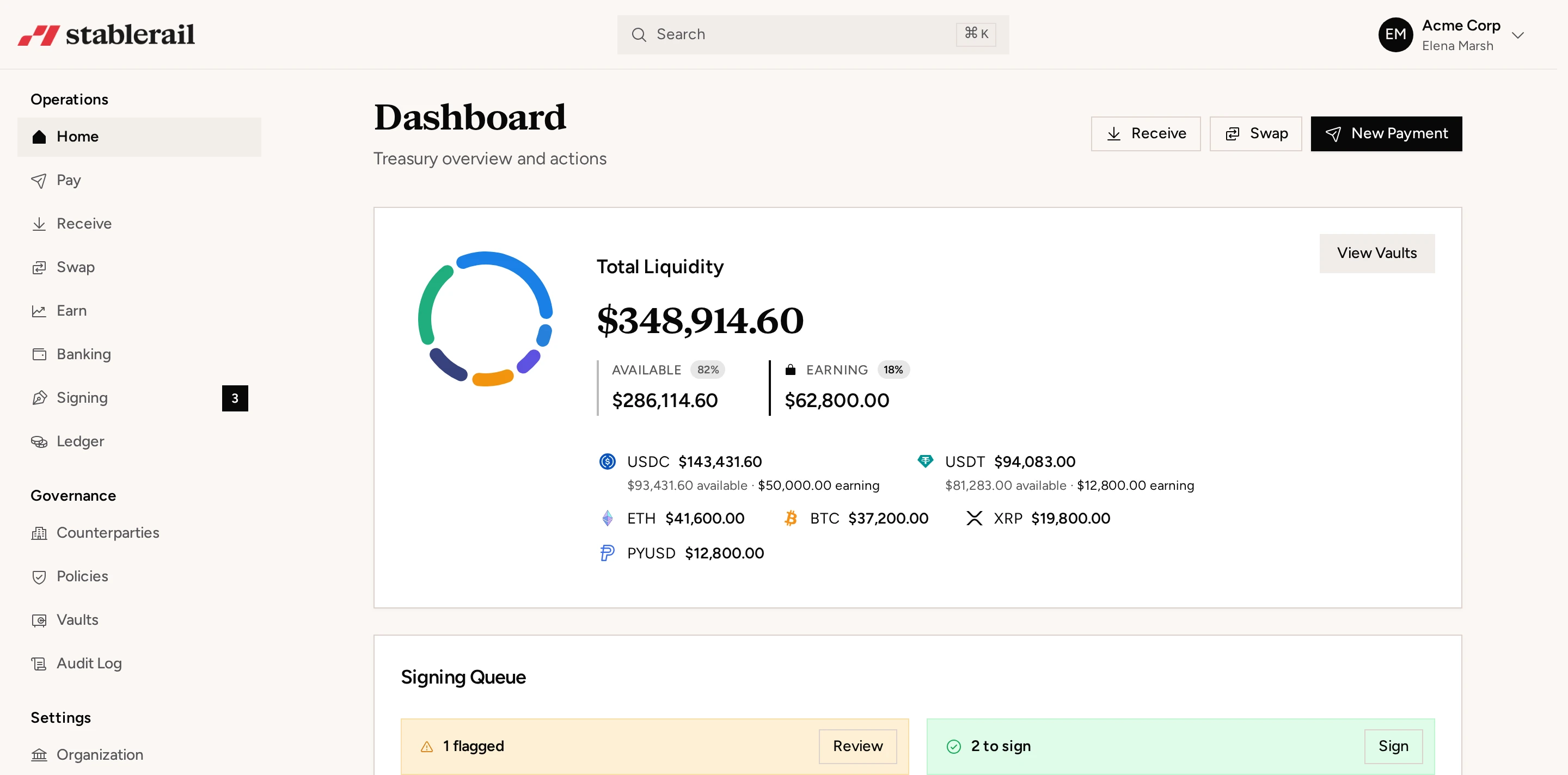
Platforms like Stablerail simplify this process by integrating compliance measures directly into stablecoin treasury workflows. They combine pre-transaction screening, multi-step approvals, and detailed audit trails to ensure adherence to OFAC regulations without disrupting daily operations.
Responding to Sanctions Hits and Escalations
Evaluating and Managing Sanctions Matches
Once pre-transaction controls are in place, effectively responding to sanctions hits becomes the next critical step in compliance. When a sanctions match is flagged by software, the first move is to pause the transaction and verify the details. Use key identifiers like location, date of birth, or passport numbers to confirm the match. Automated systems often flag false positives, so human review is essential.
"Computer software may flag some transactions that are not actually associated with OFAC targets. This is where human intervention becomes critical and some hands-on research may be necessary."
If the match is confirmed, the transaction must be blocked. For prohibited transactions where no Specially Designated National (SDN) is directly involved - such as payments tied to sanctioned jurisdictions - reject the transaction and return it to the sender.
For virtual currency, you can consolidate blocked assets into a single "omnibus" account, as long as you maintain a clear audit trail for future unblocking. These steps ensure that every action aligns with reporting and coordination requirements.
Regulatory Reporting and Coordination with Partners
After blocking a transaction, file a report with OFAC through the ORS (Online Reporting System) within 10 business days. Registration for reporting can be initiated by emailing ofacreport@treasury.gov.
"Initial Blocked Property Reports must be filed within 10 business days following the date that property is blocked."
Additionally, you must submit an Annual Report of Blocked Property by September 30 each year. This report should account for all blocked assets held as of June 30. Maintain detailed records of all blocked property and rejected transactions for at least five years.
If customer funds are blocked, notify them and direct them to OFAC's online application for fund release. While coordination with custodians or stablecoin issuers may be necessary, your institution remains fully responsible for both screening and reporting.
Post-Incident Reviews and Program Improvements
After completing regulatory reporting, conduct a post-incident review to strengthen your compliance program. Begin with a root-cause analysis to uncover whether the issue arose from a technical glitch, inadequate screening, or human error. Document your findings and revise policies to address any gaps.
Lessons from past enforcement actions often lead to better screening and geolocation controls. Use these insights to update staff training, ensuring employees understand the new measures and the risks that triggered the breach. Senior management should review and approve all updated policies to ensure they are fully integrated into daily operations. Follow-up audits can then confirm the effectiveness of these changes.
Voluntarily disclosing violations to regulators can help reduce penalties. These steps create a continuous cycle of risk management, reporting, and improvement, keeping stablecoin treasury operations compliant and resilient.
Conclusion
Ensuring OFAC compliance for stablecoin treasuries hinges on three key elements: pre-transaction controls, centralized governance, and detailed audit trails. Pre-transaction screening acts as the first line of defense, helping to avoid strict liability violations. Under OFAC rules, civil penalties can be imposed even if the entity was unaware of the violation, as past enforcement cases have shown. By identifying and blocking risky transactions before they happen, organizations can significantly reduce exposure to these penalties.
Centralized governance plays a crucial role in applying sanctions controls consistently across the board. Decentralized or inconsistent compliance processes have been repeatedly flagged as leading causes of sanctions violations. To counter this, senior management must dedicate adequate resources and empower compliance officers with the authority and expertise needed to enforce uniform practices. This includes appointing a dedicated sanctions compliance officer and rolling out board-approved policies across all business units. Such governance measures also support accurate and reliable recordkeeping.
Maintaining thorough audit trails for at least five years isn't just a regulatory requirement - it’s also a critical way to demonstrate due diligence. These records provide clear evidence of compliance efforts and can even mitigate penalties during enforcement actions. For instance, voluntary self-disclosure of violations can lead to a 50% reduction in proposed penalties. To meet this standard, every transaction, screening result, approval, and override should be documented with timestamps and clear explanations.
Compliance programs must also adapt to the ever-changing threat landscape. OFAC regularly updates its SDN List, now including specific digital currency addresses to combat evasion tactics. A recent example: in August 2022, Circle froze all USDC associated with Tornado Cash addresses after they were added to the SDN List. Regular audits and timely updates to compliance policies ensure that controls remain effective in the face of evolving regulations.
To bridge governance with execution, integrated tools can streamline treasury operations. Aligning modern tools with traditional governance practices allows treasury teams to maintain efficiency without compromising compliance. A case in point is Stablerail, which offers a control platform that integrates pre-transaction screening, policy enforcement, and comprehensive audit trails - helping teams achieve both operational speed and regulatory adherence.
FAQs
What is the difference between blocking and rejecting transactions under OFAC regulations?
Under OFAC regulations, blocking a transaction involves freezing the assets or funds tied to it, effectively locking them in place. These funds are held in a blocked account, where they remain completely inaccessible - no transfers, no returns, and no usage - unless OFAC grants explicit authorization. This typically applies when the transaction involves sanctioned individuals, entities, or countries.
Rejecting a transaction, however, means refusing to process it altogether. Unlike blocking, rejecting doesn't involve freezing funds. Instead, the transaction is canceled or the funds are returned to the sender because it doesn't comply with OFAC requirements. Importantly, this happens when no sanctioned party or asset is involved that would require a block.
The main difference is straightforward: blocking freezes and immobilizes assets, while rejecting simply stops the transaction from happening without seizing any funds.
How can treasury teams ensure compliance with OFAC regulations when managing stablecoin transactions?
Treasury teams can stay on top of OFAC regulations by adopting a strong, risk-based approach to screening and monitoring stablecoin transactions before giving the green light. This means checking counterparties, token contracts, and destination addresses against the official SDN List and other OFAC sanctions lists. The goal? Spot any potential sanctions risks. If there's a match, the next steps are clear: verify the entity’s identity, conduct due diligence, and, if needed, block or report the transaction.
But compliance doesn't stop there. Static list checks are just the beginning. Teams should also leverage advanced tools that offer continuous monitoring and behavioral analytics. Key practices include:
Pre-sign checks to screen for sanctions or tainted funds.
Policy-enforced rules to manage transaction limits and approvals.
Real-time anomaly detection to flag unusual amounts or patterns.
Detailed audit trails to support regulatory reviews.
Platforms like Stablerail can simplify these tasks. They provide tools like self-custody wallets, automated compliance checks, and easy-to-understand risk reports. Best of all, these solutions ensure treasury teams maintain full control over payment approvals while staying compliant.
Why is having a dedicated sanctions compliance officer important for stablecoin treasury teams?
A sanctions compliance officer plays a crucial role in stablecoin treasury teams. The fast-paced, cross-border nature of on-chain payments significantly increases the risk of sanctions violations. According to OFAC guidance, instant payment systems must adopt a risk-based approach to ensure compliance. Skipping even one screening step can result in blocked funds, hefty fines, or damage to the organization’s reputation.
This officer is responsible for ensuring the organization meets OFAC’s stringent standards for internal controls, risk assessments, and sanctions screening. Their duties include coordinating compliance measures, keeping sanctions list checks current, and managing disclosures or licensing when needed. These efforts help reduce the likelihood of enforcement actions.
Using tools like Stablerail’s pre-sign verification agents, compliance officers can automate sanctions checks and generate audit-ready documentation. This approach integrates compliance safeguards into every transaction, allowing treasury teams to maintain the speed of on-chain payments while staying within regulatory boundaries.
Related Blog Posts
Former CEO of Simple, a self-custodial wallet with $2B+ in transaction volume across 75+ countries.
More about the Stablerail team- Stablecoin treasury managementApprovals, limits, yield and reporting on one balance.
- Stablecoin payoutsBatch contractor and vendor payments with screening.
- USDT vs USDCWhich stablecoin your company should settle in.
- Stablecoin finance glossaryMPC, off-ramp, travel rule and the rest, in plain English.
- Product updatesEverything we ship, month by month.